Zimbabwe is one of the easier African countries for an Indian passport. You do need a visa, but you can buy it at the airport in Harare or Victoria Falls, or sort it online beforehand. Where people get stuck is the trip around it: a day across the bridge into Zambia, a Gulf passport that falls into a stricter group, or an airline agent asking how you plan to leave. This guide works through each of those using the Zimbabwean government's own pages.
Zimbabwe visa key facts
| Question | Official answer |
|---|---|
| Indian passport | Category B: visa required, but it can be obtained at the port of entry after paying the fee, or applied for online.[1][2] |
| Gulf passports | UAE, Bahrain and Kuwait: Category B. Saudi Arabia, Qatar and Oman: Category C, visa before travel.[1] |
| e-Visa processing | About seven working days on average; apply at least three weeks before travel.[1] |
| e-Visa validity | Single entry and KAZA: one month. Double entry: three months. Multiple entry: six months.[1] |
| Flight-ticket rule | None published on the e-visa or immigration pages we read in October 2026.[1][2] |
| Passport | GOV.UK advises an expiry at least six months after arrival and three blank pages.[4] |
Which visa category is India in?
Zimbabwe groups nationalities into three categories. The Department of Immigration describes them simply: Category A nationals need no visa; Category B nationals need one "but the visa can also be obtained at the port of entry after paying the corresponding visa fee"; Category C nationals must apply online and get the visa before travelling.[2]
India sits in Category B on the e-visa portal's country lists.[1] That's useful flexibility. If your plans firm up late, you can still go, and pay at the desk.
Neighbouring countries in South Asia are split. Nepal, Pakistan, Bangladesh and Sri Lanka are all Category C, so mixed-nationality groups should check each passport separately.[1]
Should you get an e-visa or pay on arrival?
Both are legal routes for Category B, and the portal lists the options side by side.[1]
| Option | Validity | How you get it |
|---|---|---|
| Single entry e-visa | One entry within one month | Prepaid online before travel |
| Double entry e-visa | Two entries within three months | Prepaid online before travel |
| Multiple entry e-visa | Any number of entries within six months | Prepaid online before travel |
| Visa on arrival (single or double) | One month or three months | Paid at the port of entry; declarations can be pre-filled online |
| Multiple entry on arrival | Six months | Paid on arrival; only for UK, USA and Canada |
| KAZA UNIVISA (advance or on arrival) | One month | Online or on arrival, eligible nationalities only |
The FAQ adds some rules worth knowing before you pay. Validity starts on the date you specify, and you can enter on any day within it. You cannot amend an e-visa if your travel dates change; you need a new one. Unused e-visas are not refunded, and a refused application isn't either, because the fee pays for processing.[1]
Which would we choose? If your dates are fixed and you want certainty at check-in, the e-visa. If dates are still moving, paying on arrival avoids buying a visa you may have to replace. The portal also notes that officials may refuse entry even with an e-visa, so it is not a guarantee either way.[1]
Does Zimbabwe require a return ticket?
We could not find one in writing. The e-visa portal's FAQ and the Department of Immigration's visa page set out categories, validity and processing, but neither makes a return or onward flight a condition of entry.[1][2] GOV.UK's entry page for Zimbabwe, which covers passport validity, visa on arrival and KAZA, does not mention one either.[4] That contrasts with Zambia next door, where the return-ticket rule is explicit.[6]
"Not written down" is not the same as "never asked". An airline agent in Mumbai or Dubai can still ask how you will leave, and an immigration officer can ask about your plans. A return or onward flight is the quickest answer to both. We explain the difference between those two checks in who checks your onward ticket.
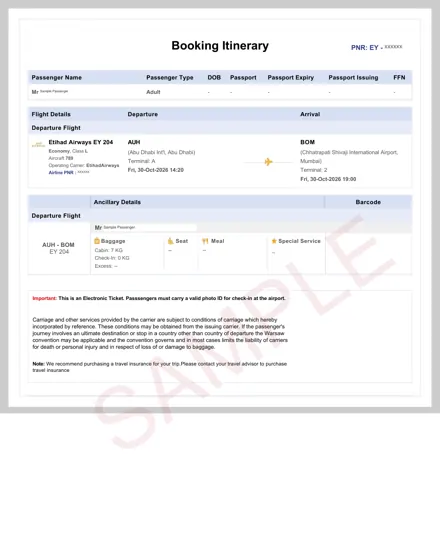
Reservation or paid ticket for Zimbabwe?
| Situation | What we'd carry | Why |
|---|---|---|
| Category B, paying on arrival, return already bought | The paid return | Answers any question at check-in or the desk |
| Category B, e-visa, return not yet bought | Verifiable reservation, then the real ticket once dates are fixed | An e-visa cannot be amended, so fix dates before applying[1] |
| Category C passport (e.g. Saudi, Qatari, Omani) | Reservation for the application; paid ticket for travel | Visa must be issued before boarding[1] |
| Overland onward trip into Zambia or Botswana | Flight home from the last country, plus that country's visa | Shows the whole exit route |
A reservation is genuine, checkable evidence of a plan, and it is not a ticket. Describe it as a reservation if anyone asks. If you are told a paid ticket is needed, buy one.
KAZA UNIVISA and crossing into Zambia
Victoria Falls sits on the border, and most visitors want to see both sides. The KAZA UNIVISA was built for that: one US$50 visa, valid 30 days, for repeated travel between Zimbabwe and Zambia and day trips to Botswana through Kazungula.[4][5] On the Zimbabwean side it is issued at Harare and Victoria Falls airports and at the Victoria Falls and Kazungula borders; GOV.UK also lists Bulawayo airport.[4][5]
The catch for Indians: the eligibility list published by Zambia's immigration department does not include India.[5] The Zimbabwean portal offers KAZA as a visa type but did not show its own nationality list on the pages we could read, so we cannot confirm a different answer from that side. And Zambia requires Indians to obtain a visa approval letter before travelling.[6]
So a quick walk across the bridge to the Zambian side is not something an Indian passport holder can decide on the day. Apply for the Zambian visa in advance, and buy a double-entry Zimbabwe visa if you will come back. Our Zambia visa guide has the document list.
Gulf passports and Gulf-based Indians
The six Gulf states don't share one category. The UAE, Bahrain and Kuwait are in Category B with India, while Saudi Arabia, Qatar and Oman are in Category C and must get the visa before travelling.[1] For Category C, plan around the processing time of about seven working days, and apply at least three weeks out.[1]
If you are an Indian resident in the Gulf, your Indian passport keeps you in Category B wherever you live. Book the return leg back to your Gulf city, and check that your residence permit has plenty of time left on it. More on that in our Gulf-based Indian expats guide.
Routes from India and the Gulf, and transit checks
Harare is the main entry point; Victoria Falls airport serves the Falls, and Bulawayo the south-west.[4] Indian and Gulf travellers usually connect through Johannesburg, Addis Ababa, Nairobi or Dubai. Each connection brings its own transit question:
- Johannesburg: check South Africa's transit rules for Indian passports before you book. Our South Africa guide covers the visa side.
- Addis Ababa or Nairobi: confirm transit conditions on the airline's own site; see our notes on Ethiopian Airlines and Kenya Airways.
- Yellow fever: GOV.UK says Zimbabwe requires a yellow fever certificate from travellers arriving from countries listed as a transmission risk, so check your connection country.[4]
Our layover rules guide explains how to check a connection before paying for it.
Families and mixed groups
Zimbabwe's categories follow the passport, not the group, so a family can end up with two different processes. Picture a Muscat office trip with Indian and Omani colleagues, or a tour group mixing Indian, Nepali and British travellers. The Indian and British members can pay on arrival; the Nepali or Omani members, in Category C, must have their visas issued before boarding.[1] The airline will check each passport separately at the gate.
For the flights, one reservation can list every traveller, which keeps dates identical across the group. If some members fly home earlier, give them their own booking rather than mixing return dates on one document. And if anyone in the group is applying online, fix dates first, because their e-visa cannot be changed afterwards.[1] Our family visa guide and group booking guide cover the paperwork for several travellers.
Step by step: Zimbabwe on an Indian passport
India is B; check every passport in your group.
Fixed dates suit the e-visa; moving dates suit paying on arrival.
Indians need Zambian approval before travel.
Then buy the real flights.
GOV.UK advises small notes for the visa fee.
How the Zimbabwe e-visa process runs
The Department of Immigration sets out four stages on its own site:[2]
- Fill in the online form on the e-visa portal.
- Upload your documents, double-check every detail, and pay the visa fee through the secure payment page.
- Watch your email. The e-visa is processed and issued electronically, then sent to you.
- Print it, show it when boarding, and have it stamped into your passport on arrival.
The portal also has a tracking page for applications in progress.[3] One practical point: the portal says the department may change your visa type during processing, which can change the cost, and the final price appears in the approval.[1] Don't be alarmed if the amount differs from what you expected; read the approval email before travel.
Mistakes that cause trouble with Zimbabwe trips
- Booking flights after the e-visa window. A single-entry e-visa is valid for one month from the date you chose, and cannot be amended.[1]
- Forgetting the Zambia side. An Indian passport cannot buy a Zambian visa at the bridge.[6]
- Assuming a Gulf passport is Category B. Saudi, Qatari and Omani citizens need the visa before they fly.[1]
- Single entry for a there-and-back trip. If you leave Zimbabwe for Zambia or Botswana and return, one entry is not enough.
- Arriving without cash for a visa on arrival. GOV.UK tells British travellers to bring US dollars in small notes; the same desk will serve you.[4]
Example: you land in Victoria Falls on 5 June, cross to Livingstone on the 7th, and come back on the 8th to fly out. That plan needs a Zambian approval letter obtained before you left India, and a double-entry Zimbabwe visa. Your reservation should show the flight out of Victoria Falls, and the Zambian application should show how you return to Zimbabwe.
What a Zimbabwe reservation should include
- Names spelled as in the passport, including any middle name printed there.
- Arrival into Harare, Victoria Falls or Bulawayo, and a flight home, from Zimbabwe or the last country you visit.
- Dates inside your e-visa validity window, since an e-visa cannot be changed later.[1]
- A PNR you have checked on the airline's site; our verification guide takes two minutes.
Reservations for Zimbabwe: what they cost
We'll set up a held flight booking for you, with a working airline reference, Delhi to Harare via Addis Ababa, for instance, or Kuwait to Victoria Falls through Johannesburg. Search for it on the carrier's website and it should appear. It is a reservation only, so it cannot be used for boarding.
One price per traveller covers a single or round trip, and multi-stop routes are billed leg pair by leg pair (see the price breakdown). Payment is via Razorpay with UPI, cards or netbanking, and delivery takes about 10 minutes. The airline sets the hold period, up to two weeks, so book close to your e-visa application or departure. Need a stay on paper too? Try our hotel booking, and see flight reservation for visa for background.
Heading to Victoria Falls?
Checkable reservation for Harare, Victoria Falls or a two-country route. ₹699 / $9.
Frequently asked questions
Do Indians get a visa on arrival in Zimbabwe?
Yes. India is in Category B on Zimbabwe's official e-visa platform, meaning a visa is needed but can be paid for and issued at the port of entry. You may also apply online in advance for a single, double or multiple entry e-visa if you prefer to have it before flying.
Is a return ticket compulsory for Zimbabwe?
We found no return-ticket rule on Zimbabwe's e-visa or immigration pages in October 2026. Airlines and officers can still ask about your departure, so carry a return or onward booking. A live reservation answers the question while dates are uncertain; a paid ticket removes any doubt.
How long does a Zimbabwe e-visa take?
The portal says processing averages seven working days and can vary, and it recommends applying at least three weeks before you travel. Remember that e-visas cannot be amended, so settle your dates before you submit.
Can Indians use the KAZA UNIVISA?
India is not on the KAZA eligibility list published by Zambia's Department of Immigration, and we could not find a different list on the Zimbabwean side. Plan on separate visas: Zimbabwe on arrival or online, and a Zambian visa approved before travel.
Do Saudi or Qatari citizens need a visa in advance?
Yes. Saudi Arabia, Qatar and Oman are in Category C, so their citizens must apply online and obtain the visa before travelling. UAE, Bahraini and Kuwaiti passports are in Category B and can get the visa on arrival.
Is my e-visa fee refunded if I don't travel?
No. The portal states that unused e-visas are not refunded, and that a refused application is not refunded either because the payment covers processing. That's one reason to keep flexible plans on a reservation until dates are certain.
Sources
All sources last checked: October 2026.
- Department of Immigration Zimbabwe, Zimbabwe eVisa FAQs and visa regime categories.
- Department of Immigration Zimbabwe, Who needs a visa: Category A, B and C.
- Department of Immigration Zimbabwe, Zimbabwe eVisa platform.
- GOV.UK, Zimbabwe travel advice: entry requirements.
- Zambia Department of Immigration, KAZA UNIVISA.
- Zambia Department of Immigration, Nationals requiring visa prior to travel and Arriving & departing Zambia.
Related: requirements by country · onward ticket · Schengen visa · Zambia visa · Mexico visa · Brazil visa.