Dummy ticket infographics: 200 posters on how it works, validity, prices and visa rules
This is the visual version of everything on DummyTicketPrice. Each poster is one fact about flight reservations for visa applications, written in plain language and checked against our guides: how to get a dummy ticket, why a live booking reference matters, how long it stays valid, what it costs in your country, what forty visa checklists ask for, how to verify the reservation on the airline's website, and the mistakes that weaken a file. Open any poster at full size, save it, print it, or share it with someone who is applying.
Every card follows the same rules as the rest of this site. A dummy ticket is a held reservation, not a paid ticket, and it cannot be used to board a flight. It stays valid for up to two weeks and the airline decides the exact period. It costs ₹699 per passenger in India and about $9 elsewhere. And no document, ours included, guarantees a visa: the officer decides each application on the whole file.
Updated 6 October 2026 · 200 posters · free to share with a link to dummyticketprice.com
How to get a dummy ticket
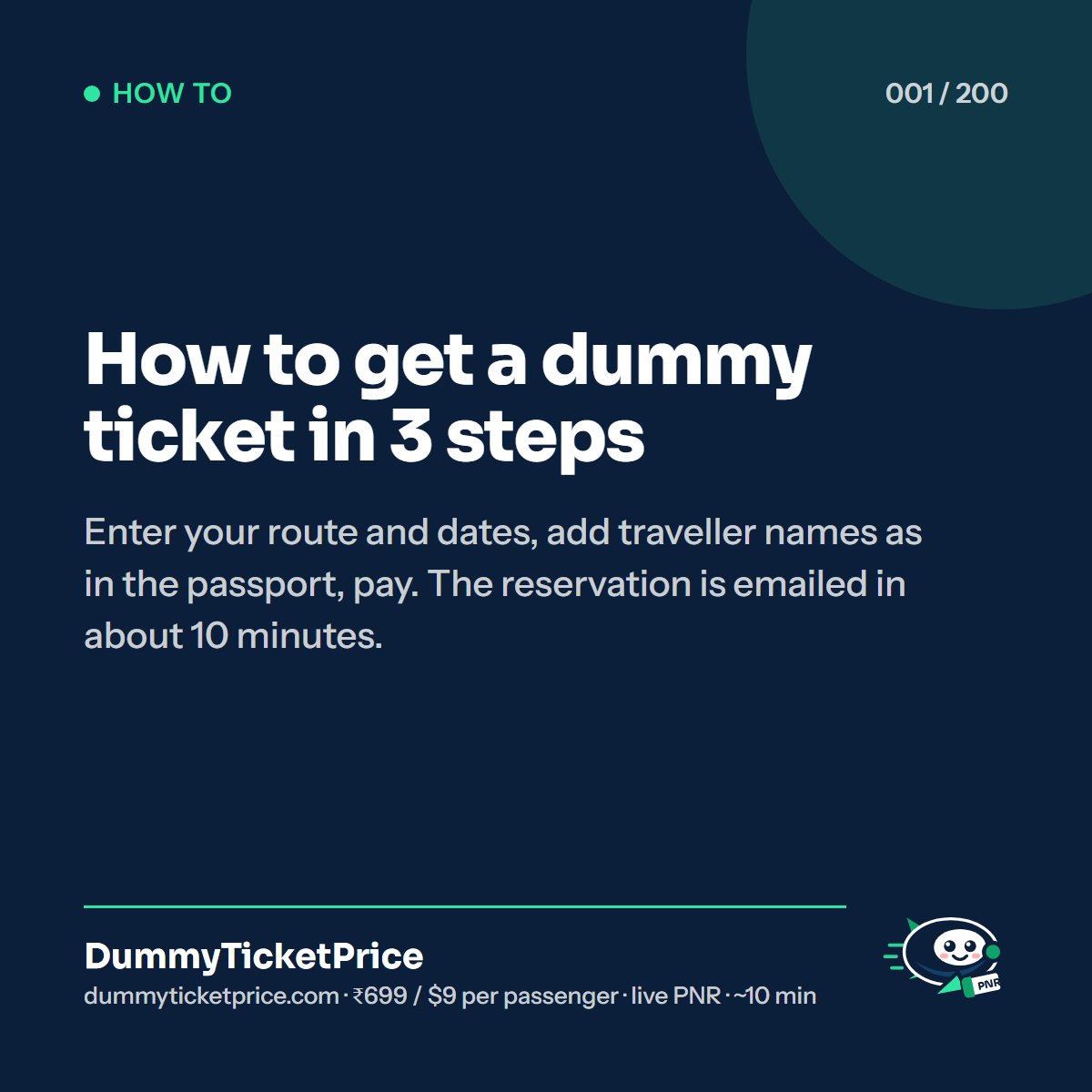
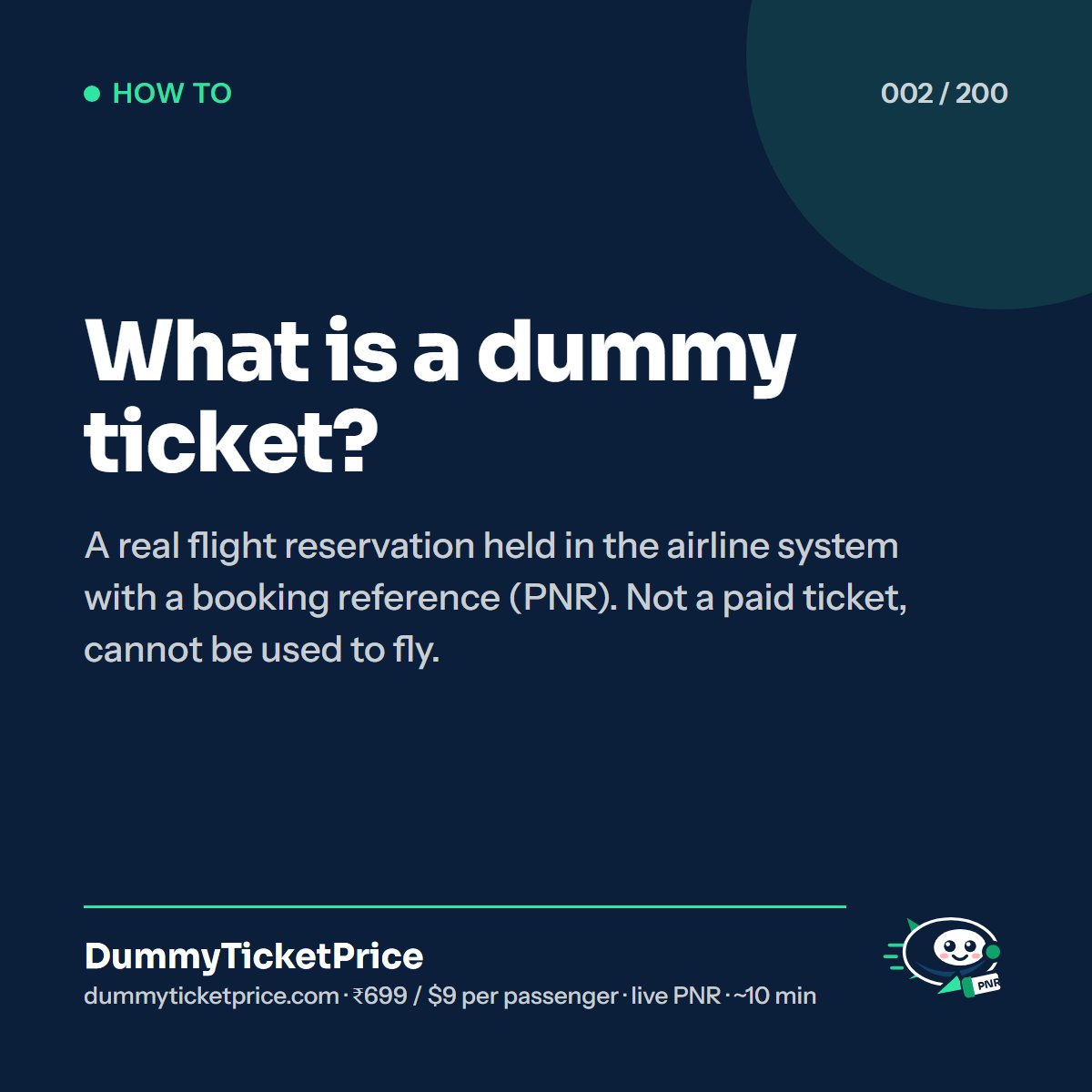
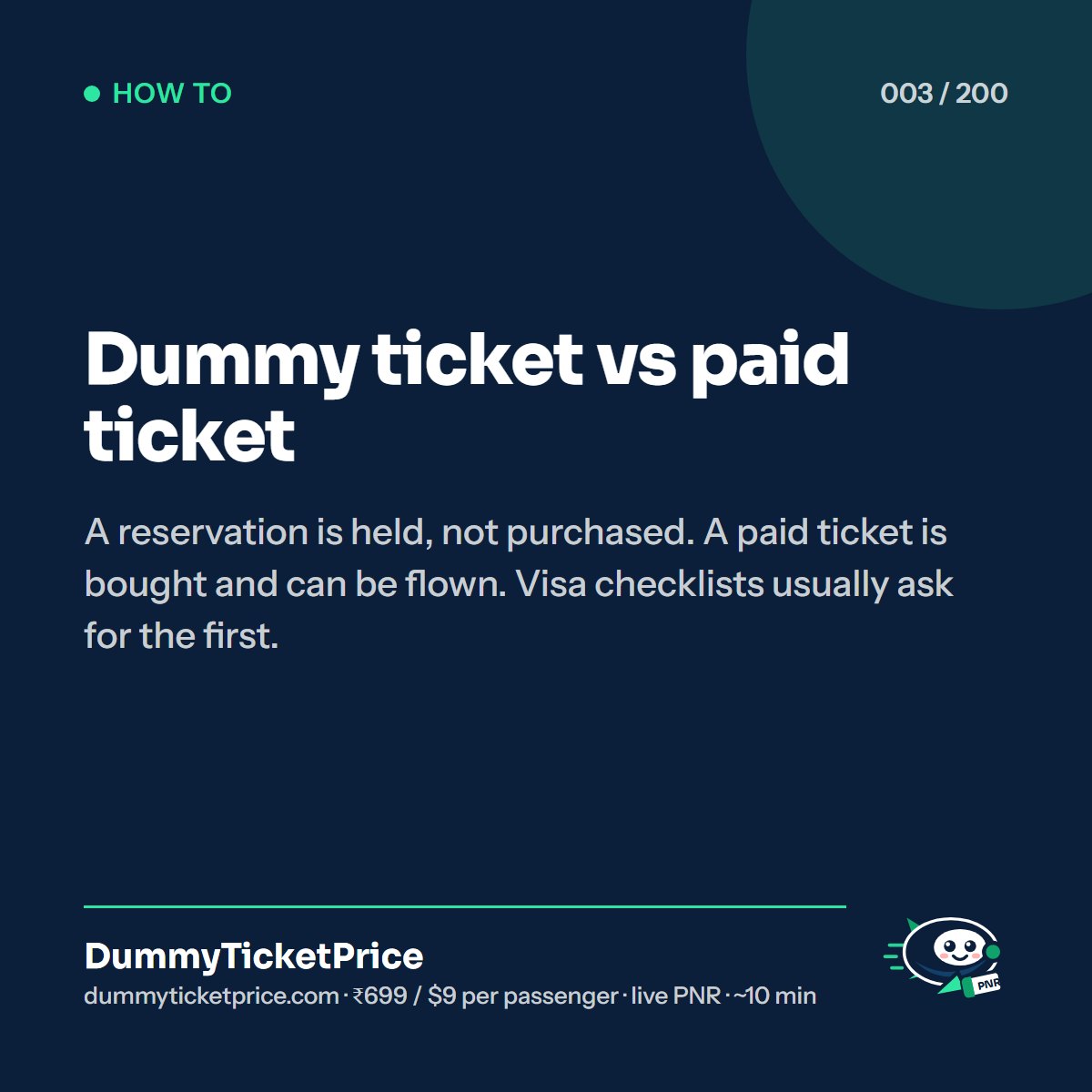
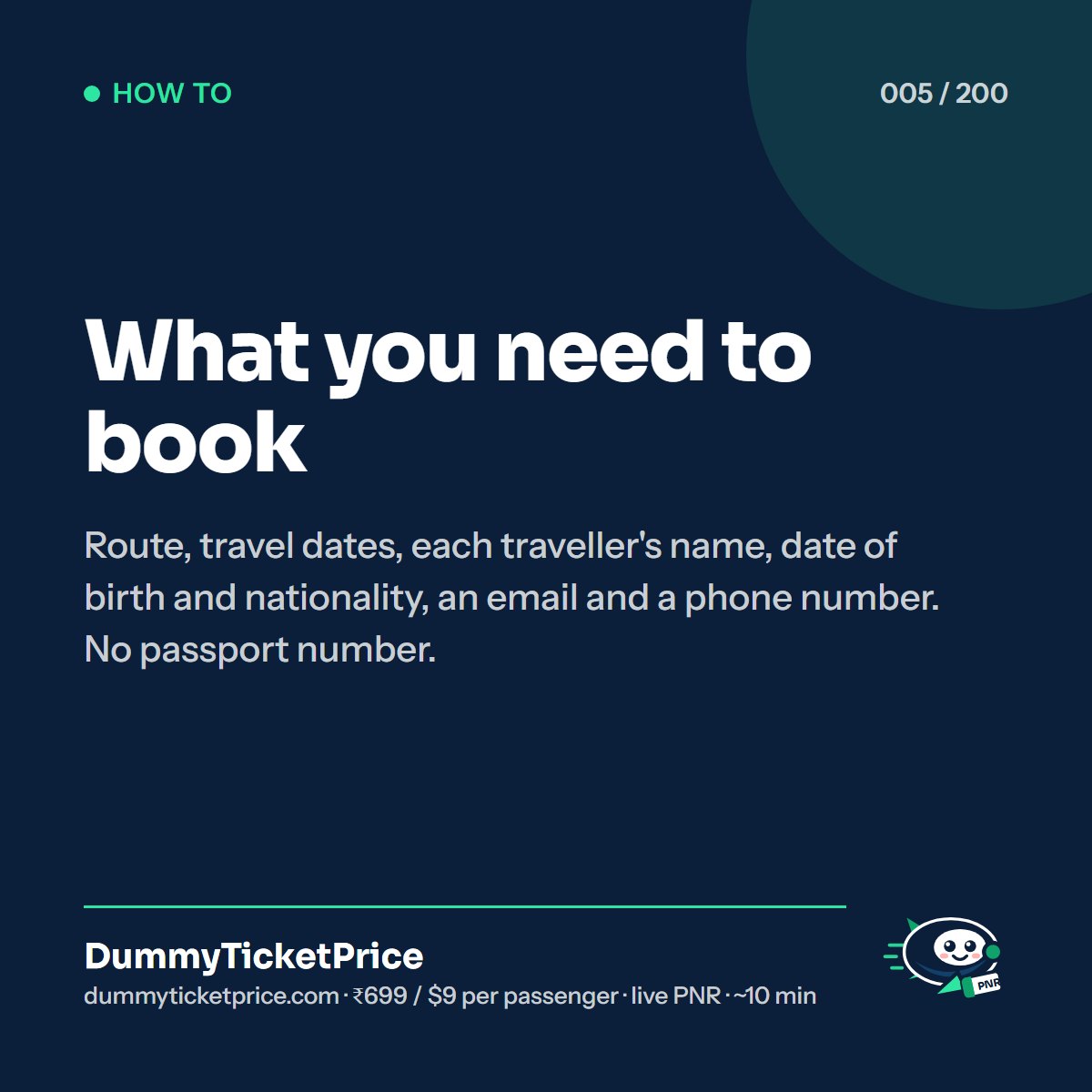
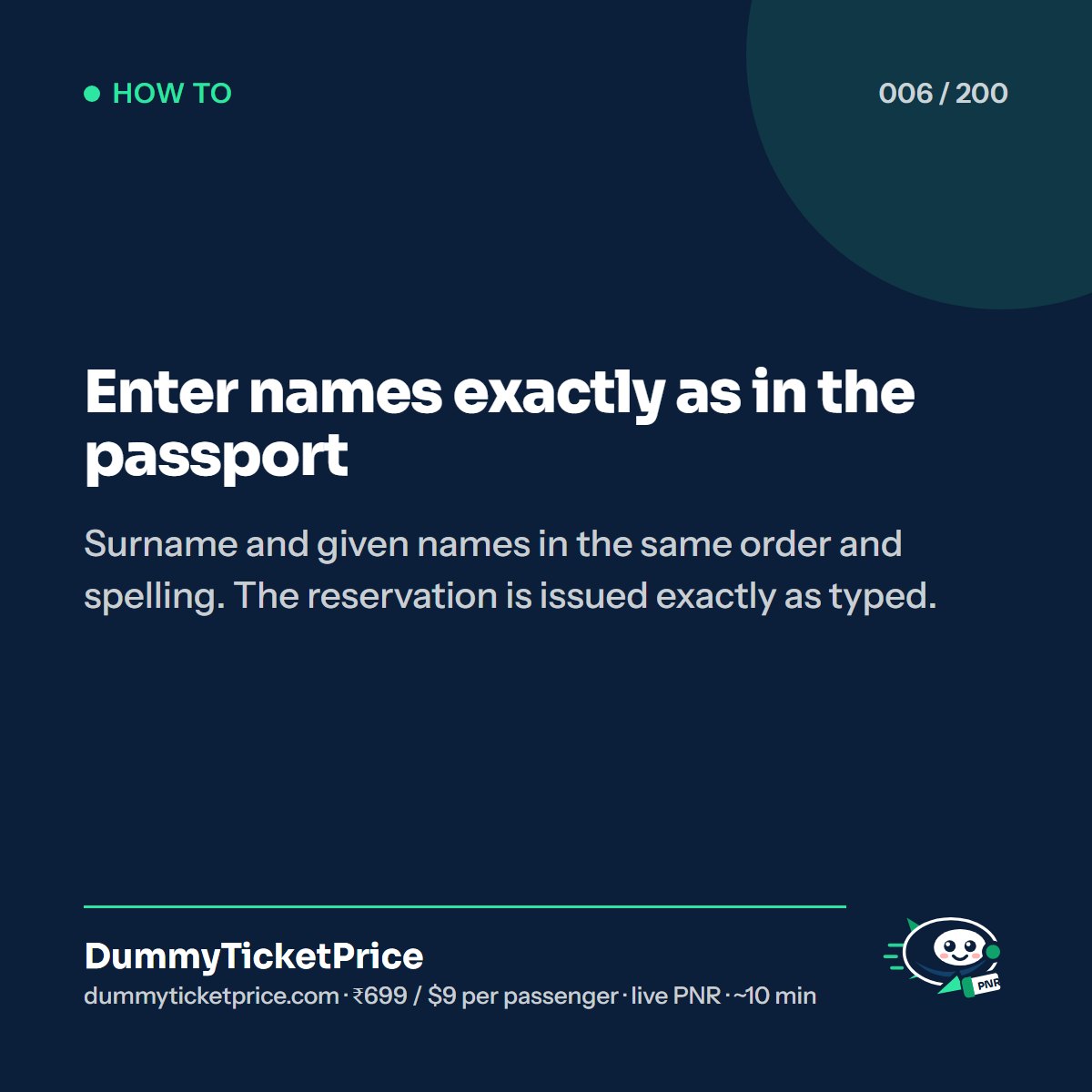
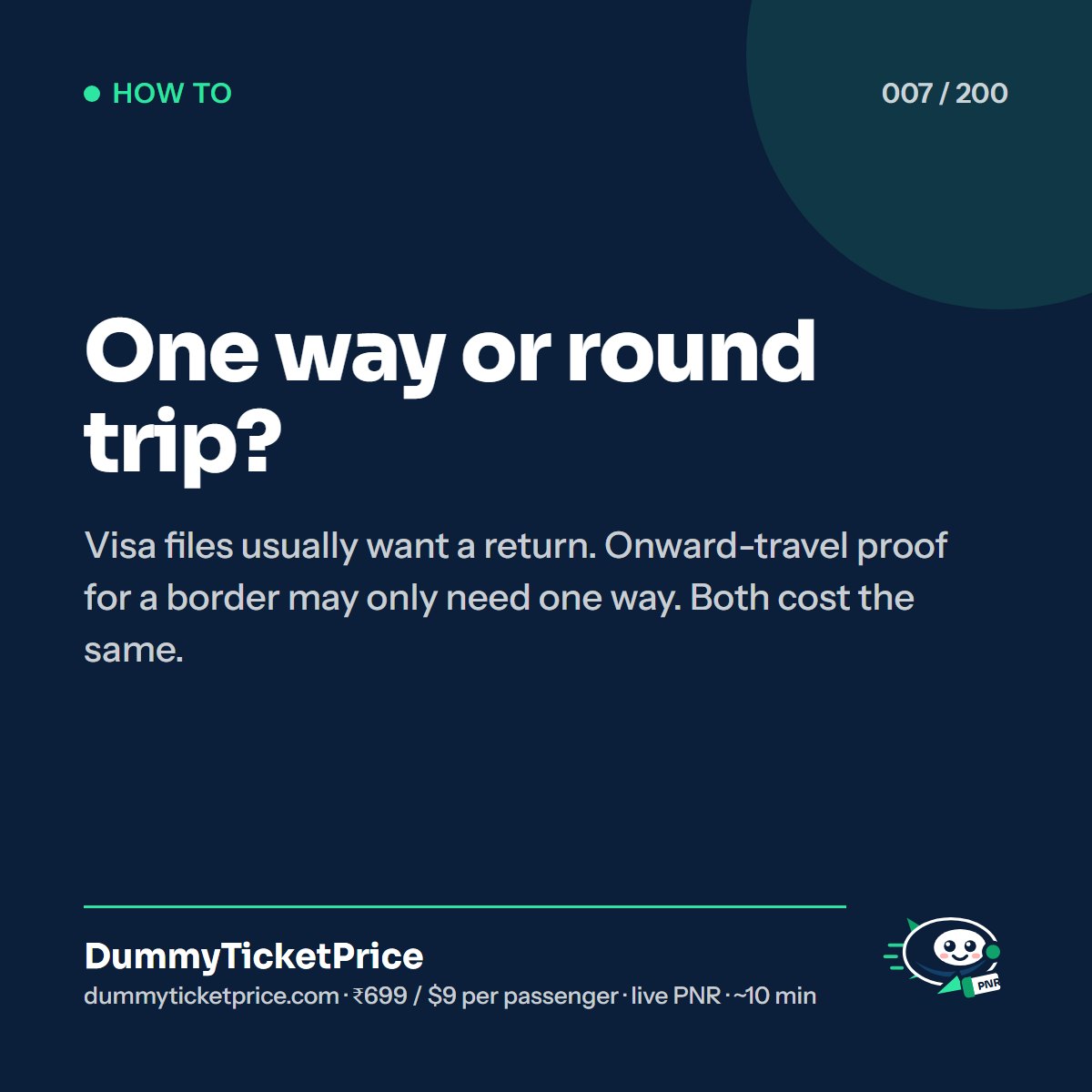
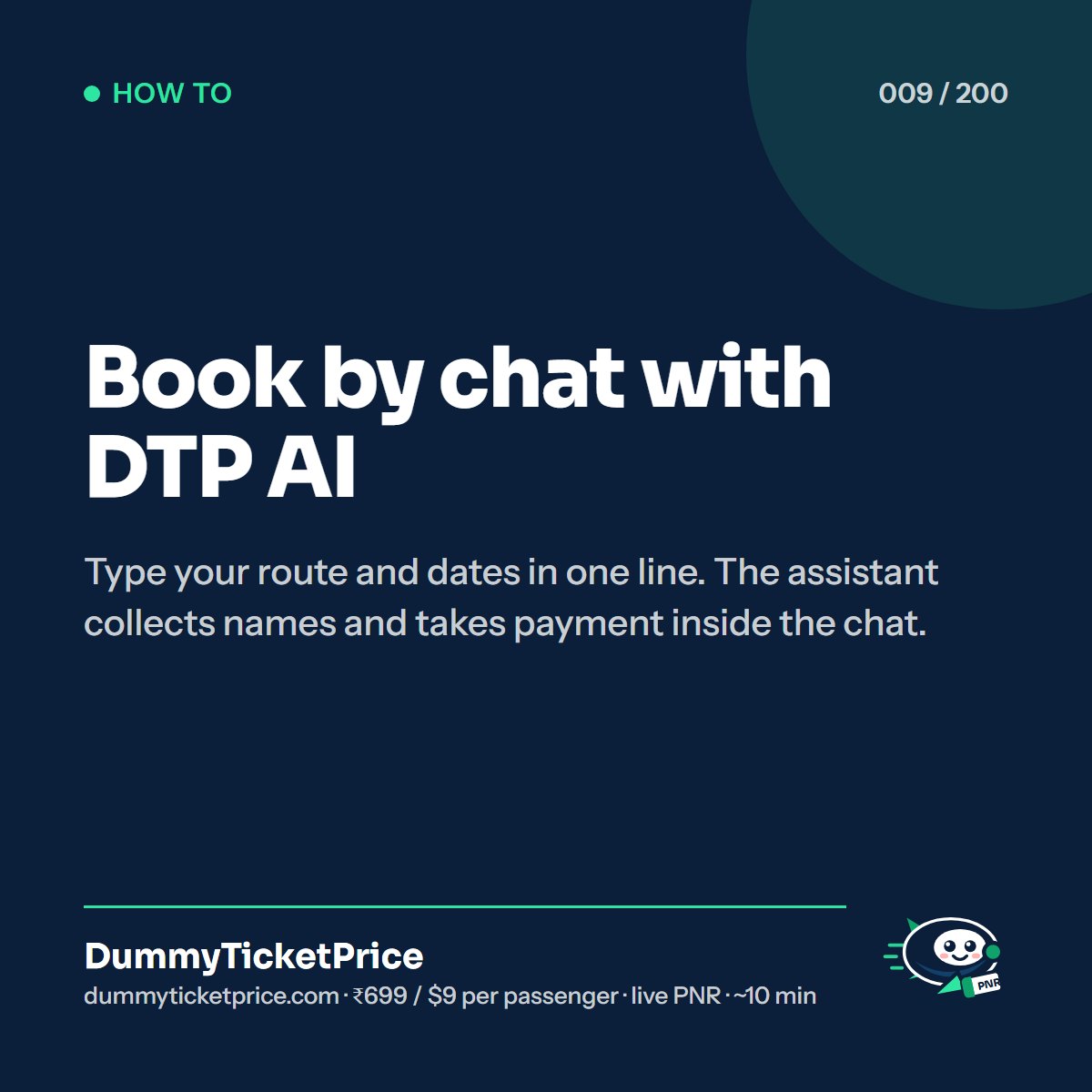
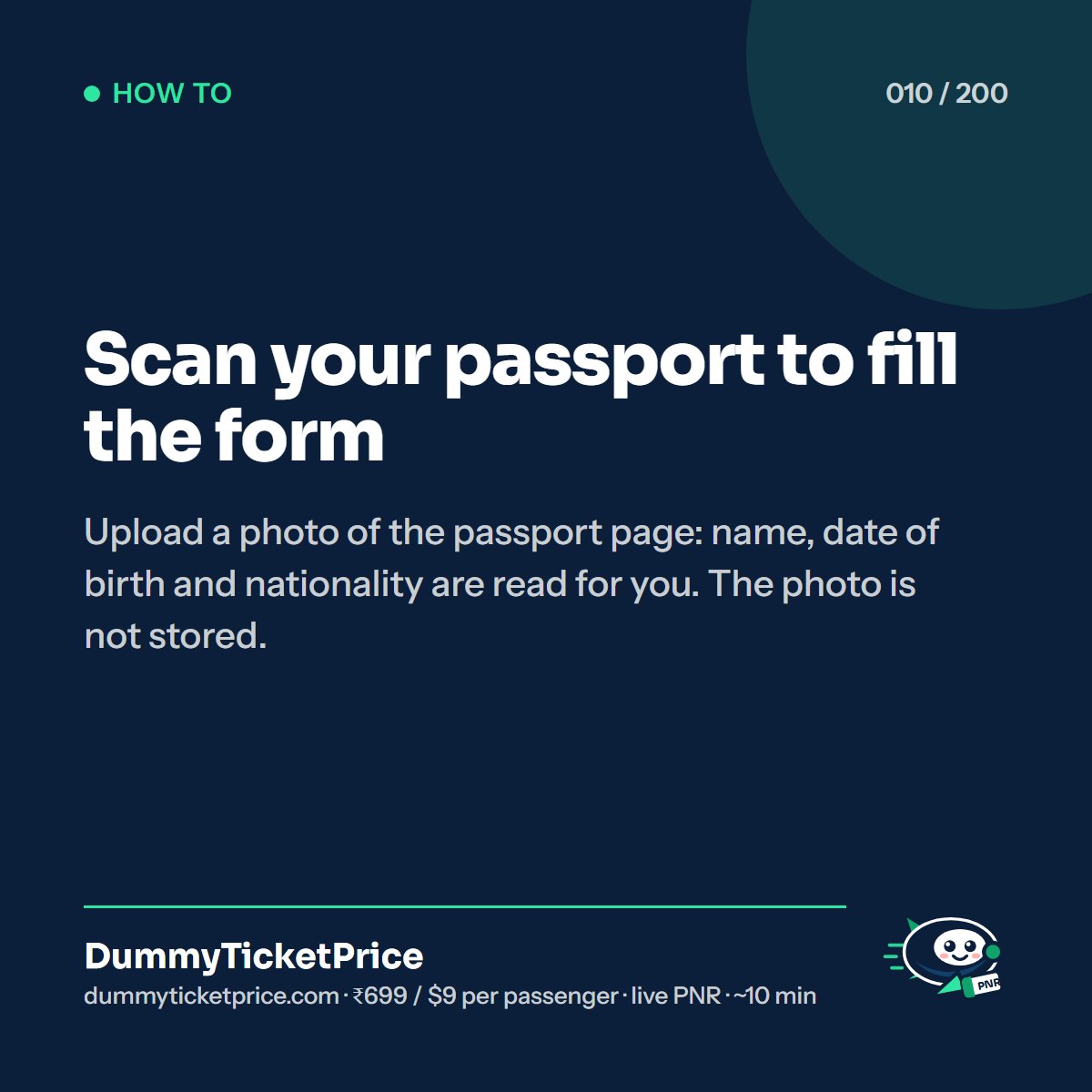
Thirty cards that walk through the booking itself: what a dummy ticket is, what we need from you, how to enter names, how to choose airports and dates, and what arrives in your inbox.
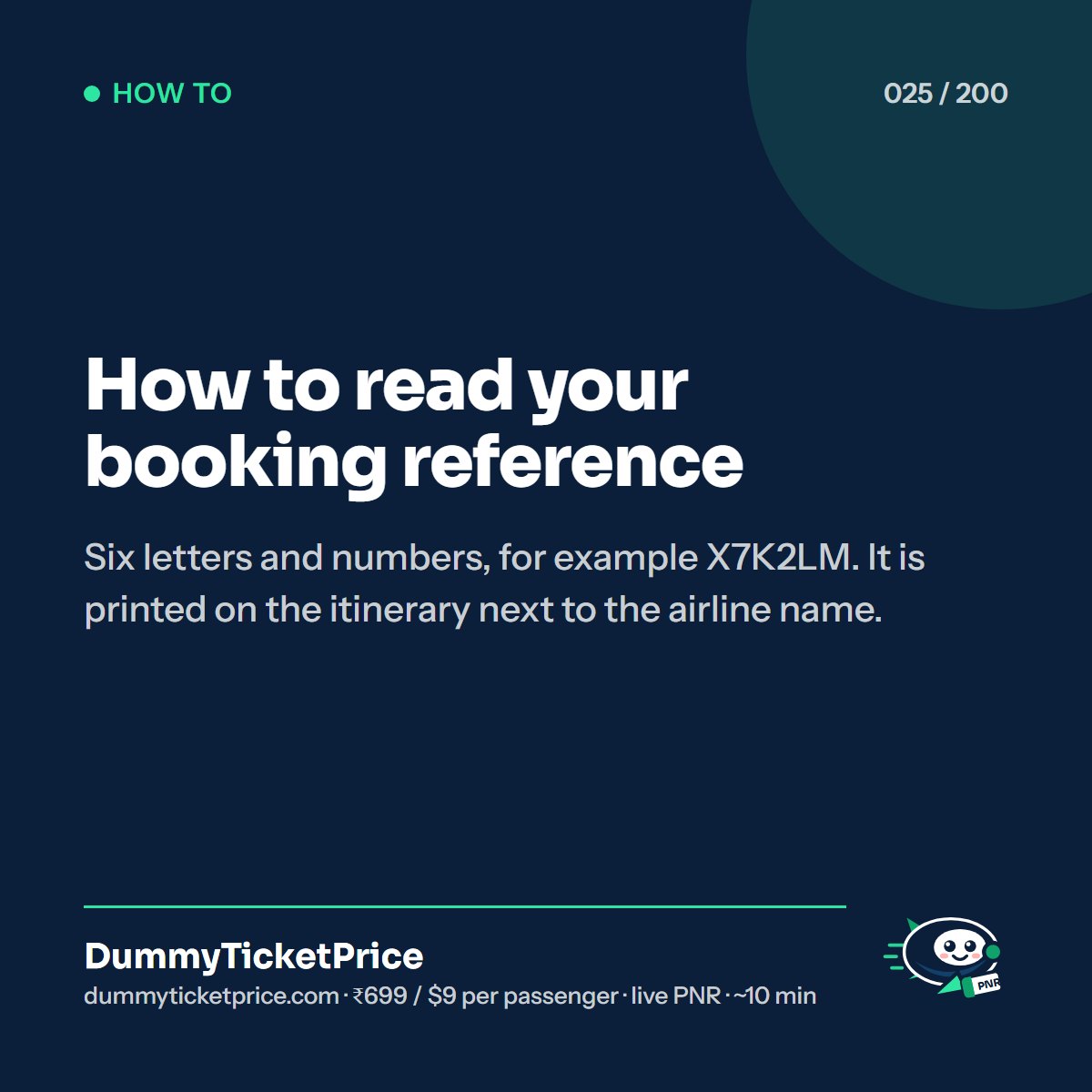
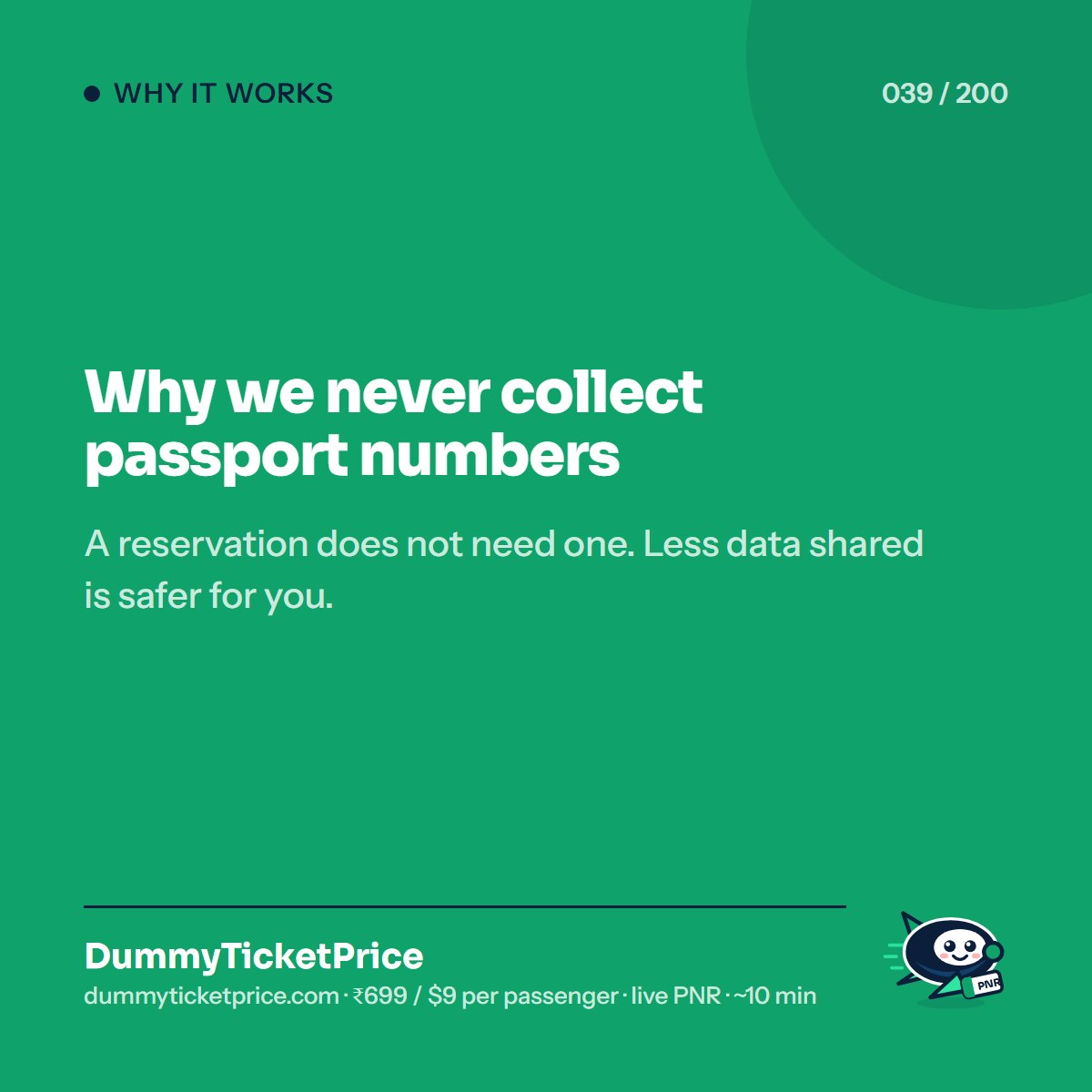
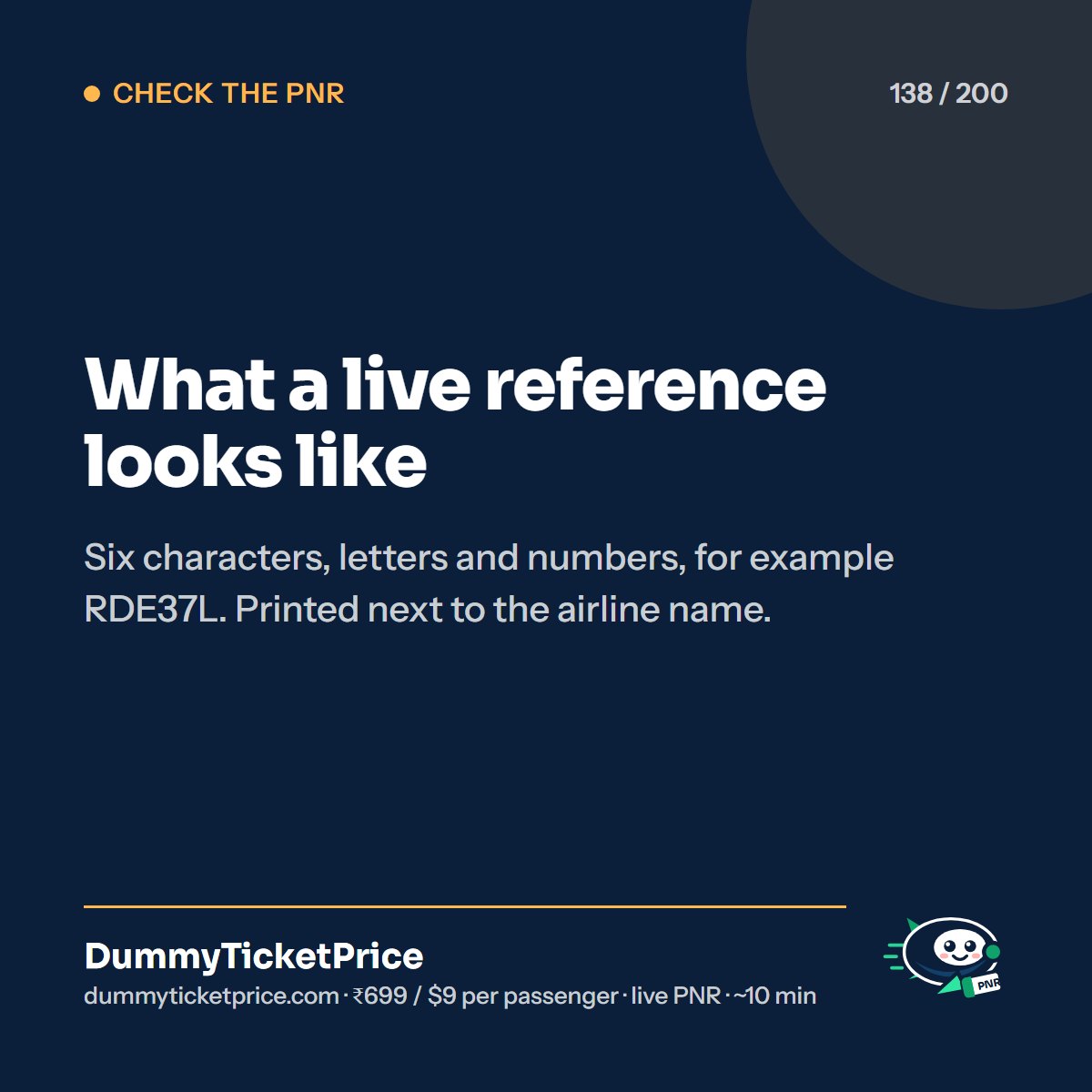
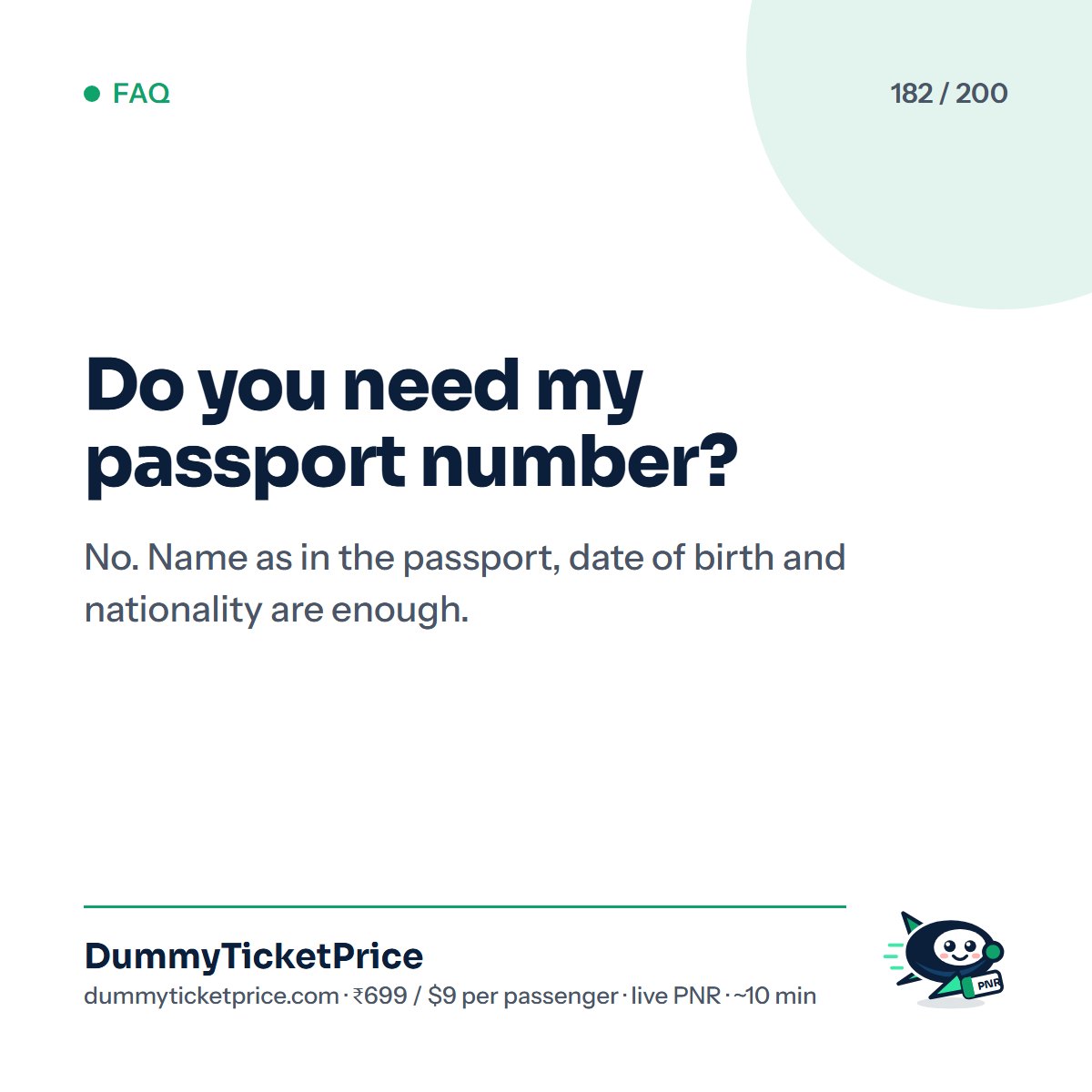
A dummy ticket is a flight reservation: a hold placed in the airline's reservation system under a six-character booking reference, issued in your name but not paid for. Visa checklists call it a flight itinerary, a flight reservation or a booking; they all mean the same held reservation. On DummyTicketPrice the whole process takes about two minutes on the booking page, or one line in the DTP AI chat: you give the route and dates, add each traveller's name exactly as printed in the passport along with date of birth and nationality, and pay through Razorpay. We never ask for a passport number.
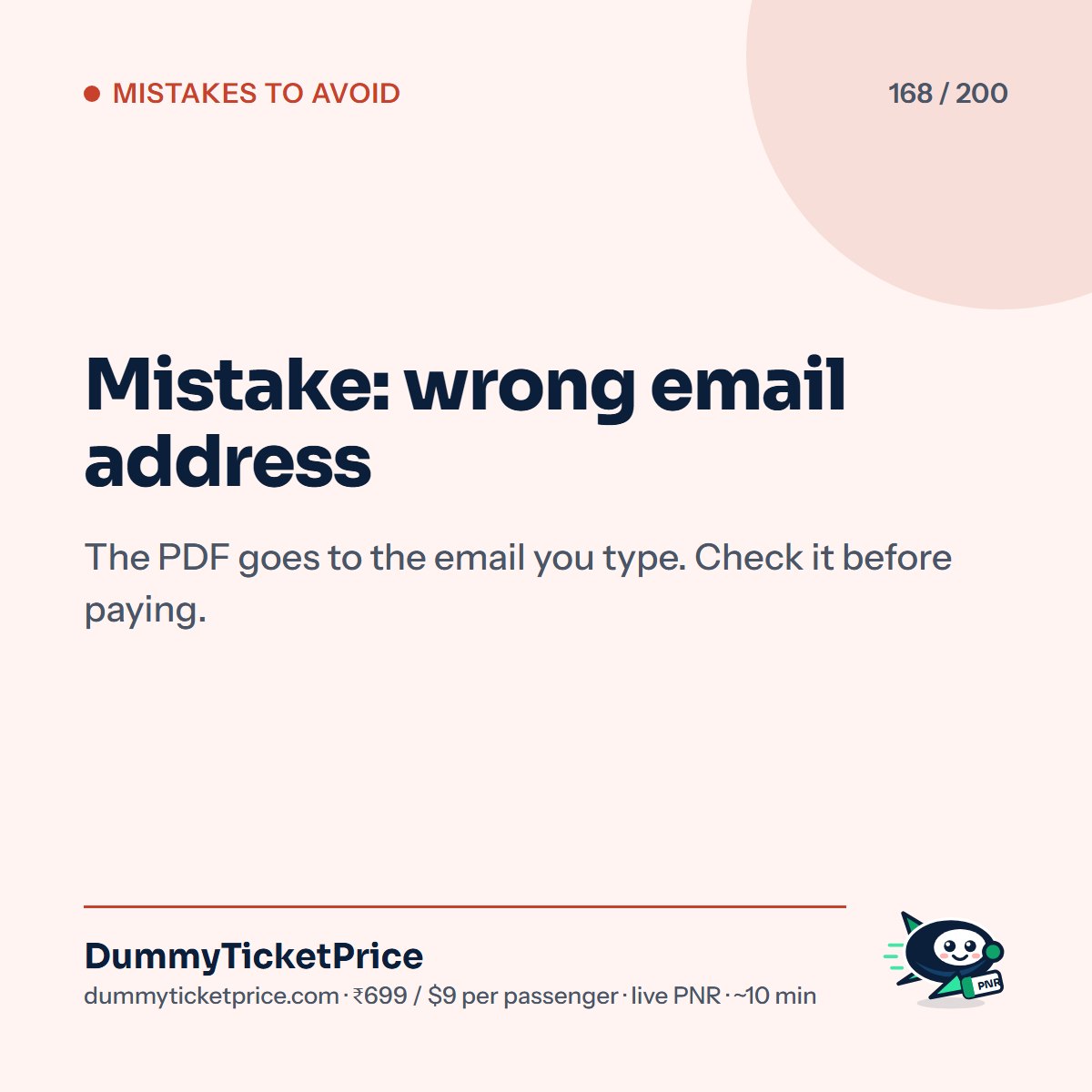
Our team then places the hold on a real itinerary and emails the PDF, usually within ten minutes, seven days a week. The PDF shows the passenger names, airline and flight numbers, dates, airports, class of travel and the booking reference. You can print it for a visa-centre appointment or upload it to an online application; it is the same document either way. The cards below cover the details people ask about most, from multi-city itineraries and group bookings to what to do if the email has not arrived.










Why a verifiable reservation beats the alternatives
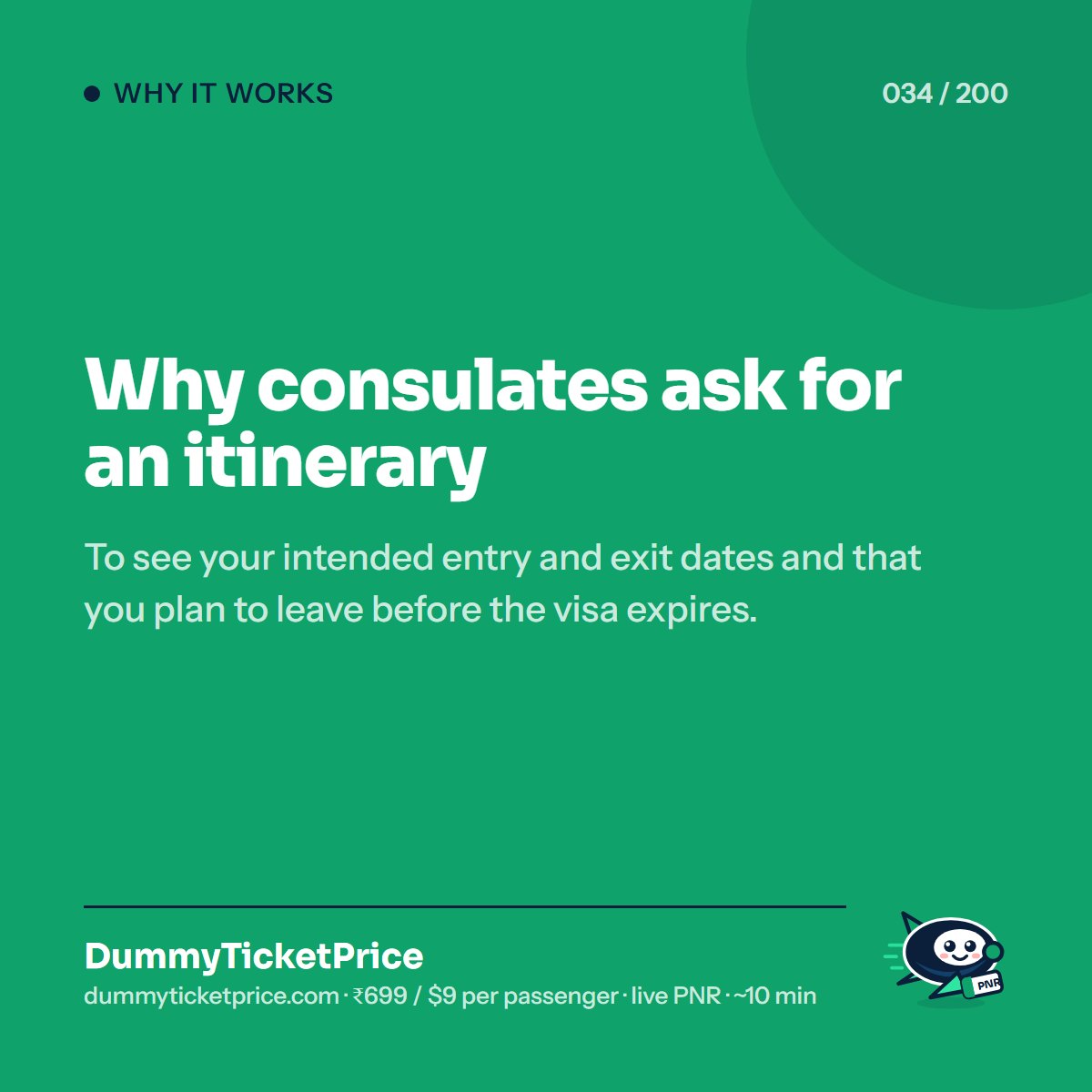
Twenty-five cards on the reasoning: why consulates ask for an itinerary, why a live reference matters, why free generators are dangerous, and why the officer, not the document, decides.
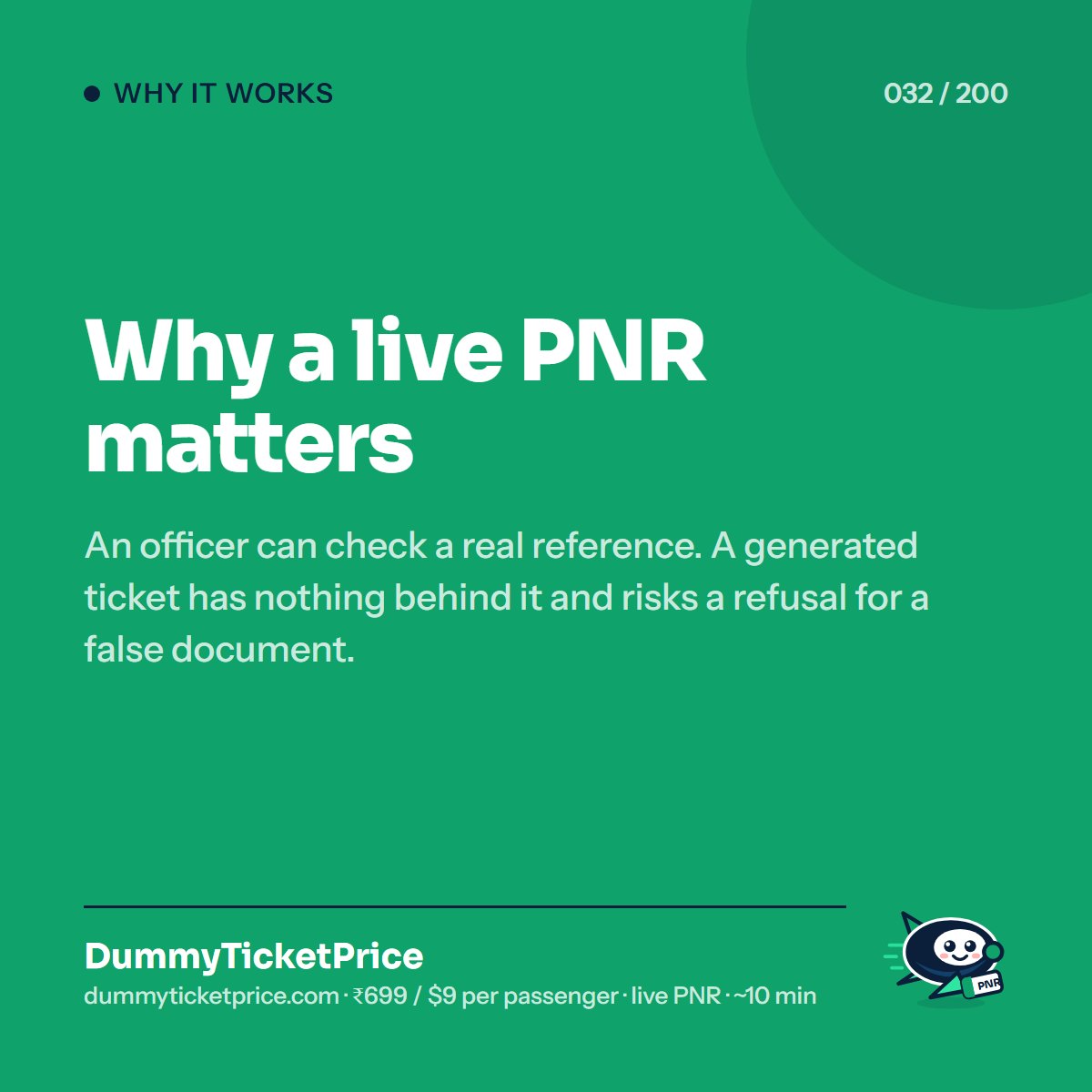
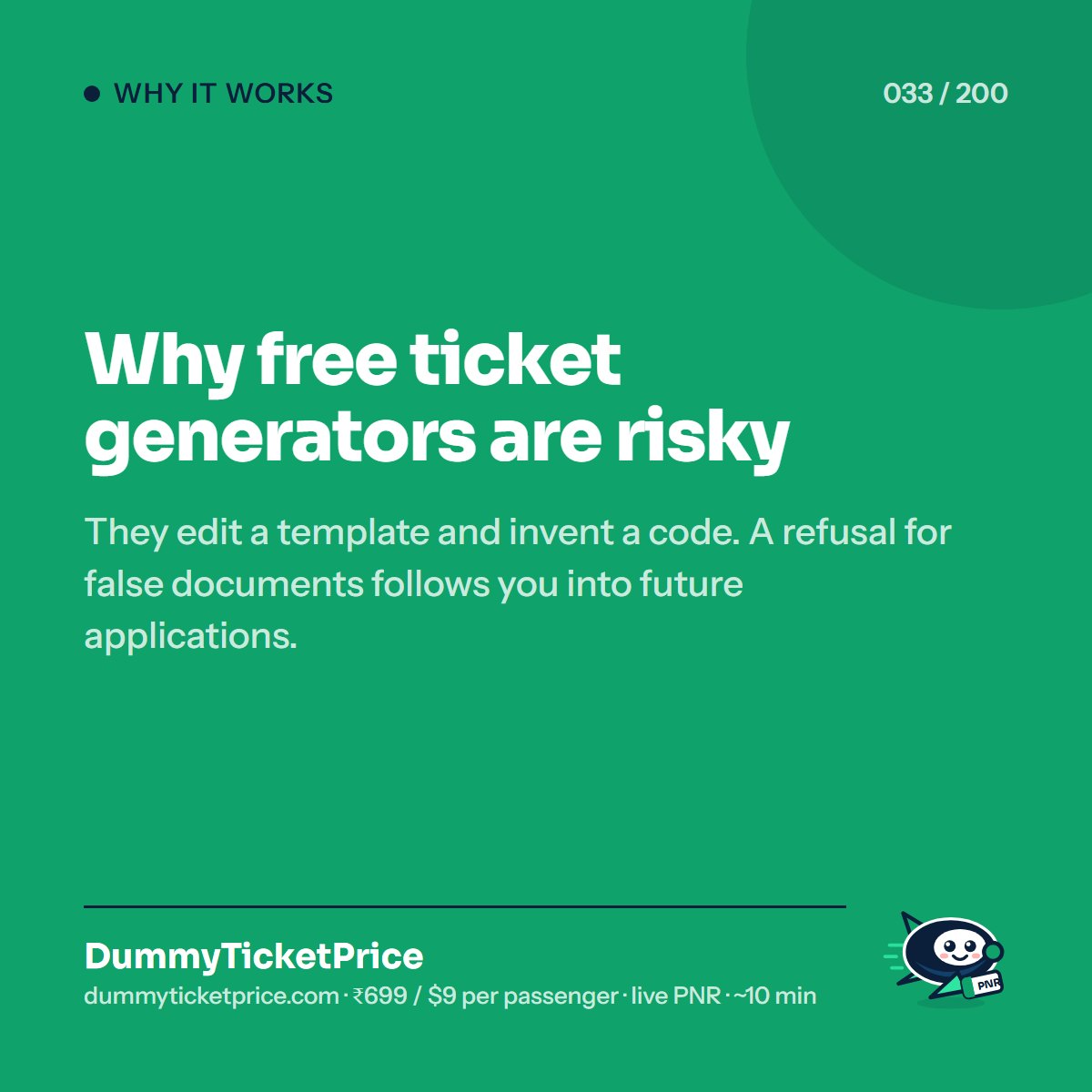
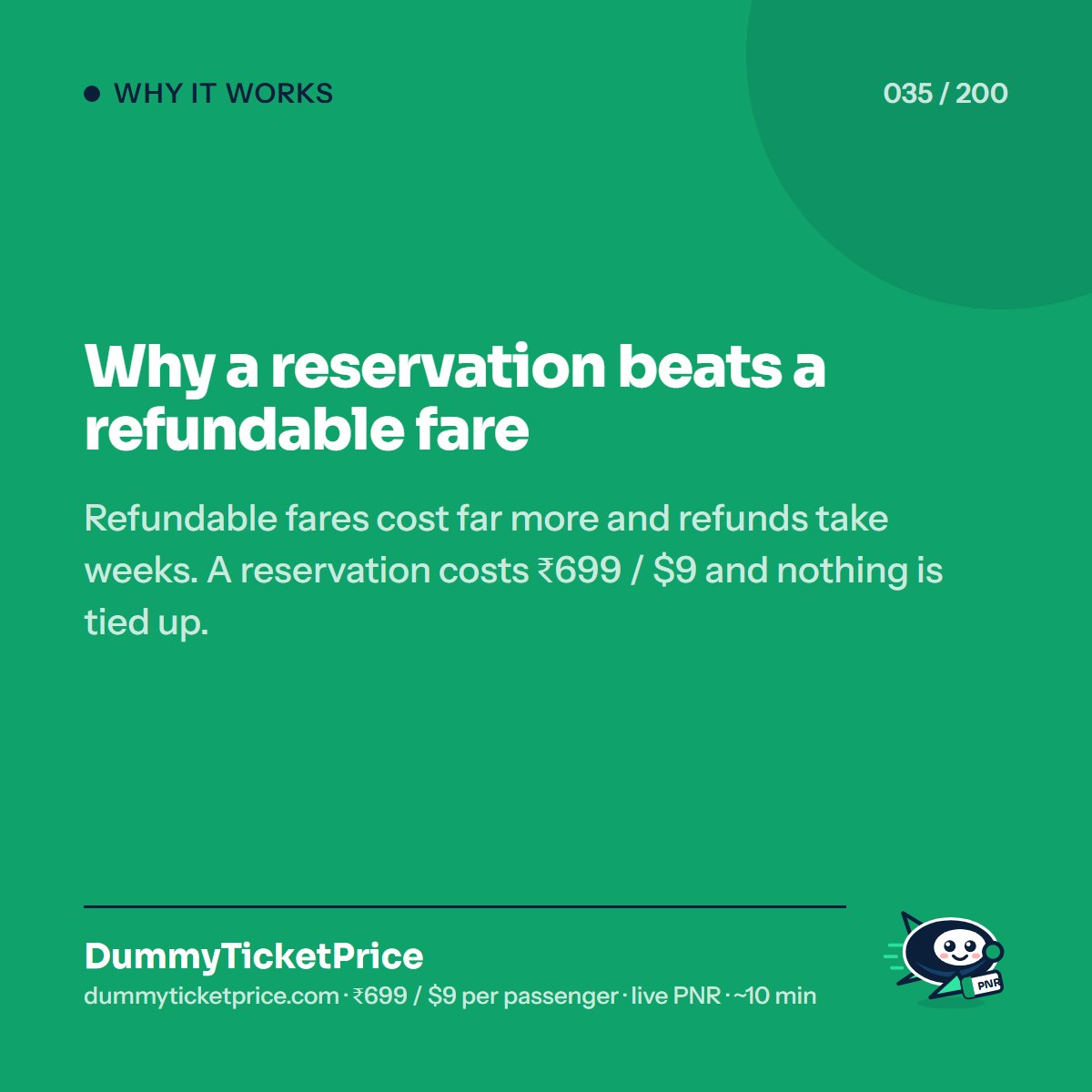
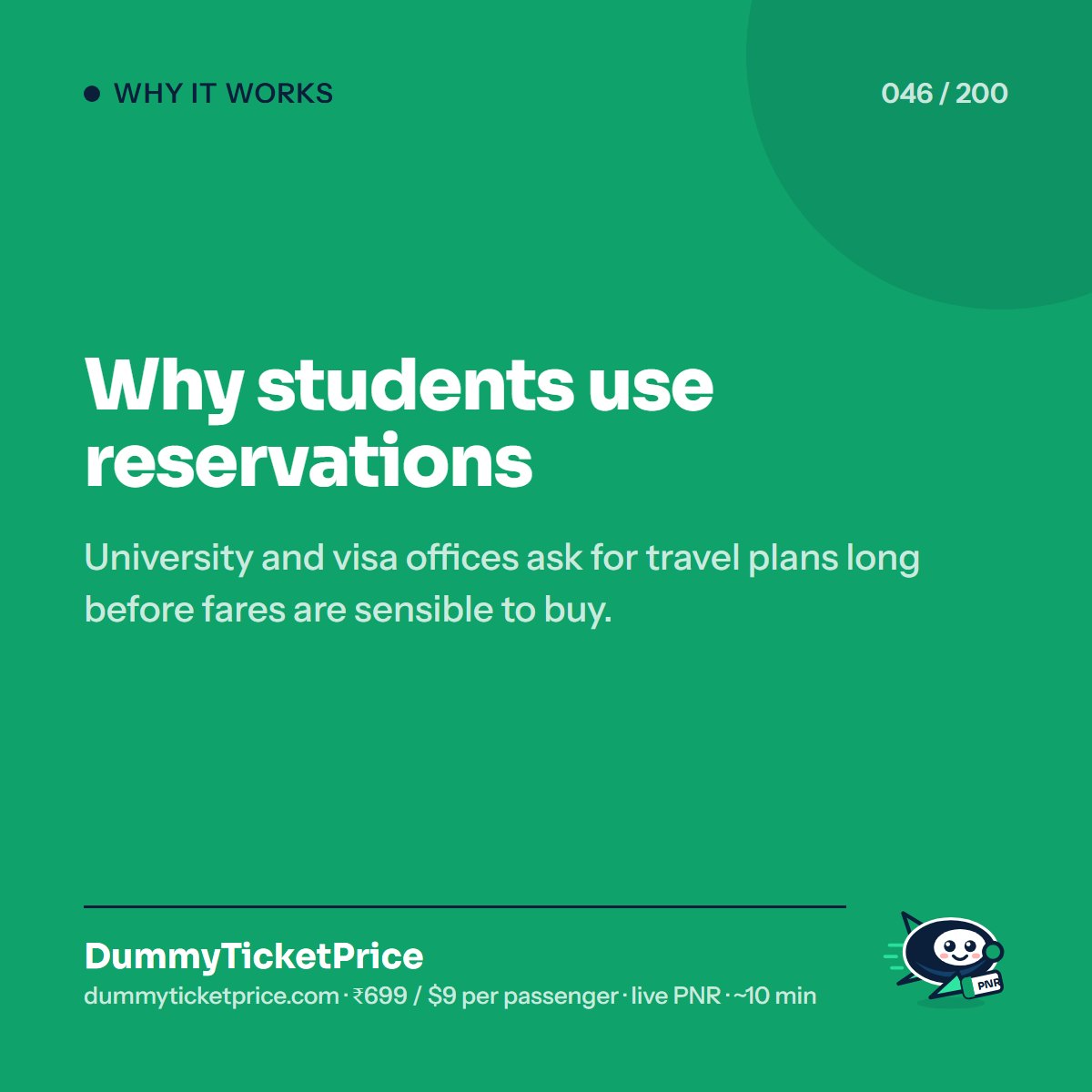
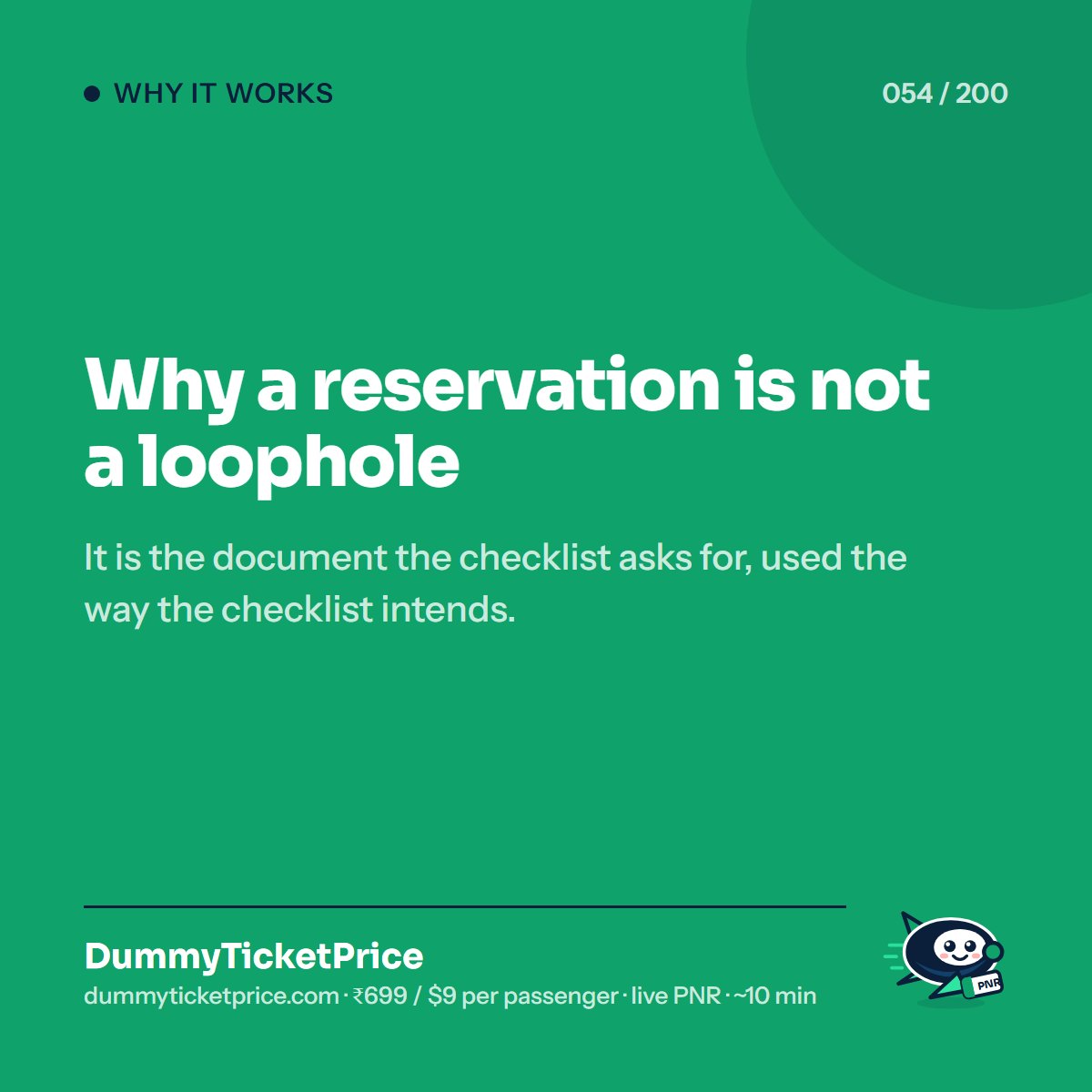
Applicants have three ways to show travel plans: buy a fare, generate a fake, or hold a reservation. Buying early puts the whole fare at risk if the visa is refused or the dates change. A generated "ticket" has no reference behind it, and a refusal for a false document follows you into every future application. A reservation sits between the two: the booking is real and checkable, nothing is paid, and the document says exactly what it is.
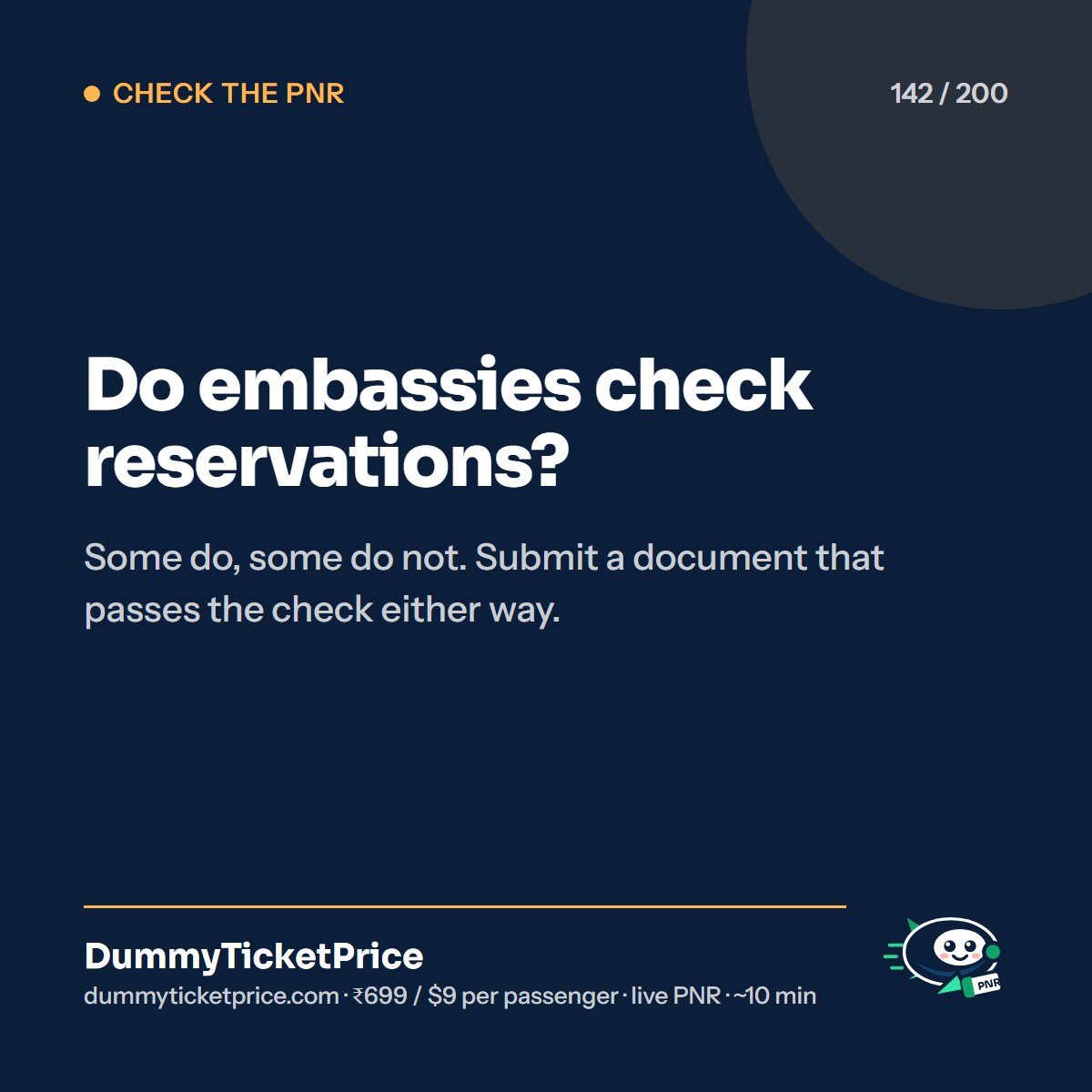
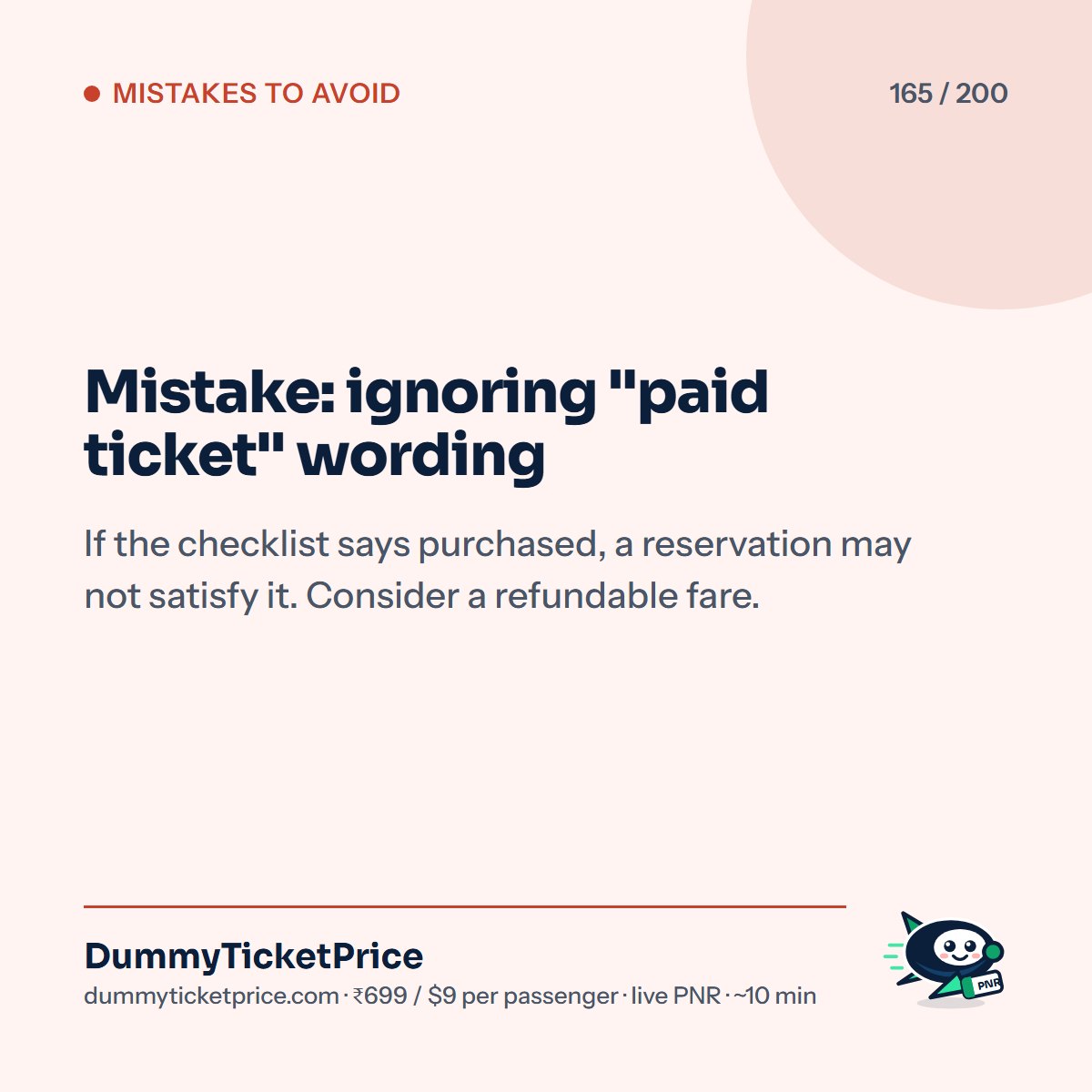
Two honesty points run through every card. First, no document guarantees a visa; the officer weighs the whole file and a reservation only supports it. Second, a small number of checklists ask for a paid or purchased ticket, and we say so plainly when that is the case rather than pretend a reservation will do. Read more in do embassies check flight reservations and refundable ticket vs dummy ticket.




How long a dummy ticket stays valid
Twenty cards on timing: the two-week limit, why the airline sets it, when to book before an appointment, and what to do if a hold lapses.
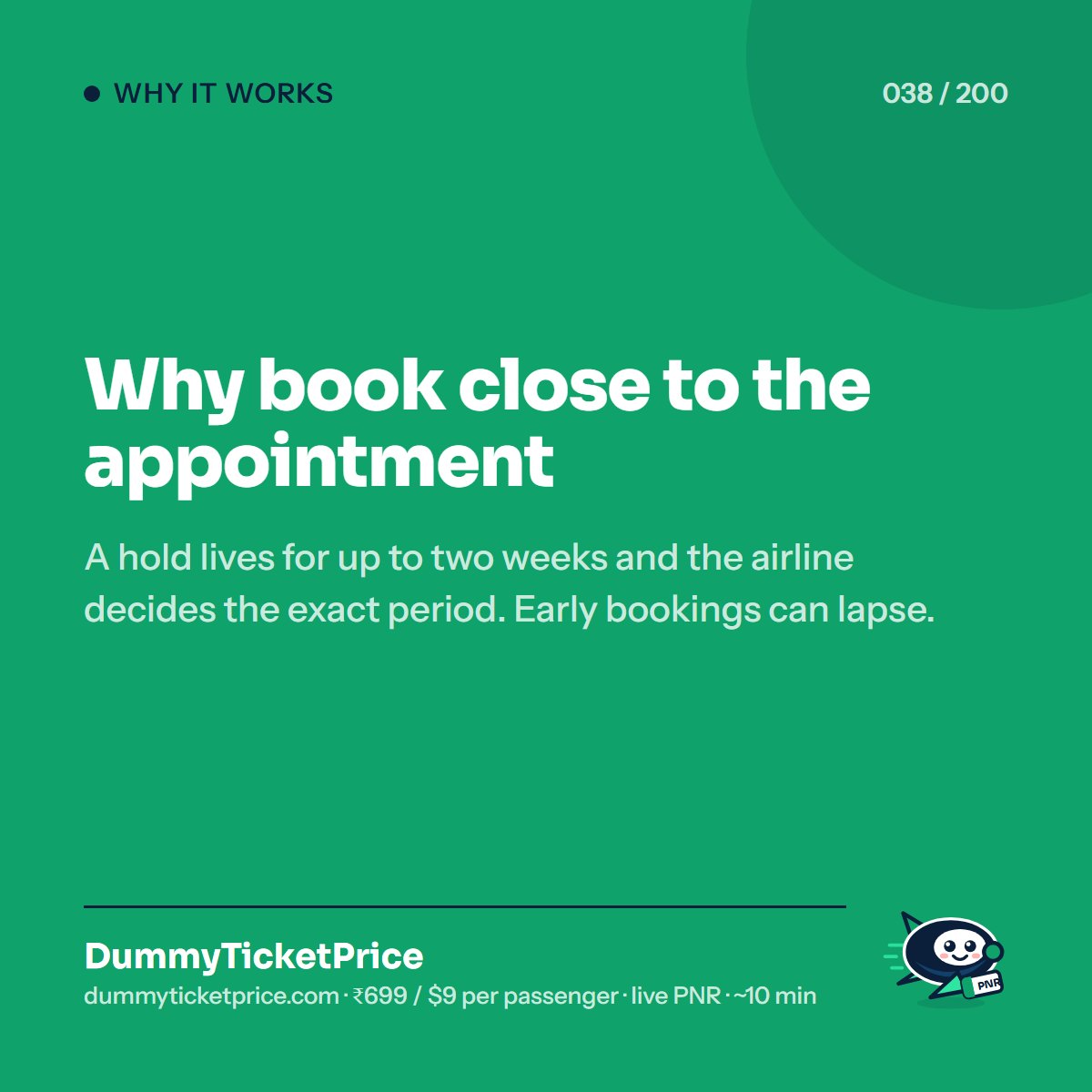
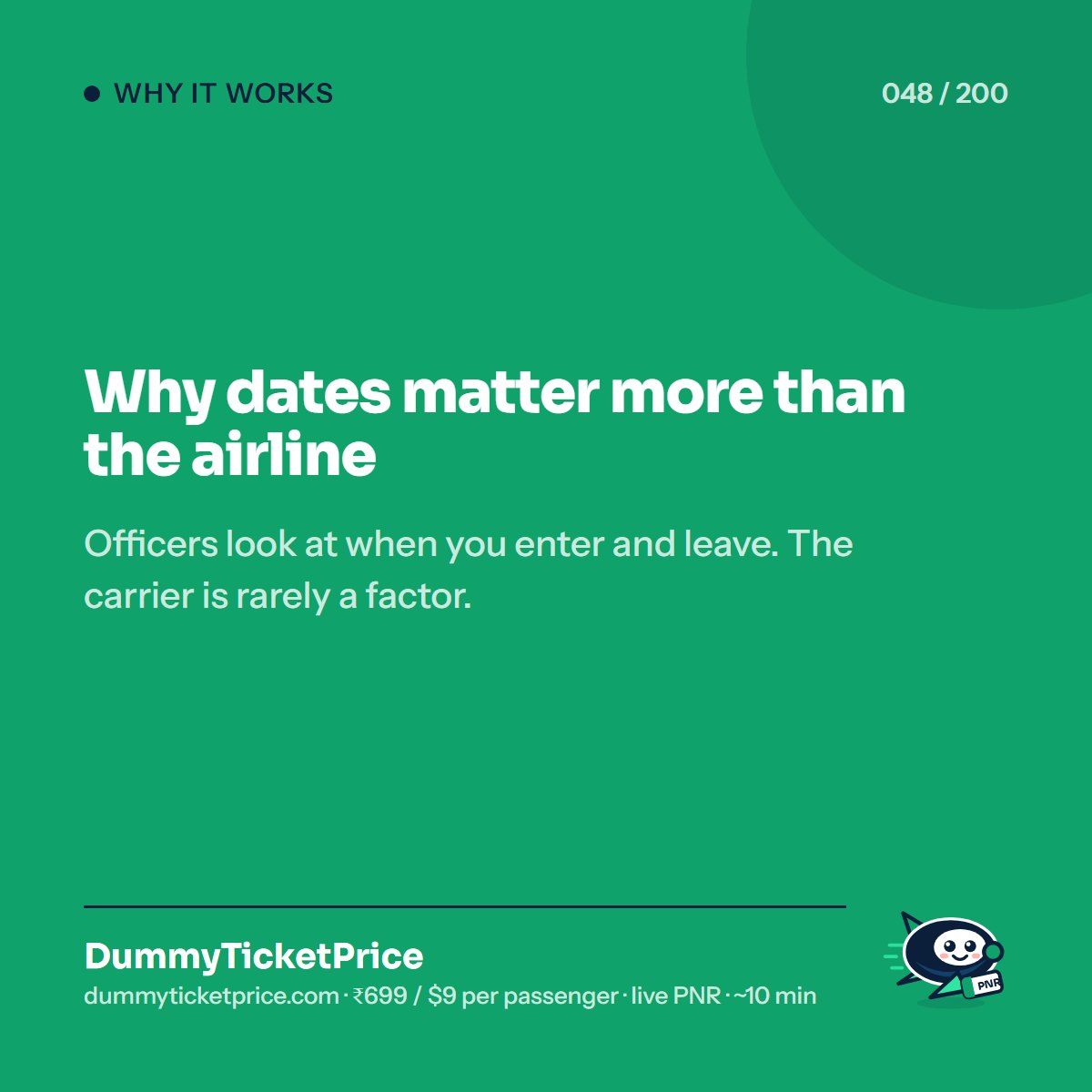
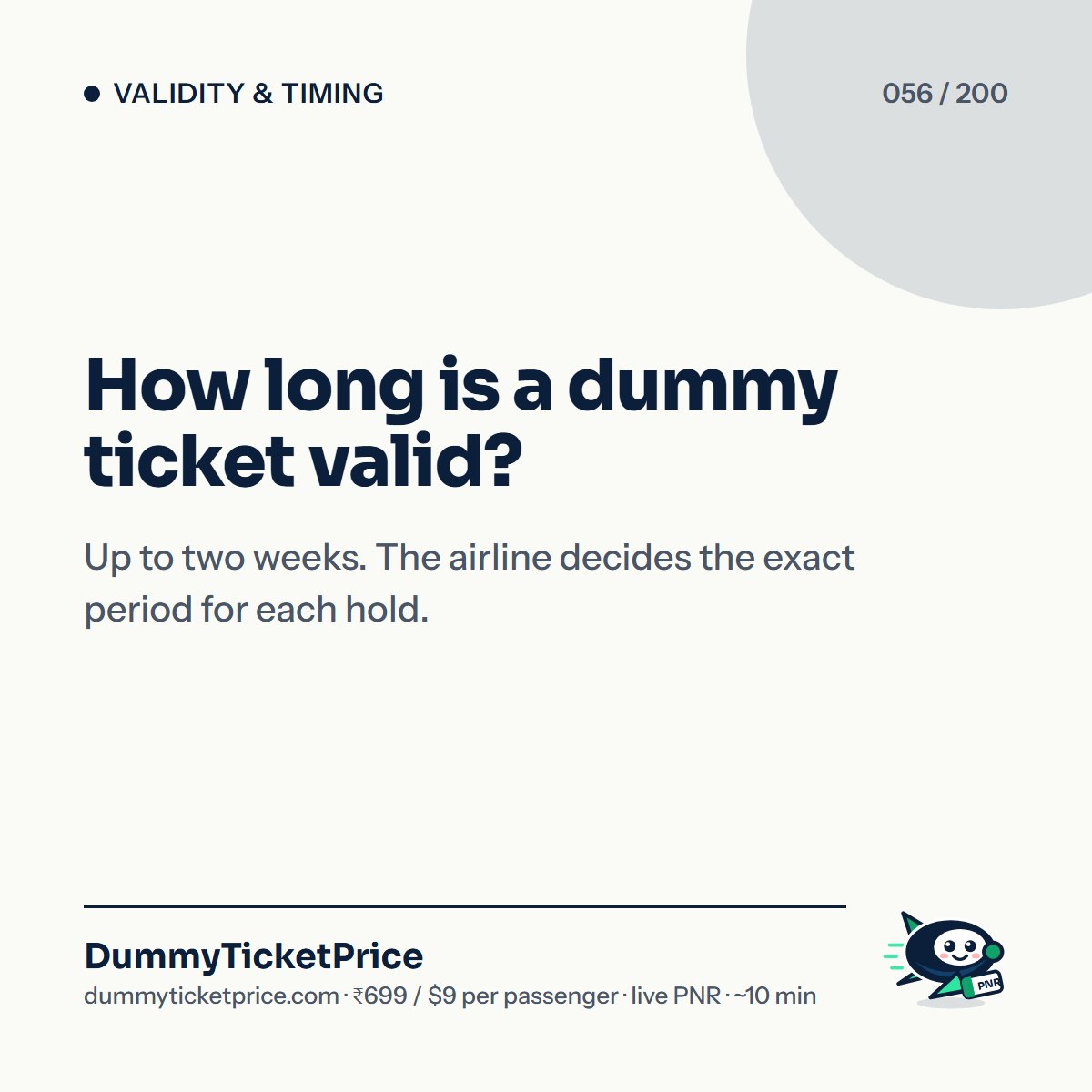
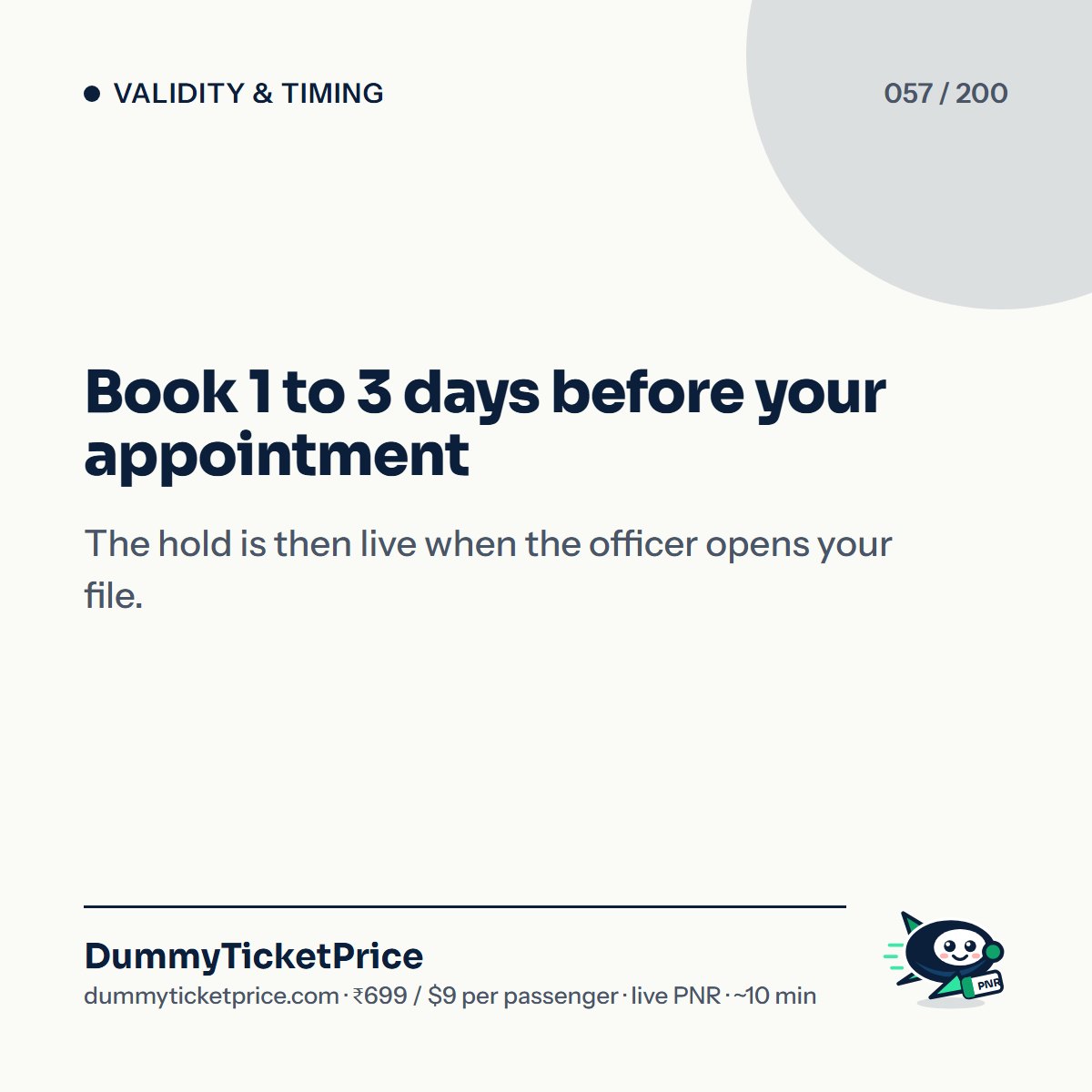
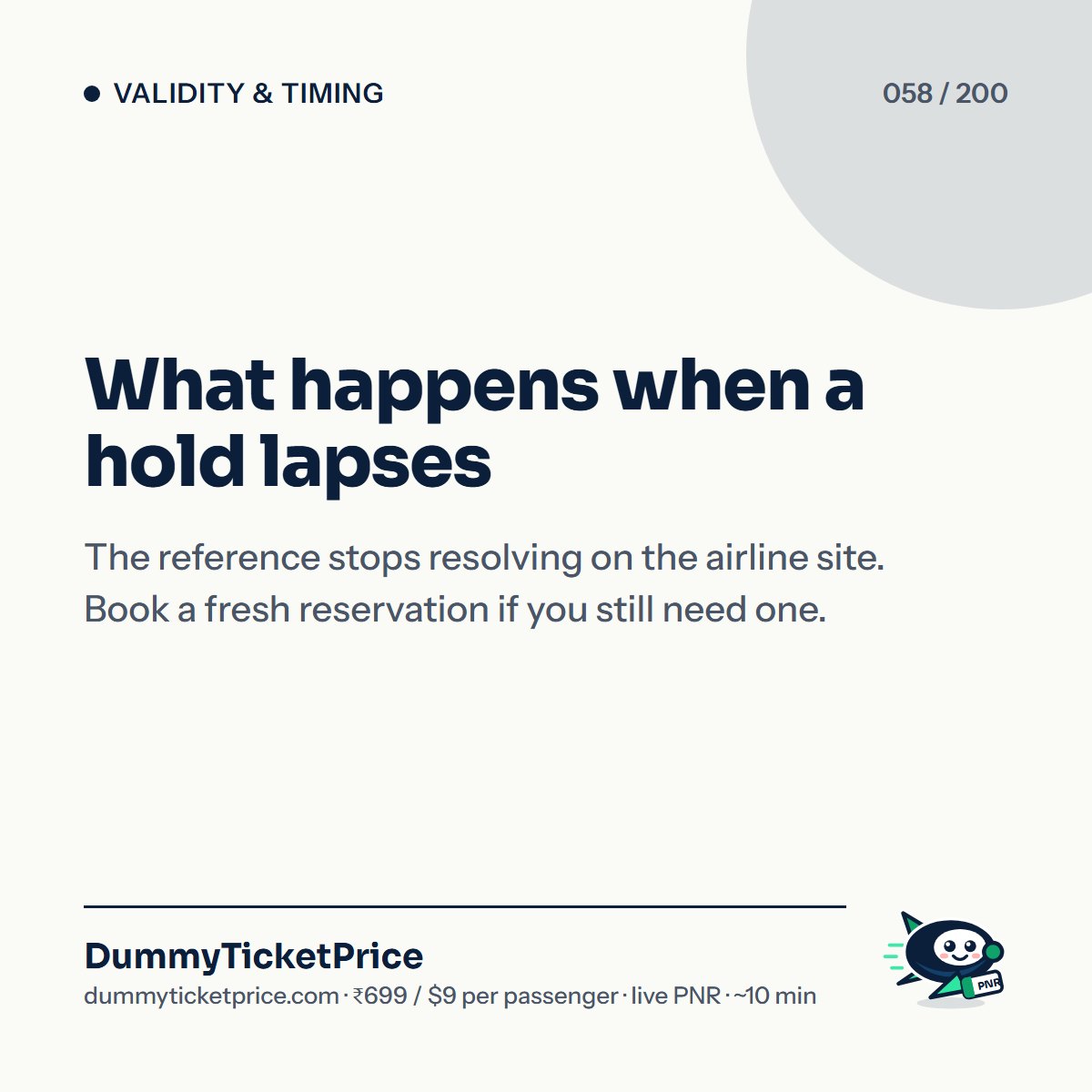
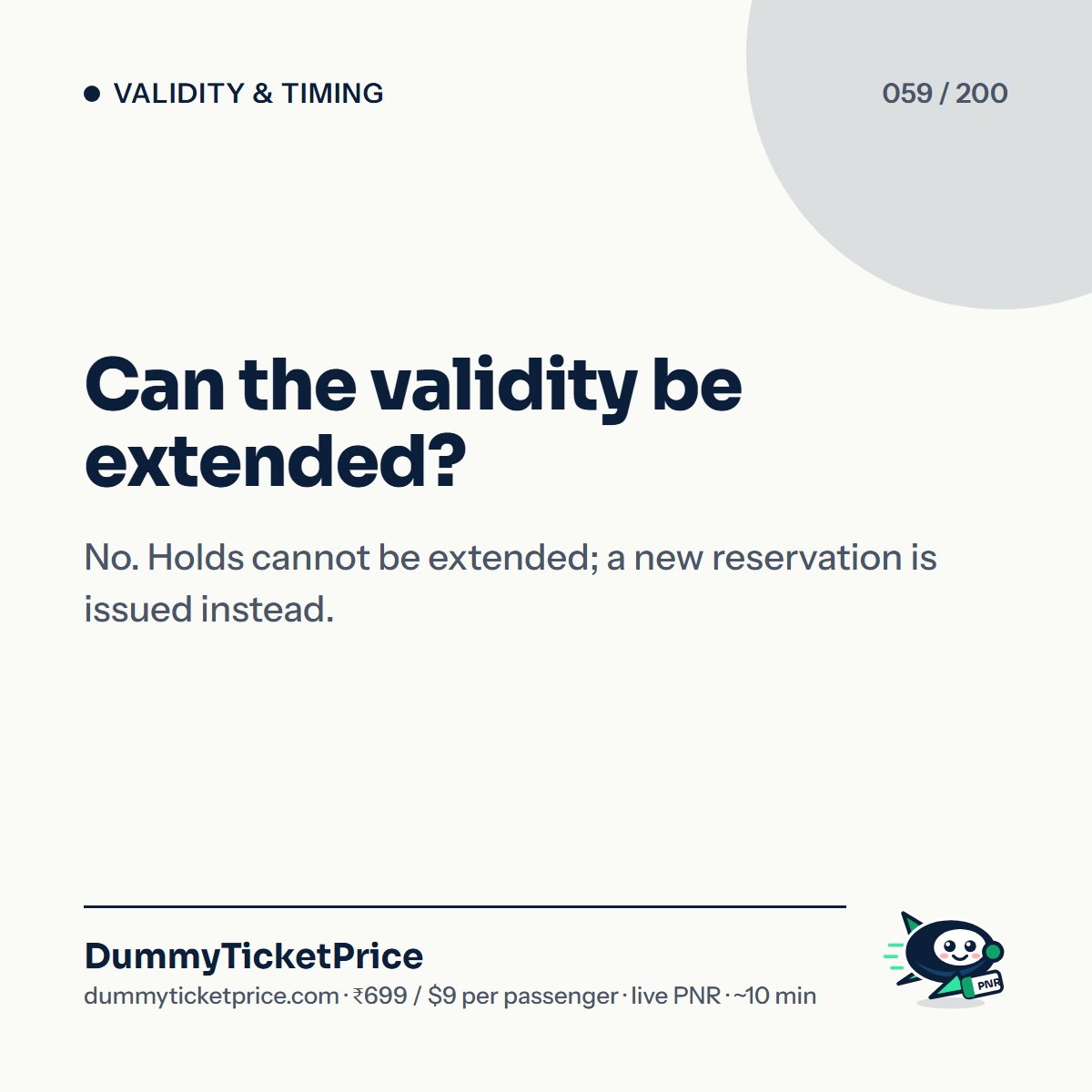
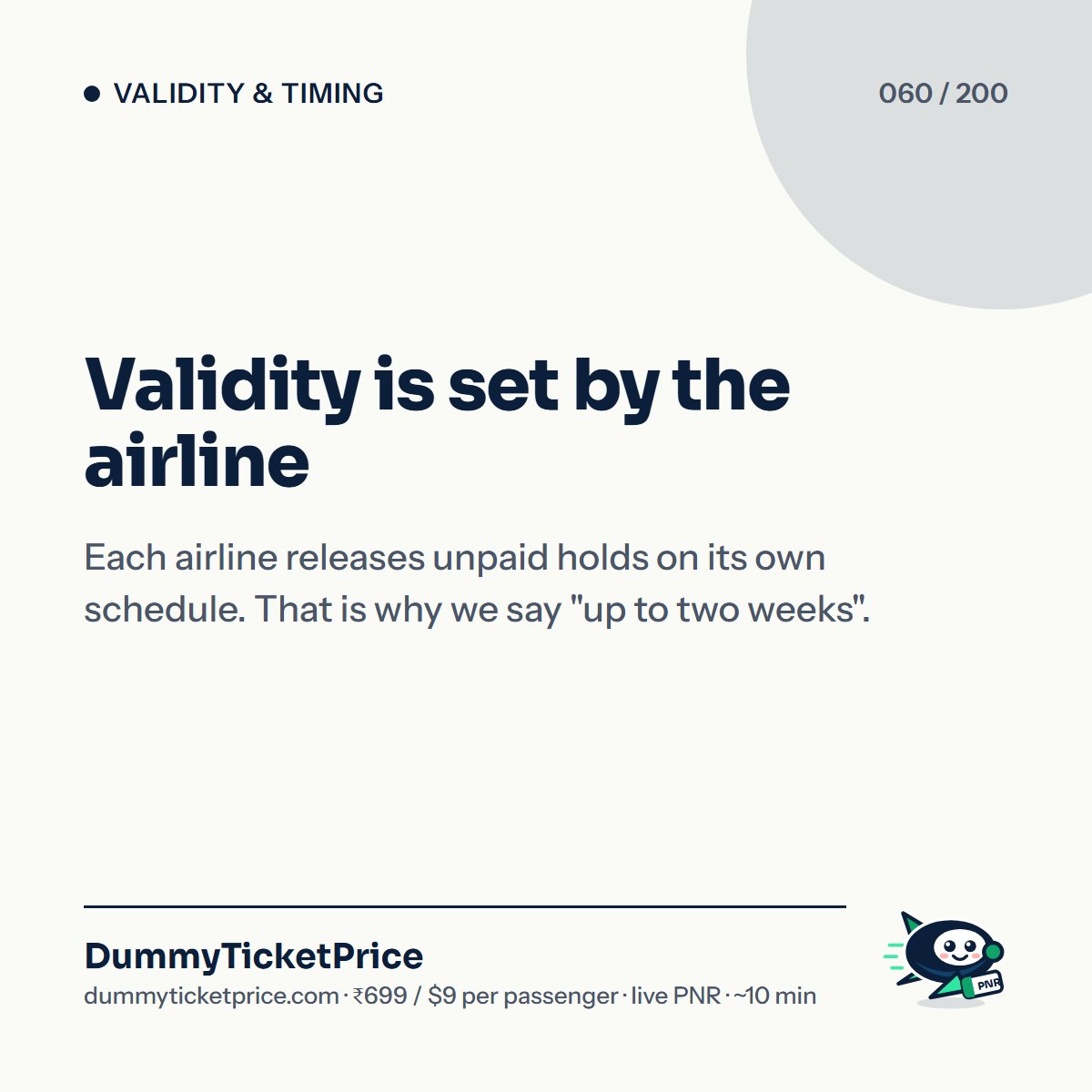
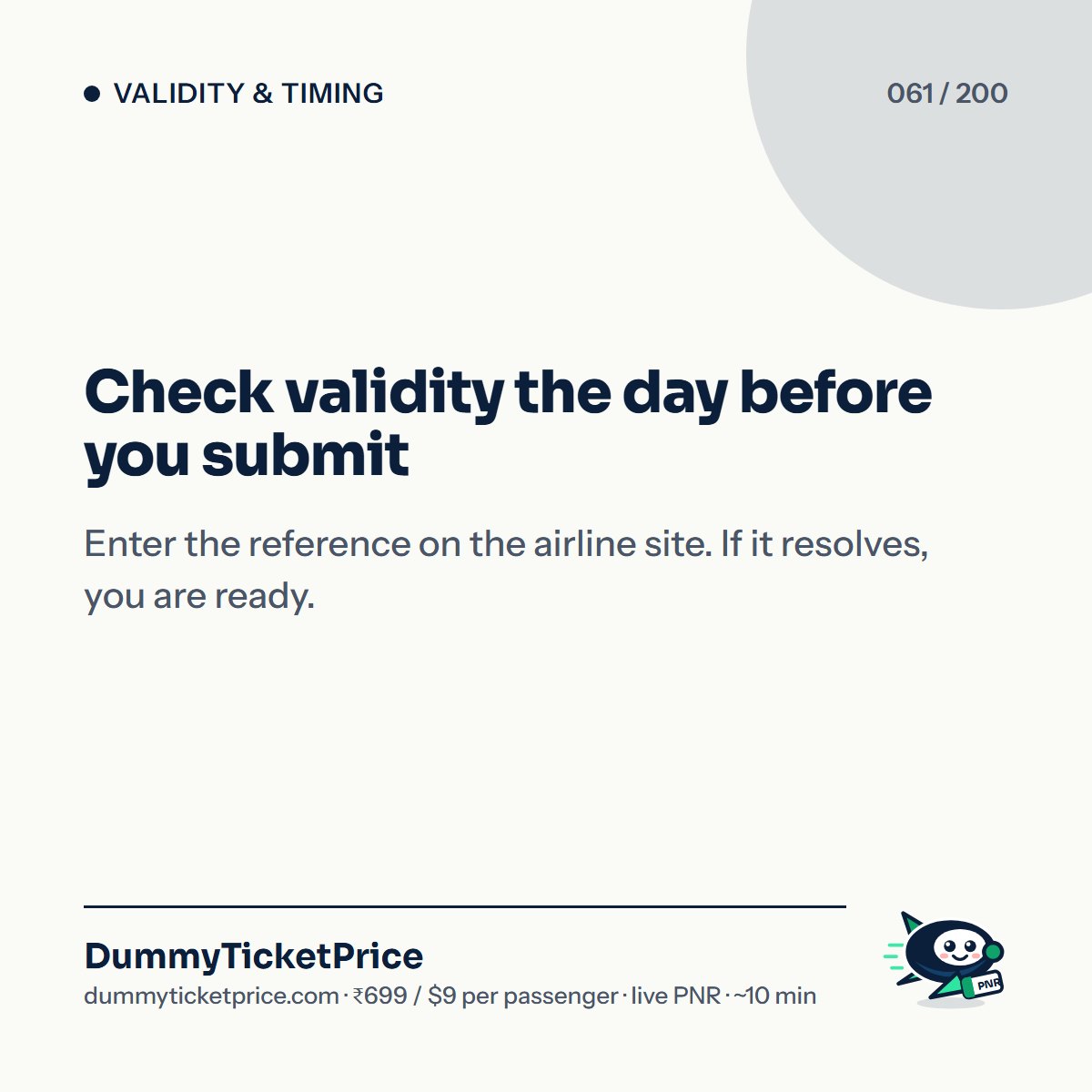
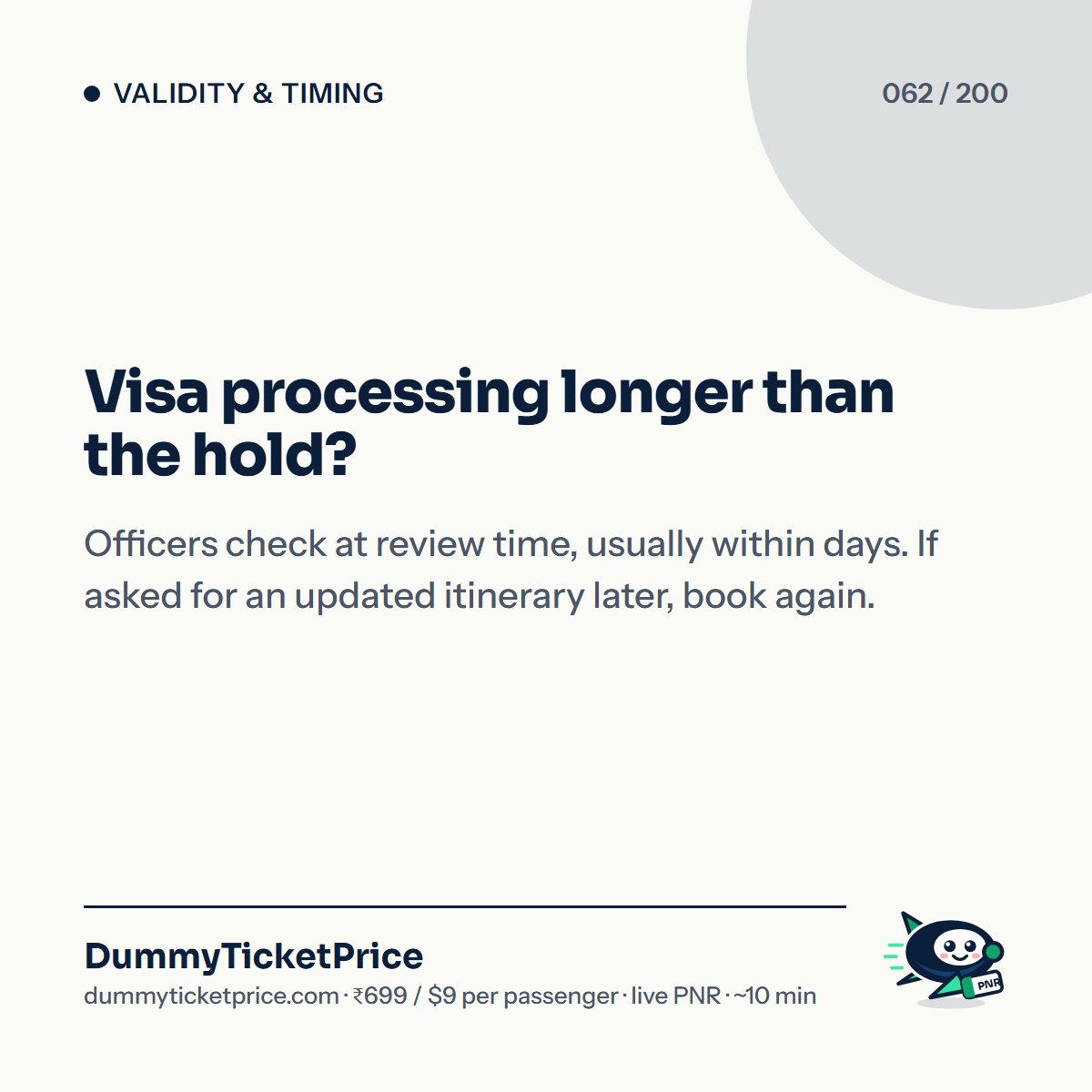
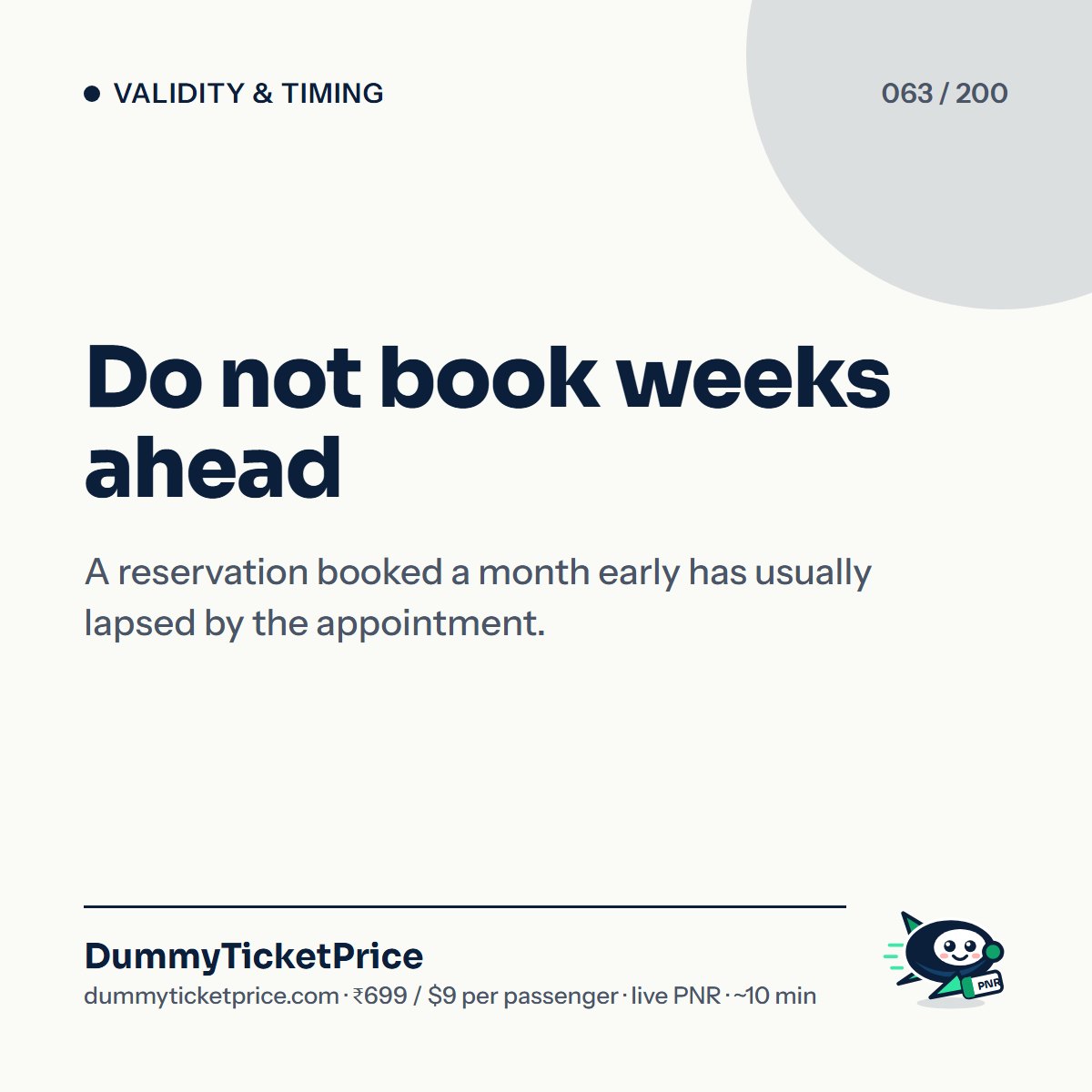
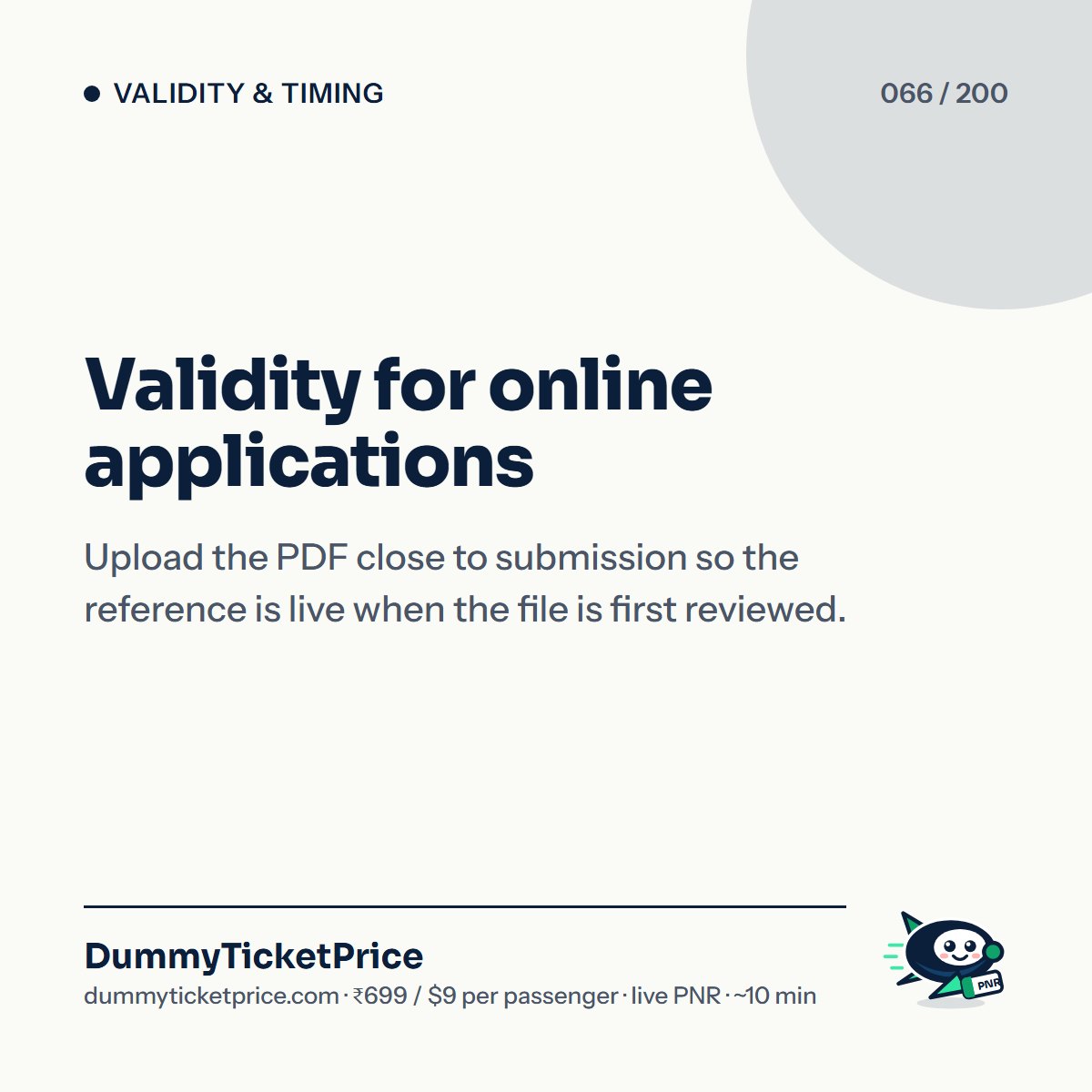
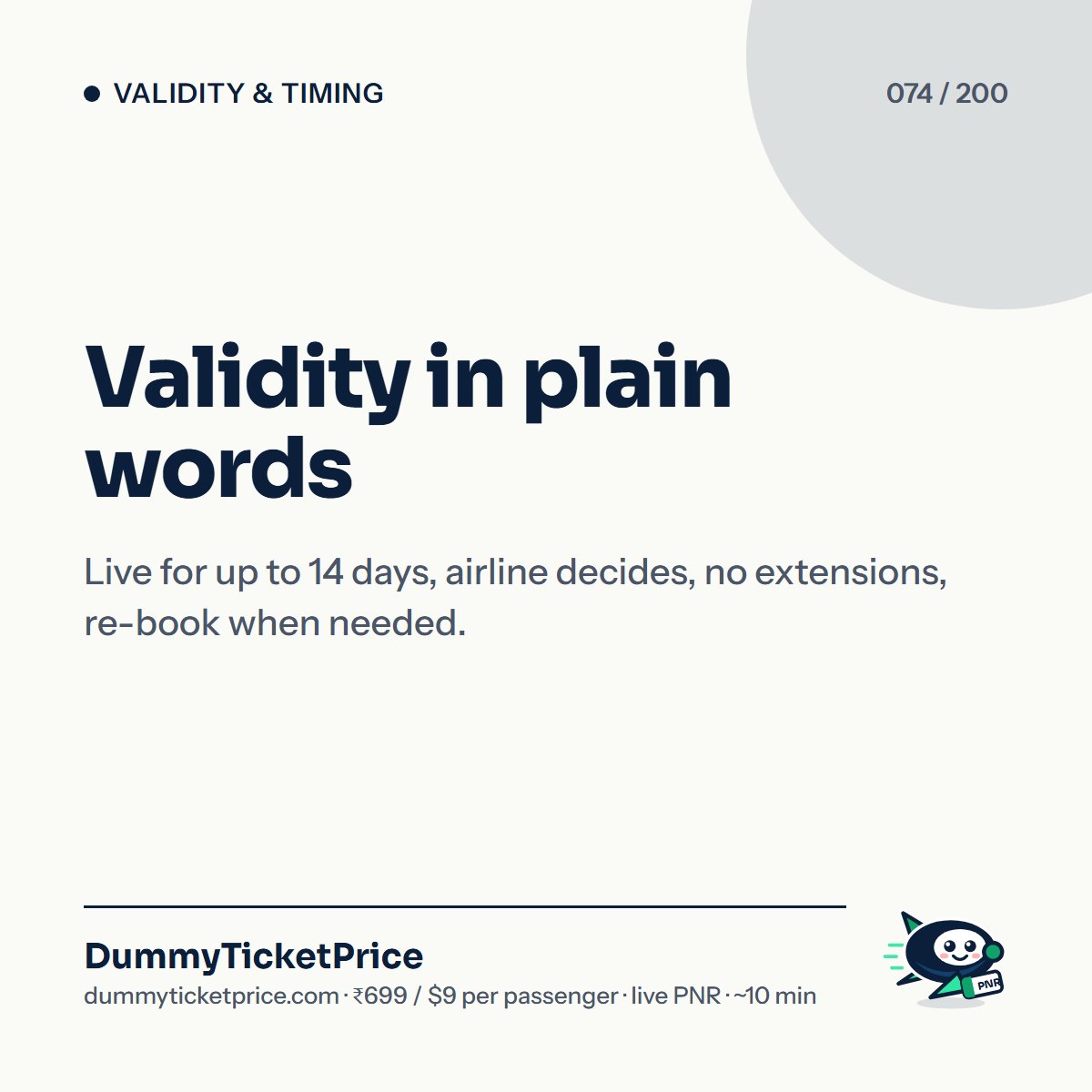
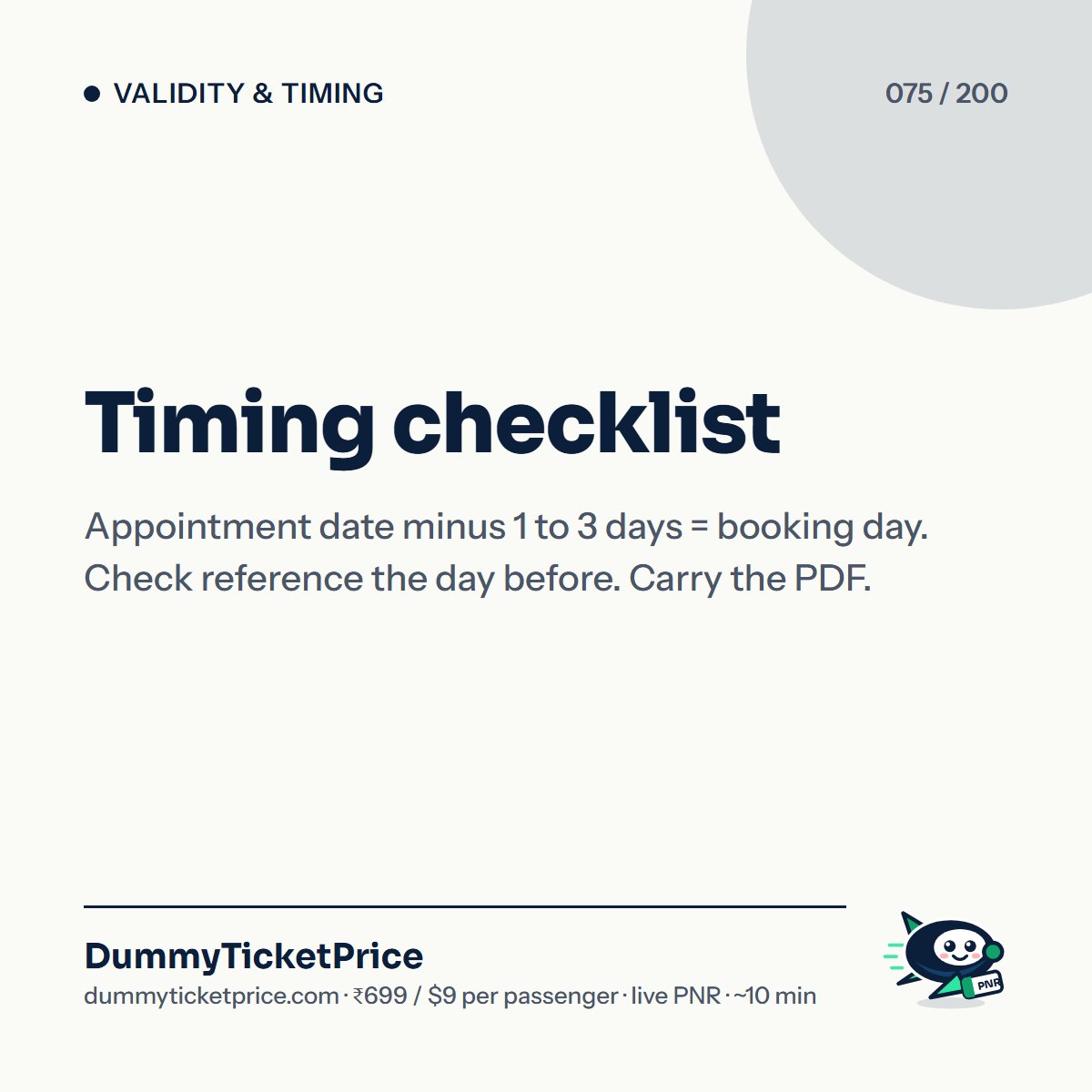
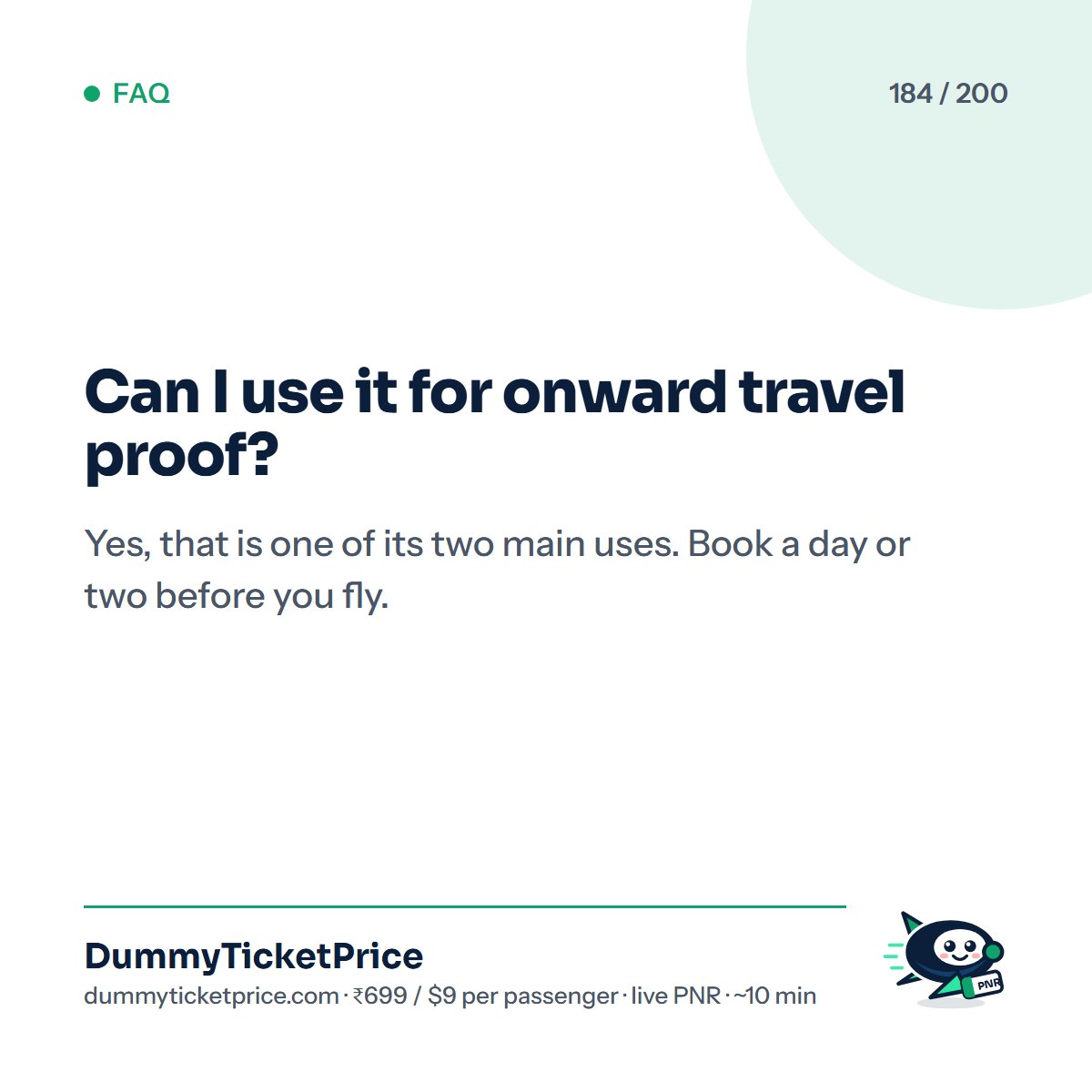
The question we are asked most. A reservation is a hold, and airlines release unpaid holds on their own schedule, so the honest answer is up to two weeks, and the airline decides the exact period. That is plenty for a visa appointment and not enough for a file you plan to submit next month. The practical rule is to book one to three days before the appointment or online submission, check the booking reference on the airline's website the day before, and book a fresh reservation if the consulate asks for an updated itinerary later.
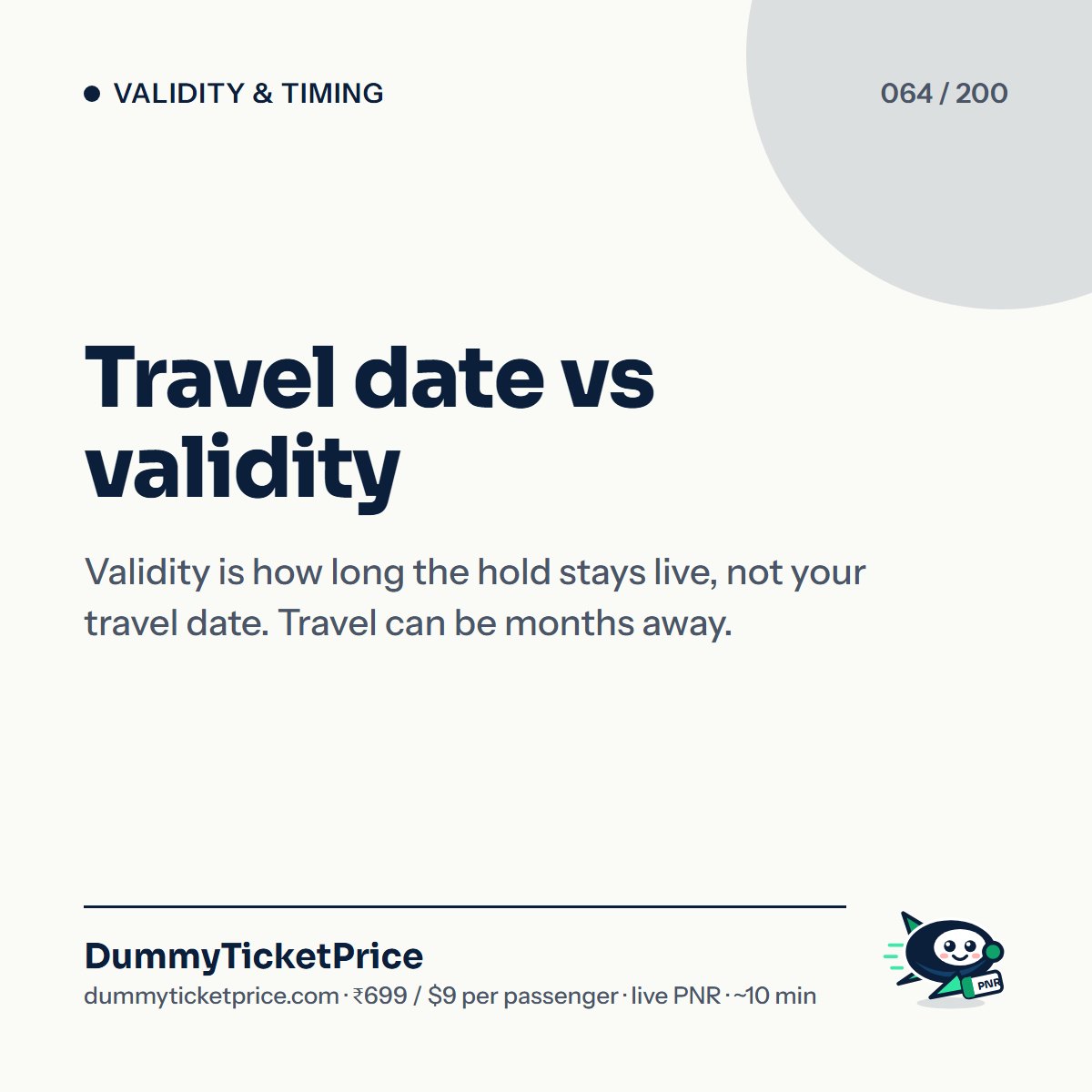
Validity is often confused with the travel date. The travel date on the itinerary can be months away; validity only describes how long the hold itself stays live. There is no email when a hold lapses, which is why every card in this set repeats the same advice: check it yourself before you submit. Full detail in the validity guide.


What a dummy ticket costs
Twenty cards on price: the flat rate per passenger, the price in each currency, multi-city and hotel pricing, and how payment works.
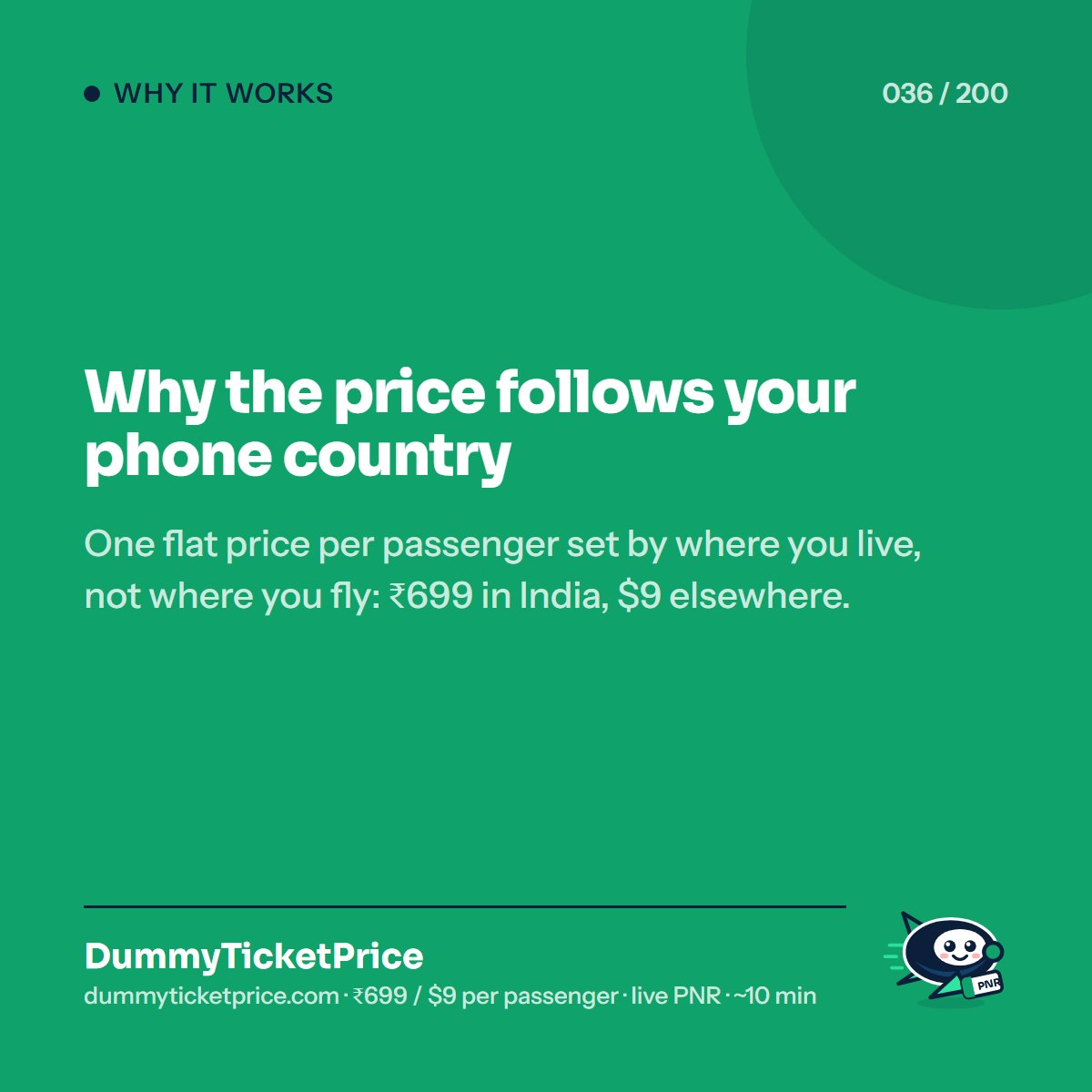
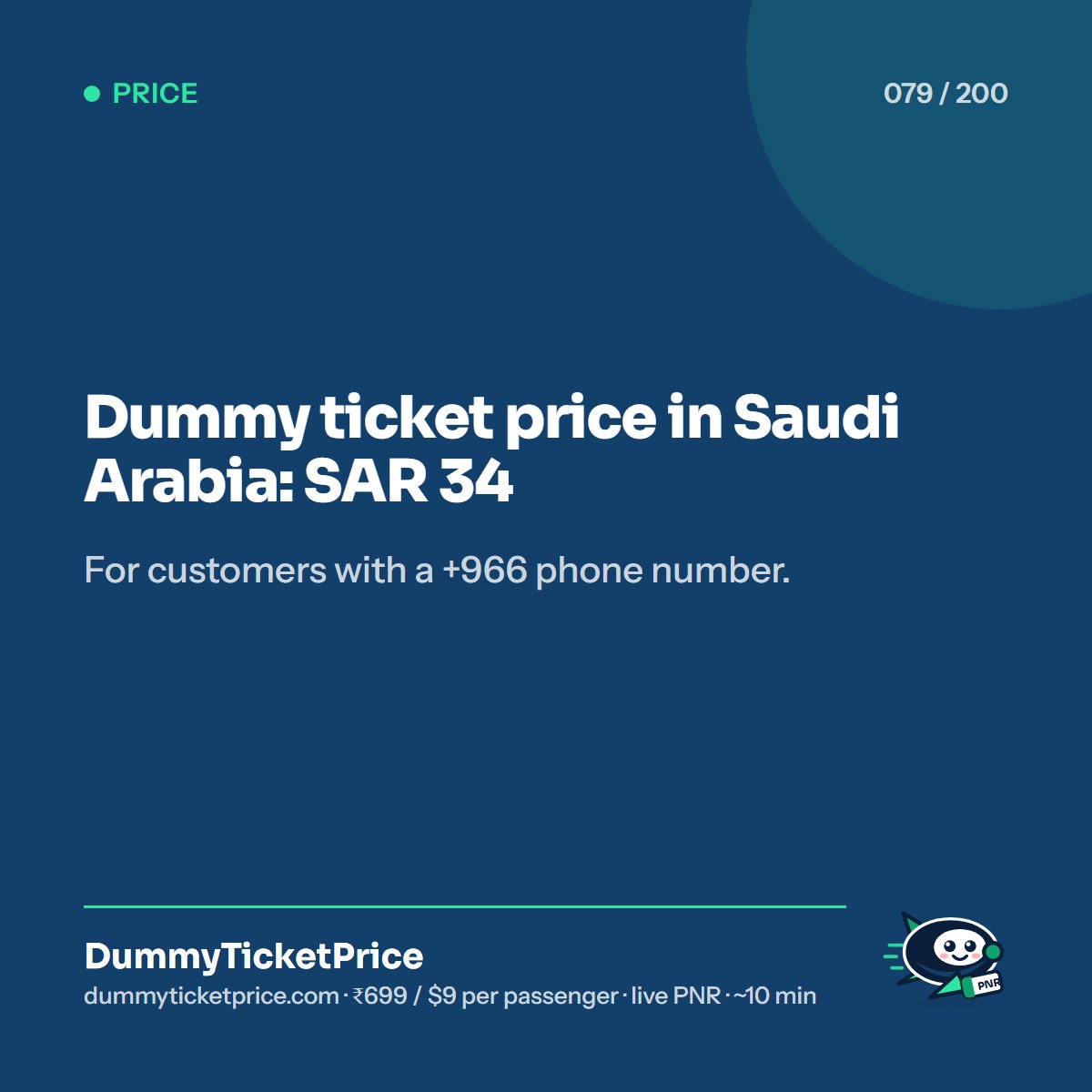
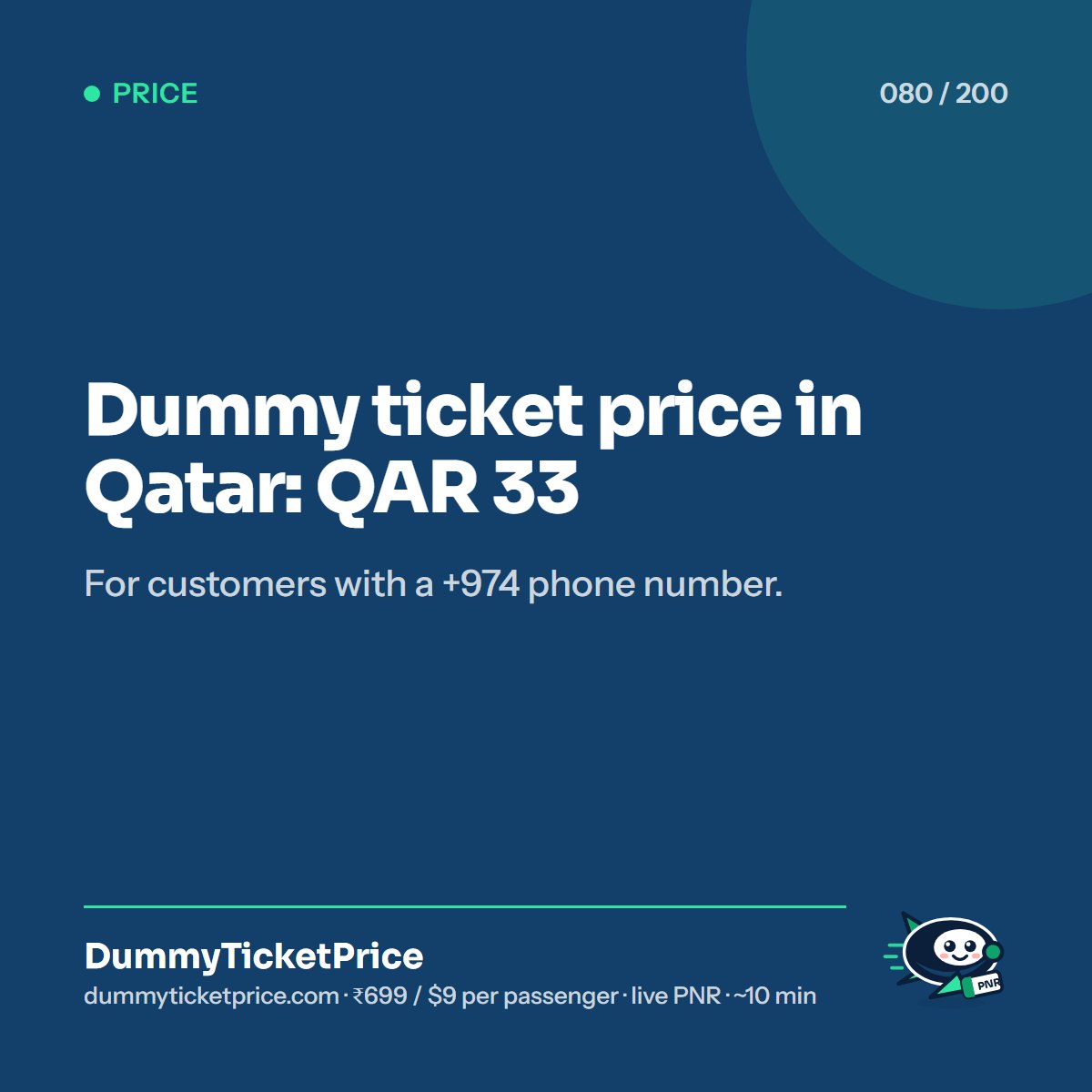
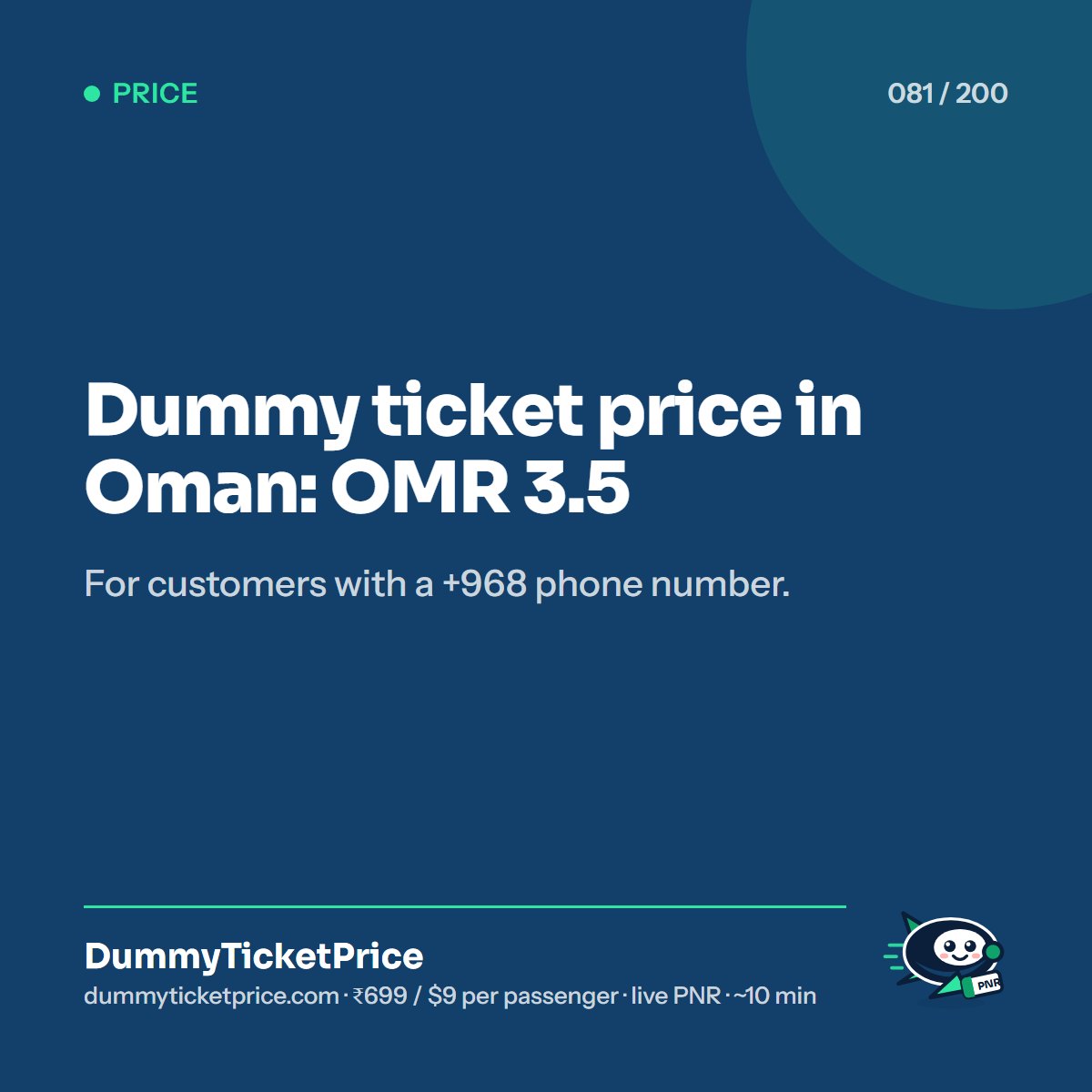
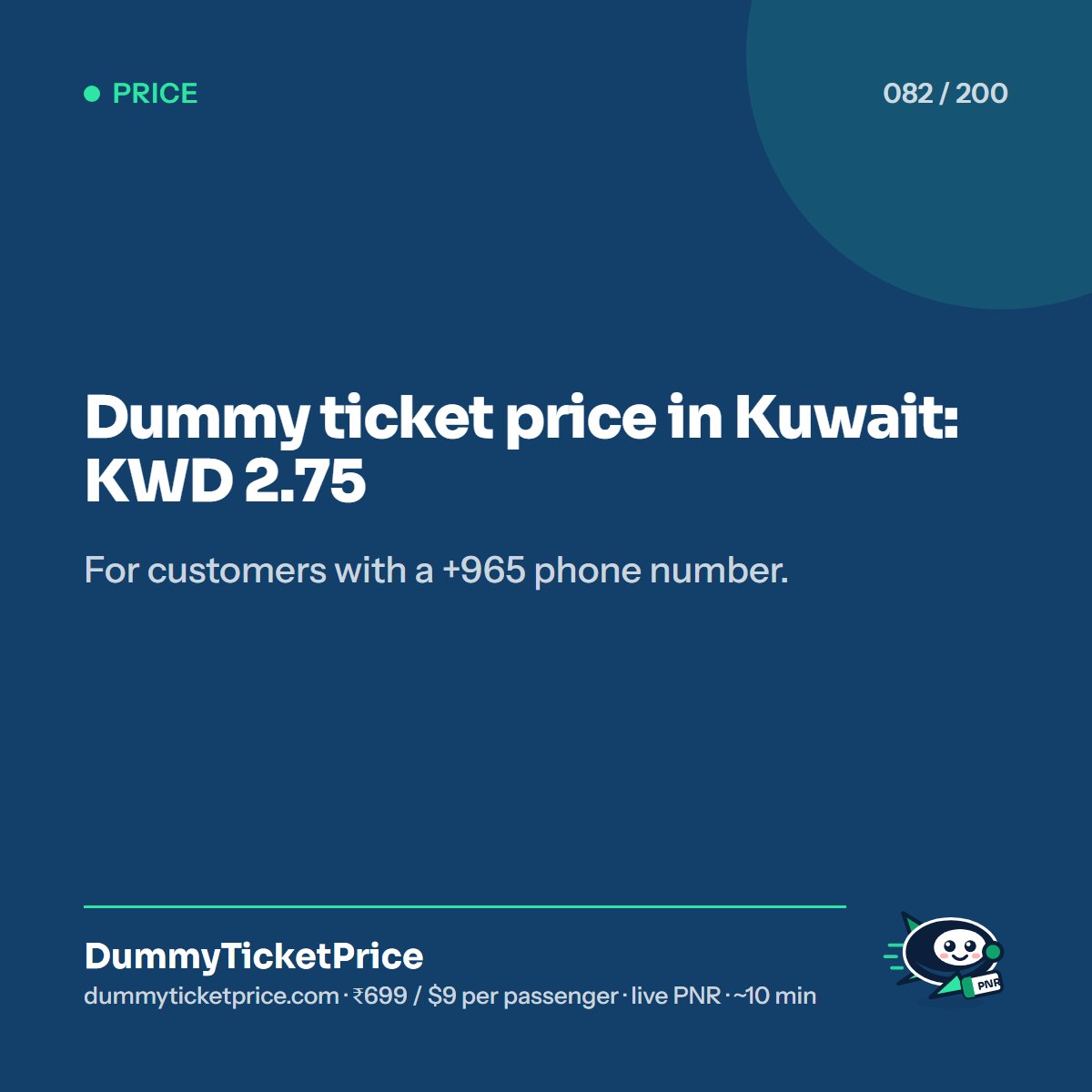
One flat price per passenger, one way or round trip, set by the country of your phone number rather than by the destination: ₹699 in India, AED 33 in the UAE, SAR 34 in Saudi Arabia, QAR 33 in Qatar, OMR 3.5 in Oman, KWD 2.75 in Kuwait, £7 in the United Kingdom and $9 everywhere else. Multi-city itineraries are priced per pair of flights, and a hotel reservation for the same file costs the same per stay. The booking page shows the total before you pay, and payment goes through Razorpay by UPI, card, netbanking or wallet; we never see card details. The full table is on the price page.










Dummy ticket rules by visa and country
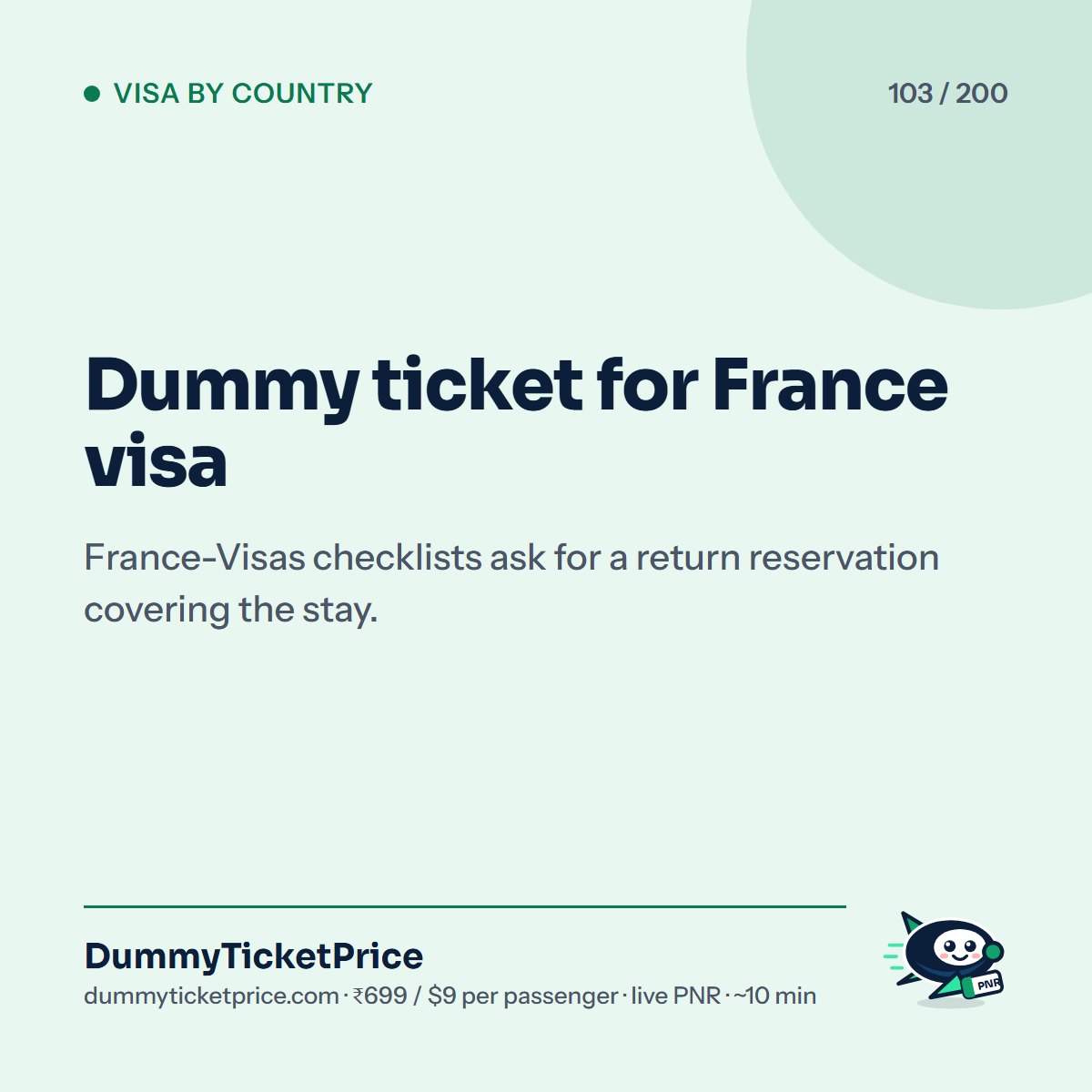
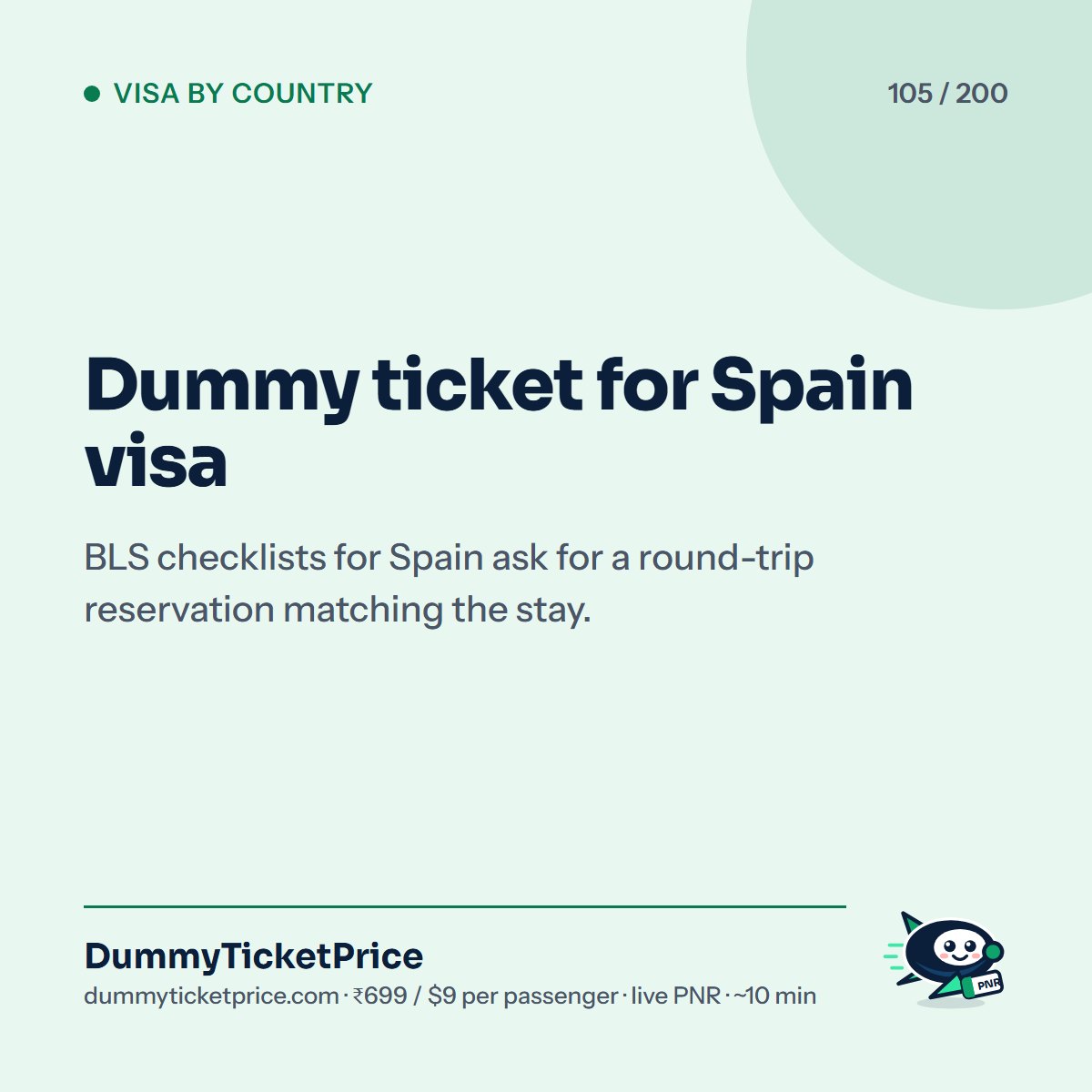
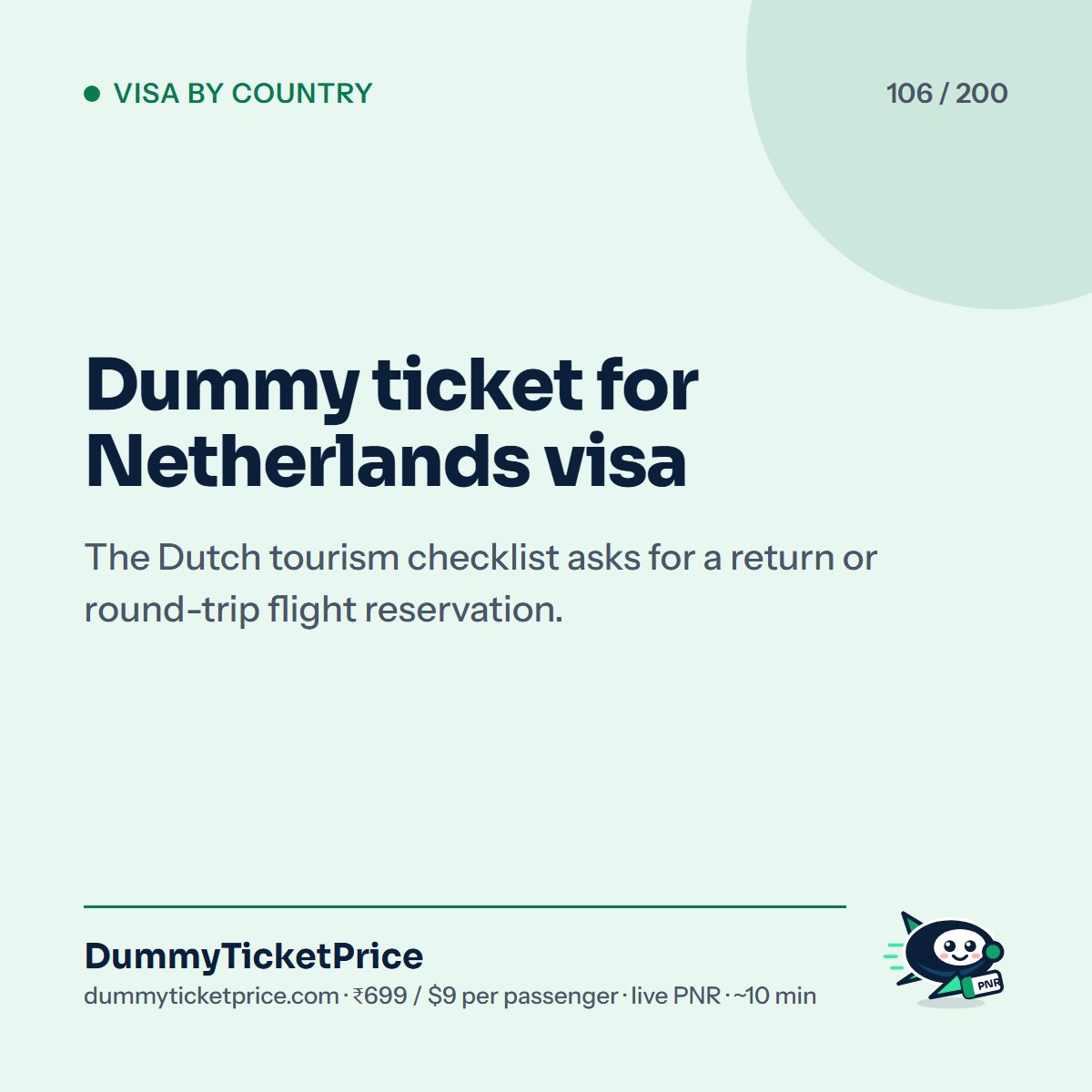
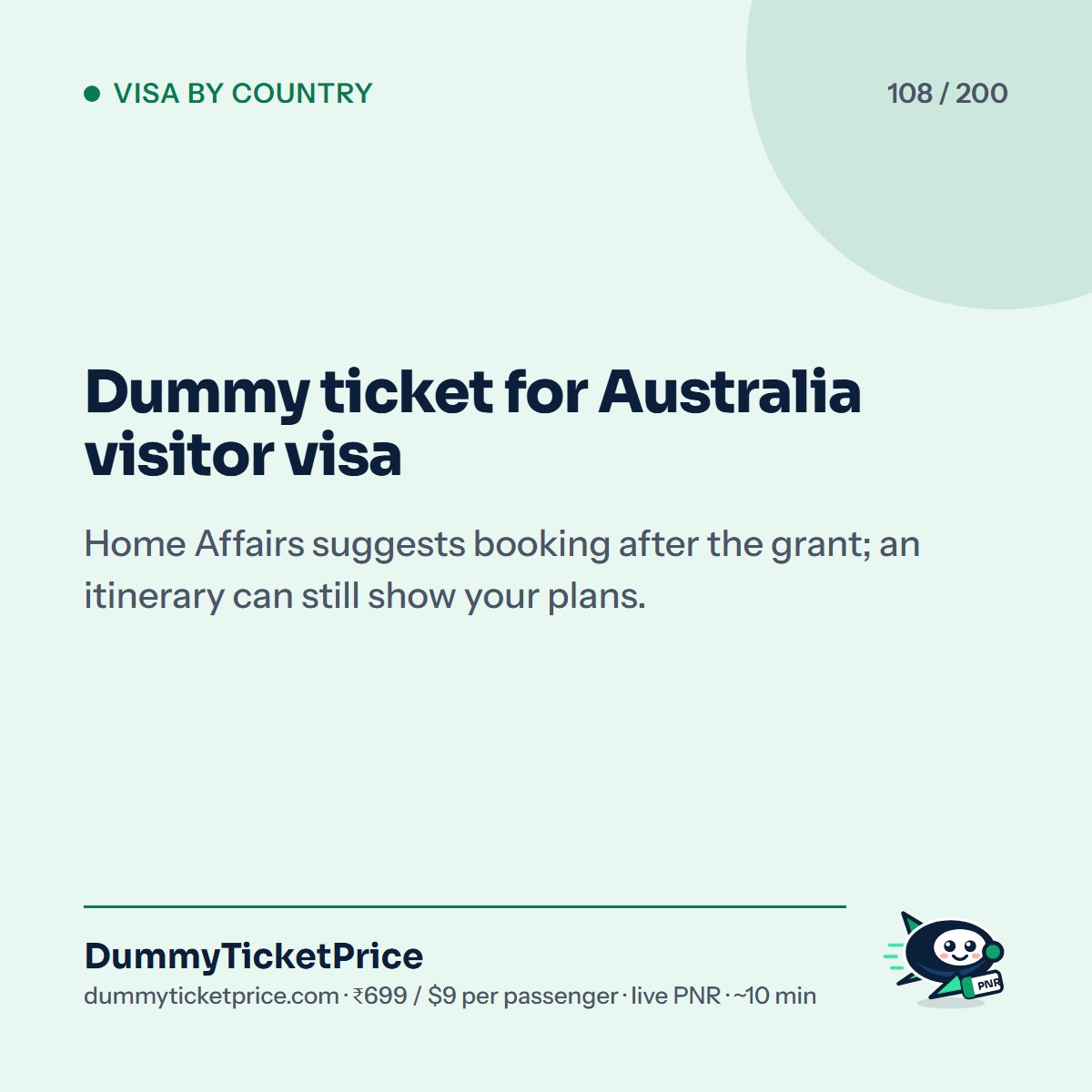
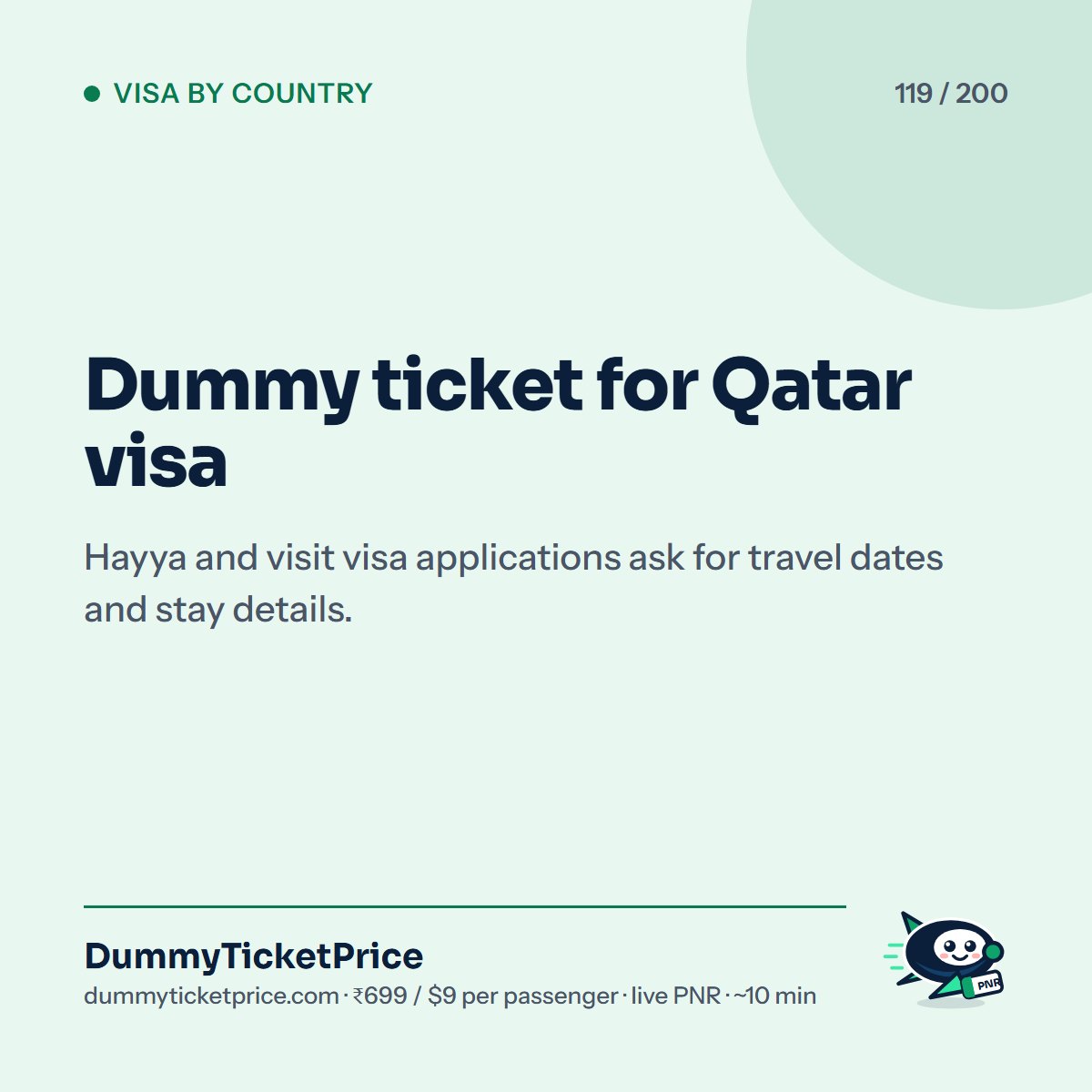
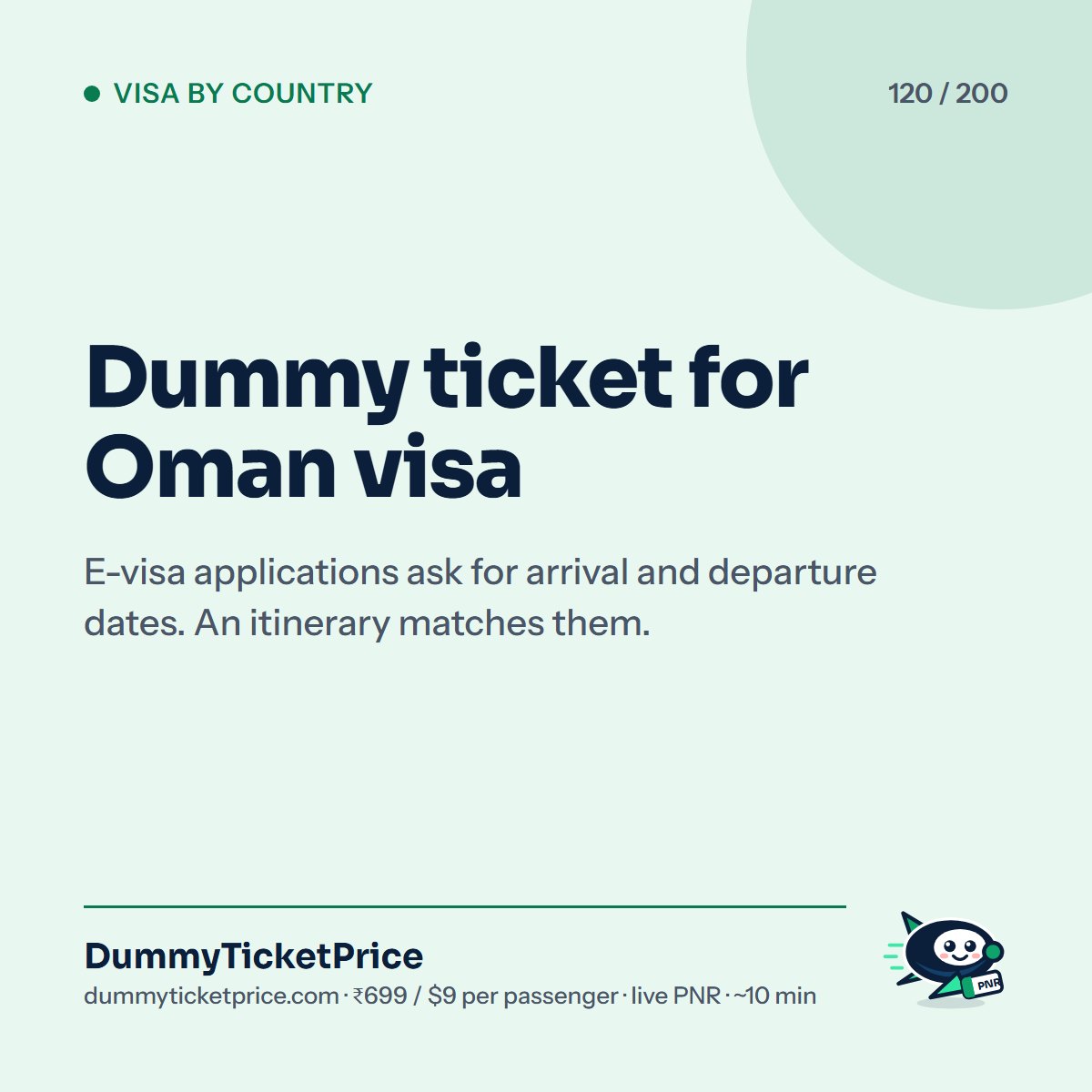
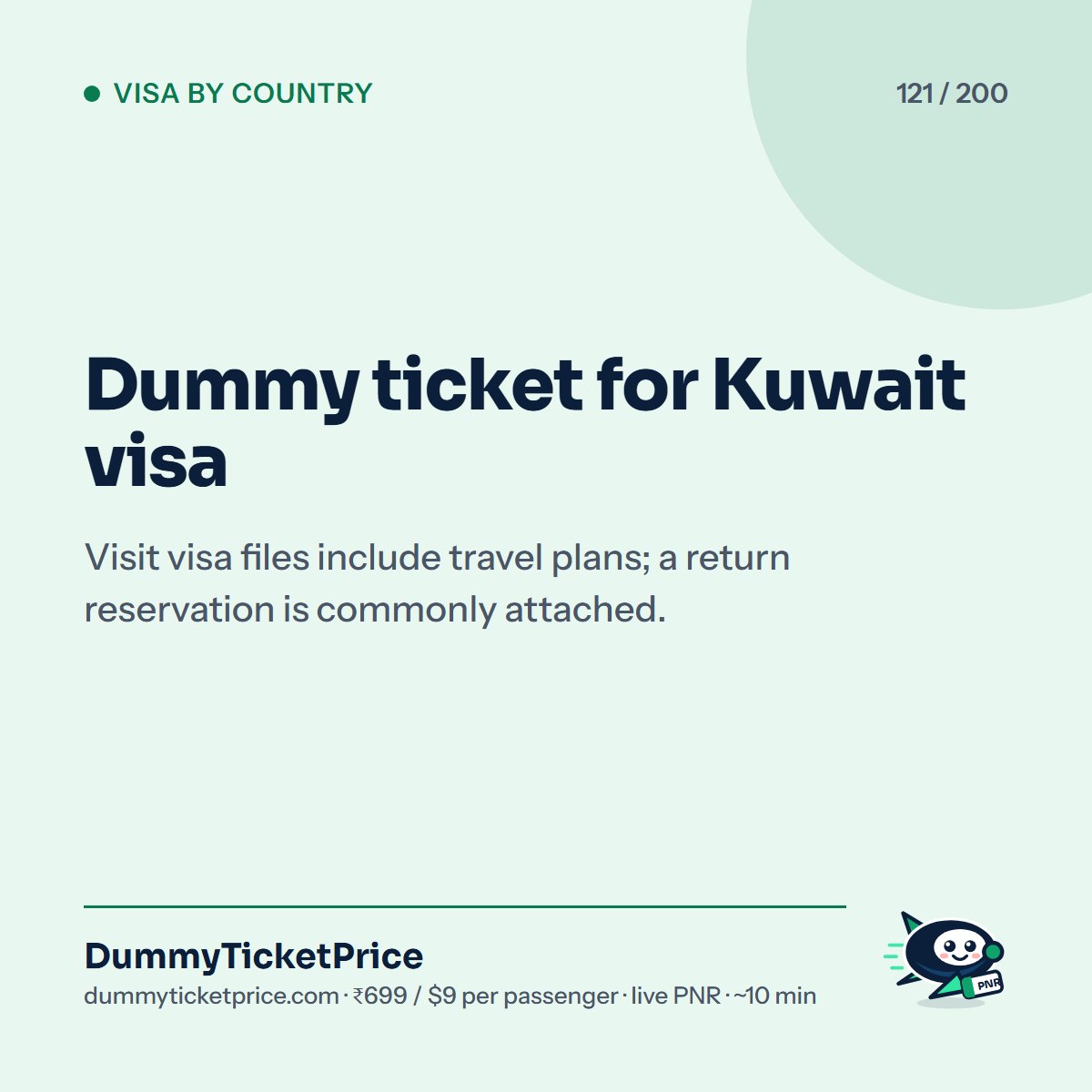
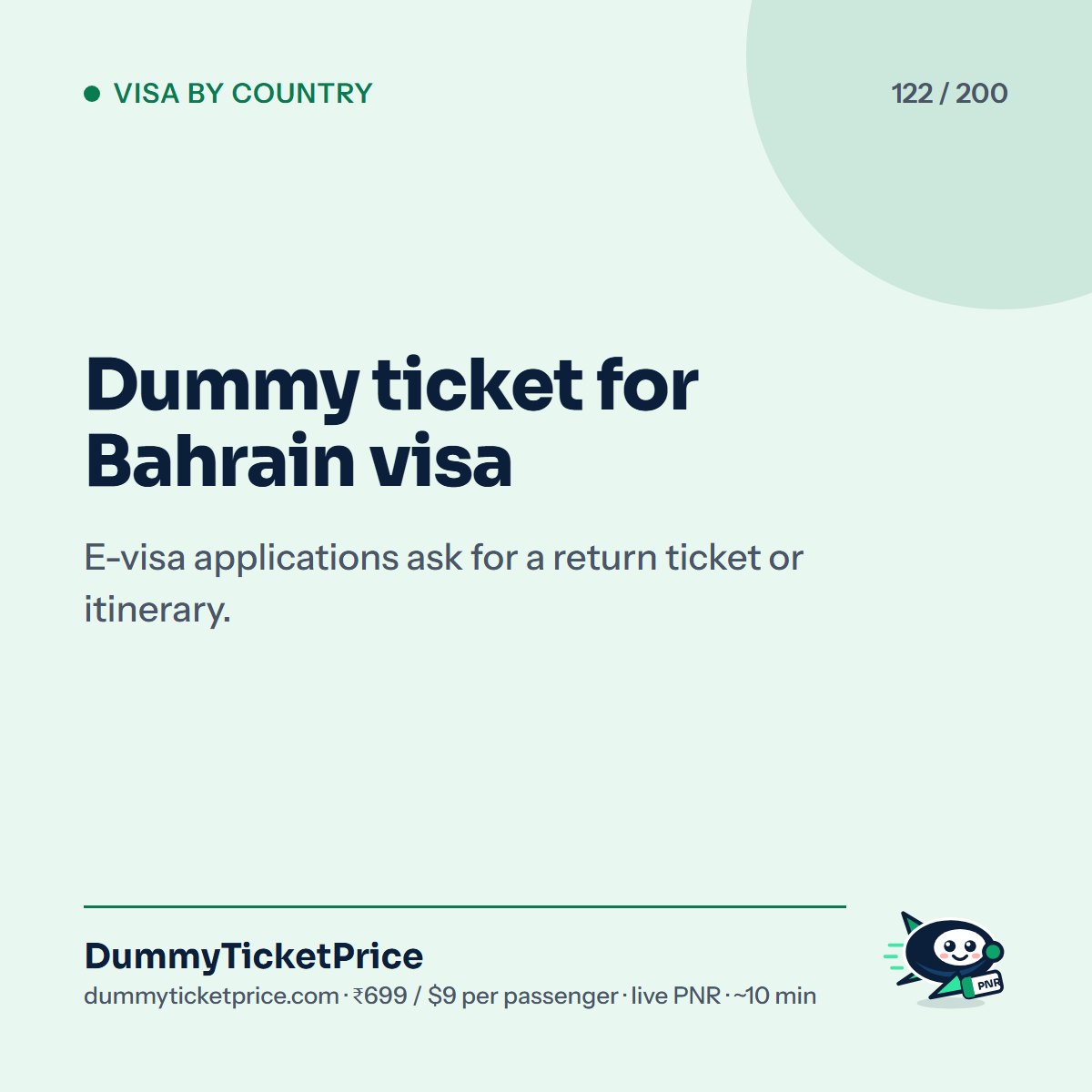
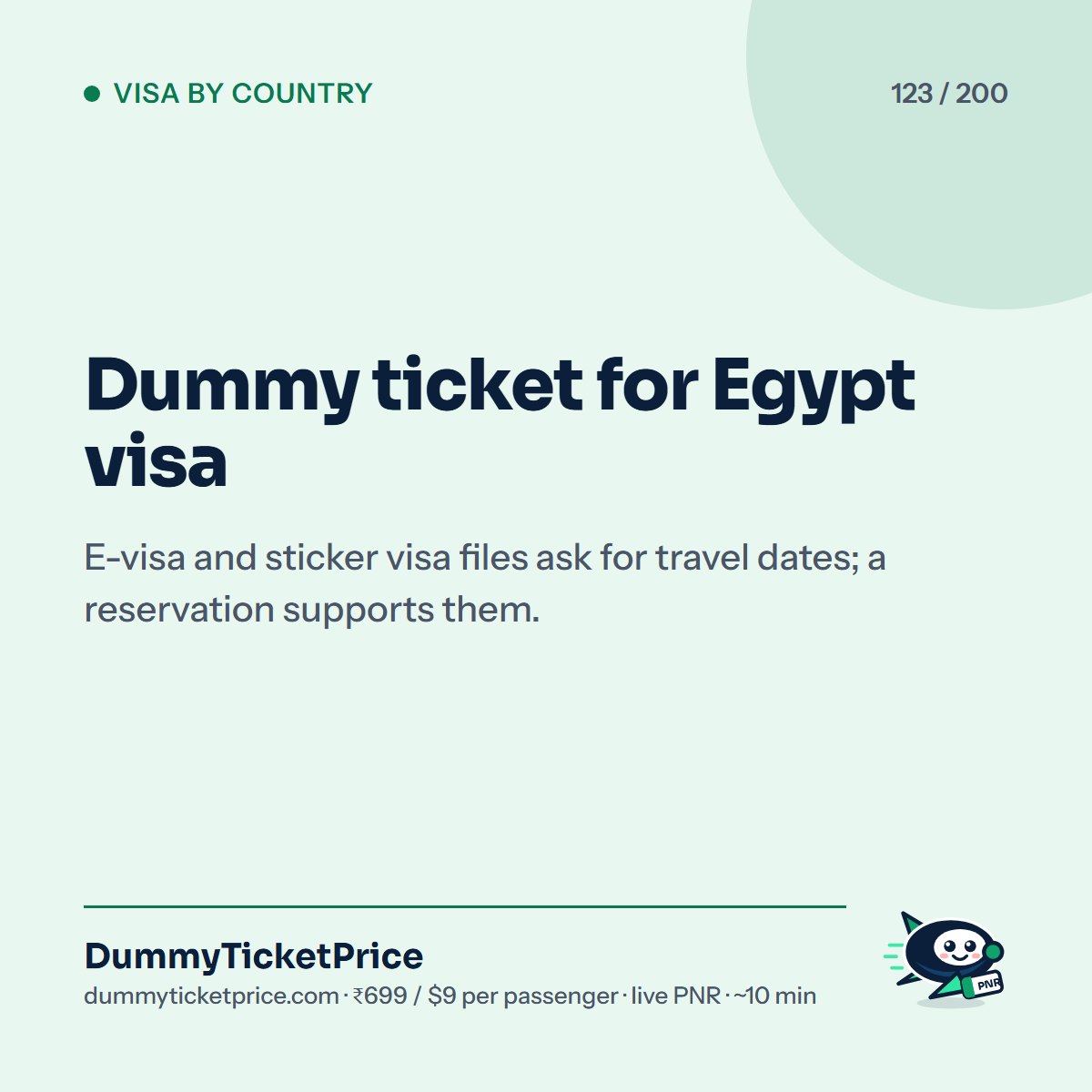
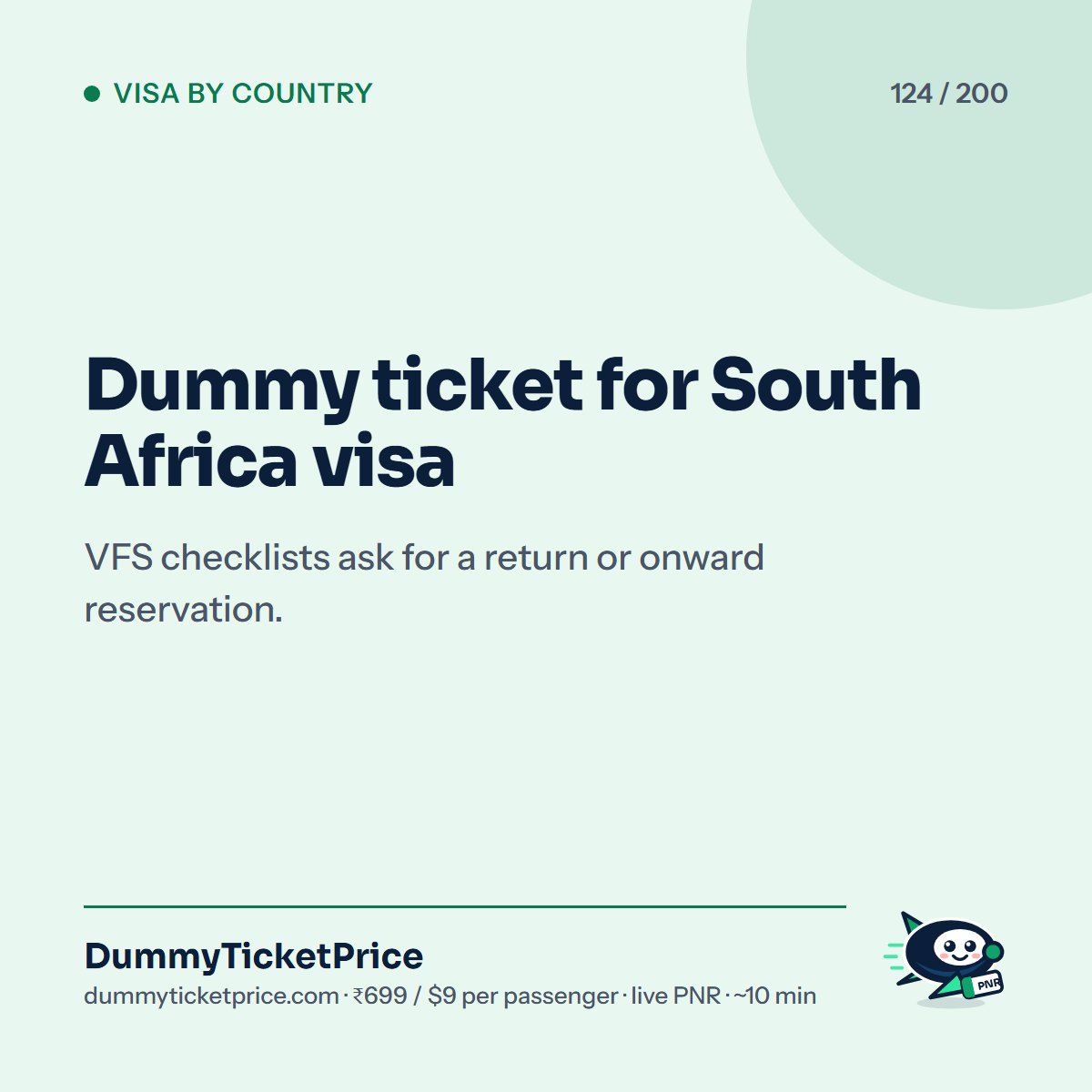
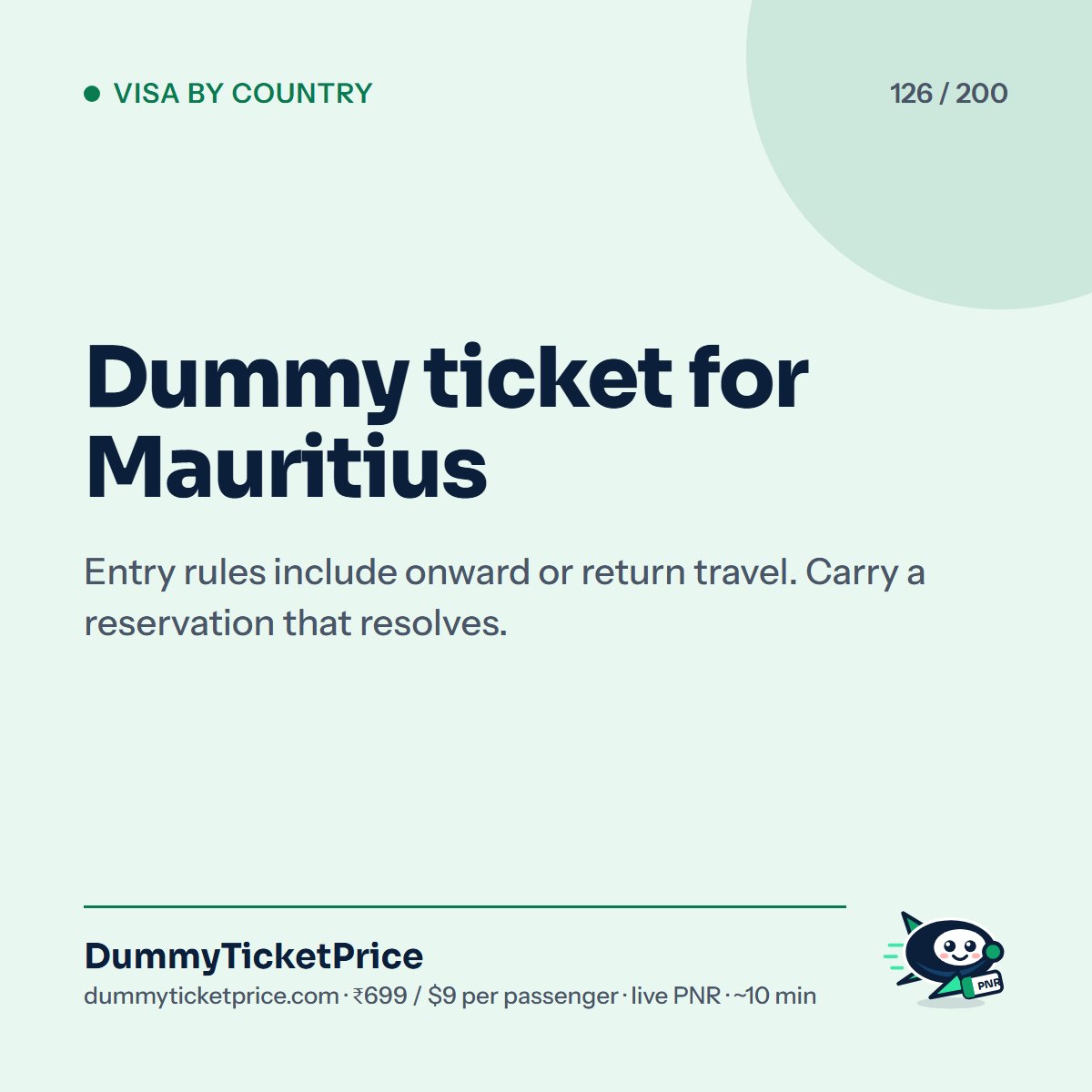
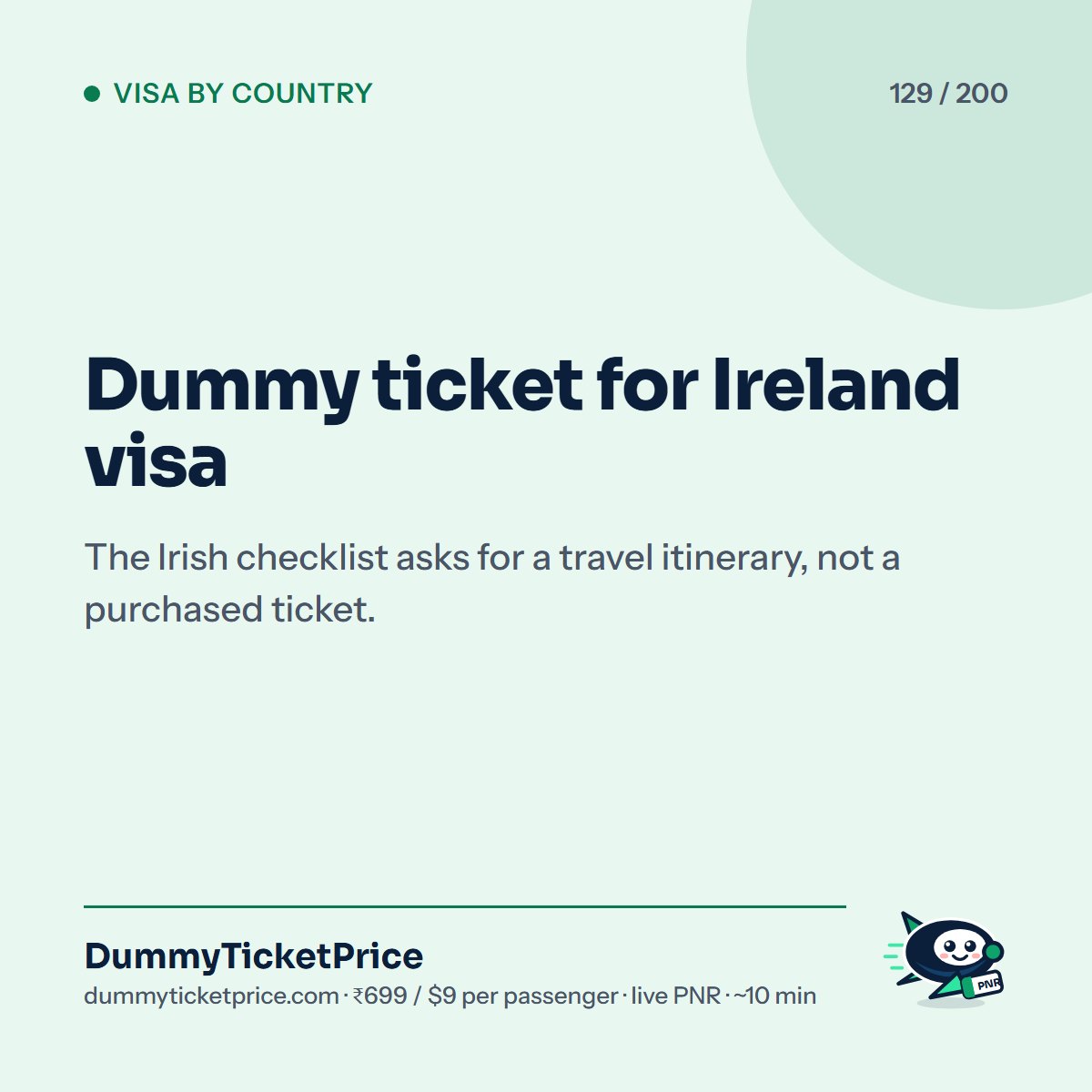
Forty cards on what individual checklists ask for, from the Schengen Visa Code to visa-on-arrival countries that check onward travel at the border.
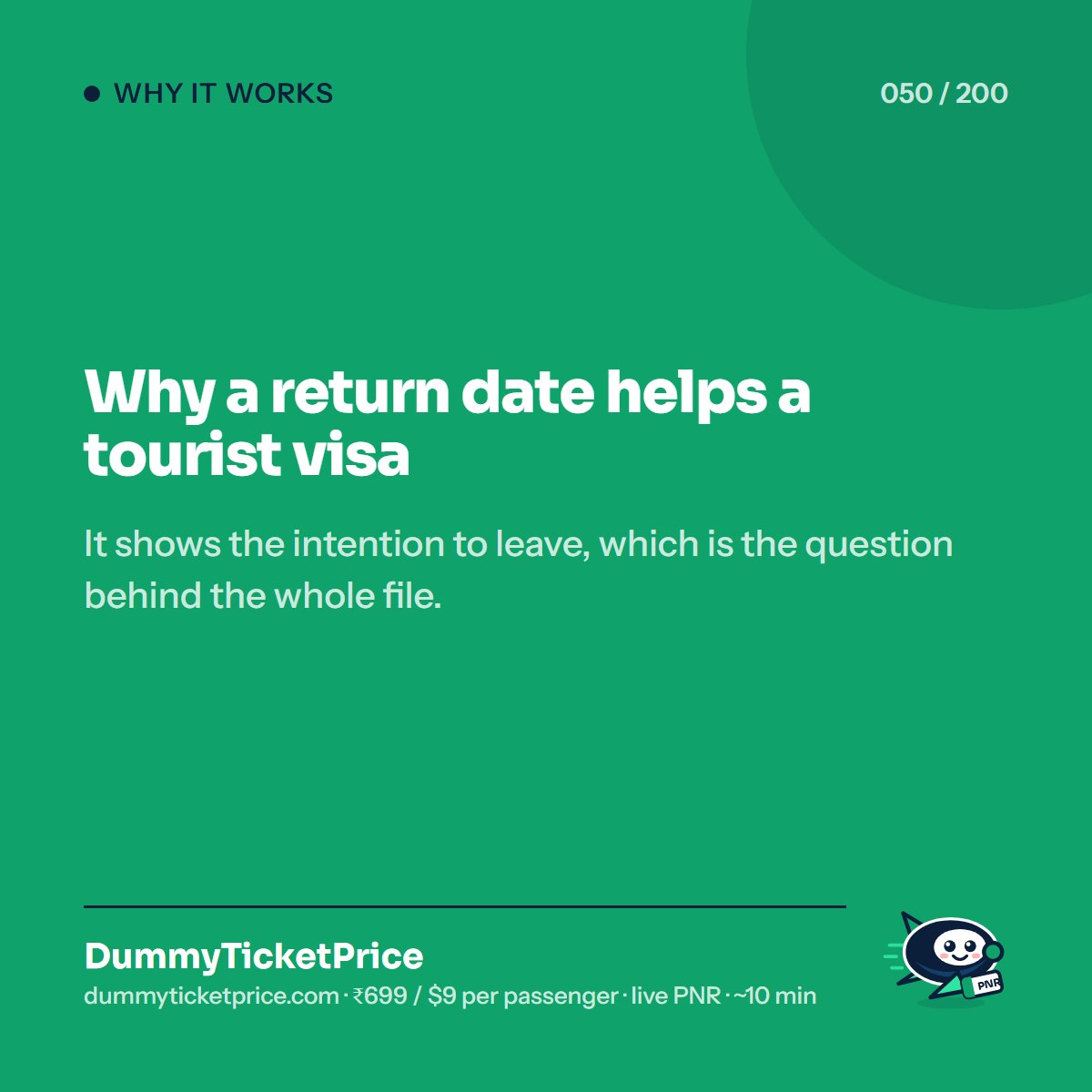
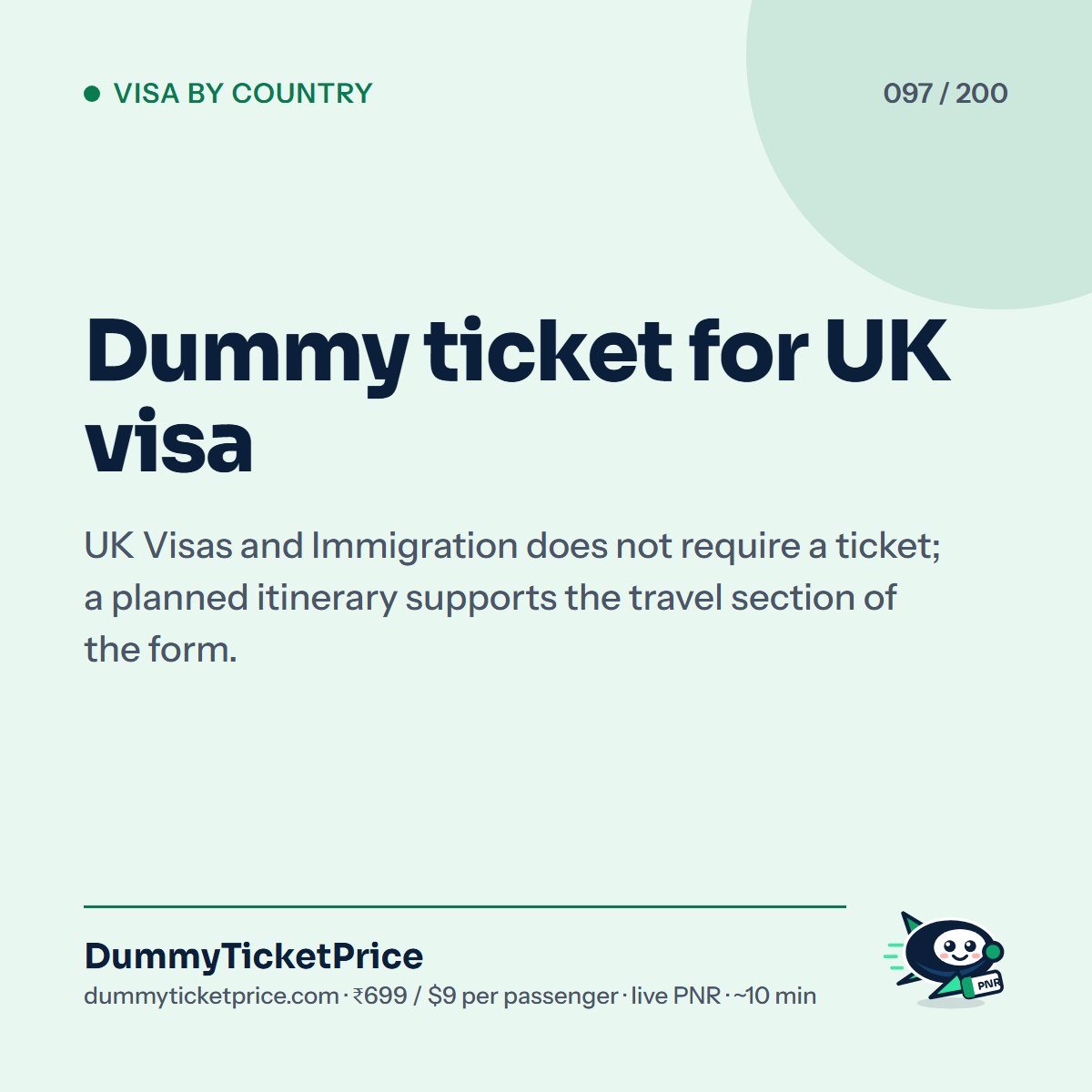
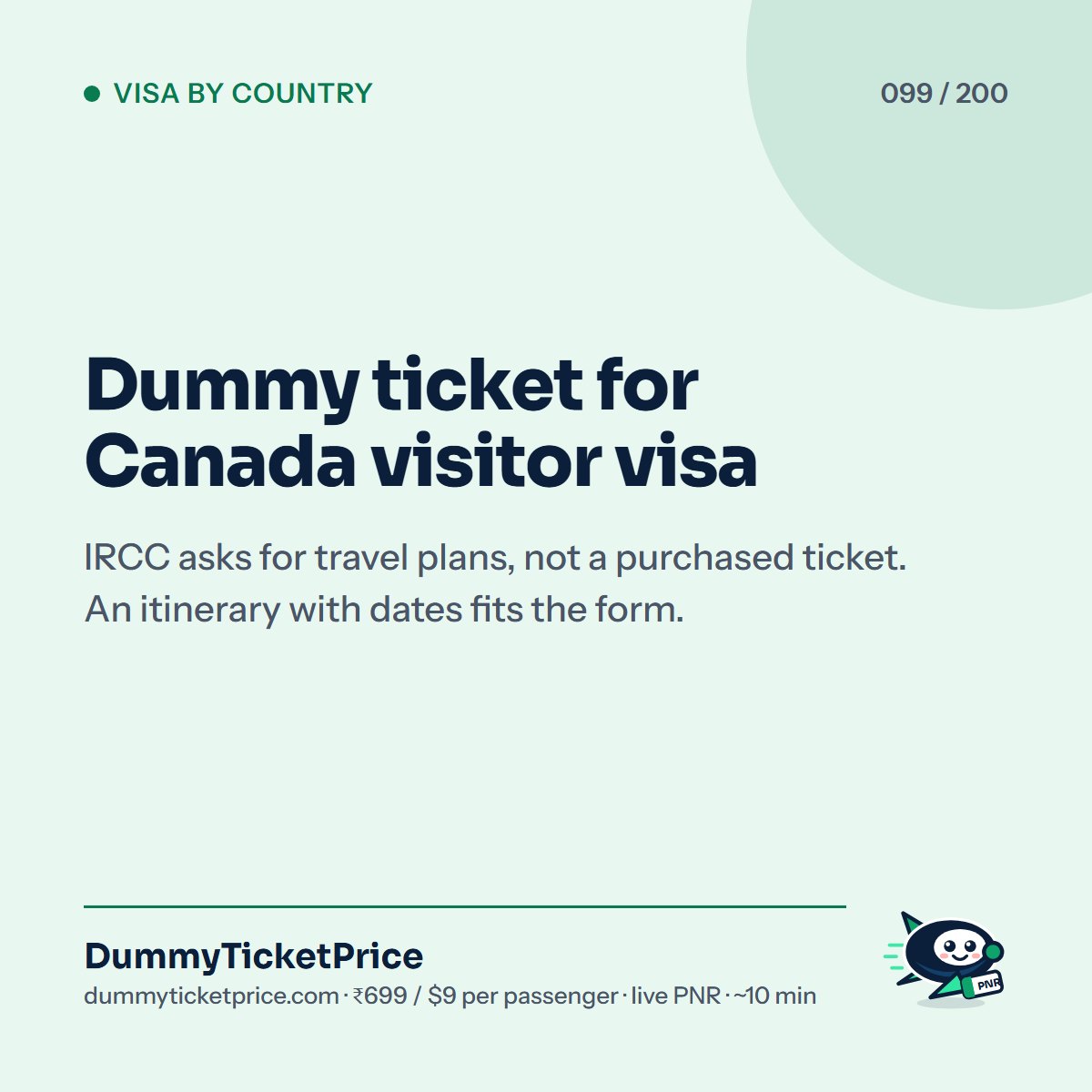
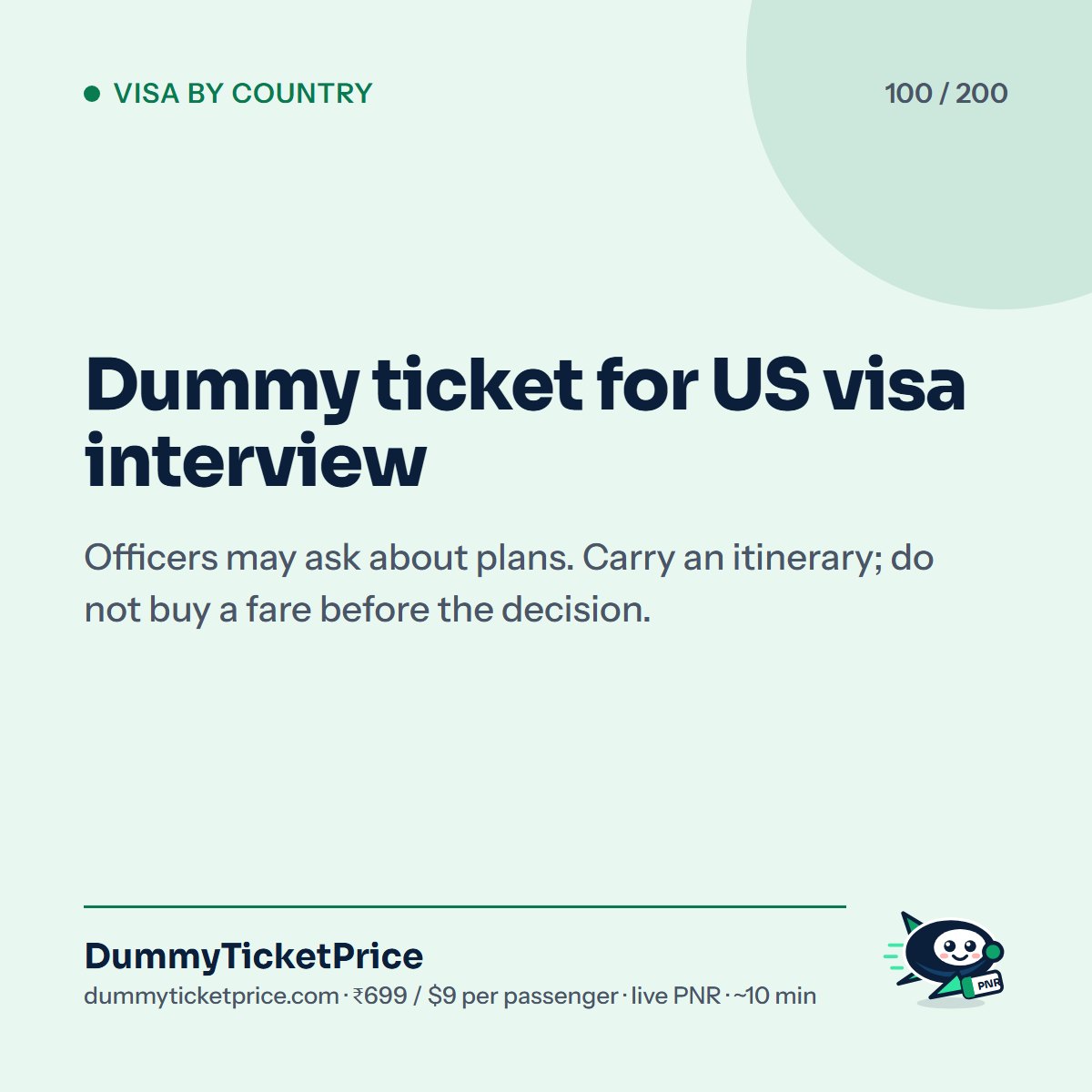
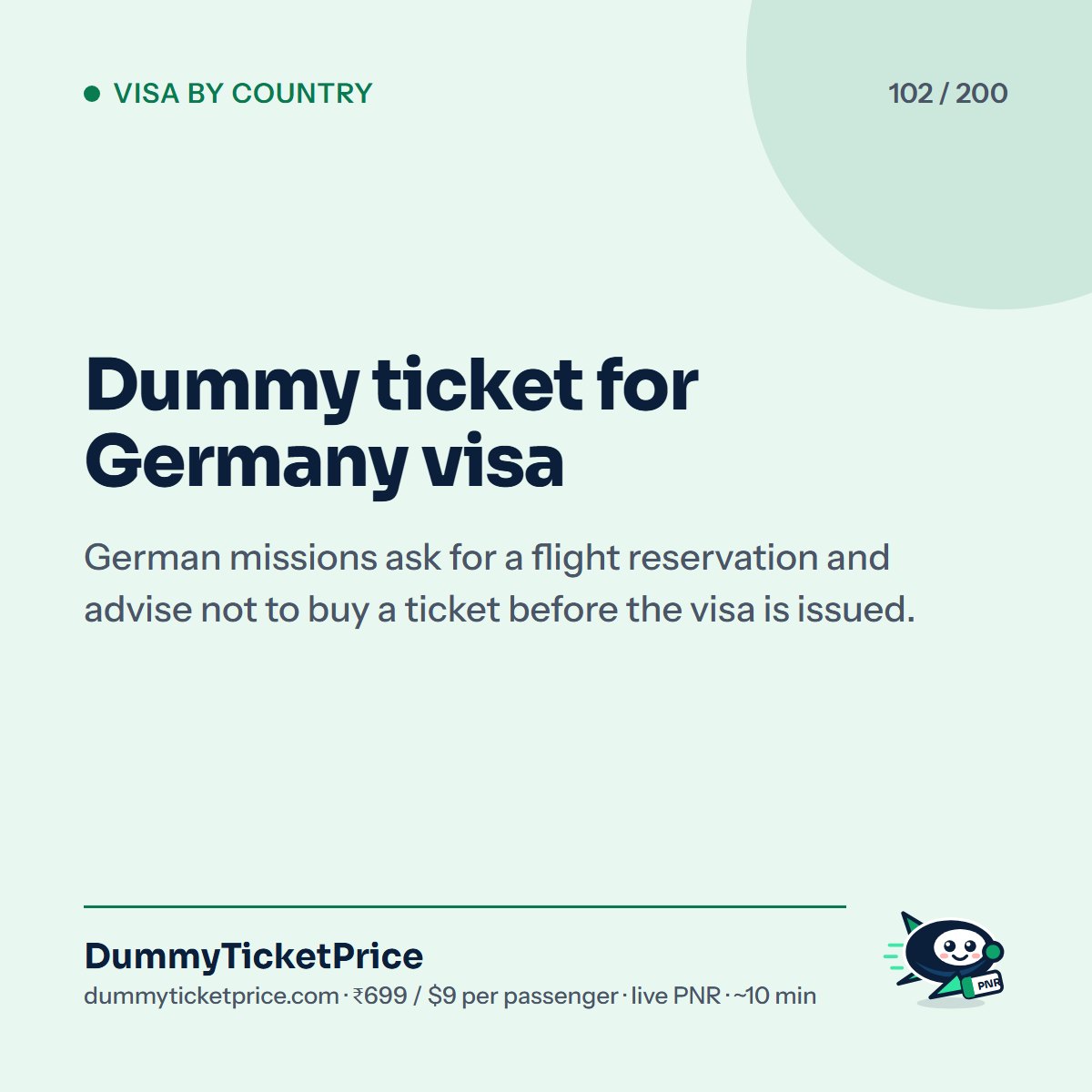
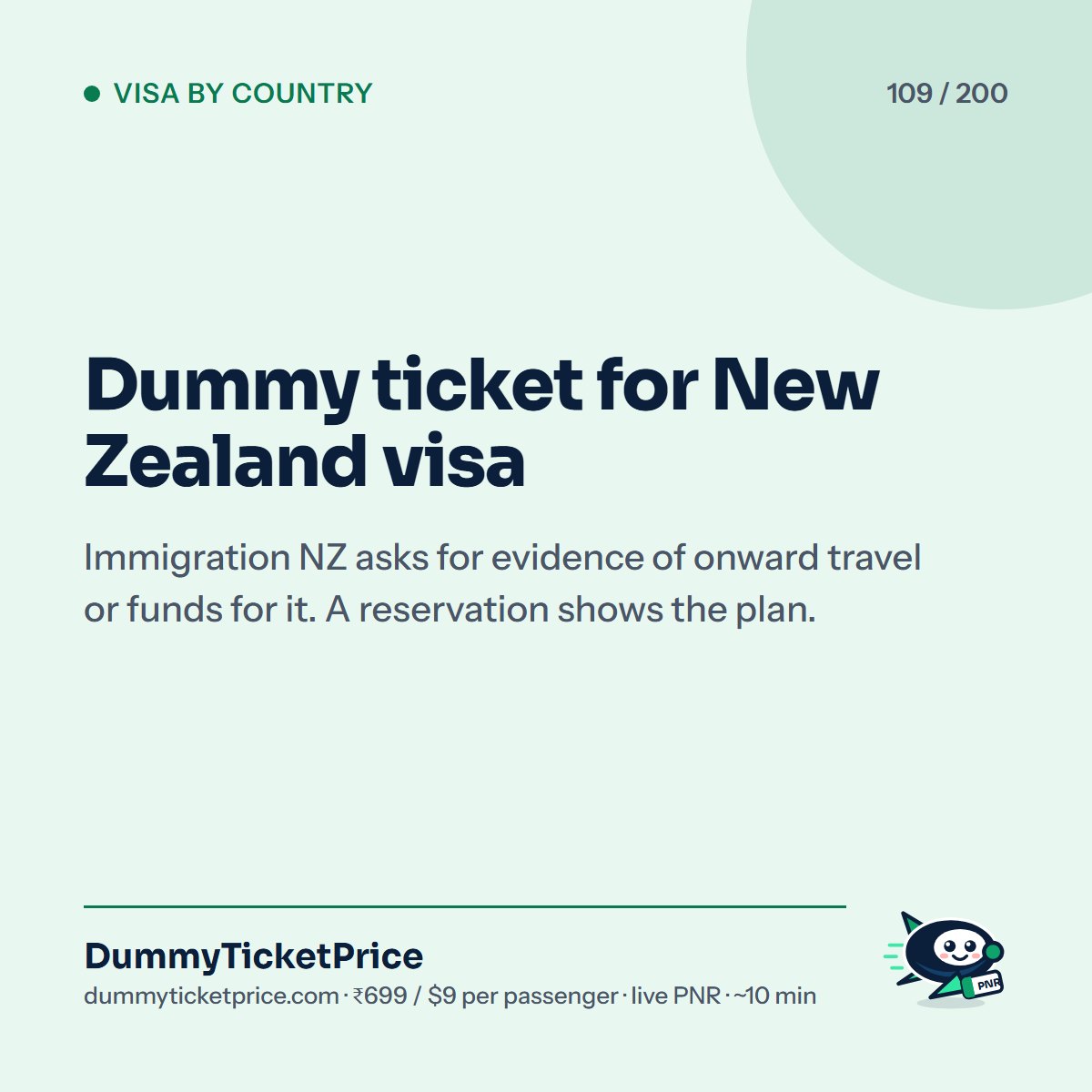
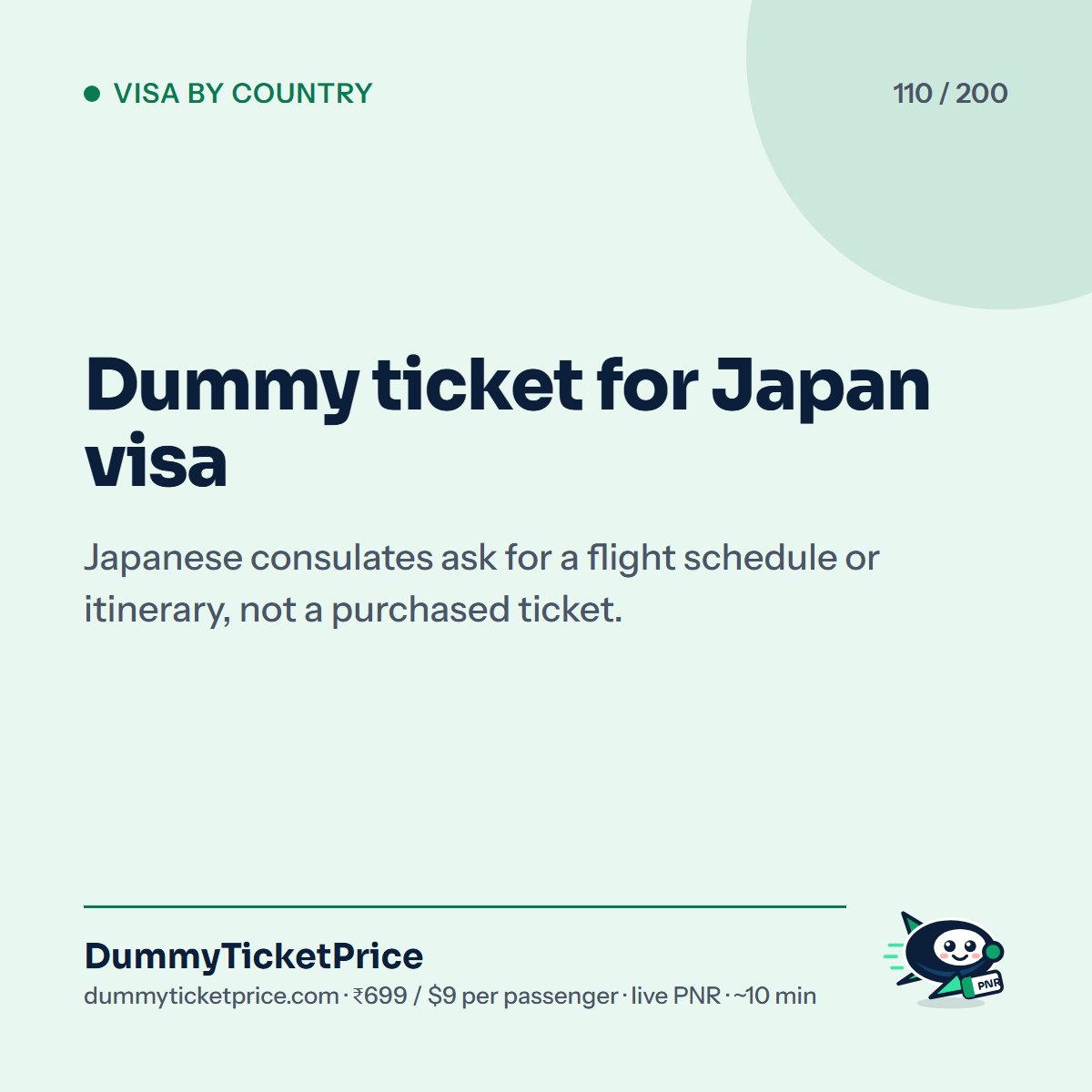
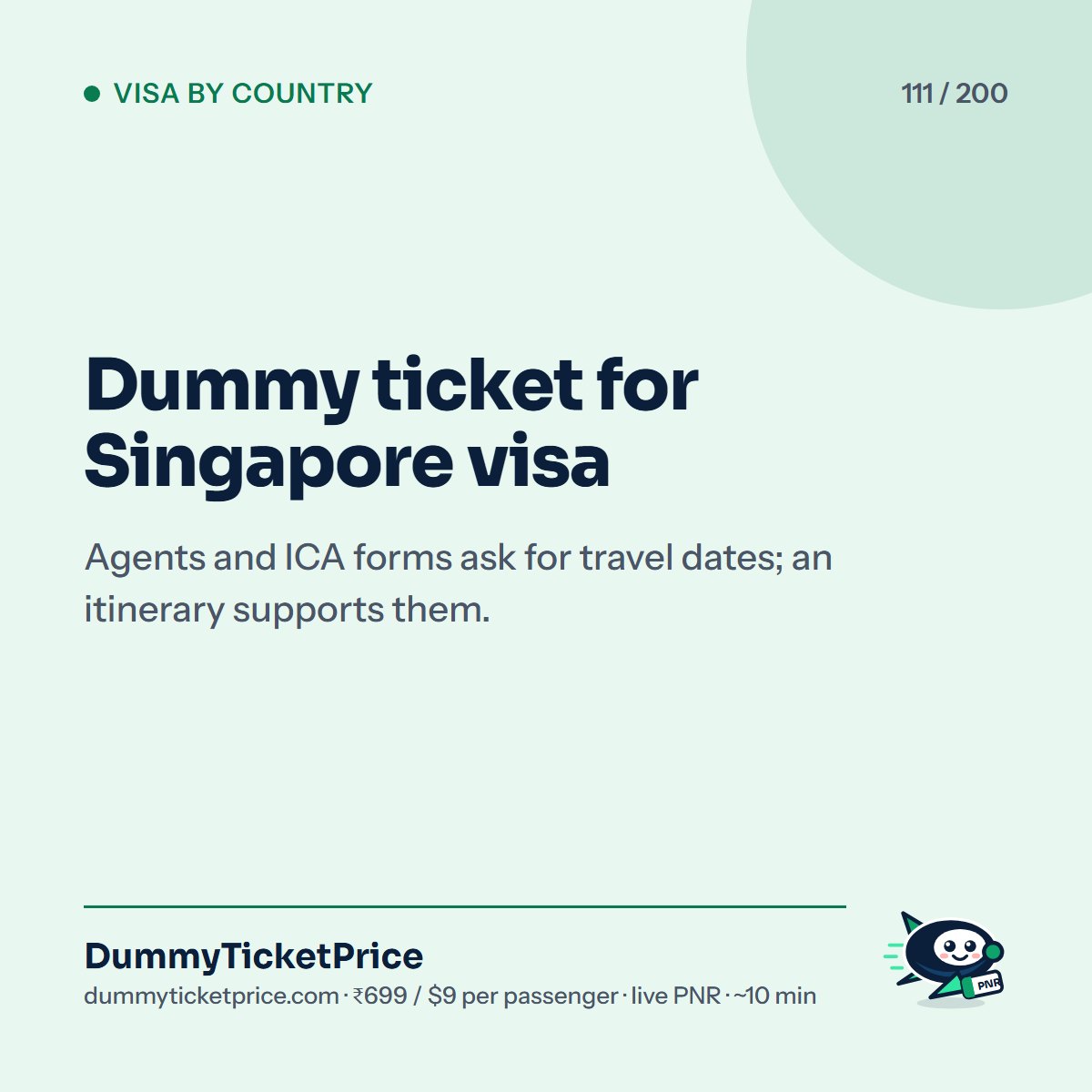
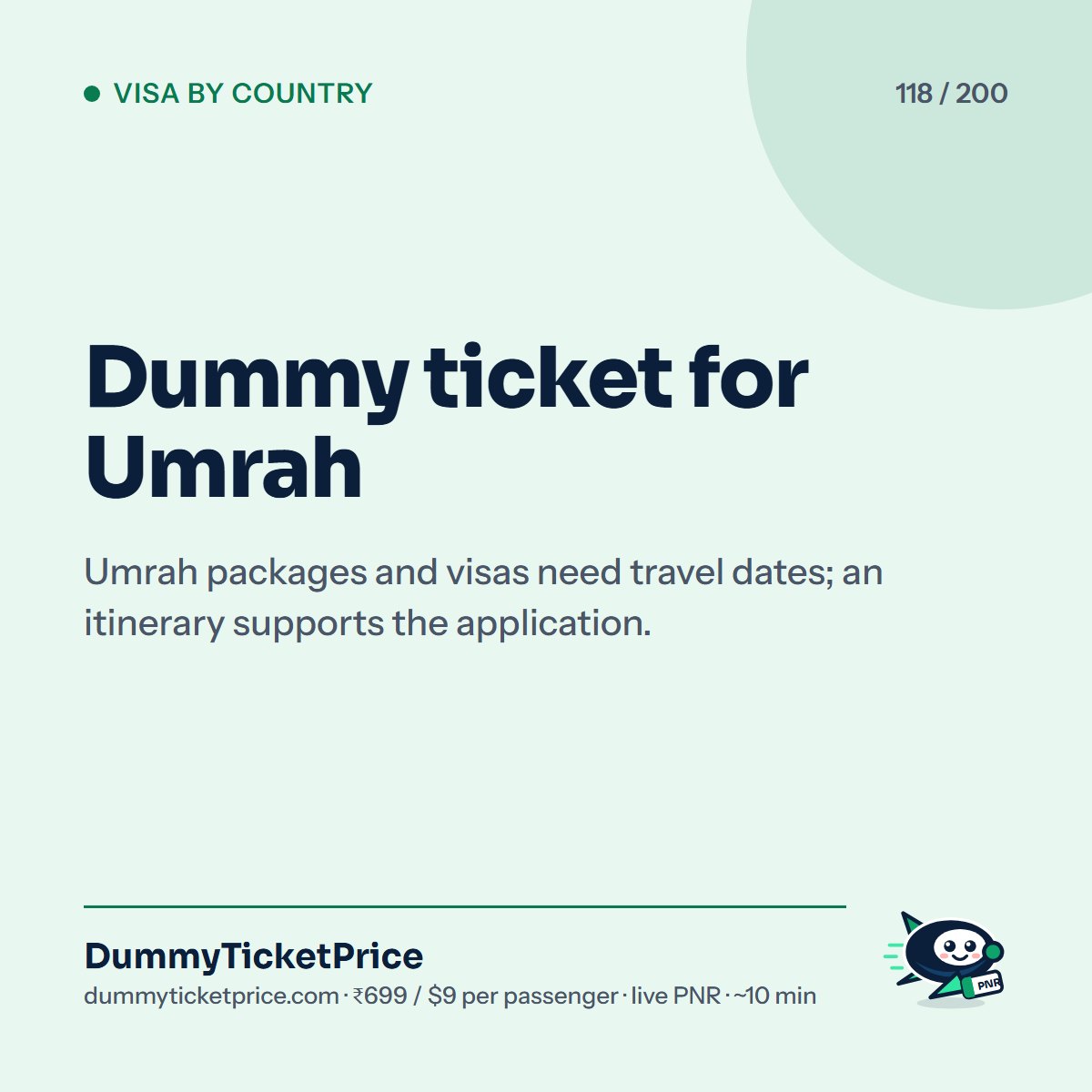
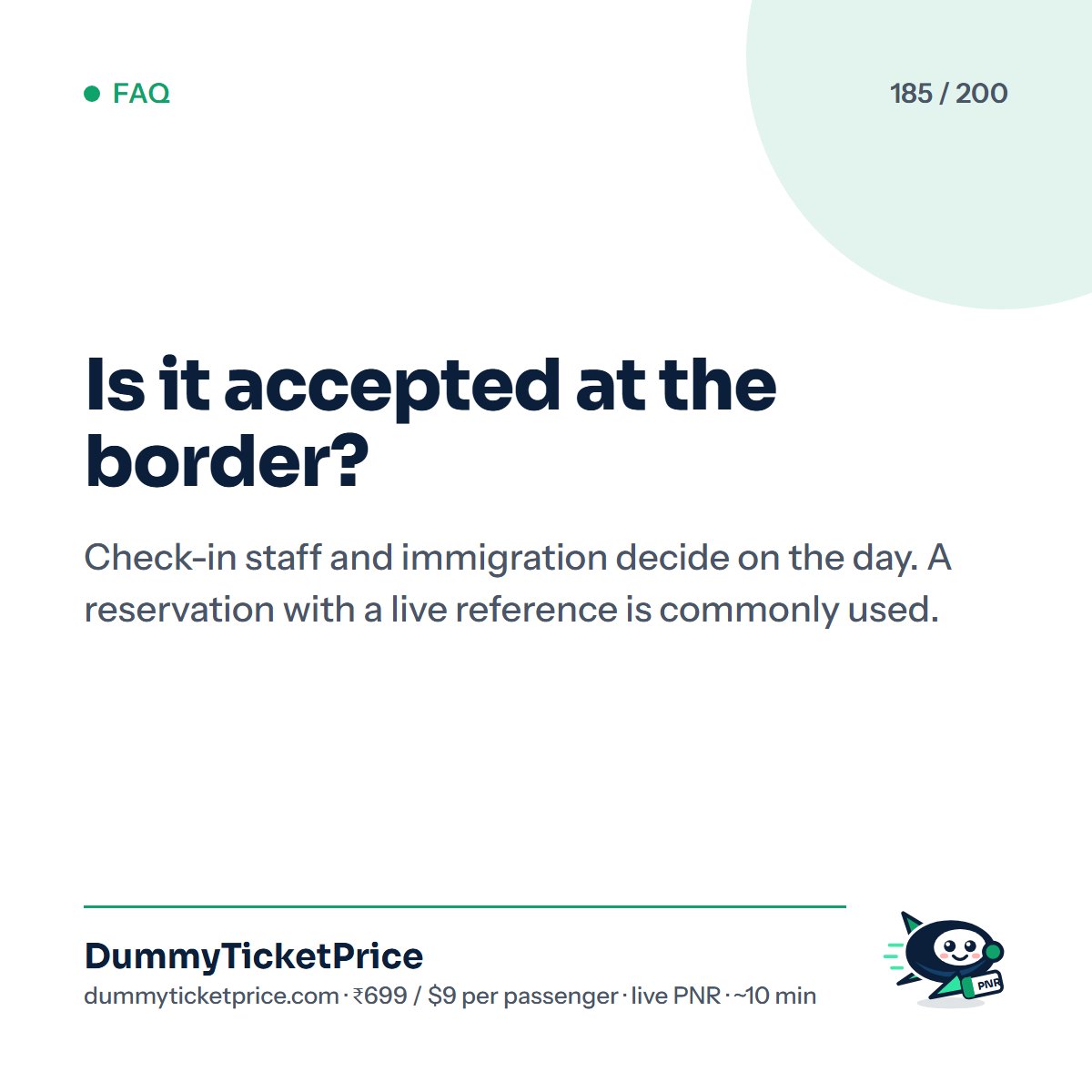
Every country words its flight requirement differently. The EU Visa Code lists a "reservation of or return or round ticket" among the documents that show the intention to leave, and German missions tell applicants not to buy a ticket before the visa is issued. UK, Canadian and Australian forms ask for travel plans rather than a ticket. Gulf visit visas and e-visas ask for dates and accommodation. Visa-on-arrival destinations such as Thailand, Indonesia and the Maldives check onward travel when you land or at check-in.
The cards give the short version for forty destinations; each links to the matching guide, which quotes the official checklist and records when we last checked it. Where a checklist asks for a paid ticket we say so. Start with the complete visa guide or the Schengen guide.












How to check a dummy ticket on the airline website
Twenty cards on verification: where the booking section is on each airline site, what to enter, what a live reference looks like, and what to do if it does not resolve.
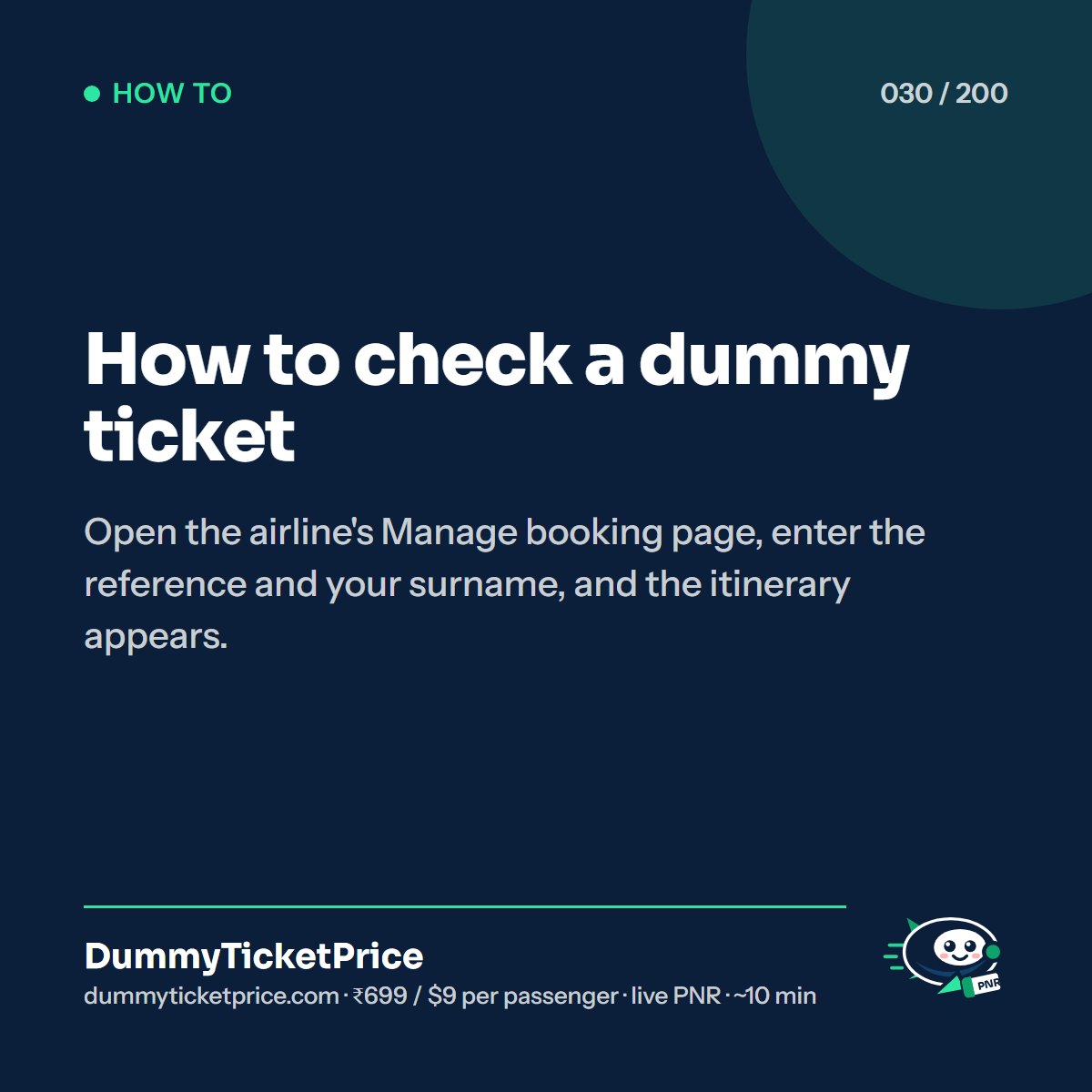
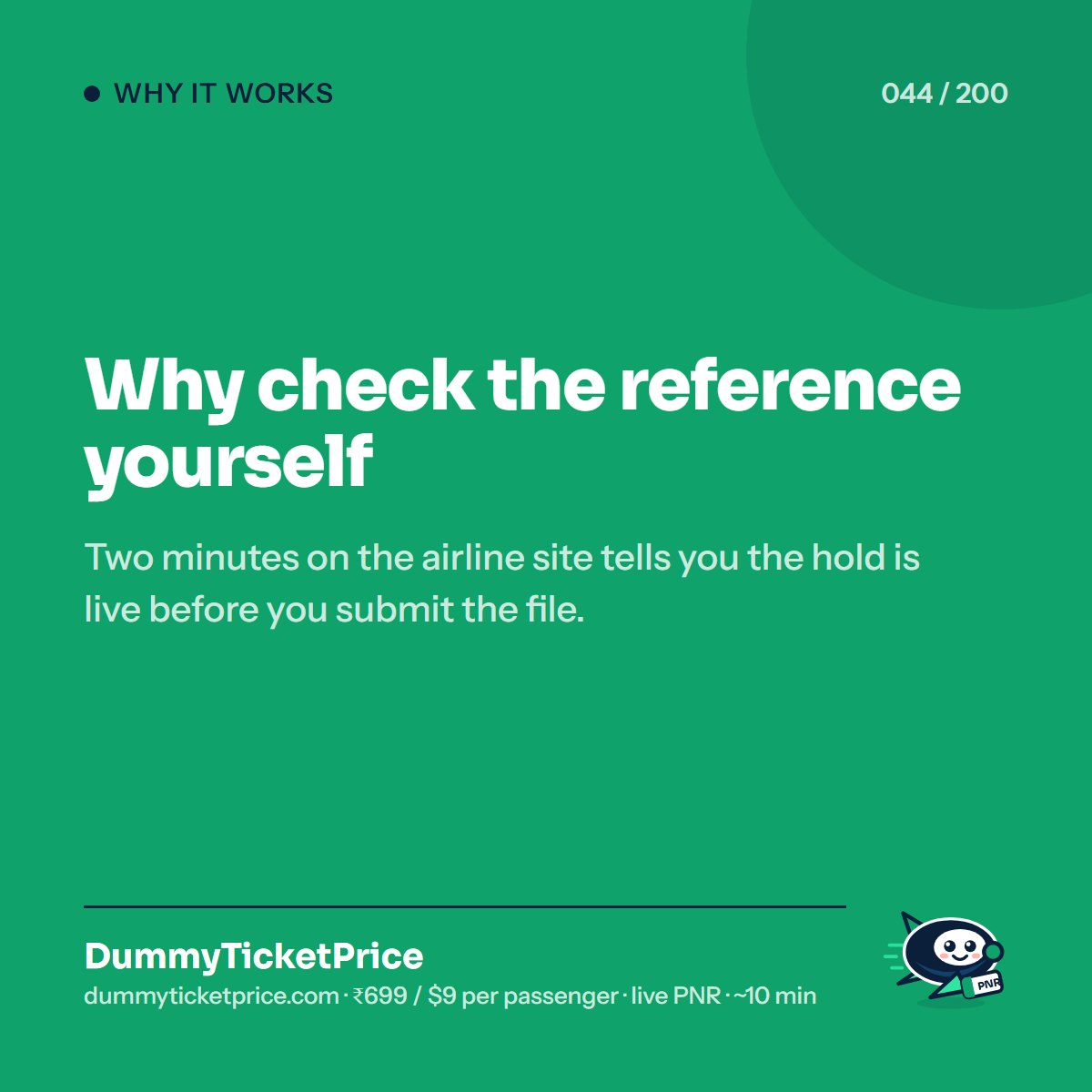
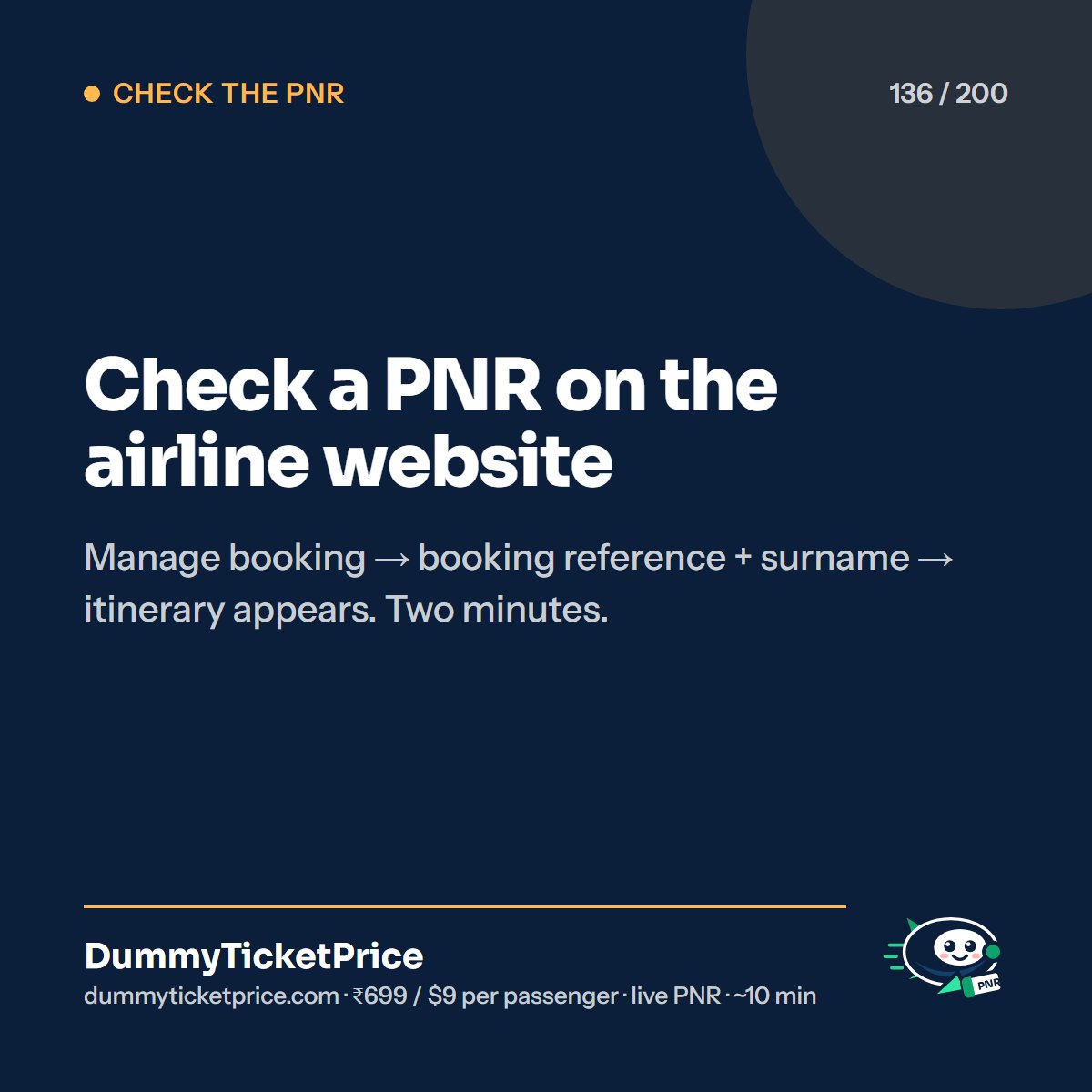
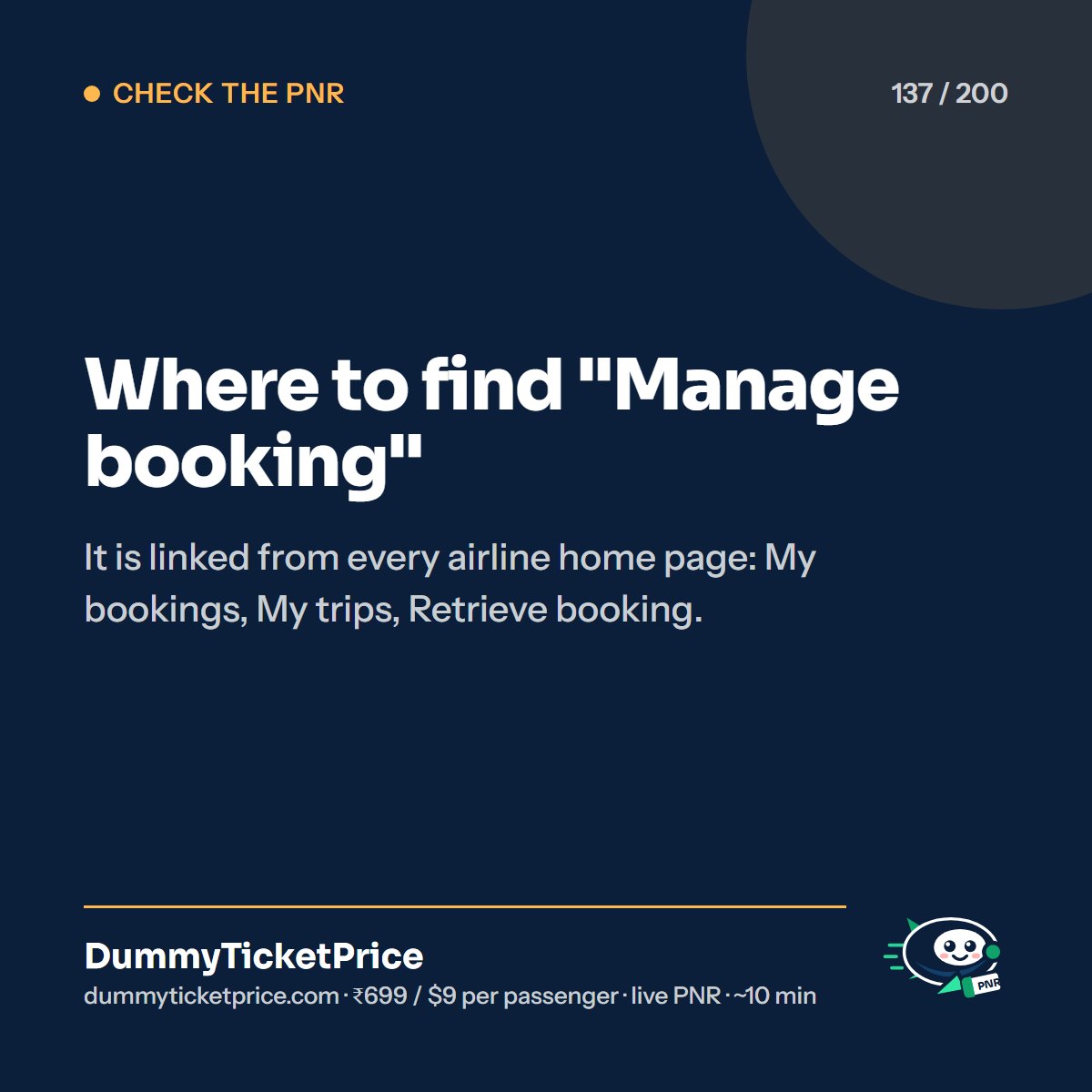
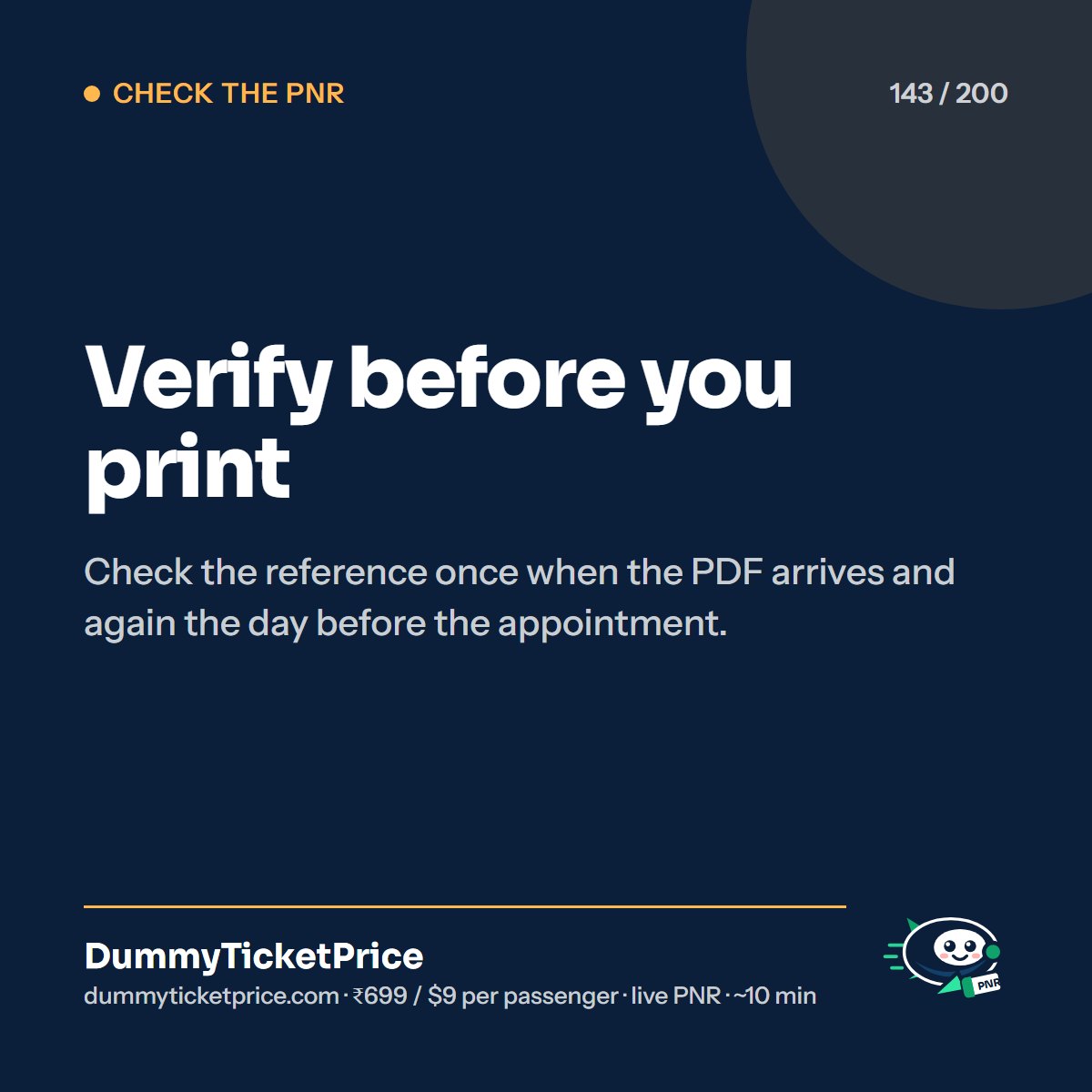
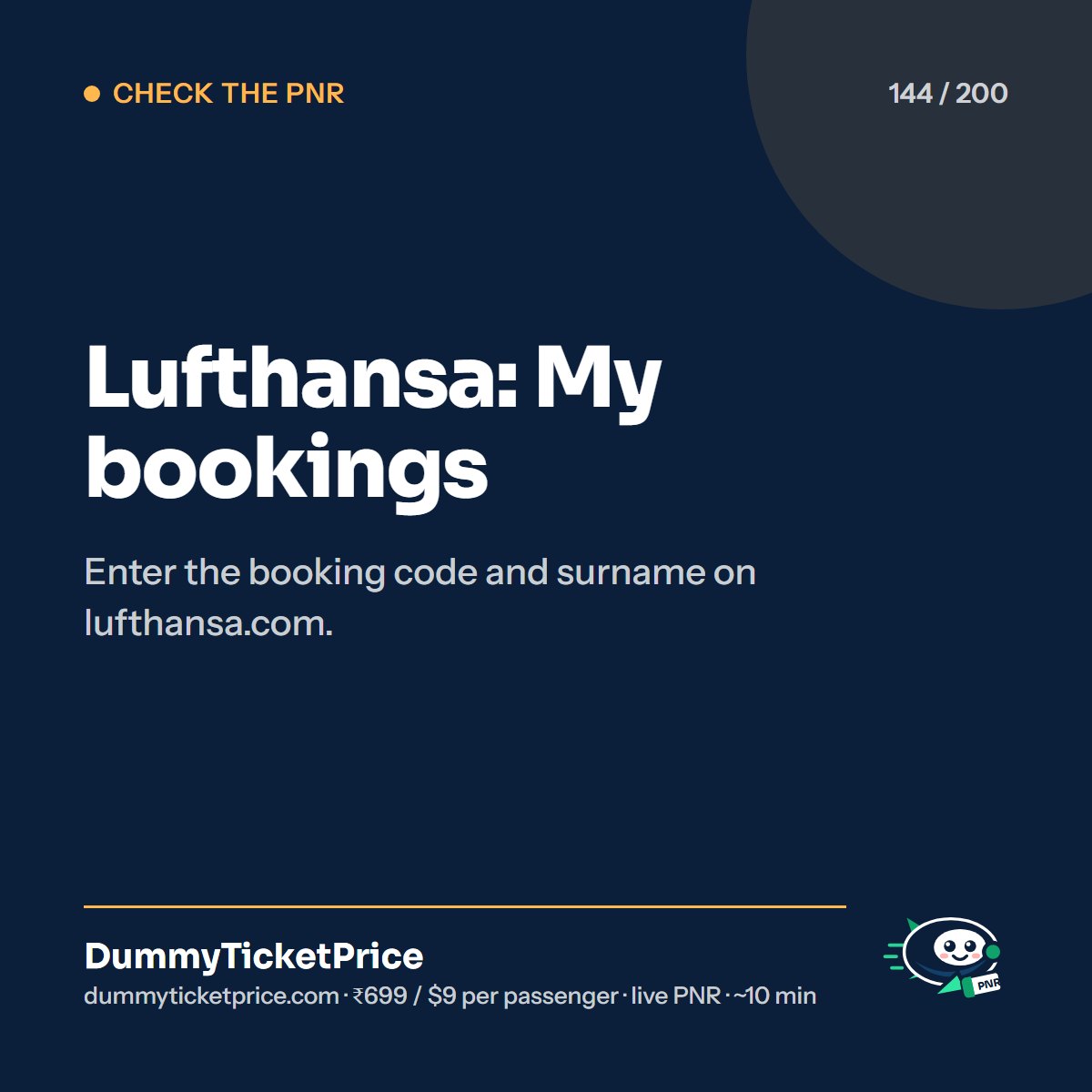
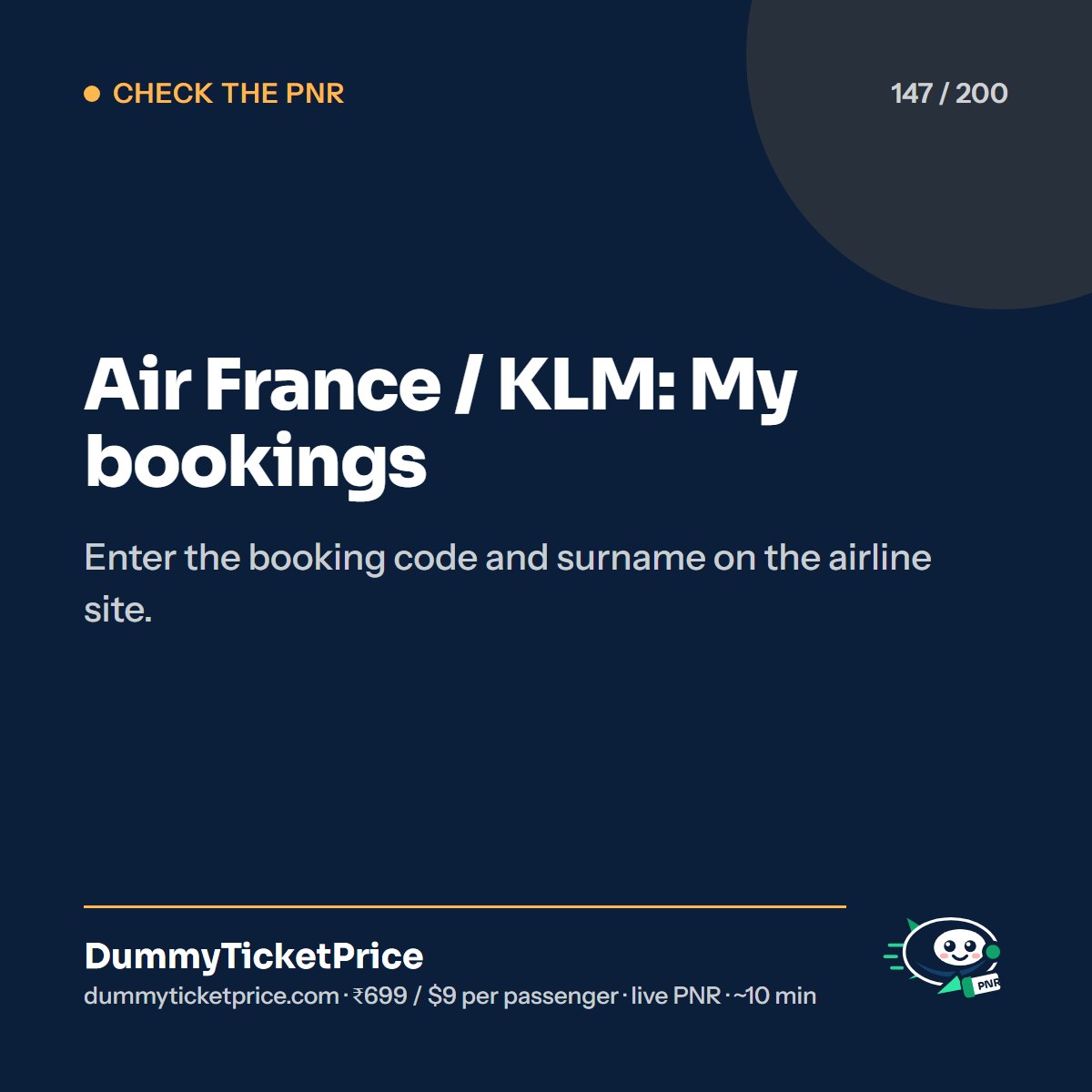
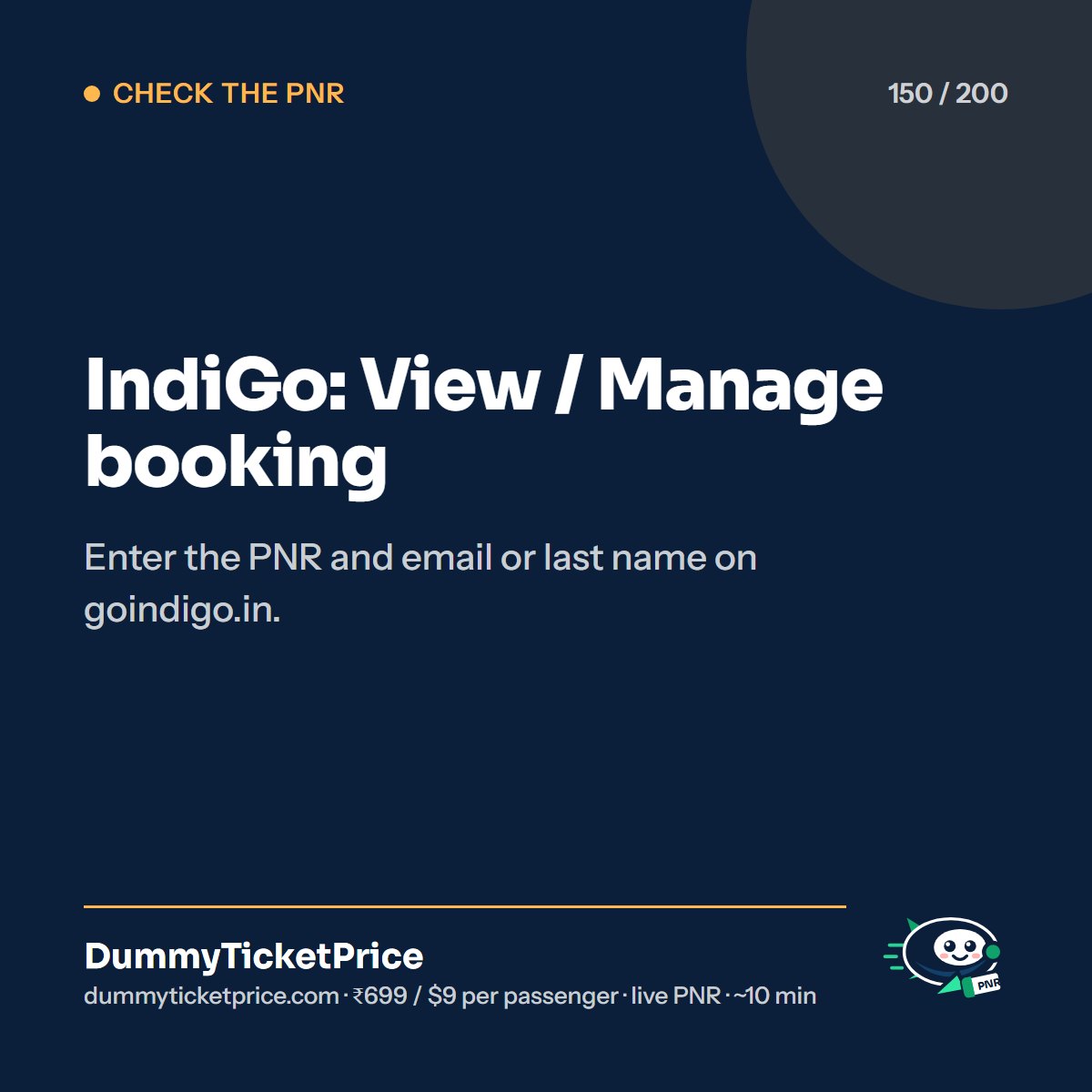
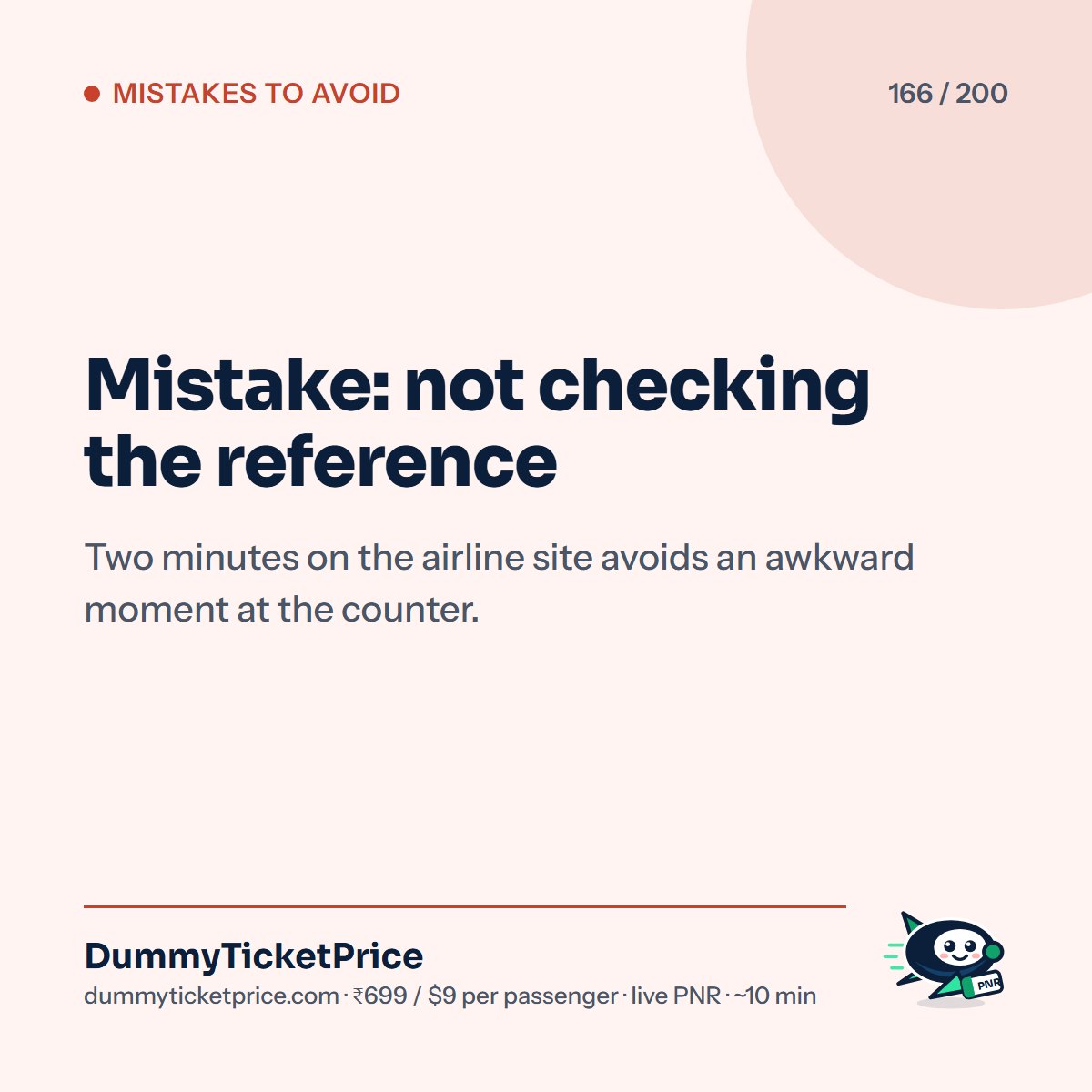
A reservation is only worth submitting if it passes the check an officer could make. The check is simple: open the airline's official website, find the booking section (Manage booking, My bookings, My trips or Retrieve booking depending on the airline), enter the six-character booking reference and your surname, and the itinerary appears with your name and dates. Do it once when the PDF arrives and again the day before your appointment, and keep a screenshot with your documents.
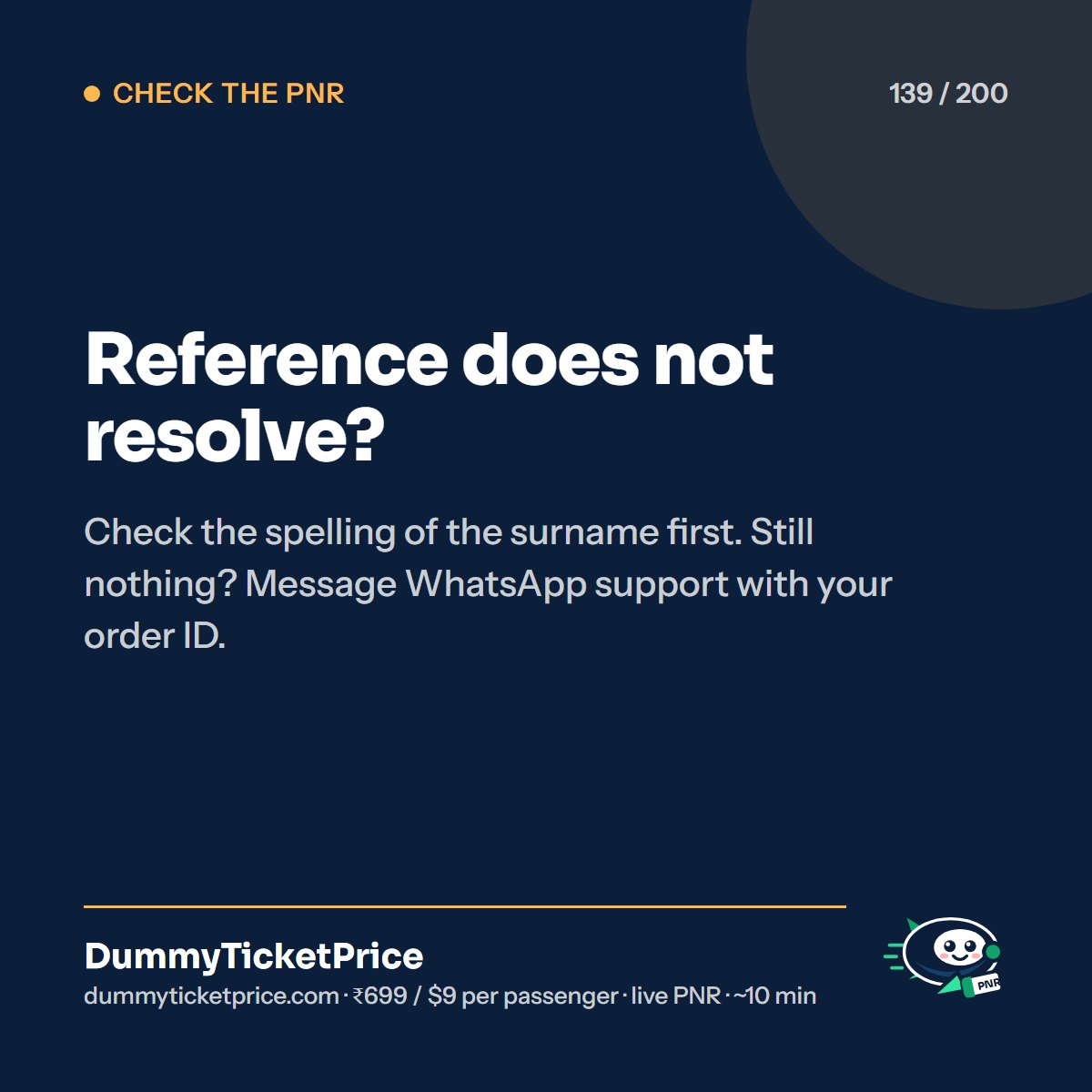
If the reference does not resolve, check the surname spelling first, then message WhatsApp support with your order ID before you submit anything. Step-by-step instructions for the airlines applicants ask about most are on the cards, with a longer walkthrough in how to verify a dummy ticket before submission.








Mistakes that weaken a visa file
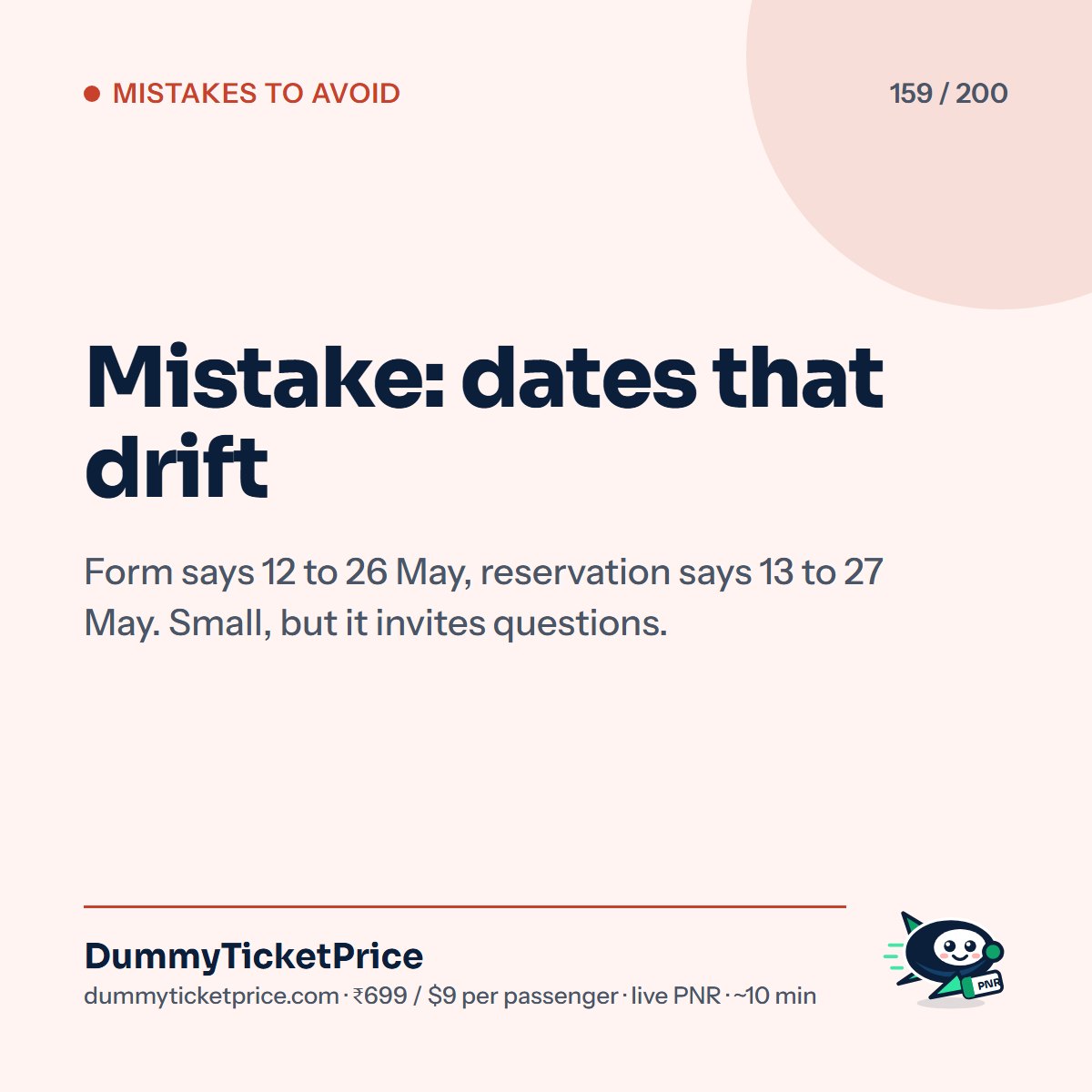
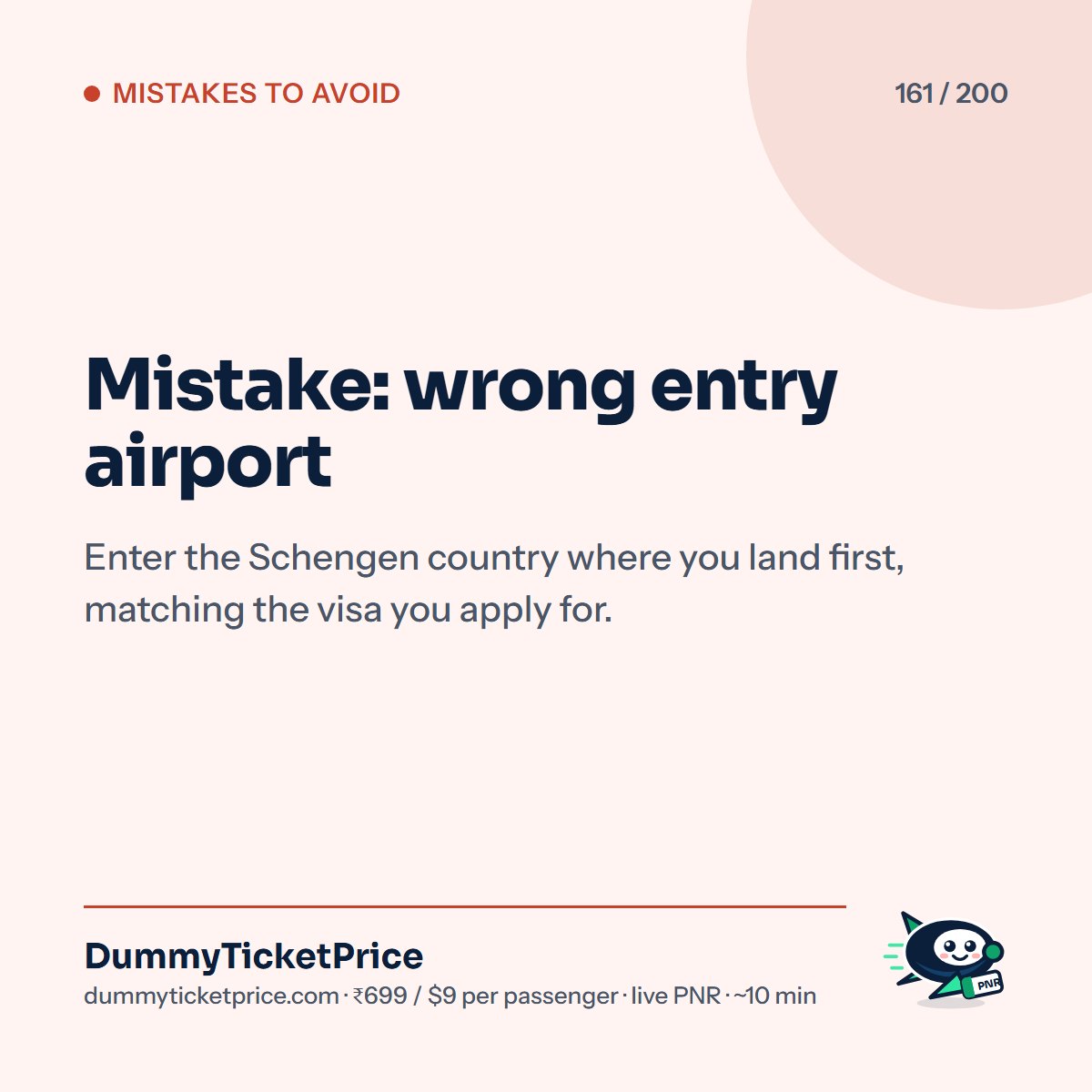
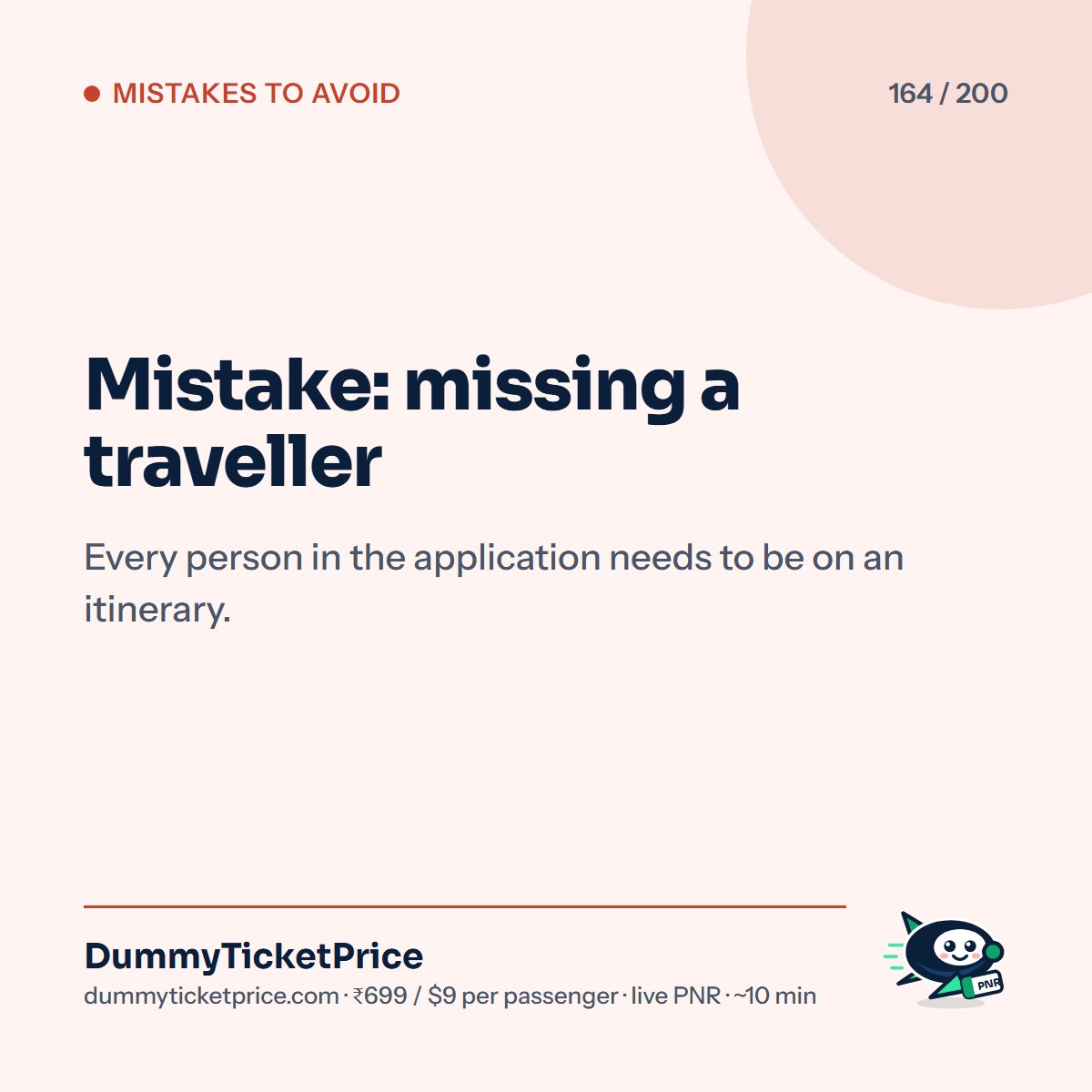
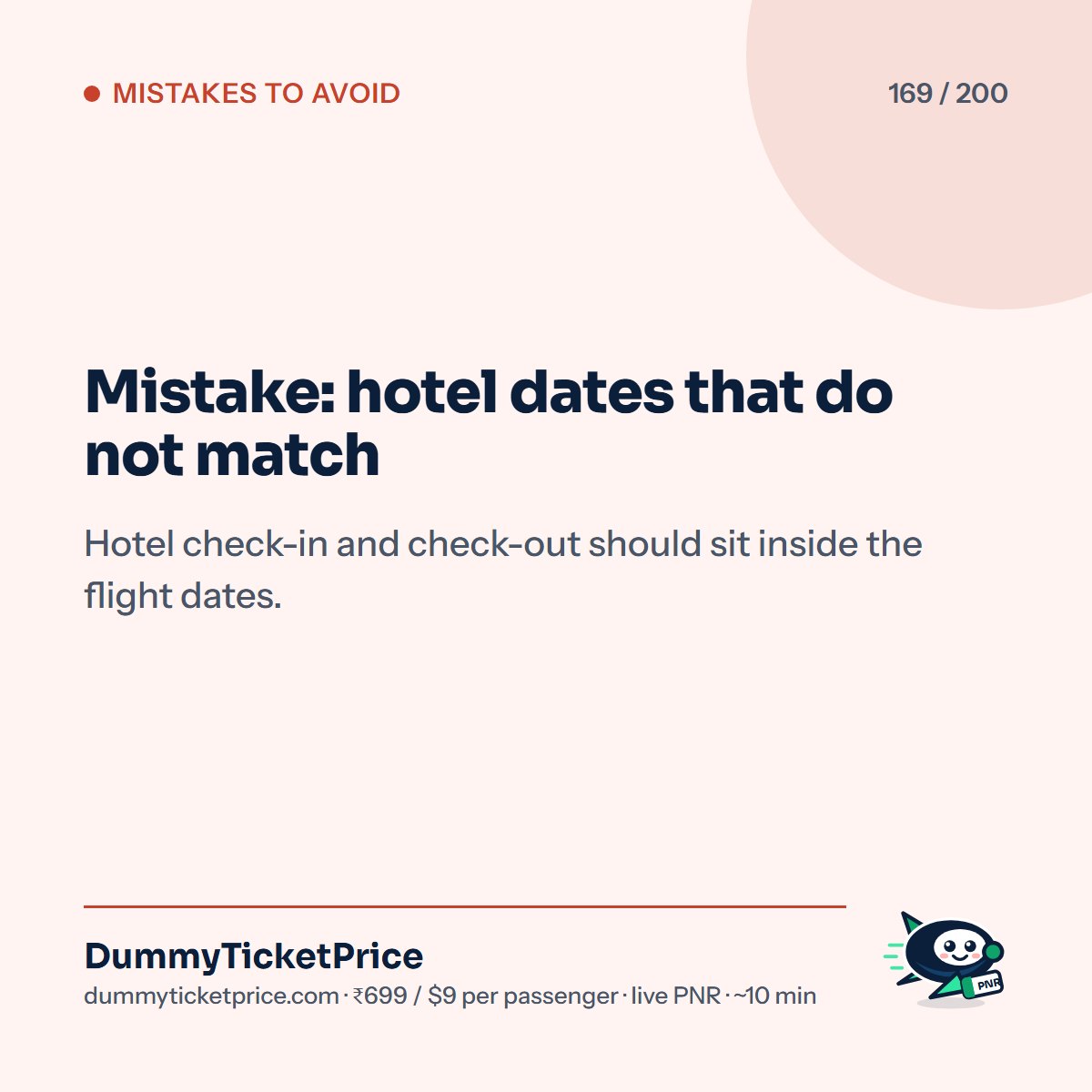
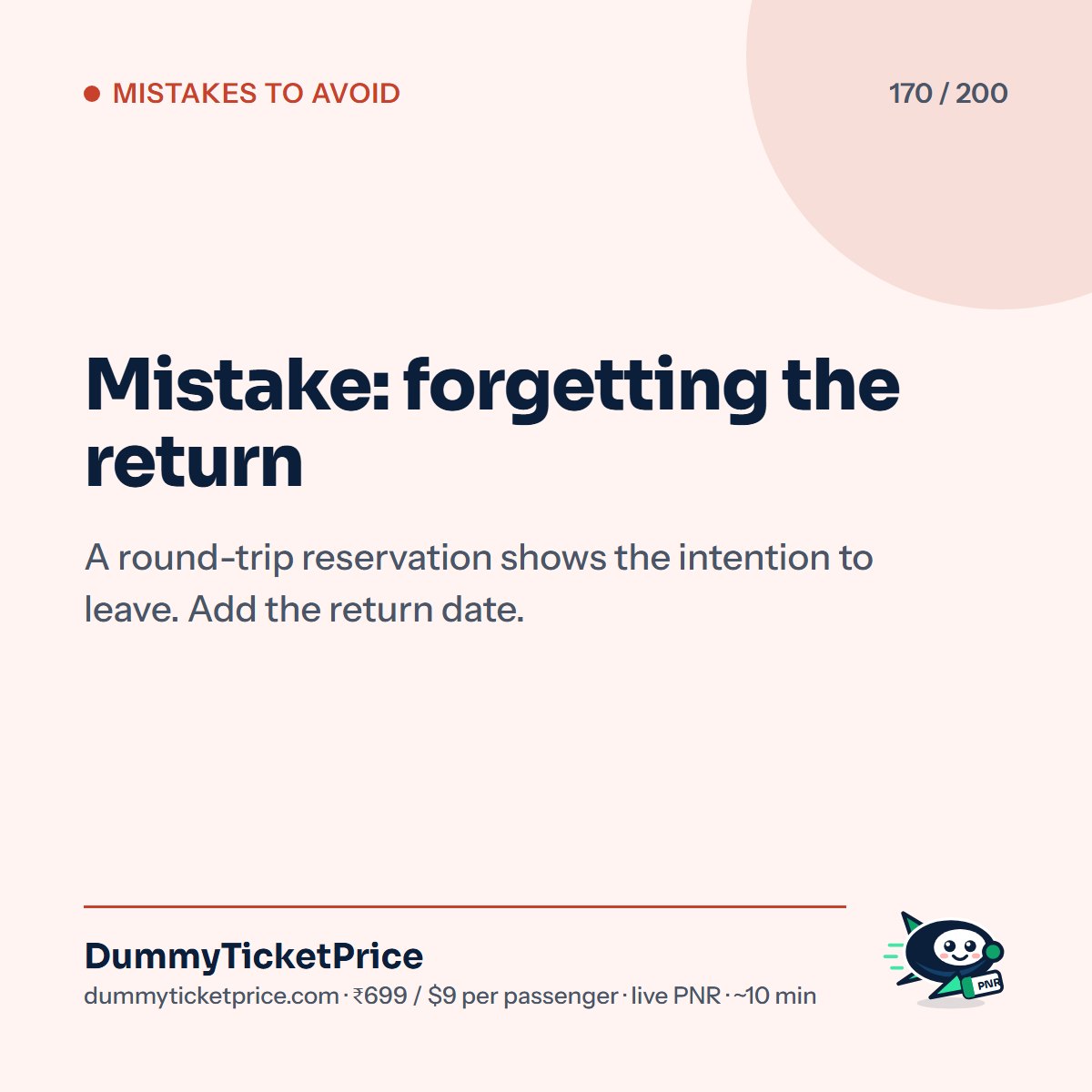
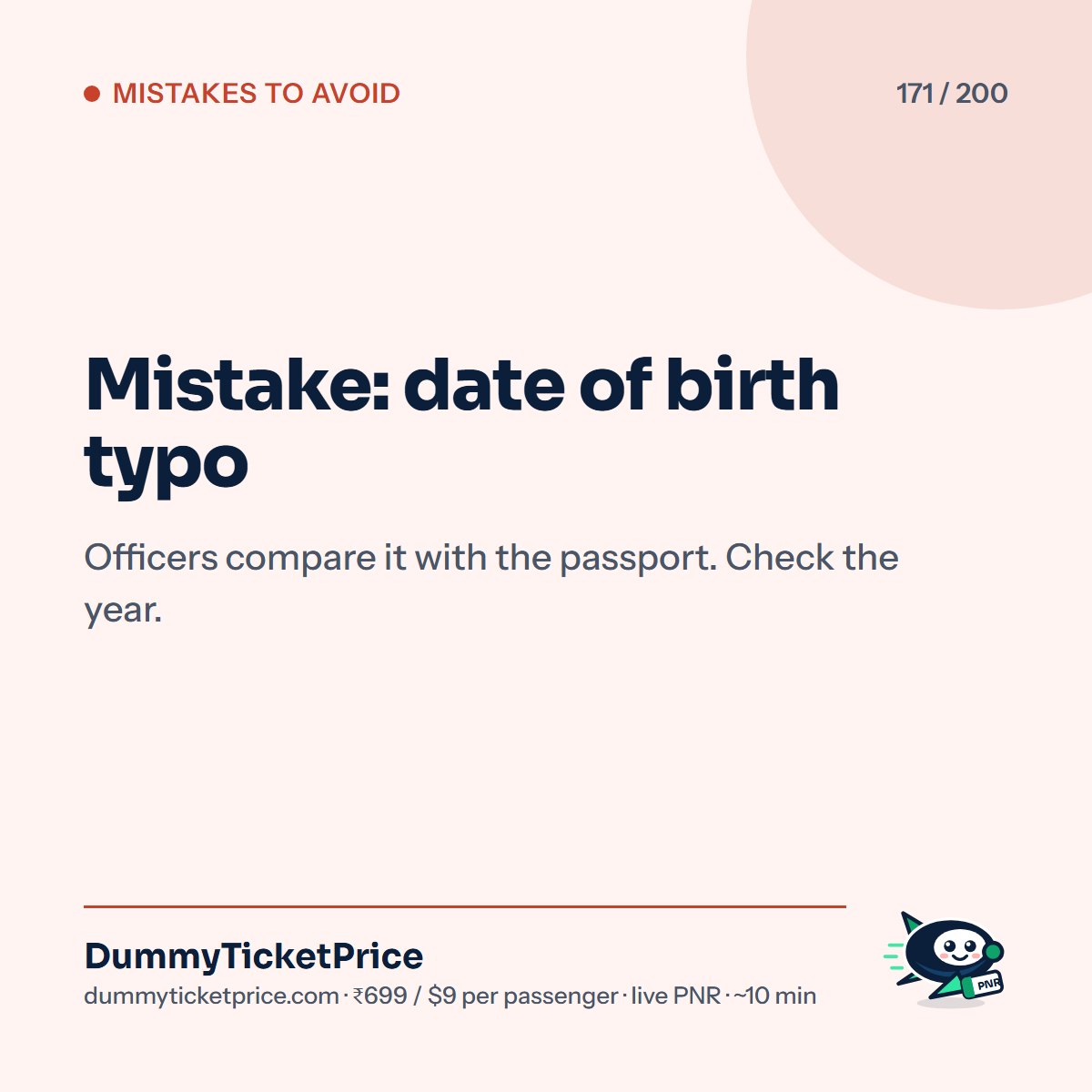
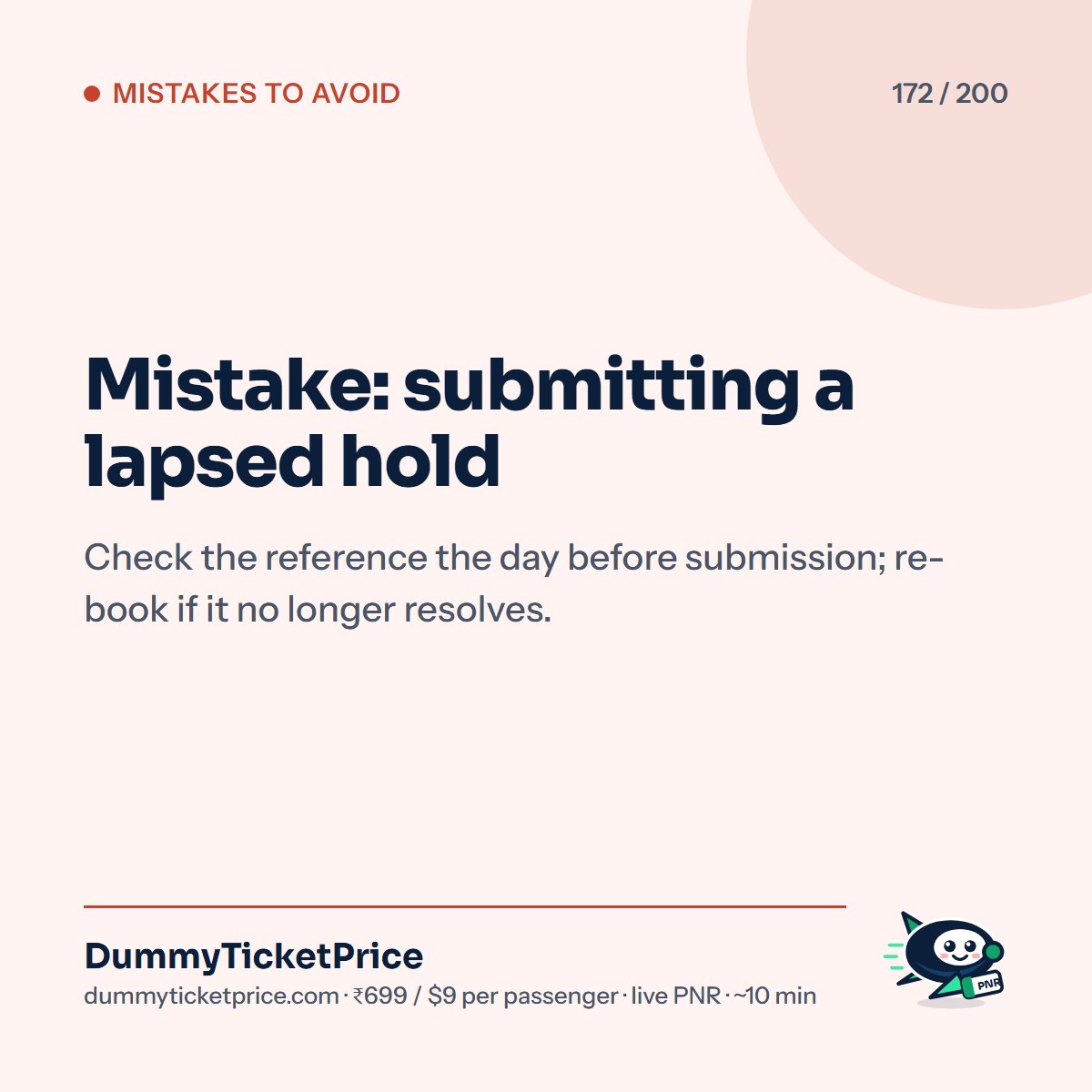
Twenty cards on the errors we see most: free generators, buying too early, names that do not match the passport, dates that drift, and lapsed holds.
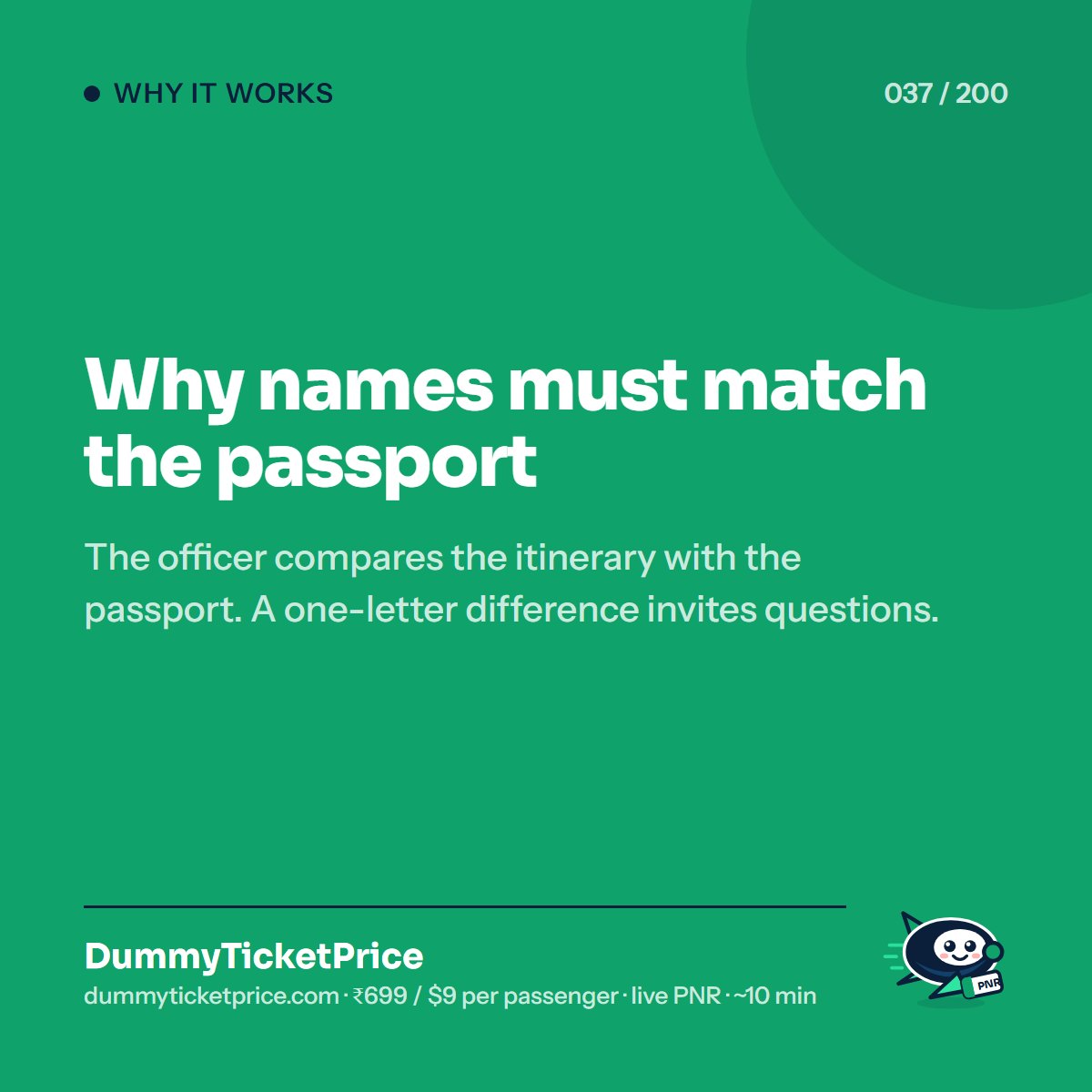
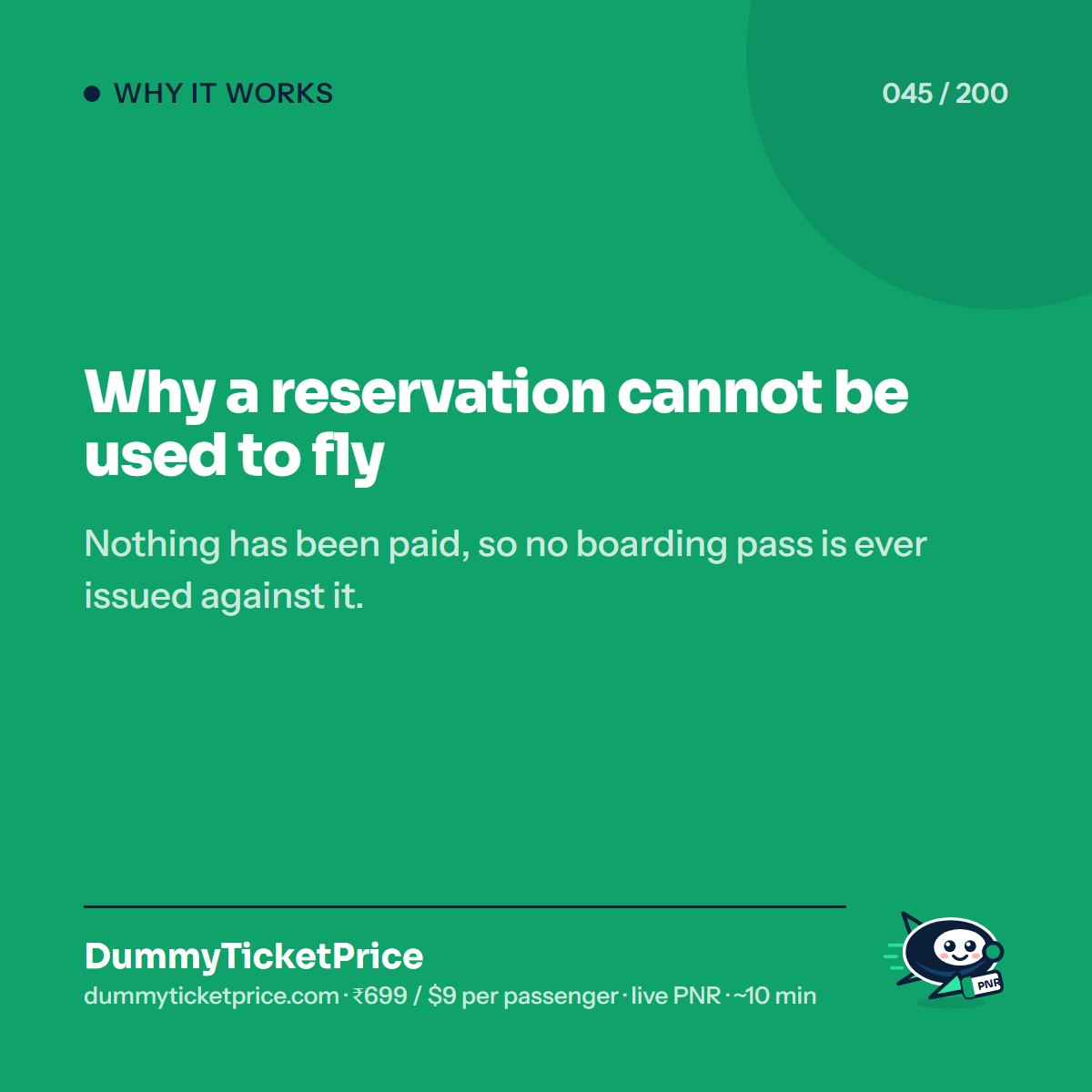
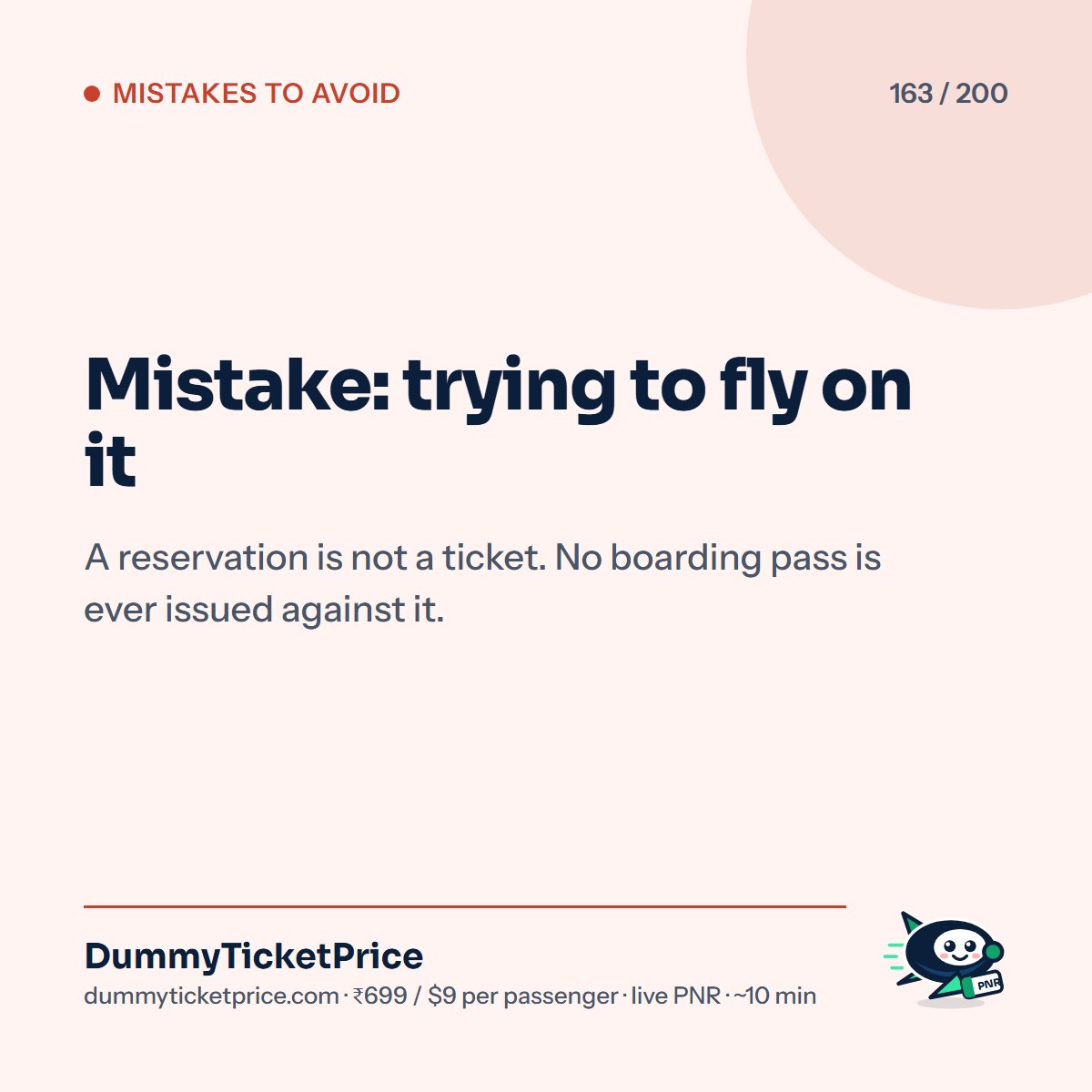
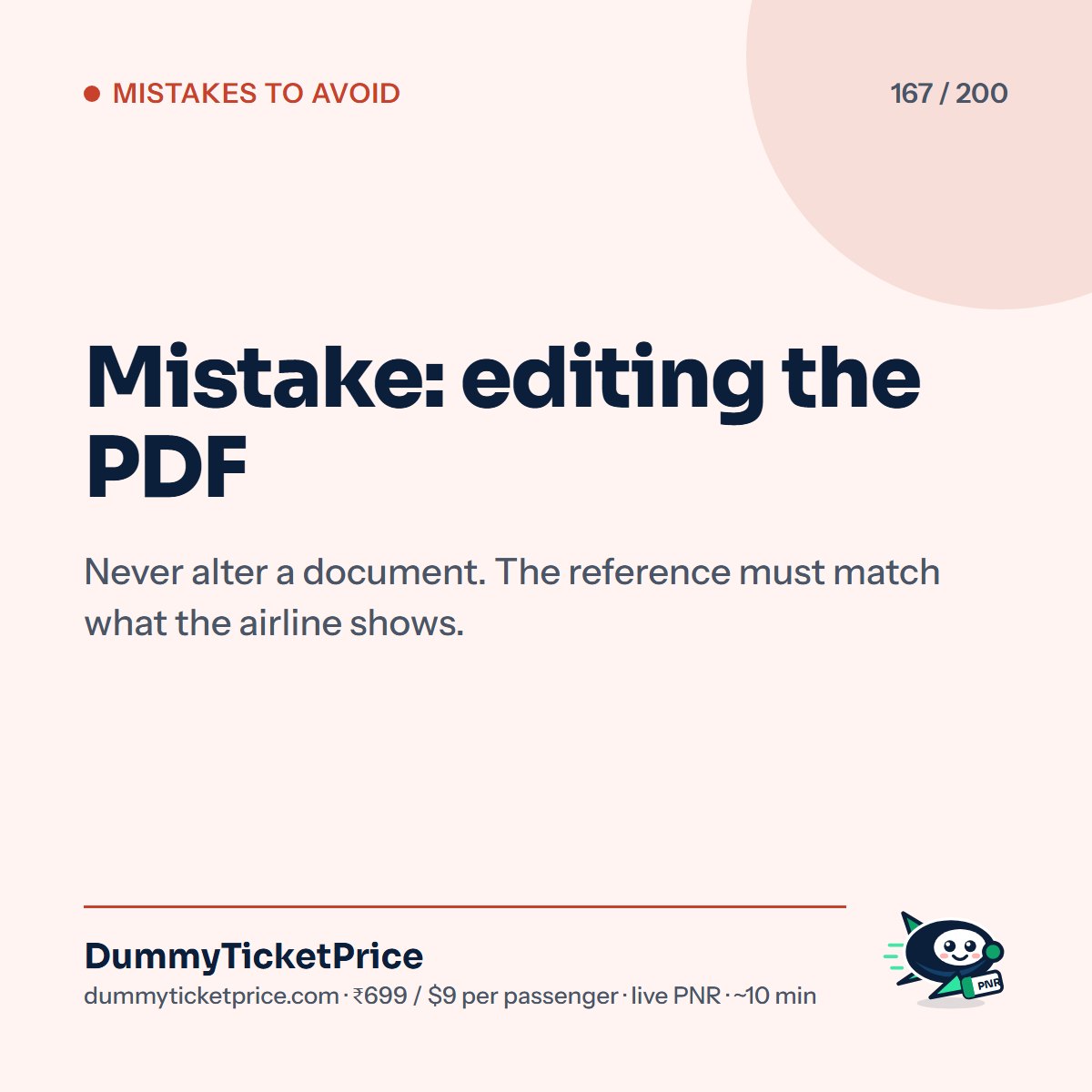
Most problems with a flight document are self-inflicted and avoidable. A generator ticket has nothing behind it. A reservation booked a month early has lapsed by the appointment. A nickname, a middle name left out or a one-letter spelling difference invites questions because the officer compares the itinerary with the passport. Dates that differ from the application form, the hotel or the insurance by a single day tell an inconsistent story. And a reservation is not a ticket: nobody can board a flight with it.
Each card names one mistake and the fix. Read them before you book, and again before you print. Our guide to common mistakes when booking a dummy ticket goes deeper.


Dummy ticket questions, answered
Twenty-five cards with the short answers to the questions that reach our WhatsApp every day: legality, PNRs, delivery, cancellations, onward travel, data and the DTP AI assistant.
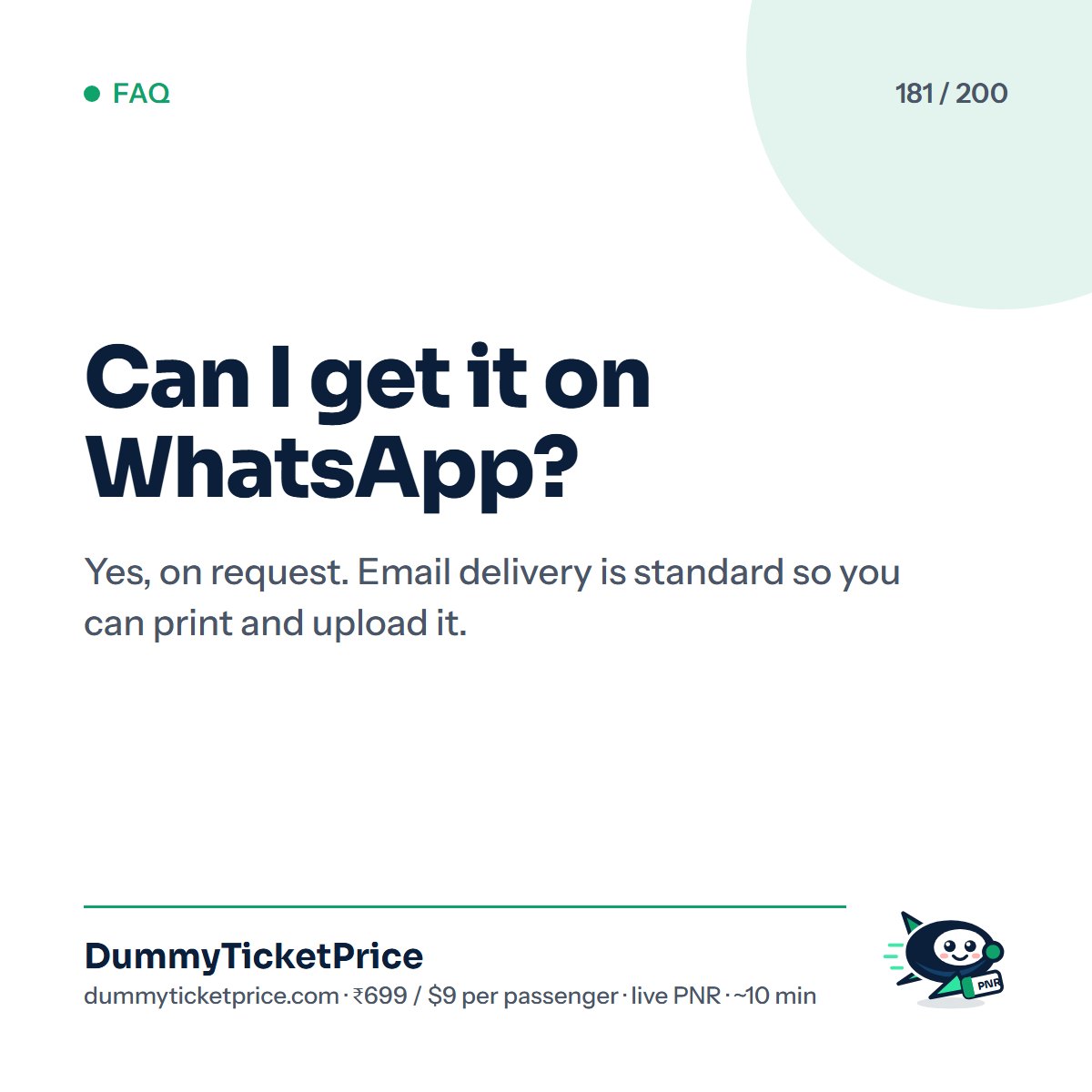
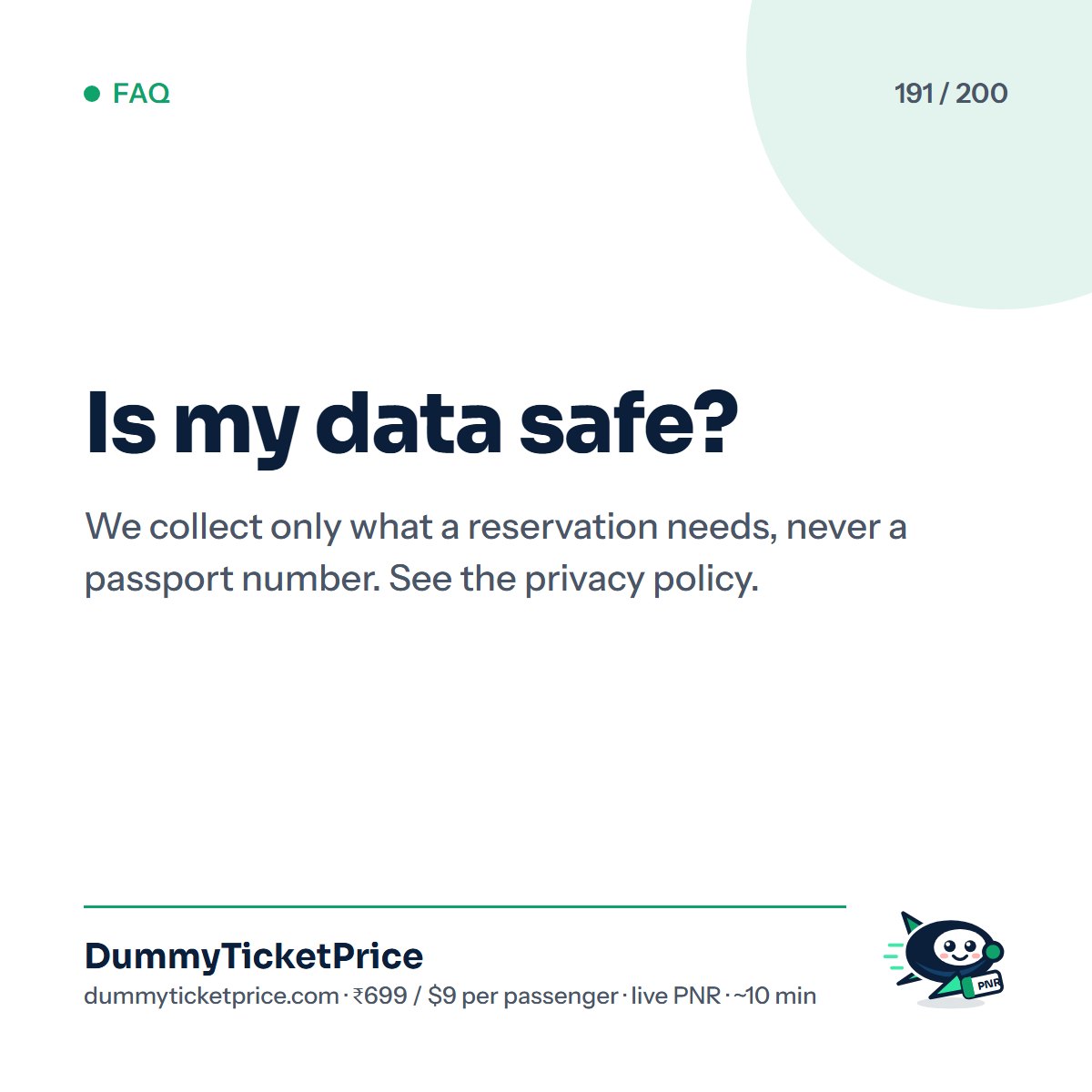
Short, direct answers to the questions we hear most. Is it legal? Yes: airlines create unpaid holds as part of normal booking, and a forged document, not a real reservation, is what is illegal. Do you get a PNR? Yes, on every reservation. Do we need a passport number? No. Can you cancel? Reservations are issued quickly and exactly as entered, so read the refund page before paying. The longer answers are on the FAQ page.





How to use these posters
Applicants: save the cards for your destination and the validity set, and read them the day before you book so the timing is right.
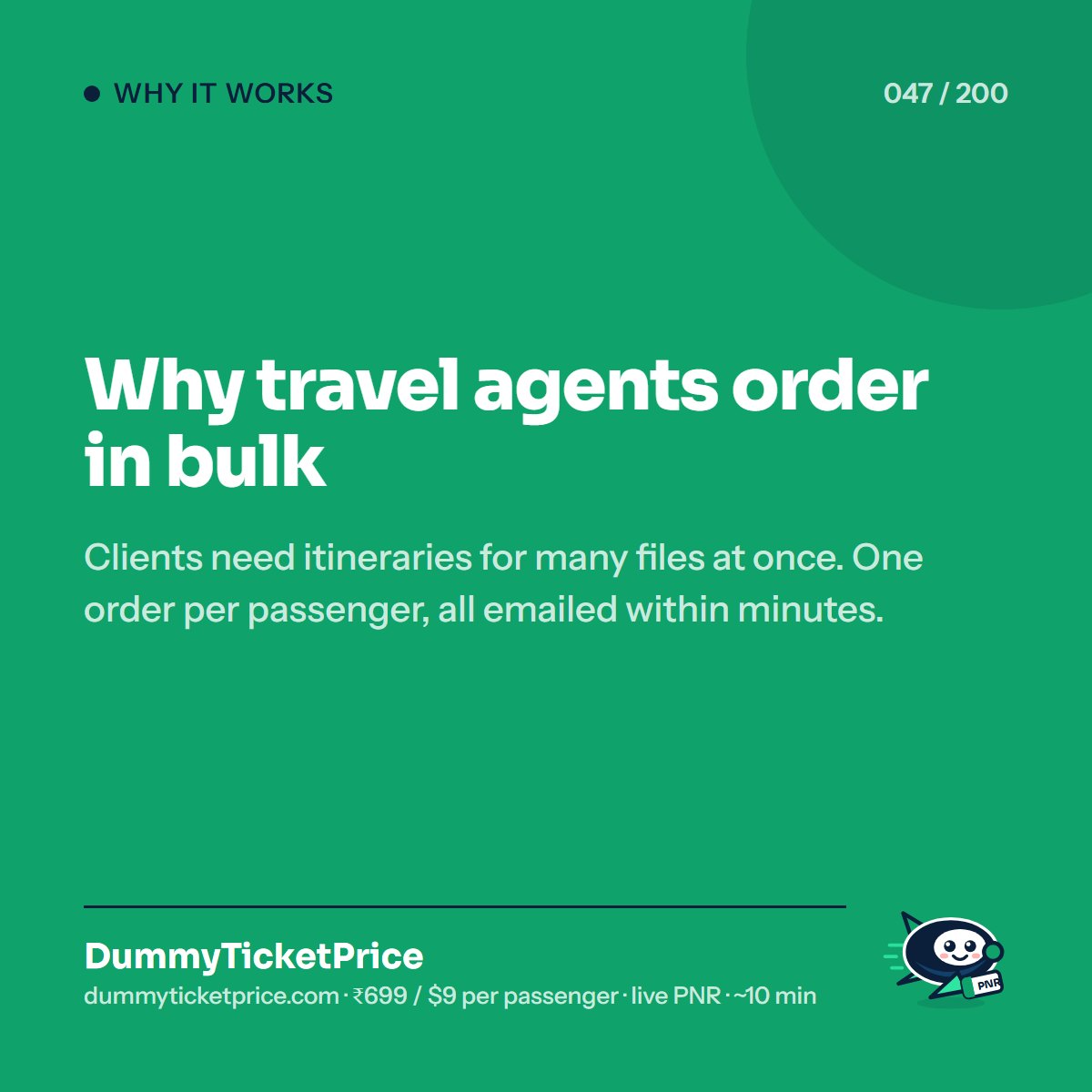
Travel agents and consultants: share the country and mistakes cards with clients instead of repeating the same explanation. The facts are sourced and dated.
Everyone: the posters are free to reuse unchanged with a link back to dummyticketprice.com. Full-size files are 1200 × 1200 pixels, which fits Instagram, WhatsApp status and YouTube community posts. Follow us on Instagram and YouTube for new ones.
Questions about the infographics
Can I use these infographics on my own site or social media?
Yes, free of charge, as long as the poster is unchanged and you link back to dummyticketprice.com. Travel agents, student groups and visa consultants are welcome to share them.
Are the facts on the posters the same as in your guides?
Yes. Every card repeats what our guides say: a dummy ticket is a held reservation and not a paid ticket, it stays valid for up to two weeks and the airline decides the exact period, the price is ₹699 / $9 per passenger, and the visa officer decides each application.
Do the posters replace reading the official checklist?
No. The country cards give the short version and link to our guide for that country, which quotes the official checklist. Always read the current checklist for your own application.
How often are the posters updated?
When a rule or a price changes we re-issue the affected card. The page shows the date it was last updated.
Where can I get the reservation itself?
On the booking page or in the DTP AI chat. Route, dates and traveller names, pay, and the PDF with the booking reference is emailed in about 10 minutes.
Need the reservation itself?
₹699 / $9 per passenger, live booking reference, emailed in about 10 minutes.