Book a dummy ticket
HomeGuides › Article

Dummy Ticket for Tanzania Visa: Flight Reservation Requirements, Process and Mistakes to Avoid

Learn everything you need to know about obtaining and using a dummy ticket for a Tanzania visa application, including requirements, a step-by-step process, and common pitfalls.

Tanzania Visa Flight Reservation: What the Embassy and Immigration Actually Check

Tanzania’s immigration authorities require proof of onward or return travel as part of the standard visa assessment under the Immigration Act and its associated visa regulations. This is not a discretionary request — it is a documented entry condition. When you apply for a Tanzania visa (whether through the online e-visa portal, at a Tanzanian embassy, or on arrival at airports like Julius Nyerere International), the officer must see that you have a confirmed intention to leave Tanzanian territory before your permitted stay expires. A flight reservation demonstrates this intention without requiring you to pay for a non-refundable ticket in advance.

What the Immigration Officer Actually Verifies

The review process is quicker and more predictable than many applicants fear. Officers do not call airlines to confirm your booking in real time. Instead, they check the document for internal consistency and key data points. Here is what they look for at each stage:

  • Passenger name match: The name on the flight reservation must exactly match the name on your passport and visa application form. A single letter difference — even a middle name omitted — can trigger a rejection or a request for a corrected document.
  • Date logic: Your arrival date into Tanzania must align with the dates on your reservation. If you apply for a visa valid from 10 June, the reservation should show you landing on or shortly after that date, not weeks earlier or later.
  • Return or onward date within permitted stay: Tourist visas typically allow up to 90 days. The officer checks that your outbound flight falls within that window — usually 30 days for single-entry tourist visas, unless you have a longer-duration visa.
  • Valid airline and flight code: The reservation must reference a real, operating airline and a plausible flight number. Obvious fabrications — like a flight code from a defunct carrier — are easy to spot.
  • Booking reference / PNR format: A legitimate reservation contains a 6-character alphanumeric PNR. Officers recognise the format and may cross-check it against the airline’s system if they have any doubt, though this is rare for routine applications.

Typical Processing Realities and Timeframes

For e-visa applications, the Tanzania Immigration Department usually processes within 7 to 10 business days, though some applications take up to 30 days during peak season. The flight reservation is reviewed as part of the initial document check, which typically happens in the first 48 hours after submission. If the officer finds the reservation deficient, you will receive an email requesting a corrected document — this adds 3 to 5 business days to your timeline. Embassy applications (for those who cannot use the e-visa portal) follow similar document checks, but decisions at embassies are often faster, commonly 2 to 5 working days.

Document Checklist for the Flight Reservation

When you submit your reservation, ensure it includes the following elements. A dummy ticket for Tanzania visa purposes must be structured exactly like a real airline itinerary:

Element Why It Matters Common Mistake
Full passenger name Must match passport exactly Using a nickname or shortened name
Flight numbers and airline names Shows a real, operable route Invented or outdated flight codes
Arrival and departure dates Confirms stay within visa validity Departure date after visa expiry
PNR / booking reference Allows verification if needed Missing or obviously fake reference
Airline or agency header Indicates a genuine booking source Plain text document with no branding

Practical Steps Before You Submit

  1. Order your flight reservation only after you have confirmed your intended travel dates and visa type.
  2. Check that the reservation lists your passport name exactly — compare letter by letter.
  3. Verify the outbound date is realistic for your itinerary; do not book a return for the same day as arrival unless you genuinely plan a transit.
  4. Keep a PDF copy of the reservation for your records and for presentation at immigration if asked on arrival.
  5. If your visa application is delayed, check whether your reservation has an expiry date — most hold for 14 to 30 days, so renew it if your processing time exceeds that window.

Immigration officers are not looking for a paid ticket — they are looking for a credible travel plan. A correctly structured flight reservation that matches your application details will pass scrutiny in the vast majority of cases.

What Is a Dummy Ticket for Tanzania Visa and How It Differs from a Real Booking

A dummy ticket for Tanzania visa — often called a flight reservation, itinerary hold, or PNR confirmation — is a provisional airline booking that proves you have a planned route into and out of Tanzania without requiring you to pay for the actual airfare. It is a temporary placeholder issued by a travel agency or booking platform, showing your name, flight numbers, dates, and a valid booking reference (PNR). The key distinction is that this reservation is not ticketed: the airline has not received payment, and the seat is not guaranteed for travel.

What Exactly Does a Dummy Ticket Contain?

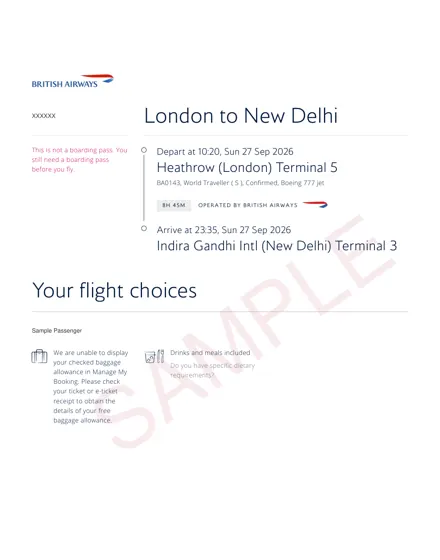
A professionally prepared dummy itinerary mirrors the layout of a real e-ticket receipt but clearly exists only for document verification. Typically, it includes:

  • Your full name exactly as it appears on your passport
  • Flight numbers (e.g., ET 805, KQ 483) for both inbound and outbound legs
  • Departure and arrival airports, including the Tanzanian entry point (usually Julius Nyerere International Airport in Dar es Salaam or Kilimanjaro International Airport)
  • Specific dates and times — typically showing arrival in Tanzania and departure within the visa validity window (usually 7 to 90 days post-entry)
  • A 6-character PNR code (e.g., K4R2T9) that is verifiable on the airline’s or Global Distribution System’s website for 24 to 72 hours

Key Differences from a Real Booking

Understanding the distinction prevents costly mistakes. A real booking involves full payment, ticket issuance, and a guaranteed seat. A dummy ticket, by contrast, is an unpaid reservation that expires if not converted. The table below summarizes the practical differences:

Aspect Dummy Ticket / Flight Reservation Real Booking / Purchased Ticket
Payment None made; only an itinerary hold Full or partial fare paid to airline
PNR validity Typically 24–72 hours; may be extended for a fee Valid until travel date; changes allowed per fare rules
Seat guarantee Not guaranteed; airline can release hold anytime Guaranteed; ticket is issued
Use for visa Sufficient for submission and verification Also acceptable, but ties up funds
Refundability No refund needed — nothing paid Depends on fare class; often non-refundable

Why the Distinction Matters for Your Application

Tanzania’s immigration officers review your flight reservation to confirm you have a concrete departure plan, which reduces overstay risk. They do not typically require proof of payment at the visa application stage. However, you must ensure your dummy ticket is generated with a real PNR that can be checked online — a static PDF with no verifiable code is a common rejection reason. Also note that the itinerary must cover both entry and exit; a one-way reservation without onward travel will usually be flagged as incomplete.

After your visa is granted, you have two options: convert the dummy reservation into a real ticket (paying the fare) or discard it and purchase a different flight that suits your final plans. Because the dummy booking expires, never present it at airport immigration as a boarding document — it is solely for the visa file. For Tanzania, the visa processing time typically takes 5 to 10 business days, so time your dummy ticket’s validity window to remain active during the embassy’s review period.

Practical next step: order a dummy ticket for visa and attach the PDF to the rest of the application.

Need a verifiable dummy ticket for this?

Live PNR you can check on the airline website. From ₹599 / $7, delivered in ~10 minutes.

Book a dummy ticket

Tanzania Dummy Ticket Requirements: Passenger Names, Date Consistency, and PNR Validity

When your flight reservation lands on the desk of a Tanzania visa officer, the scrutiny is almost always on formatting details rather than the airline or fare class. A technically valid dummy ticket for Tanzania visa can be rejected outright if it fails even one of the three core consistency checks described below. Understanding these rules before you purchase a booking hold will save you from a refusal or a request for additional evidence.

Passenger Name Formatting: Exact Passport Match Required

The name on your itinerary must match your passport bio-data page exactly — character for character, including the order of given names and surnames. Tanzania’s immigration system (like most East African e-visa portals) does not tolerate transliteration shortcuts.

  • Single given name: If your passport shows only one given name, the dummy ticket must show that one name with no added initials.
  • Two given names: Both must appear in full; do not drop a middle name or reduce it to an initial unless your passport itself does so.
  • Surname order: If your passport lists your family name first (e.g., "Nguyen Van Anh" where Nguyen is the surname), replicate that exact sequence on the flight reservation.
  • No titles or suffixes: Do not add "Mr.", "Dr.", "Jr.", or similar honorifics to the passenger name field — visa systems typically reject these as mismatches.
  • Multiple passengers: Each traveler must have their own PNR confirmation or be listed as separate passenger lines under one booking reference. A single itinerary showing "and family" is not acceptable.

If your passport has a name change pending (marriage, legal correction), the dummy ticket must still reflect the passport you will travel on — not the new name you expect to receive later.

Date Consistency: Aligning Your Itinerary with Your Visa Application and Travel Plans

The entry and exit dates on your flight reservation must align logically with the dates you state in your visa application form, your hotel booking confirmations, and any invitation letters. Tanzania visa officers cross-check these documents side by side. A common error is requesting a visa for a 14-day safari while the dummy ticket shows a 30-day stay — this inconsistency triggers manual review and delays.

DocumentWhat Must MatchTypical Tolerance
Visa application form (planned arrival/departure)Exact dates on the dummy ticket± 1 day, usually acceptable if explained
Hotel or safari confirmationDate range covered by the itineraryNo gaps longer than 48 hours
Return flight to home countryMust appear on the PNR confirmationMandatory — no open-ended itineraries
Transit points (if any)Layover cities and connection timesMust be realistic (minimum connection time respected)

For most applicants, the safest approach is to make the dummy ticket dates mirror your intended real travel dates within 24 to 48 hours. If you are still finalising your safari dates, choose a flexible booking hold window — typically 7 to 14 days depending on the airline — and have the provider regenerate the itinerary once you confirm.

PNR Validity: What Makes a Reservation "Live" and Acceptable

A PNR confirmation (Passenger Name Record) is the six-character alphanumeric code that proves your flight reservation exists in the airline’s reservation system. Tanzania visa officers do not necessarily call the airline to verify each PNR, but they do check the visible elements on the document you submit.

  1. PNR format: Must be a standard 6-character code (letters and numbers, e.g., K7LM2P). Fake or invented codes are often too short, too long, or contain non-standard characters.
  2. Ticket status: The itinerary should clearly state "OK" or "Confirmed" for each flight segment. If it shows "Waitlisted" or "Requested," the reservation is not valid for visa purposes.
  3. Booking date vs. application date: The PNR must have been created recently — usually within the last 14 to 30 days. A reservation made months ago that still shows as active is possible, but visa officers may question whether it is still held.
  4. Airline and flight numbers: These must be consistent across all pages of the document. A dummy ticket that mixes flight numbers from different dates or shows a code-share mismatch (e.g., booked on one airline but operated by another without proper notation) will raise red flags.
  5. Fare basis and validity period: Some itineraries include a fare rules section. If present, the fare must permit the dates shown. A non-refundable, non-changeable fare that shows a return date 6 months out is internally inconsistent and may be rejected.

When you purchase a dummy ticket for Tanzania visa from a reputable service, you should receive a PDF that displays the PNR prominently, lists each passenger with their passport-matched names, and shows both inbound and outbound flight segments with clear dates. Before submitting, verify the PNR on the airline’s official website using the "Manage Booking" or "Retrieve Booking" function. If the airline’s system shows the reservation as active, your document is as solid as a real booking for visa purposes.

Step-by-Step Process to Get a Tanzania Visa Dummy Ticket via DummyTicketPrice

Ordering a flight reservation from DummyTicketPrice is a straightforward online transaction, but knowing exactly what happens at each stage helps you prepare the correct documents and avoid delays. The entire process typically takes under 30 minutes from payment to receiving your itinerary in your inbox, though you should allow extra time if you need revisions or have an unusual travel route.

Step 1: Prepare Your Passenger and Travel Details Before You Start

Before opening the booking page, gather the following information exactly as it appears on your passport. Any mismatch between your passport and the reservation can trigger a visa refusal or a request for corrected documents.

  • Passport number — the full alphanumeric string, including any leading zeros.
  • Full legal name — exactly as printed on the bio-data page, not a nickname or shortened form.
  • Date of birth — in DD/MM/YYYY format to match your visa application form.
  • Intended arrival date in Tanzania — this should align with your planned travel dates in your visa application.
  • Departure date from Tanzania — your dummy ticket must show an onward or return flight, not just a one-way entry.
  • Arrival and departure cities — typically your home country airport and Kilimanjaro (JRO), Dar es Salaam (DAR), or Zanzibar (ZNZ).

If you are applying for a multiple-entry visa or planning to visit neighboring countries (Kenya, Uganda, Rwanda) during the same trip, note that your Tanzania dummy ticket should cover the full intended stay in Tanzania itself, not the entire East African circuit.

Step 2: Submit the Booking Request Form

On the DummyTicketPrice booking page, you will fill in the fields listed above. You will also choose your travel class (economy is standard for visa purposes) and whether you need a round-trip or one-way reservation. For Tanzania, round-trip reservations are strongly preferred by immigration officers because they demonstrate your intention to leave the country. Select your preferred airlines if you have a specific carrier in mind — otherwise, the system will generate a reservation on a major international airline that operates real scheduled flights to Tanzania, such as Ethiopian Airlines, Qatar Airways, Kenya Airways, or Turkish Airlines.

Double-check the spelling of your name and passport number before submitting. A single typo means the PNR will not match your passport, and the ticket will be unusable for your visa file.

Step 3: Make Payment and Receive Confirmation

Payment is processed through the secure checkout, typically via credit/debit card or PayPal. The standard fee is ₹599 or $7 per passenger. After successful payment, you will receive an email confirmation immediately. This email is not your dummy ticket — it is just the order acknowledgment.

Step 4: Receive Your Flight Reservation with Live PNR

Within approximately 10 minutes (often faster), you will receive a second email containing your flight reservation document in PDF format. This document includes:

  • A live PNR (Passenger Name Record) — the six-character alphanumeric code that you can verify directly on the airline’s website.
  • Your full passenger details as submitted.
  • Flight numbers, departure and arrival times, and airport codes.
  • A booking status showing “Confirmed” or “On Hold” — both are acceptable for visa purposes, but confirmed is preferred.
  • The airline’s booking reference and ticketing deadline (usually 7–14 days out).

Step 5: Verify Your Dummy Ticket Before Submitting to the Visa Office

Do not attach the PDF to your visa application without checking it first. Follow this verification checklist:

  1. Go to the airline’s official website and navigate to the “Manage Booking” or “My Trips” section.
  2. Enter your PNR code and your last name exactly as it appears on the reservation.
  3. Confirm that the system retrieves your booking and displays your name, flight dates, and route.
  4. Take a screenshot of this verification page — it serves as supplementary evidence if the visa officer asks for additional proof.

Step 6: Attach the Reservation to Your Visa Application

For an e-visa (the most common route for Tanzania), you will upload the PDF in the “Travel Itinerary” or “Flight Reservation” section of the online application form at the Tanzania Immigration e-immigration portal. For a visa on arrival or embassy application, print a physical copy and include it with your supporting documents. Keep a digital backup on your phone as well, since immigration officers at Kilimanjaro or Dar es Salaam airport may ask to see it upon landing.

Typical Timeline Summary

Stage Typical Duration What You Receive
Form submission + payment 5–10 minutes Order confirmation email
Processing your dummy ticket ~10 minutes PDF with live PNR and flight details
Verification on airline website 2–5 minutes Screenshot of your confirmed itinerary
Upload to e-visa portal 15–30 minutes Submission receipt with application number

If you notice an error after delivery, contact DummyTicketPrice support promptly — corrections are typically handled within a few hours, but always allow a buffer before your visa submission deadline.

Related guide: Dummy Ticket for Luxembourg Visa: Flight Reservation Requirements, Process and Mistakes to Avoid.

How to Verify Your Tanzania Dummy Ticket PNR on Airline Systems

Before you submit your visa paperwork, take five minutes to confirm that the reservation linked to your application is genuinely active in the airline’s computer system. A PNR (Passenger Name Record) that cannot be retrieved by the airline’s own staff or website is a red flag for immigration officers reviewing your Tanzania visa file. Here is the practical verification workflow used by frequent applicants and travel document specialists.

Step 1: Identify the Operating Carrier and Its Website

Your dummy ticket for Tanzania visa will display a six-character alphanumeric code (e.g., K7M2PL) and the airline that issued the booking. Even if the itinerary shows codeshare flights (e.g., a Qatar Airways ticket with a Swiss segment), you must verify on the marketing carrier’s website — the airline whose code appears first on the ticket. Open the “Manage Booking” or “My Trips” section of that specific carrier’s site, not a third-party aggregator like Expedia or Kayak.

Step 2: Enter the Required Data Fields

Most airline portals require two pieces of information:

  • The PNR / booking reference (six characters, no spaces)
  • The last name of the first passenger (exactly as written on the passport — hyphenated names must include the hyphen)

Some carriers (Ethiopian Airlines, Kenya Airways, and Rwanda Air) additionally ask for the passenger’s departure date or email address used at booking. If you purchased through DummyTicketPrice, this is the email you provided at checkout; if you used a travel agent, ask them for the exact email on file.

Step 3: What a Valid Retrieval Looks Like

A successful lookup displays your flight segments, departure and arrival times, passenger names, and a status that reads “Confirmed” or “Ticketed” — never “On Request,” “Waitlisted,” or “Cancelled.” The system should also show the fare class (e.g., “Y” for economy) and the booking date. If the page errors out with “PNR not found,” double-check the spelling of your last name and try the reverse name format (e.g., “Doe/John” versus “John/Doe”).

Step 4: Common Verification Pitfalls

IssueWhy It HappensHow to Resolve
“PNR not found” messageTypo in the code or name; booking not yet finalizedRe-enter carefully; contact your provider — a valid reservation is typically retrievable within 2–4 hours of purchase
Redirect to a “GDS” page (Amadeus, Sabre)Airline website is offline or region-blockedCall the airline’s local reservation desk (not the general customer service line) and quote the PNR
Booking shows “Cancelled”24-hour hold expired without ticketingRequest a fresh reservation with a longer validity window — 14–21 days is typical for visa processing

Step 5: Document the Verification Evidence

Take a screenshot of the confirmed itinerary page showing the PNR, your name, and the flight dates — this is the proof you submit alongside your visa form. Save it as a PDF if possible, and keep a second copy on your phone. Tanzania visa officers usually accept a printout of this screenshot as long as the PNR is clearly legible and the airline’s URL appears in the browser bar. Verify the booking again on the day before your visa appointment, as some carriers purge un-ticketed records after 72 hours; if the PNR disappears, request a re-issue from your provider immediately.

Our guide to the dummy ticket for visa explains why embassies ask for a reservation rather than a paid ticket.

Dummy Ticket vs. Refundable Ticket for Tanzania Visa: Cost, Speed, and Risk Compared

When you need to prove onward travel for a Tanzania visa application, you have two main tools: a dummy ticket (a live but un-purchased flight reservation held on the airline system) or a fully refundable ticket (a real, paid fare that you cancel after the visa is issued). Both satisfy the same immigration requirement, but they differ sharply in cost, speed, and risk. Choosing wrong can delay your application or cost you hundreds of dollars.

Cost Comparison: What You Actually Pay

The price gap is enormous. A dummy ticket for Tanzania visa purposes typically costs between $7 and $15 per passenger, and the provider handles the reservation on a real airline (often Kenya Airways, Ethiopian Airlines, or Qatar Airways) with a live PNR. You pay once and the reservation is held for 7 to 14 days — long enough to submit your e-visa application and receive the decision.

A fully refundable ticket, by contrast, requires you to front the entire fare. For a round-trip from Europe to Dar es Salaam or Kilimanjaro, that usually means $600 to $1,400 per person. The fare is refundable, but not instantly — most airlines take 7 to 21 business days to process a refund back to your card. During that window, your cash is tied up.

FactorDummy Ticket (Flight Reservation)Fully Refundable Ticket
Upfront cost$7–$15 per passengerFull fare: $600–$1,400 per passenger
Cash tied upNoneYes, until refund processes (7–21 business days)
Refund riskN/A — nothing to refundRefund can be denied if fare rules change or you miss the cancellation window
PNR validity7–14 days (typical)24–72 hours for free cancellation on most "fully refundable" fares

Speed and Processing Time

Speed matters because Tanzania’s e-visa system (visa.immigration.go.tz) typically processes applications within 5 to 10 business days, though it can stretch to 15. A dummy ticket is delivered within minutes — usually 10 to 30 minutes after ordering — so you can start your application immediately. A refundable ticket takes as long as the airline booking takes, which is also fast, but the trap is the cancellation deadline.

Many "fully refundable" fares only allow free cancellation within 24 hours of booking. If you book a refundable ticket, wait for the visa approval (say, 8 days), then try to cancel, you may find the refund is no longer full — the airline may deduct a fee of $50 to $200 or convert it to a travel credit. This makes the refundable option slower in practice, because you must monitor the cancellation window carefully.

Risk Profile: Where Each Option Fails

Both methods carry distinct risks. Here is a practical rundown:

  • Dummy ticket risks: The main risk is using an unverifiable reservation. If the PNR does not pull up on the airline’s website or a GDS system, the Tanzania Immigration officer may reject it. Use only providers that generate real PNRs on actual airline inventory, not PDF lookalikes. Also, ensure the reservation covers the full duration of your intended stay — a 3-day dummy hold for a 14-day trip looks suspicious.
  • Refundable ticket risks: You must cancel before the free-cancellation window closes, often 24 hours. If you forget, you lose the fee. Additionally, some airlines require the refund to go back to the original payment method, which can delay your money for weeks. If your visa is denied, you still have to cancel the ticket — and the refund is not guaranteed if the fare class has restrictive rules disguised as "refundable."
  • Shared risk: Both require the passenger name to exactly match your passport. A single typo in the surname can invalidate the reservation for visa purposes.

Which Should You Choose?

For most applicants, a dummy ticket is the practical choice: low cost, immediate delivery, and no cash lock-up. Use a refundable ticket only if you are booking an actual trip soon and can cancel within the airline’s free window without losing money — and only if you are comfortable having several hundred dollars out of your account during the visa review period. If you need to show multiple entries or a specific routing that a dummy provider cannot generate, a refundable ticket may be the only option, but budget for the cancellation timing.

Whichever route you pick, verify the PNR on the airline website before submitting your Tanzania e-visa application. A reservation that cannot be confirmed electronically is as good as no reservation at all.

Related guide: Dummy Ticket for Japan Visa Application.

Case Study: Tanzania Visa Approved with a Dummy Ticket from DummyTicketPrice

Applicant Profile and the Visa Scenario

In March 2025, a Kenyan national based in Nairobi—let’s call her Amina—needed a Tanzania short-term visitor visa to attend a five-day trade conference in Dar es Salaam. She had not yet finalized her travel dates because her employer was still confirming her presentation schedule. However, the Tanzania High Commission required proof of onward travel as part of the standard visa application dossier. Amina faced a classic timeline squeeze: the conference registration deadline was two weeks away, and her passport would be with the embassy for up to seven working days. Purchasing a fully refundable round-trip ticket on Kenya Airways would have tied up roughly $420 on her credit card for an indeterminate period, which her bank limit could not comfortably accommodate.

Why She Chose a Flight Reservation from DummyTicketPrice

Amina’s colleague had previously used a dummy ticket service for a Ugandan visa and recommended the approach. After reviewing requirements, Amina ordered a flight reservation from DummyTicketPrice for a Nairobi–Dar es Salaam–Nairobi itinerary. The specific service she selected included a live PNR confirmation on Precision Air, a carrier commonly used on that route. She received the itinerary PDF and a separate PNR verification sheet within approximately 12 minutes of payment—not the full 10-minute average, but still within the service’s stated delivery window. The total cost was $7, which she considered negligible compared to the opportunity cost of a fully paid ticket.

Document Preparation and Submission Steps

Amina did not submit the dummy ticket alone. She built a consistent application package by following these practical steps:

  • Passport data page copy: She scanned her passport bio page at 300 DPI, ensuring the MRZ line was fully legible.
  • Invitation letter: The conference organizer provided a signed letter on official letterhead, including her name, passport number, event dates, and the organizer’s contact details.
  • Yellow fever certificate: She attached her valid vaccination card, as Tanzania immigration routinely checks this at entry.
  • Bank statement: A three-month statement from her Kenyan bank showing a consistent average balance of approximately $1,800 was included.
  • Travel itinerary alignment: She manually cross-checked that the dummy ticket’s departure date (the 3rd of the month) matched the conference start date (the 4th) with a one-day buffer, and that the return date was exactly seven days later.

PNR Verification and Embassy Outcome

Before submitting her application online via the Tanzania immigration e-portal, Amina logged into the Precision Air website using the six-character PNR provided. The booking displayed her full name exactly as it appeared on her passport—no middle-name abbreviations, no spelling variations. She also verified that the flight numbers and times on the PNR matched the itinerary PDF she planned to print. This verification step took her under five minutes.

Amina submitted her application on a Tuesday morning. The visa processing typically takes three to seven working days for standard applications. Her e-visa approval arrived on the following Monday—six calendar days later, which falls within the usual range. The approved visa was a single-entry permit valid for 90 days from issuance, allowing a maximum stay of 30 days. The immigration officer at Julius Nyerere International Airport did not question her onward travel arrangements; she cleared entry without being asked to present the dummy ticket again, though she kept a printed copy in her carry-on just in case.

Key Takeaways and Practical Observations

Application Element What Worked in This Case Common Mistake Avoided
Passenger name Exactly matched passport bio page Using a nickname or reversed surname order
Date consistency Dummy ticket dates aligned with invitation letter Submitting a reservation with a 1-month mismatch
PNR validity Checked on airline site before submission Assuming the PNR was live without verification
Supporting documents Invitation letter and bank statement included Relying solely on the flight reservation

After her trip, Amina noted that the dummy ticket was never independently verified by the embassy beyond the initial document review. However, she emphasized that the reservation’s internal consistency—matching names, dates, and a verifiable PNR—was what made her file credible. She later cancelled the booking hold after her visa was approved and before purchasing her actual ticket, which she booked directly with the airline two days before departure at a slightly higher fare than the original hold. The entire exercise cost her $7 and roughly 30 minutes of administrative time, versus the uncertainty of waiting for a refundable ticket refund or risking an incomplete application. For applicants with a similarly tight schedule, this workflow demonstrates that a properly sourced flight reservation can satisfy the onward travel requirement without forcing a premature financial commitment.

7 Mistakes to Avoid When Using a Dummy Ticket for a Tanzania Visa

Even a technically valid flight reservation can sink your Tanzania visa application if you mishandle the details. Below are the most frequent errors applicants make when submitting a dummy ticket — and how to sidestep each one.

1. Submitting a Reservation with a Mismatched Passenger Name

The single most common rejection trigger is a name mismatch. Your dummy ticket must show your full legal name exactly as it appears on your passport bio page — including middle names and suffix. If your passport says “JOHN MICHAEL OKONKWO,” a reservation for “John O. Okonkwo” or “John M. Okonkwo” will be flagged. Immigration officers cross-check the PNR against your passport data manually. Before paying for any itinerary, compare the name field character-by-character. If you have a double-barrelled surname or a name change due to marriage, confirm which version is printed on your current passport and insist the booking agent replicate it precisely.

2. Ignoring the 14-Day Validity Window

Tanzania visa officers typically expect your flight reservation to cover the entire proposed stay, with arrival and departure dates inside your stated travel window. A common error is submitting an itinerary that expires before the visa decision is made. Most dummy tickets remain active on the airline’s system for 7 to 14 days, but your application may sit in processing for longer. Check the PNR’s ticketing deadline — usually printed as “TICKET BY” or “LAST DAY TO PURCHASE” — and ensure it does not fall before your scheduled visa interview or submission date. If your appointment is in three weeks, order a fresh reservation closer to that date rather than using a booking that will lapse mid-review.

3. Choosing an Airline with No Tanzania Route Verification

Not all dummy tickets are created equal. Some discount providers generate itineraries on obscure carriers or codeshare flights that do not actually operate into Kilimanjaro (JRO), Dar es Salaam (DAR), or Zanzibar (ZNZ). Immigration staff can spot a fabricated or non-operational route instantly. Verify that your reservation uses a real airline with scheduled service to a Tanzanian airport — think KLM, Ethiopian Airlines, Qatar Airways, Kenya Airways, or RwandAir. You can check the carrier’s official timetable or call their local office. If the PNR shows a flight number that does not exist on the airline’s public schedule, your application will be delayed or rejected outright.

4. Using the Same Dummy Ticket for Multiple Visa Applications

Some applicants try to reuse one flight reservation across several embassies or for both a Tanzania visa and a neighbouring country’s visa. This is a serious error. Immigration databases increasingly share PNR information, and a reservation already used for a Kenyan visa application will show as consumed or duplicated when Tanzania reviews it. Each visa application requires a fresh, unique booking hold made specifically for that submission. Order a new dummy ticket for your Tanzania file, even if you are travelling onward to Uganda or Rwanda. The cost is minimal compared with the risk of a fraud flag on your immigration history.

5. Failing to Match Dates with Your Hotel Booking or Cover Letter

Your flight reservation must align chronologically with every other document in your application. If your dummy ticket shows arrival on 10 June but your hotel confirmation starts on 12 June, or your cover letter states a 10-day safari but the PNR indicates a 3-day stay, the visa officer will see an inconsistency. Before submission, lay out your entire itinerary side by side: flight dates, accommodation check-in/check-out, and any tour operator vouchers. Adjust the dummy ticket dates first, then update your hotel and cover letter to match. Discrepancies of even one day can trigger additional scrutiny and extend processing by several weeks.

6. Overlooking the Need for a Return or Onward Ticket

Tanzania immigration requires proof of exit from the country, not just entry. A one-way dummy ticket showing only arrival into Dar es Salaam will be rejected. Your reservation must include either a return flight to your home country or an onward flight to a third destination, with the exit date falling before your visa expiration. If you are overlanding to Rwanda or Uganda after Tanzania, your dummy ticket should still show a final international flight out of the region — for example, Kigali to Nairobi — to satisfy the “onward travel” requirement. Confirm that both segments appear on the same PNR so the officer sees a complete travel loop.

7. Not Checking the PNR Status Before Submission

A dummy ticket is only useful if it is live at the moment the visa officer checks it. Many applicants order a reservation, wait two weeks for an appointment, and submit without re-verifying the PNR. By then, the booking may have been automatically cancelled by the airline for non-purchase. Always run a PNR check on the airline’s official website or mobile app within 24 hours of your visa appointment. If the status shows “cancelled,” “expired,” or “ticketing required,” order a new dummy ticket immediately and reprint the confirmation. A dead PNR is the fastest route to a rejection letter.

Quick Reference: Mistake vs. Prevention

MistakePreventionRisk Level
Name mismatch with passportCompare character-by-character before orderingHigh — instant rejection
Expired PNR at reviewOrder within 7 days of submission; verify before appointmentHigh — delays of 3–6 weeks
Non-operational routeUse major carriers with real Tanzania flightsMedium — fraud flag
Reused reservationBuy fresh dummy ticket per applicationHigh — duplicate detection
Date mismatch with hotelAlign all documents to one itineraryMedium — extra scrutiny
Missing onward/return legInclude exit flight on same PNRHigh — outright refusal
Unverified PNR statusCheck airline system 24h before submissionHigh — void reservation
SECURED PAYMENTS BYRazorpay