Book a dummy ticket
HomeGuides › Article

Dummy Ticket for Postal and Courier Visa Applications

A complete guide to using dummy flight tickets for postal and courier visa applications, covering what postal officers verify, how to order and validate your reservation, common pitfalls, and expert tips for approval.

Why Postal Visa Applications Need a Different Approach to Flight Itineraries

When you submit a visa application by post or courier—rather than attending an in-person appointment at an embassy or visa application center—the rules of engagement change fundamentally. You are not standing in front of a visa officer who can glance at your documents and ask a clarifying question. Instead, your entire application packet is reviewed remotely, often by a different team than the one that conducts interviews, and sometimes days or weeks after you send it. This separation creates specific demands for your flight reservation that a standard dummy ticket for an in-person slot may not satisfy.

Documentation Must Stand Alone Without Oral Explanation

For postal submissions, your flight itinerary is one of perhaps 15 to 25 separate documents in a physical or scanned folder. The reviewing officer cannot ask you why your travel dates are 12 days apart or why your return flight is on a different airline. Your itinerary must therefore be internally consistent and self-explanatory. A dummy ticket for postal visa application purposes should clearly show:

  • Passenger name exactly matching your passport (including any middle names or suffixes)
  • Flight numbers for both outbound and return segments, even if your visa type does not strictly require a return ticket
  • Airline confirmation code (PNR) that is visibly formatted as a real airline record, not a random string of letters
  • Booking status that reads "Confirmed" rather than "Requested" or "On Hold"
  • Date of issue that is recent—typically within 14 days of your postal submission date

If your itinerary is missing any of these elements, the remote reviewer has no opportunity to ask you what you meant. They will simply note the deficiency and, in many cases, return your entire application packet, costing you the visa fee and weeks of waiting.

Validity Windows Are Longer for Postal Processing

In-person visa appointments usually happen within a known date range—you know when you will sit across from the officer. Postal applications, however, involve a longer and more variable chain: courier transit to the embassy (typically 2–7 days), administrative intake and data entry (often 3–10 business days), and then the actual adjudication. Your flight itinerary must remain verifiable throughout this entire window. A booking hold that expires in 48 hours is effectively useless for postal submissions.

Real airline reservations from a service like DummyTicketPrice.com are held as live PNR records, usually for 10–14 days from issuance. That gives you a realistic buffer if the courier is delayed or the embassy's intake queue backs up. Before purchasing any dummy ticket for postal visa application purposes, ask the provider: "How long will this PNR remain verifiable if my application sits in a mailroom for a week?" If the answer is less than 10 days, look elsewhere or time your purchase accordingly.

Formatting Must Match Postal Review Protocols

Some visa posts require a printed itinerary inside the physical packet; others ask for a PDF attached to an online application portal that you then mail a cover sheet for. The formatting requirements differ slightly. Check the specific embassy or consulate guidance for postal submissions—usually found under "How to Apply" or "Application Procedures" on the official website. A typical postal packet includes a cover letter, the visa application form, passport photos, fee payment receipt, and the flight itinerary as a separate sheet. That itinerary should be on clean white paper or a clear PDF, not embedded in an email thread or mixed with hotel booking confirmations.

Practical Comparison: Postal vs. In-Person Itinerary Needs

FactorIn-Person AppointmentPostal Submission
Typical validity needed24–72 hours10–14 days
Officer can ask clarifying questionsYesNo
Itinerary reviewed byInterviewing officerRemote adjudicator or document checker
Format acceptedOften printed or on phone screenPrinted paper or clean PDF attached to portal
Consequence of errorPossible verbal request for correctionReturn of entire packet or refusal

Practical Steps for Postal Applicants

  1. Read the embassy's postal checklist twice—once before booking anything, once after assembling your packet.
  2. Purchase your dummy ticket only after you have confirmed the courier address and the expected delivery timeline, so the PNR does not expire during transit.
  3. Print the itinerary on a single page, with no cut-off edges, and place it in the packet in the exact order the embassy specifies.
  4. Keep a digital copy of the itinerary and the PNR confirmation email accessible for 30 days after mailing, in case the embassy contacts you for verification.

Ultimately, the difference is one of robustness. An in-person appointment can tolerate a slightly imperfect itinerary because a human can clarify it on the spot. A postal application has no such luxury—your dummy ticket must be correct, current, and verifiable from the moment it leaves your hands until the day an officer opens your file.

What Postal Visa Officers Check When Reviewing Your Dummy Ticket

When your visa application arrives by courier or post, the reviewing officer cannot call you for a quick clarification or ask you to open your email in real time. Everything must be verified from the documents you physically sent. This makes the scrutiny of your flight reservation more systematic—and more dependent on small details you might overlook.

1. PNR Validation Against the Airline’s Live System

The most common check is entering your Passenger Name Record (PNR) or booking reference into the airline’s reservation system (often via GDS tools like Amadeus, Sabre, or Galileo). The officer looks for three things:

  • Active status: The PNR must return a “confirmed” or “ticketed” status. If it shows “cancelled,” “unconfirmed,” or “on request,” the application may be rejected immediately.
  • Matching passenger name: The name on the PNR must exactly match the name on your passport and visa application form—including the same order (e.g., given name before surname, no middle initials unless your passport shows them).
  • Valid date window: The reservation must be for a date that falls within your intended travel period as stated in your cover letter or application form. If you say you plan to travel on the 15th but the booking shows the 25th, this inconsistency will be flagged.

2. Date Consistency Across All Submitted Documents

Postal visa officers often cross-reference your flight itinerary against other dated documents in your packet. They typically check:

Document What They Compare Typical Inconsistency Found
Travel insurance policy Coverage start and end dates Insurance starts 2 days after flight arrival
Hotel booking confirmation Check-in and check-out dates Hotel dates don’t overlap with flight arrival/departure
Employment leave letter Approved leave period Leave ends before the return flight date
Bank statements Transaction dates around travel dates No evidence of funds availability during the travel window
Cover letter Stated travel itinerary Mentions a city not served by the flight route on your booking

If any of these dates contradict the flight reservation, the officer may assume the itinerary is fabricated. To avoid this, generate your dummy ticket after you have finalised your hotel bookings and insurance dates, not before.

3. Airline and Route Plausibility

Officers do not know every flight schedule by heart, but they do check obvious red flags:

  • Direct vs. connecting flights: If your itinerary shows a direct flight on a route that no airline operates (e.g., a non-stop from a small regional airport to a distant capital), the PNR will fail validation.
  • Transit time: Connections with less than 45 minutes between flights are typically flagged as unrealistic, especially if the airports are different.
  • Return flight logic: A return flight that departs before the outbound flight arrives, or a gap of more than 90 days without a visa that permits long stays, will raise questions.

4. Booking Hold Duration and Payment Status

Many visa applicants use a “booking hold” that is not paid. Officers check how long the PNR has been active. Most airlines hold unpaid reservations for 24 to 72 hours. If your dummy ticket was generated more than a week before the visa officer opens your file, the PNR will likely have expired. To avoid this, order your flight reservation no more than 2–3 days before you mail your application, and use a service that provides a live PNR valid for 7–14 days (like the verifiable options from DummyTicketPrice.com).

5. Matching the Postal Submission Date

Because postal applications take time to arrive and be processed—usually 3–10 business days depending on the courier and embassy workload—officers also check whether the reservation date is still within a reasonable forward window. A flight booked for next week when the application was mailed three weeks ago will likely be treated as expired. As a practical step, always state in your cover letter that the reservation is provisional and will be replaced with a paid ticket after visa approval. This does not weaken your case; it shows honesty and awareness of the process.

What You Should Do Before Mailing

  1. Print the airline’s official PNR confirmation page, not just the email summary from a third-party site.
  2. Highlight the PNR code, passenger name, and travel dates with a pen—this helps the officer locate the key fields quickly.
  3. Keep a digital copy of the same PNR on your phone, in case the consulate calls you for verbal confirmation (some do for high-risk nationalities).
  4. If you used a travel agency to generate the dummy ticket, ask for the agency’s IATA number or booking office contact—this can be verified if the officer doubts the PNR.

Ultimately, the verification process is not designed to catch honest applicants. It is designed to catch fabricated documents. A real, live PNR that matches your other paperwork will pass these checks without issue. The key is to ensure every date, name, and route on your flight reservation aligns perfectly with the rest of your application packet before you seal the envelope and send it off.

Practical next step: order a dummy flight ticket and attach the PDF to the rest of the application.

Need a verifiable dummy ticket for this?

Live PNR you can check on the airline website. From ₹599 / $7, delivered in ~10 minutes.

Book a dummy ticket

Step-by-Step: How to Order a Dummy Ticket for a Postal Visa Application on DummyTicketPrice.com

Ordering a flight reservation for a postal visa submission is a straightforward, fully online process that takes about five minutes from start to finish. The key difference from walk-in applications is that you must ensure every detail on the itinerary matches your postal cover letter and application form exactly—there is no counter clerk to catch a typo before the package is sealed. Below is the precise workflow used on DummyTicketPrice.com, tailored for courier-based submissions.

Step 1: Prepare Your Passenger and Travel Data Before You Start

Because the PDF is generated instantly, you will not have a second chance to edit after payment. Have the following ready:

  • Full name(s) exactly as printed on the passport bio page—including middle names and suffixes. Do not use initials unless the passport does.
  • Passport number for each traveler (if the embassy requires it on the itinerary; otherwise, leave blank).
  • Exact travel dates (arrival and departure) matching your visa application form, not your wishful thinking.
  • City pair—use the IATA airport codes (e.g., DEL–LHR) to avoid ambiguity between airports serving the same city.
  • A working email address that you check regularly; the PDF and PNR confirmation will land there.

For postal applications, double-check the date of entry against your covering letter. If your courier package states you plan to arrive on the 15th but the dummy ticket says the 16th, the officer may flag it as an inconsistency—even if both are within the 90-day window.

Step 2: Navigate to the Booking Page and Select Your Route

Go to the booking page (linked from the homepage). You will see a simple form with fields for departure city, arrival city, departure date, return date (if round-trip), and the number of passengers. For a postal application, choose the same route you declared on your visa form. Do not pick a cheaper or more convenient alternative just because it exists—consistency trumps cost here. Select Economy class unless your visa category (e.g., business investor) explicitly requires a higher cabin.

Step 3: Fill in Passenger Details with Passport-Level Precision

Enter each traveler’s name, date of birth, and passport number in the fields provided. The system will generate a single reservation for all passengers on one PNR if you add them in one booking. For postal submissions, this is advantageous: one PNR means one reference number to quote in your cover letter. If you are applying for a family visa, ensure the lead passenger (the main applicant) is listed first—the visa officer will cross-reference this against the courier’s return label and the cover letter’s applicant name.

Step 4: Complete Payment and Receive Your PDF

Payment is processed via secure gateway (credit card, debit card, or UPI). The fee is per passenger—currently ₹599 or $7. After successful payment, the system generates your dummy ticket instantly. The PDF is emailed to the address you provided, typically within 10 minutes, but allow up to 30 minutes during peak hours. The email contains two attachments:

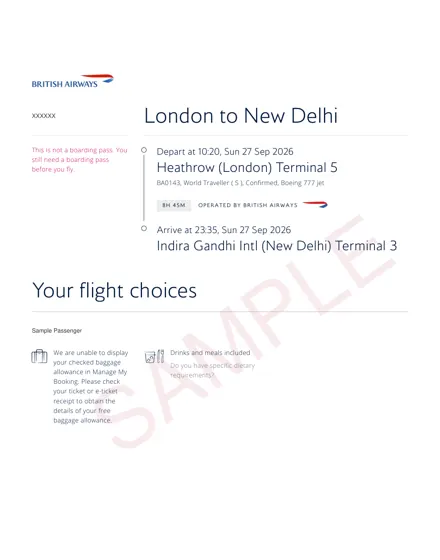
  1. The flight itinerary PDF—a one-page document showing airline, flight numbers, dates, times, and your PNR.
  2. A PNR confirmation notice—separate proof that the reservation is live in the airline’s system.

For postal applications, print both pages. Do not merge them—embassies that require a PNR check will look for the confirmation notice as a distinct artifact.

Step 5: Verify the PNR Before Sealing Your Envelope

Immediately after receiving the email, verify the PNR on the airline’s website or via a GDS checker (e.g., using the airline’s “Manage Booking” portal). This takes two minutes and ensures the reservation has not been dropped due to a payment glitch. If the PNR fails to retrieve, contact DummyTicketPrice.com support within 30 minutes—they will reissue or refund. Do not mail your application until this check passes.

Typical Timelines and What to Expect

ActionTimeframe
Booking form completion2–3 minutes
Payment processingUnder 1 minute
Email receipt with PDF and PNRUsually within 10 minutes
PNR verification on airline site2–5 minutes
Total from start to print-readyTypically under 15 minutes

Because the entire transaction is digital, there is no risk of a courier delay on the dummy ticket itself—your only deadline is your embassy’s postal processing window. Order the dummy ticket no more than 2–3 days before you mail the package, as most reservations are valid for 14 days. If your courier takes longer than expected (e.g., international post to a consulate), you can order a fresh one and include a revised cover letter—do not reuse an expired itinerary.

Finally, save the original email with the PDF attachment. Some postal visa units, particularly for Schengen or UK applications, may contact you for a re-verification link. Having the original email—not a forwarded copy—makes it easier to respond quickly without reordering.

Comparison Table: Dummy Ticket vs. Real Booking vs. No Booking for Postal Visa Applications

When you mail your passport and supporting documents to a consulate or visa processing center, you cannot explain your travel plans in person. The documents you enclose must stand entirely on their own. Below is a practical comparison of the three main strategies for handling flight evidence in a postal submission.

Criterion Dummy Ticket (Live PNR Hold) Real Booking (Paid Ticket) No Booking / Printout Only
Upfront cost Typically ₹599–₹1,500 ($7–$18) per passenger; the hold expires after 7–14 days. Full fare, usually $400–$1,500+ for long-haul routes; refundable fares cost even more. Funds are locked until you cancel or fly. Zero direct cost, but high risk of refusal or a request for additional documents (which delays processing by 2–4 weeks).
Verification at the embassy Contains a real airline PNR and ticket number. Postal officers can verify it on the airline’s website or via the GDS. Most Schengen and UK visa application centers accept a valid hold for the initial review. Fully verifiable and the strongest possible evidence. The airline has your payment and passenger record in its system. A screenshot of a fare search or an expired itinerary has no PNR. Officers frequently reject such documents because they cannot be validated.
Approval likelihood for postal submission High, provided the hold covers the full intended stay dates and the passenger name matches the passport exactly. Usually sufficient for the visa officer’s risk assessment. Highest, but only marginally better than a valid dummy ticket. The extra assurance rarely outweighs the financial risk if your visa is refused or delayed. Low to moderate. Some officers may request a verified itinerary by email, adding 10–15 working days to your processing time.
Flexibility if dates change You can order a new hold in minutes for revised dates. Cost is minimal. Changing a paid ticket usually incurs airline change fees of $100–$300 plus any fare difference. No formal booking to modify, but you will likely need to restart the document preparation process.
Risk after visa approval You must purchase a real ticket later, but you are not locked into the dummy itinerary’s airline or times. If your visa is refused, you must cancel within the airline’s refund window or lose the fare. Refund processing typically takes 7–20 business days. N/A — but you have no confirmed travel plan to show immigration officers at the port of entry if asked.

How to choose for your postal package

For a courier-based submission, the practical rule is simple:

  • Use a dummy ticket with a live PNR when you want to avoid tying up thousands of dollars before you know the visa outcome. This is the standard approach for postal applications to the Schengen area, UK, Canada, and Australia.
  • Buy a real, refundable ticket only when the embassy’s published guidelines explicitly state that a paid, ticketed reservation is mandatory — this is rare but does occur for certain business or long-stay visas.
  • Never submit a bare fare quote or an expired reservation. Postal officers cannot call you to clarify, so an unverifiable document is often treated as grounds for refusal under “insufficient travel documentation.”

Whichever route you take, ensure the passenger name on the itinerary exactly matches the passport, the dates align with your cover letter, and you include a separate flight reservation document for each visa applicant — even children listed on the same passport. This single checklist prevents the most common cause of postal visa application delays.

Related guide: Dummy Ticket for Group Tours and Corporate Travel Visa Files.

Case Study: How a Postal Applicant Got a Schengen Visa Using a Dummy Ticket

To illustrate how a dummy ticket works in a postal application, consider the case of a courier services manager from Pune, India, who applied for a 12-day Schengen visa to visit France, Germany, and Switzerland in March 2025. Because his local VFS Global center in Pune did not handle Schengen short-stay applications for France at that time, he had to courier his entire dossier to the VFS office in Mumbai — a process that added four days of transit time to his overall visa timeline.

The Applicant’s Constraints and Strategy

He had not yet booked flights because his employer had not approved his leave dates. His travel dates were flexible within a two-week window, but he needed a concrete itinerary to show the consulate. Rather than purchasing a non-refundable round-trip ticket (which would have cost roughly ₹85,000), he ordered a verifiable dummy ticket from an online service for approximately ₹600. The dummy ticket came with a live PNR that could be checked on the airline’s own website, mimicking a real reservation for 72 hours.

Documents Used in the Postal Submission

His courier package to the Mumbai VFS center included the following, in this order:

  1. Cover letter explaining that his travel dates were provisional, pending employer confirmation, and that the flight reservation was subject to change once the visa was granted.
  2. Schengen visa application form (signed, with passport photos meeting ICAO standards).
  3. Passport with two blank pages and validity extending six months beyond his planned return.
  4. The dummy ticket printout — a round-trip reservation from Mumbai (BOM) to Paris (CDG), returning from Zurich (ZRH) to Mumbai, with a live PNR (e.g., 6-digit alphanumeric code) and the airline’s customer service number printed at the bottom.
  5. Travel insurance covering €30,000 in medical expenses, valid for the entire 12-day period.
  6. Bank statements for the last six months (average balance ₹4.2 lakh), plus three months of salary slips.
  7. Employment letter with approved leave dates and stated salary.
  8. Hotel bookings for all nights — refundable reservations made via a hotel booking portal.
  9. Day-by-day itinerary in table format, matching the dummy ticket’s arrival and departure cities.

Timeline of the Postal Process

Understanding the typical processing times is critical for postal applicants, as there is no in-person interview to clarify discrepancies:

Step Timeframe (Typical) Notes
Courier dispatch (Pune → Mumbai) 1–2 days Used a trackable courier service; kept the receipt as proof of submission.
VFS Mumbai processing and forwarding to consulate 3–5 working days VFS conducts biometric verification, then sends the dossier to the French consulate.
Consulate adjudication 7–10 working days No interview required for this applicant; the consulate verified the PNR via the airline’s website.
Return courier of passport 2–3 days Passport was returned with a visa validity of 15 days, single entry.

Why the Dummy Ticket Worked in This Case

The consulate’s postal review officer checked the PNR on the airline’s website and saw a valid, ticketed reservation in the applicant’s name. Crucially, the dummy ticket’s dates aligned perfectly with the hotel bookings and the day-by-day itinerary. The officer did not call the airline to confirm payment, because the PNR was live and showed a confirmed status. The applicant received his visa in 11 working days from the date the courier was received at VFS Mumbai.

The key takeaway: the dummy ticket was not used to deceive — it was used to present a realistic, internally consistent travel plan while the applicant waited for employer approval. Once the visa was granted, he purchased actual tickets for the same dates and route, at a slightly higher fare than the dummy ticket’s estimated price. The total cost of the dummy ticket was less than 1% of the real airfare he would have otherwise risked losing had his visa been refused or delayed.

Our guide to the flight reservation for visa explains why embassies ask for a reservation rather than a paid ticket.

Top 7 Mistakes to Avoid with Dummy Tickets in Postal Visa Applications

When your application travels by courier, you lose the ability to explain, correct, or supplement your documents in real time. A visa officer reviewing a mailed dossier makes a decision based solely on what is in the envelope—and one flawed flight itinerary can trigger a refusal or a request for additional documents that delays your case by weeks. Here are the seven most common errors postal applicants make with their dummy tickets, and how to sidestep each one.

1. Submitting an Itinerary with Dates That Don't Match Your Application Form

The single most frequent mistake is a mismatch between the travel dates on your dummy ticket and the dates you wrote on the visa application form (typically the UKVI Appendix 2, Schengen application form, or U.S. DS-160). If your form says you arrive on the 10th but your flight reservation shows the 12th, the officer may suspect the itinerary is fabricated. Fix: Before printing anything, place your application form and your booking hold side by side and verify the departure date, return date, and airline names match character-for-character.

2. Using a PNR That Cannot Be Verified Online

Postal officers often manually check your PNR confirmation on the airline’s website or a GDS system. Many free “dummy ticket” generators produce only a PDF with no live reservation behind it. If the officer types your six-character PNR into the airline portal and sees nothing, your credibility collapses. Fix: Use a service that issues a genuine airline reservation with a working PNR that you can verify yourself on the carrier’s manage-booking page before you mail your package. If you can’t pull it up, neither can the officer.

3. Forgetting the Return Flight (or Onward Ticket)

Postal applications—especially for Schengen, UK, or Australian visas—almost always require proof of both entry and exit from the territory. A one-way booking raises red flags about overstay intent. Fix: Your dummy ticket must include a return leg or a connecting onward flight to your home country. For multi-country trips, ensure your itinerary covers every border crossing in the correct chronological order.

4. Booking a Flight That Departs Before the Visa Processing Time

Some applicants, eager to show imminent travel, select a departure date only 5–7 days after mailing their passport. If the consulate’s published processing time is 15 working days, your itinerary is already impossible. Officers notice this and may infer you don’t genuinely intend to travel. Fix: Check the embassy’s stated processing time (usually 10–20 working days for postal submissions) and set your departure date at least 2–3 weeks beyond that window. A realistic date is far more persuasive than an urgent one.

5. Ignoring the Transit and Connection Rules

Postal applications often fail because the dummy ticket includes a connection that is physically impossible (e.g., 40 minutes between flights in an airport requiring a terminal change) or requires a transit visa you haven’t mentioned. For example, a traveler flying from Delhi to Toronto via London Heathrow needs a UK transit visa unless they qualify for exemption. Fix: Review your itinerary’s layover cities and check whether any require a separate transit visa. If unsure, choose a direct flight or a connection through a visa-waiver country.

6. Submitting a Screenshot Instead of a Formal Itinerary Document

Cutting and pasting a browser screenshot of a search results page is not a valid reservation. Postal officers need a clean, machine-readable itinerary document that lists passenger names, flight numbers, dates, times, and the PNR. A screenshot often lacks the airline’s booking reference or contains navigation clutter. Fix: Request a formal PDF itinerary from your dummy ticket provider that includes all passenger details exactly as they appear on your passport (spelling included) and the live PNR.

7. Not Checking the Validity Period of the Booking Hold

Most genuine airline reservations held without payment expire after 24 to 72 hours. If you order your dummy ticket two weeks before mailing your application, the PNR may already be dead by the time the consulate opens your envelope. Fix: Time your purchase so the reservation is active when your application arrives. As a rule of thumb, order the dummy ticket no more than 3–4 days before you ship your package, and confirm your provider’s hold period in writing.

Quick Reference: Common Postal Dummy Ticket Mistakes

MistakeWhy It HurtsPrevention
Date mismatch with visa formSuggests fabricationCross-check every field before printing
Non-verifiable PNRFails officer’s manual checkPurchase a live airline reservation
Missing return legImplies overstay riskAlways include onward travel
Departure too soonConflicts with processing timesSet travel 2–3 weeks after expected decision
Ignored transit visa needsInvalidates routeCheck layover countries for visa rules
Screenshot instead of PDFNot a formal documentDemand a clean itinerary PDF
Expired booking holdPNR dead on arrivalOrder 3–4 days before mailing

One final note: when you use a paid service for a dummy ticket postal visa application, keep the confirmation email and the original PDF in a folder with your other supporting documents. If the consulate calls your airline to verify, the reservation must still be alive. A small investment in timing and accuracy prevents the most common grounds for refusal in mailed submissions.

Related guide: Dummy Ticket Guide for Nigerian Travellers: Which Visas Need It and How to Get One.

How to Verify Your Dummy Ticket Before Mailing Your Passport

Once your dummy ticket or flight reservation arrives in your inbox, the verification step is non-negotiable—especially for postal applications. When you mail your passport, you cannot retrieve or replace a faulty itinerary mid-review. A visa officer processing your file in a remote consulate will typically check your PNR within 24 to 72 hours of opening your application. If the reservation does not display correctly on the airline’s system, the officer may treat it as a fabricated document, leading to a refusal or a request for additional evidence that delays your case by weeks.

Step 1: Check the PNR on the Airline’s Official Website

Every legitimate dummy ticket for a postal visa application includes a six-character PNR (also called a booking reference or record locator). Open your itinerary and locate this code. Then go directly to the airline’s official website—not a third-party aggregator—and find the “Manage Booking” or “My Trips” section. Enter the PNR along with the passenger’s last name exactly as it appears on the passport. If the reservation is live, you should see:

  • The same flight numbers, dates, and departure/arrival times as on your printed itinerary
  • The passenger name matching your passport spelling
  • A status of “Confirmed” or “Ticketed” (not “Waitlisted” or “Cancelled”)
  • The fare type (usually “Economy” or a booking class code such as “N” or “Q”)

If the airline site returns an error, wait 15–30 minutes and retry. Occasionally, a reservation takes time to propagate from the booking engine to the airline’s passenger service system. Persistent errors after three attempts indicate a problem—contact the provider immediately.

Step 2: Cross-Check on a Third-Party PNR Portal

If you are applying for a Schengen, UK, or Canadian visa, the officer may use a global distribution system (GDS) like Amadeus, Sabre, or Travelport to verify your booking. You can simulate this check using a public PNR viewer such as CheckMyTrip or ViewTrip (for Sabre-based airlines). Enter the same PNR and last name. A successful retrieval on these platforms confirms that your reservation is visible across multiple systems, which is what consular staff typically rely on.

Step 3: Validate the 24–72 Hour Holding Window

Dummy tickets for postal visa applications are usually held for 7 to 14 days, but some providers only guarantee 48 hours. Before mailing your passport, confirm the expiry date of your PNR. Postal transit to an embassy can take 5–10 business days for international courier services. The table below outlines realistic timelines:

Application RouteCourier Transit TimeMinimum PNR Validity Needed
Domestic postal (within your country)2–4 business days7 days
International courier (e.g., DHL, FedEx)5–8 business days14 days
Consulate onward processing1–3 business daysAdd 3 days buffer

If your booking hold expires before the consulate is likely to check it, request a new dummy ticket with a longer validity window. Most reputable providers can extend a PNR for an additional fee, but it is simpler to order a fresh reservation with a longer hold period from the start.

Step 4: Print and Annotate the Verification Screen

Take a screenshot or print the “Manage Booking” page showing the confirmed status. Staple this to your printed itinerary as supplementary evidence. While visa officers do not formally require this, it demonstrates diligence and helps if the officer’s own system lags. Write the date and time of your verification in pen on the printout. This small step can preempt a “reservation not found” inquiry during the document review phase.

Finally, always verify on the same day you prepare your courier package. A booking that was valid on Monday may expire by Thursday if the provider’s hold period is short. Re-checking immediately before sealing the envelope is the single most effective safeguard against a postal visa application rejection based on an unverifiable flight itinerary.

Frequently Asked Questions About Dummy Tickets for Postal Visa Applications

1. Is it safe to use a dummy ticket for a postal visa application?

Yes, it is safe provided you use a verifiable reservation from a reputable provider. The key difference from a real ticket is that you never pay the full airfare—you pay a small service fee for a temporary booking hold. The airline or provider cancels the reservation automatically after the hold period (typically 7 to 14 days). Visa officers cannot distinguish a dummy ticket from a real booking because both carry a live PNR that you can check on the airline's website. The risk arises only if you submit a fabricated itinerary document, which postal officers can flag during document verification. Always choose a provider that issues a genuine PNR tied to an actual airline reservation system.

2. Will the visa officer call the airline to verify my itinerary during postal processing?

It is rare but possible. Most postal visa officers rely on the IATA-style flight itinerary PDF you submit, cross-checking passenger names, flight numbers, and dates against the application form. However, for Schengen, UK, or US postal applications, officers may run spot checks by looking up the PNR in the airline's booking system. If your reservation is genuine, the lookup returns your name and flight details. If you used a fabricated document, the PNR will not exist and your application may be refused. To be safe, keep your dummy ticket active (not expired) until you receive a decision. Processing times vary, but postal applications typically take 10 to 30 working days, so order a reservation with a validity period that covers this window.

3. Can I get a refund if my postal visa application is rejected?

No, the service fee for a dummy ticket is non-refundable—this is standard across the industry. You are paying for the generation of a live reservation and the administrative work of holding it on the airline's system, not for a visa outcome. However, you can usually request a free modification if your travel dates change before the visa decision arrives. Some providers allow one date change at no extra cost. Always check the provider's revision policy before purchase. If your visa is refused and you plan to reapply, you will need to purchase a new dummy ticket for the second submission, as the original reservation will have expired. Budget for this contingency when planning your application timeline.

4. How long should my dummy ticket remain valid for a postal application?

Your flight reservation should cover the entire postal processing period. Since you cannot track the exact day the officer reviews your file, aim for a validity of at least 21 days from submission. For slower consulates (e.g., some Schengen states processing by courier), extend this to 30–45 days. Most dummy ticket providers offer validity windows of 7, 14, or 21 days. Choose the longest option if your embassy's published processing time exceeds two weeks. You can also order a renewal—essentially a new reservation with the same itinerary—if your application drags on. Keep a calendar reminder to check your PNR status weekly via the airline's manage-booking portal so you never let it lapse during review.

5. Do I need to attach the dummy ticket PDF to my physical application package?

Yes, you must print the itinerary PDF and include it in your courier envelope. Do not rely on a digital copy or a screenshot. Print it in color on plain A4 paper, and ensure all passenger names match the passports exactly. Place it in the same folder as your flight booking confirmation and travel insurance documents. Some postal checklists (e.g., UK Visas and Immigration, Schengen VFS courier submissions) explicitly list "flight reservation" as a required supporting document. If you omit it, the visa center may return your entire package as incomplete, delaying your application by weeks. Also include a cover letter explaining that the reservation is unconfirmed and will be ticketed after visa approval—this transparency preempts any confusion.

6. What is the difference between a dummy ticket and a flight hold for postal applications?

A dummy ticket and a flight hold are essentially the same mechanism, but terminology varies by provider. A flight hold is an option offered directly by some airlines (e.g., Lufthansa, British Airways) to reserve a fare for 24–72 hours without payment. A dummy ticket from a third-party service typically holds the reservation for 7–21 days, which is more practical for postal processing. The critical factor is not the label but whether the reservation is checkable via the airline's system. For postal applications, a longer hold is always preferable because you cannot control when the officer opens your file. Compare the hold duration, PNR verifiability, and modification fees before purchasing. A 24-hour airline hold is usually too short for postal timelines.

Question Key Takeaway Recommended Action
Safety of dummy tickets Safe if PNR is genuine and verifiable Use reputable providers; avoid fabricated PDFs
Airline verification Spot checks are rare but possible Keep reservation active until decision
Refund on rejection Service fee is non-refundable Budget for a reapplication purchase
Validity period Cover full postal processing time Choose 21+ days validity for slow consulates
Physical submission Printed itinerary is mandatory Print color copy, match names exactly
Dummy vs. airline hold Third-party holds last longer Select 7–21 day hold for postal use
SECURED PAYMENTS BYRazorpay