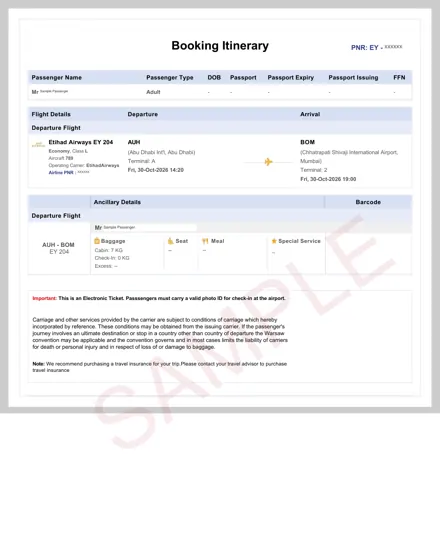
Why Dummy Ticket Validity Determines Your Visa Timeline
Your visa submission date is not an isolated event—it is the endpoint of a carefully choreographed sequence that begins with your flight reservation. The dummy ticket validity window (the number of days your airline booking hold remains active in the airline’s system) directly dictates when you should purchase that reservation relative to your embassy appointment, and how many times you may need to refresh it before a decision arrives.
The 14-Day Trap and the 30-Day Standard
Most airlines hold a dummy ticket for 14 to 30 calendar days from the date of issue. Low-cost carriers (e.g., Ryanair, AirAsia, IndiGo) typically cap the hold at 7–14 days, while full-service airlines (Lufthansa, Emirates, United) often allow 21–30 days. This window is not negotiable—once it expires, the PNR is cancelled, and your visa officer’s system check will show no active booking. If your appointment falls more than two weeks after you purchase the dummy ticket, you risk submitting an invalid itinerary.
How to Time Your Purchase Around the Embassy Schedule
Follow this practical sequence to avoid a lapsed reservation:
- Confirm your visa appointment date (e.g., Schengen, UK, US) and note the standard processing time—typically 5–15 working days for most countries.
- Buy the dummy ticket 3–5 days before your appointment, not earlier. This ensures the PNR is live at submission and remains active through the first week of processing.
- If your embassy requires a return-trip itinerary, ask the provider to generate a round-trip hold with matching validity. Many consulates reject one-way-only reservations.
- Check the PNR on the airline’s website 48 hours after purchase to confirm the hold date. If the airline shows a shorter window than promised, request a reissue immediately.
What Happens When the Validity Expires Mid-Processing
Consulates rarely re-verify your flight booking after the initial submission—most decisions rely on the document snapshot at filing. However, if a visa officer does a random check (common for Schengen C-type visas) and finds the PNR dead, they may issue a request for further documentation, delaying your case by 2–4 weeks. To be safe, buy a new dummy ticket with a fresh validity window if your processing exceeds 20 days.
| Visa Type | Typical Processing Time | Ideal Dummy Ticket Validity Needed |
|---|---|---|
| Schengen (short-stay) | 10–15 working days | At least 21 days from appointment |
| UK Standard Visitor | 15–30 working days | 30 days (renew at day 20 if needed) |
| US B1/B2 | 3–8 weeks after interview | Purchase 7 days before interview; renew if no decision by day 25 |
| Canadian Visitor | 14–40 days | 30-day hold, then rebook weekly |
The practical rule: never let your dummy ticket validity lapse before your visa decision arrives. If you are unsure, buy a 30-day hold and mark a calendar reminder to revalidate at day 20. A lapsed reservation is the most common—and most avoidable—cause of visa refusal on itinerary grounds.
Industry Standard: How Long Do Airline Reservations Stay Live Without Payment?
When you create a flight reservation through an airline website, a travel agency, or a Global Distribution System (GDS) like Amadeus, Sabre, or Travelport, the booking enters a temporary holding state. This hold is governed by fare rules and carrier-specific ticketing deadlines. The industry standard is not a single universal number—it varies by route, cabin class, and fare type—but most reservations remain live for a predictable window before the airline automatically cancels the PNR.
Typical Ticketing Deadlines by Booking Channel
For most economy-class itineraries booked directly with a carrier or through an online travel agency, the standard ticketing deadline is 24 to 72 hours from the moment the reservation is created. If you book a ticket more than 14 days before departure, airlines usually grant a 72-hour hold. If your departure is within 7 to 14 days, that window typically shrinks to 24 hours. For bookings made within 48 hours of departure, the hold often expires in just 4 to 6 hours—or may require immediate payment.
Premium cabins (business and first class) and fully refundable fares frequently enjoy longer holds, sometimes up to 5 to 7 days. Conversely, promotional or basic-economy fares often carry the strictest rules: payment is due immediately, with no grace period at all.
How GDS Systems Handle the Hold
Travel agencies and dummy ticket providers operate through GDS platforms. When an agent creates a PNR, the system assigns a TL (time limit) field. This is the exact date and time the reservation will auto-cancel if no ticket number is issued. The TL is visible in the PNR record and is calculated based on the fare rules loaded by the airline. A typical GDS booking shows a TL of "TL/24HR" or "TL/72HR" depending on the carrier's filed rules.
One nuance: the TL clock starts at the moment of PNR creation, not at the time you receive your confirmation email. If you order a dummy ticket at 11:00 PM, the 24-hour window may expire at 11:00 PM the next day, even if you only opened the PDF at 9:00 AM. Visa applicants should therefore note the exact creation timestamp, not the delivery time.
Realistic Validity Windows Across Major Carriers
| Carrier Group / Region | Economy Hold (Typical) | Business / First Hold | Notes |
|---|---|---|---|
| US carriers (AA, UA, DL) | 24 hours | 24–72 hours | US DOT mandates 24-hour free cancellation if booked 7+ days ahead |
| European flag carriers (LH, AF, BA) | 72 hours (off-peak) | 5–7 days | Shorter windows for flights within 10 days of booking |
| Middle East carriers (EK, QR, EY) | 48–72 hours | 72 hours–5 days | Often extend holds on long-haul routes |
| Asian carriers (SQ, CX, NH) | 24–48 hours | 72 hours | Strict enforcement; no auto-extension |
| Low-cost carriers (FR, U2, D8) | Immediate | N/A | No holds; payment required at booking |
Practical Steps to Check Your Reservation's Live Status
To confirm your itinerary is still active before submitting it with a visa application, follow these steps:
- Locate your 6-character PNR (also called a booking reference or record locator) in the confirmation email.
- Visit the airline's official website and navigate to "Manage Booking" or "My Trips."
- Enter the PNR and the passenger's last name exactly as spelled in the reservation.
- Check for a "ticket number" field—if it shows a 13-digit number, the booking is ticketed. If it shows "open" or "TKTL," the reservation is still unpaid and may expire.
- Review the fare rules or booking details for the ticketing deadline date and time.
If your itinerary has already been cancelled by the system due to an expired hold, rebooking is straightforward but creates a new PNR with a fresh validity window. Always verify the reservation is live on the same day you submit it to the embassy, as most visa officers will check the PNR electronically during adjudication.
When your appointment date is fixed, order a dummy ticket and attach the PDF to the rest of the application.
Need a verifiable dummy ticket for this?
Live PNR you can check on the airline website. From ₹599 / $7, delivered in ~10 minutes.
Dummy Ticket Validity by Airline: Key Differences for Major Carriers
While industry-wide holds usually last 24 to 72 hours, individual carriers set their own release windows. Knowing the exact holding period for your target airline helps you schedule your visa appointment without risking a canceled PNR confirmation. Below are typical validity ranges for popular international carriers—always confirm at booking, as seasonal or route-specific exceptions occur.
Typical Holding Periods for Major Airlines
| Airline | Standard Hold (Unpaid) | Notes for Visa Applicants |
|---|---|---|
| Lufthansa / Swiss | 24–48 hours | Holds often extend to 72 hrs on long-haul if booked via GDS. |
| Emirates | 24 hours | Rarely extends; book close to submission date. |
| Qatar Airways | 24–72 hours | Depends on fare class; promo fares release sooner. |
| Singapore Airlines | 24–48 hours | Online holds auto-release after 24 hrs unless ticketed. |
| British Airways | 24 hours | BA Holidays packages may hold longer, but flight-only does not. |
| Air France / KLM | 48 hours | Sometimes 72 hrs for bookings made via travel agents. |
| United / Delta / American | 24 hours (US DOT rule) | Free cancellation within 24 hrs of booking, not a hold per se. |
| Turkish Airlines | 48–72 hours | GDS bookings often hold longer than website bookings. |
How to Check Your Exact Release Time
Your reservation record (PNR) does not display a validity countdown. Instead, follow these steps:
- Note the ticketing deadline shown in the fare rules or booking confirmation email—this is the exact date/time the airline will cancel your itinerary.
- For GDS-issued dummy tickets, ask the provider for the “last ticketing date” (usually in the fare quote).
- If you booked directly on the airline site, check your account under “My Trips”—some carriers show a countdown timer.
- Call the airline’s reservations line and ask for the fare’s ticketing time limit, quoting your PNR.
Practical Steps to Avoid a Voided Reservation
- Schedule your visa appointment within 48 hours of creating the flight reservation for most European carriers.
- For US embassies, where appointment wait times are longer, use a paid dummy ticket service that re-issues a fresh PNR on request—do not reuse an expired one.
- If your visa interview is more than 5 days away, request a new dummy ticket closer to the date rather than trusting a hold that has lapsed.
- Always download the PDF confirmation and screenshot the fare rules page showing the ticketing deadline—embassy staff rarely verify live status, but if they do, your document must be current.
Remember that a dummy ticket validity window is not a grace period for visa processing—it is a commercial hold that ends the moment the airline’s system runs its nightly purge.
Comparison Table: Validity Periods for Dummy Tickets vs. Real Bookings vs. Hold Fares
Choosing between a dummy ticket, a paid booking, and a fare hold depends on how quickly your visa interview is scheduled and how much financial risk you can tolerate. The table below summarizes the key differences across three dimensions: how long the reservation remains active, what it costs, and what happens if you never use it.
| Feature | Dummy Ticket (PNR-based) | Real Booking (Paid) | Fare Hold (Airline/GDS) |
|---|---|---|---|
| Typical validity period | 7–14 days from issuance; some providers refresh the PNR for up to 21 days | Ticket remains valid for the travel date, usually 12 months from issue for refundable fares | 24 hours to 7 days depending on airline policy; most major carriers offer 72 hours |
| Cost | ₹499–₹1,500 ($6–$18) per passenger, non-refundable | Full ticket price, often ₹40,000–₹1,20,000 ($500–$1,500) for international routes | Usually free with a credit card hold; some GDS systems charge a fee credited toward the fare |
| Cancellation risk | Low—no payment made, no chargeback; PNR may drop if airline purges unpaid bookings | High—cancellation fees of ₹5,000–₹15,000 ($60–$180) or 100% loss on non-refundable fares | None if the hold expires; your card is not charged unless you confirm the ticket |
| Verification by embassy | Passes standard PNR checks on airline websites or GDS portals | Fully verifiable with ticket number and e-ticket receipt | Verifiable as a reservation, but some embassies flag unpaid status |
How to Match the Option to Your Visa Timeline
If your visa appointment is within 10 days, a dummy ticket with a live PNR is the most practical choice—it covers the embassy’s verification window without tying up your capital. For appointments scheduled 3–6 weeks out, a fare hold on a specific airline (e.g., Lufthansa’s 72-hour hold or Emirates’ 96-hour option) is safer because it can be extended once you receive an earlier interview slot.
Real bookings only make sense when you have already secured the visa or are applying under a same-day premium service. In that case, book a refundable fare directly on the airline’s website and cancel after the visa decision—expect to pay a service fee but recover most of the principal.
Practical Steps to Avoid Expiry Gaps
- Check the PNR status on the airline’s manage-booking page 48 hours before your visa appointment; if it shows “cancelled” or “not ticketed,” request a fresh dummy ticket immediately.
- For fare holds, call the airline’s local office—not the website—to request a manual extension; agents can often push a 72-hour hold to 14 days.
- Always download the PDF confirmation and the airline’s booking reference page as separate files; embassies may check both the PNR and the fare basis code.
Remember that the shortest validity window—not the longest—should drive your decision.
Related guide: Air Arabia Dummy Ticket: How the Reservation Works, PNR Verification and Visa Acceptance.
How DummyTicketPrice Sets Validity: From 24 Hours to 14 Days
Embassy-Driven Validity, Not a One-Size-Fits-All Default
Unlike generic travel agencies that issue a blanket 48-hour hold, DummyTicketPrice calibrates your reservation’s active window to the specific visa section you are applying to. The logic is straightforward: a Schengen application typically requires your itinerary to remain verifiable for at least the duration of the adjudication process, while a transit visa may only need a short window. When you place an order, the system asks for your destination country and visa type, then assigns a validity tier from the table below.
| Visa Category / Destination | Typical Validity Assigned | Why This Range Works |
|---|---|---|
| Schengen (short-stay, type C) | 10–14 days | Covers the standard 7–10 business day processing window at most consulates, plus buffer for courier return. |
| UK Standard Visitor | 7–10 days | UKVI decisions often take 3 weeks, but the PNR check usually occurs only at biometrics submission; 10 days is usually sufficient. |
| US B1/B2 | 5–7 days | Interview slots are pre-scheduled; the officer rarely re-verifies after your appointment date. |
| Australian / Canadian visitor | 7–14 days | eTA and visitor record processing can stretch; longer validity avoids a second purchase. |
| Transit / airport-side visas | 24–72 hours | These are decided in 1–2 days, so a long validity is unnecessary and would raise questions. |
How the Validity Period Is Calculated and Confirmed
When you complete the order form at DummyTicketPrice, the system generates a live PNR through the GDS (Amadeus or Sabre) using the exact flight schedule you provided. The validity clock starts the moment the reservation is ticketed—not when you receive the PDF. You will see the expiration date and time printed on the itinerary document itself, usually in the “Fare Notes” or “Validity” field. After booking, you can verify the live status on the airline’s website using your PNR and last name; the system will show “Confirmed” or “Ticketed” until the hold expires.
What Affects the Assigned Validity
- Consulate workload: If you are applying in a high-volume season (e.g., May–August for Schengen), DummyTicketPrice automatically assigns the upper end of the range.
- Your stated travel date: If your departure is more than 30 days away, the system will cap validity at 10 days, since embassies expect you to hold a ticket closer to the intended travel window.
- Specific embassy notes: Some missions (e.g., Germany or Switzerland) explicitly ask that the reservation be no older than 7 days at submission. The system flags this and sets a 7-day expiry accordingly.
Extending or Shortening the Window
If your visa interview gets rescheduled beyond the assigned validity, you do not need to buy a new dummy ticket from scratch. DummyTicketPrice allows one free revalidation extension per order, provided you request it before the original expiry. You simply email the order number and new interview date, and the system re-issues the PNR with a fresh validity period of the same length. Conversely, if you realize your embassy only needs a 48-hour window, you can request a shorter validity during checkout—this reduces the chance that a consular officer questions why you hold a reservation for two weeks but have not paid for it.
In practice, the 24-hour to 14-day range covers every realistic filing scenario. For most applicants, a 10-day window is the sweet spot: long enough to survive a standard embassy review, short enough to appear as a genuine pre-booking rather than a speculative hold. When in doubt, select your visa type carefully in the order form—the validity you receive is tied directly to that selection, not to a random system default.
Step-by-Step: Choosing the Right Validity Window for Your Visa Appointment
Selecting the correct validity window for your flight reservation is not about guessing—it is about reverse-engineering your embassy’s processing timeline. The goal is simple: your itinerary must remain verifiable (live PNR, checkable on the airline’s site) from the moment you submit your visa application until the officer makes a decision. Here is a practical process to match your booking hold to your specific case.
Step 1: Identify Your Embassy’s Published Processing Time
Start with the official consulate or visa-processing website for your destination country. Look for the “processing times” page, not the general FAQ. For example:
- Schengen states (France, Germany, Italy): 15 calendar days is the legal standard, but peak season (May–August) can stretch to 30–45 days.
- US B1/B2: Interview wait times vary by post—typically 2–6 weeks—plus 3–5 business days for passport return after approval.
- UK Standard Visitor: Usually a decision within 3 weeks, but priority services reduce this to 5 working days.
- Canada Visitor Visa: Often 4–8 weeks, depending on your home country’s processing office.
Write down the upper bound of that range. This number is your baseline.
Step 2: Add a Safety Buffer for Administrative Delays
Embassies rarely hit their stated maximum on the dot. Add 7–10 days to your baseline to account for background checks, document verification, or public holidays in the host country. If the embassy says 15 days, your target validity becomes roughly 22–25 days. If it says 6 weeks, aim for 7–8 weeks of coverage.
Step 3: Choose a Reservation Type That Covers Your Window
Now compare your required coverage against available options. Use this table as a decision guide:
| Required Coverage (Processing + Buffer) | Recommended Reservation Type | Why |
|---|---|---|
| Up to 48 hours | Airline’s free 24-hour hold | Only viable for same-day or next-day appointments at walk-in posts. |
| 3–7 days | Short dummy ticket (3–5 day validity) | Works for e-visa or fast-track services where decisions arrive in under a week. |
| 8–14 days | Standard dummy ticket (10–14 day validity) | Suitable for Schengen or UK applications outside peak season. |
| 15–30 days | Extended dummy ticket (21–30 day validity) or paid refundable fare | Necessary for US, Canada, or India during high-volume periods. |
| 30+ days | Refundable ticket or fare hold with airline | Dummy ticket validity rarely exceeds 30 days; a paid but refundable booking is safer. |
Step 4: Match the Validity to Your Appointment Date, Not Submission Date
A common error is counting validity from the day you submit your paperwork. Officers often check your PNR confirmation at the interview stage, which may be days or weeks later. Count backwards: your reservation must still be live on the day of your scheduled interview, plus 2–3 days after that for the officer’s final adjudication. If your interview is 20 days away, a 14-day dummy ticket will expire before you even sit down.
Step 5: Request a Validity Extension Before It Lapses
If your interview gets rescheduled or processing stalls, do not wait until the PNR dies. Contact the provider that issued your dummy ticket and ask for an extended validity on the same itinerary. Reputable services—like those that sell verifiable flight reservations with live PNRs—can usually regenerate or extend the hold for an additional fee. Avoid booking a brand-new dummy ticket if the old one is still active; overlapping PNRs can raise questions about your travel intent.
Step 6: Verify the PNR on the Airline’s Website Daily
Once your reservation is issued, check it each morning using the airline’s “Manage Booking” portal. Enter your PNR confirmation and last name. If the system returns an error or shows “cancelled,” your dummy ticket validity has expired—contact the provider immediately to refresh it. Do this until you hold the visa in your passport, not just until the interview ends.
By matching your itinerary’s coverage to the embassy’s realistic timeline—plus a buffer—you eliminate the single most common reason visa officers reject applications: a flight reservation that no longer exists in the airline’s system when they check it.
Our guide to the dummy ticket price explains why embassies ask for a reservation rather than a paid ticket.
Case Study: When a 48-Hour Dummy Ticket Saved a Schengen Application
In March 2025, a software consultant based in Mumbai received an unexpected email from the German Embassy: a slot had opened at the visa section for the following Tuesday at 9:30 AM. His original appointment was six weeks out, and his project start date in Berlin was fast approaching. He had exactly four calendar days to assemble his Schengen application dossier—including proof of travel arrangements.
The Problem: A Paid Ticket Was Not an Option
His client had not yet signed the final statement of work, so purchasing a refundable round-trip ticket on Lufthansa would have meant blocking roughly ₹85,000 on a credit card with no guarantee of reimbursement. A fare hold through the airline’s website was only available for 72 hours, but he needed a reservation that would remain verifiable through his visa interview date—which the embassy had not yet confirmed. He turned to a dummy ticket service that issued a reservation through the Amadeus GDS with a 48-hour validity window.
The Timeline That Made It Work
Here is how the 48-hour window aligned with the embassy’s requirements:
- Monday, 10:00 AM: He submitted his passport, bank statements, employment letter, and travel insurance to the visa application center in Mumbai. The flight reservation—a Qatar Airways itinerary with a live PNR—was attached as a PDF.
- Monday, 3:00 PM: The visa application center forwarded his biometrics and documents to the German Embassy in New Delhi.
- Tuesday, 9:30 AM: His interview took place. The consular officer scanned the QR code on the itinerary and queried the PNR in real time. The reservation was still active—31 hours into the 48-hour window.
- Wednesday, 11:00 AM: The visa was stamped. He received his passport back via courier on Thursday morning.
The 48-hour validity was sufficient because the embassy’s internal processing did not require him to present a paid ticket at any stage. The officer only needed to confirm that a plausible, bookable itinerary existed for the intended travel dates. Since his appointment occurred within the validity window, the dummy ticket fulfilled its purpose without issue.
When a Short Validity Window Fails
This case succeeded because of three specific conditions. If your situation differs, a 48-hour reservation may not suffice:
| Condition | Why It Mattered | If It Had Been Different |
|---|---|---|
| Interview within 48 hours of submission | The PNR was still live when the officer checked it | A 7-day validity window would have been required |
| No additional document requests | The embassy did not email him for supplementary proof | A second dummy ticket would have been needed |
| Visa issued before the reservation expired | He never had to show the ticket again post-approval | He would have purchased a real ticket after the visa grant |
The Practical Takeaway
If your Schengen appointment is imminent—typically within two business days—a 48-hour dummy ticket can be a legitimate, low-cost solution. However, if your interview is scheduled a week or more out, request a longer validity period or book a refundable fare directly with the airline. Always verify that the PNR remains queryable on the airline’s website the night before your appointment, and print a fresh copy of the itinerary if the original timestamp looks stale.
7 Mistakes to Avoid: Expired Dummy Tickets and Other Validity Pitfalls
Mistake #1: Submitting a Reservation That Expires Before the Embassy Checks It
Many applicants assume the visa officer verifies their flight reservation on the day of submission. In practice, most embassies and consulates run verification checks at multiple points: when they log your application, during the adjudication review, and sometimes again before issuing the visa. If your dummy ticket validity lapses between submission and the final check, the officer may flag your itinerary as unverifiable. A common failure scenario: you book a 48-hour hold on a Tuesday, submit your application on Wednesday, and the visa officer reviews your file on Friday—after the reservation has already dropped out of the airline's system. To avoid this, always match your reservation's validity window to the embassy's stated processing time, not just your interview date.
Mistake #2: Ignoring the Difference Between "Valid" and "Verifiable"
A reservation that still exists in the airline's database is not necessarily one the visa officer can check. Some GDS-generated PNRs become passive or "ghost" records after 24–72 hours, meaning they no longer appear when an embassy queries the airline directly. You can test this yourself: try retrieving your PNR on the airline's website using your last name and booking reference. If it shows "unable to retrieve" or "booking not found," the reservation is effectively dead, even if your provider's dashboard still lists it as active. Always re-check your PNR on the carrier's official site within 24 hours of your visa appointment.
Mistake #3: Using the Same Dummy Ticket for Multiple Visa Applications
Reusing one itinerary for two different embassies (for example, applying for Schengen and UK visas in the same week) is a red flag. Each embassy performs independent verification, and if the first application triggers a hold or query on the PNR, the second embassy may see conflicting data. Worse, if your first application is refused, the second embassy may review the same PNR and notice it was already used—leading to an automatic validity rejection. Purchase a separate reservation for each visa application, with dates that match that specific application's travel plans.
Mistake #4: Choosing a Validity Window That Ends Before Your Passport Returns
Your dummy ticket only needs to stay live until the visa is issued, not until you actually fly. However, many applicants misunderstand this and select a 24-hour validity window to save money, only to find their passport is held for 5–7 business days. If the embassy re-verifies your itinerary on the day of passport dispatch, an expired reservation can delay your visa or trigger a request for additional documentation. A practical rule: if your embassy typically processes visas in 5 working days, choose a validity window of at least 7–10 days. If you are applying during peak season (May–August for Schengen), extend that to 14 days to account for slower processing.
Mistake #5: Overlooking Time Zone Differences
Validity periods are usually calculated in the airline's home time zone or the GDS's server time, not your local time. A 48-hour reservation created at 11:00 PM IST on Monday may expire at 11:00 PM Wednesday in Singapore time—which could be 8:30 PM Wednesday IST, giving you less time than you think. Always ask your provider for the exact expiry timestamp in your local time zone, and add a buffer of at least 6 hours before your visa appointment.
Mistake #6: Not Confirming That the Reservation Is "Ticketed" vs. "On Hold"
Some travel agencies issue what they call a "dummy ticket" that is actually just a fare quote or a booking hold that was never transmitted to the airline's reservation system. This is the most common cause of rejection at the visa counter. When you receive your dummy ticket, verify three things: (1) the PNR is a standard 6-character alphanumeric code, (2) the airline's website recognizes it, and (3) the passenger name matches your passport exactly, including any middle names. A PNR that cannot be retrieved by the airline is worthless, regardless of what the PDF says.
Mistake #7: Booking Too Far in Advance and Letting the Reservation Lapse
Booking a dummy ticket 3 months before your visa appointment might seem proactive, but most airline fare holds and GDS reservations do not stay live that long. Even DummyTicketPrice's longest validity option (14 days) is not designed for multi-month advance planning. If your appointment is more than 3 weeks away, wait before purchasing a dummy ticket. Instead, prepare all other documents and purchase the dummy ticket only when your interview is within the validity window.
| Common Mistake | Typical Rejection Signal | Safe Practice |
|---|---|---|
| Expired before embassy check | Embassy requests updated itinerary | Match validity to processing time + 2 days |
| PNR not verifiable on airline site | "Unable to retrieve booking" error | Test PNR 24 hours before interview |
| Same ticket reused for multiple visas | Second embassy sees prior usage | Purchase separate reservation per application |
| Validity ends before passport return | Visa delayed pending new itinerary | Choose 7–14 day validity for standard processing |
| Time zone miscalculation | Reservation expires hours before interview | Confirm expiry in your local time |
| Fare quote instead of live PNR | Airline has no record of booking | Verify PNR on carrier website |
| Booked too far in advance | Reservation dead by appointment date | Purchase within 2 weeks of interview |
The underlying principle is simple: a dummy ticket's validity is not a formality—it is the mechanism by which the embassy confirms your travel intentions. Check your PNR the morning of your appointment, keep a screenshot of the retrieval page, and if anything looks questionable, order a fresh reservation rather than risk a rejection over an expired itinerary.
Related guide: Dummy Ticket for Visa Application: Complete Guide.
Can You Extend a Dummy Ticket? Renewal Options and Costs
If your visa appointment gets rescheduled, or the embassy’s processing time stretches beyond your original reservation’s live window, you do not need to panic. A dummy ticket cannot be “extended” in the technical sense—airlines do not offer a renewal feature for an unpaid PNR. However, you have three practical paths to maintain continuous coverage, each with different costs and turnaround times.
Option 1: Reissue a Fresh Reservation (Most Common)
Because a dummy ticket is simply a held itinerary in the airline’s booking system, the cleanest fix is to request a new PNR with the same travel dates and route. Reputable dummy ticket services, including DummyTicketPrice.com, treat this as a new order rather than an extension. The old reservation is allowed to lapse, and a fresh one is generated with a new validity clock. Typical turnaround is 10–15 minutes, and pricing usually matches your original purchase—around ₹599 or $7 per passenger.
Option 2: Ask Your Provider for a Validity Top-Up
Some agencies offer a paid “validity refresh” on an existing PNR. This works when the airline’s fare rules permit the agent to re-hold the same itinerary without re-pricing. The process involves the agency re-issuing the hold through the GDS and generating a new ticketing deadline. Not all providers offer this, and it rarely costs less than a fresh booking. Expect to pay 50–100% of the original fee, with a 15-minute to 2-hour processing window depending on the airline’s system.
Option 3: Upgrade to a Paid Fare-Hold Product
If you anticipate multiple reschedules, consider switching to an airline-sponsored fare hold (e.g., Lufthansa’s “FareLock” or Emirates’ “Hold My Fare”). These products let you lock a price for 72 hours to 14 days, and some allow one paid extension before ticketing. Costs run from $10 to $60 per passenger, depending on the carrier and hold duration. The advantage is that the airline itself manages the validity—no third-party reissue needed.
Cost and Speed Comparison
| Method | Typical Cost | Processing Time | Best For |
|---|---|---|---|
| Fresh dummy ticket reissue | ₹599 / $7 per passenger | 10–15 minutes | Single reschedule; urgent appointments |
| Validity top-up on existing PNR | 50–100% of original fee | 15 minutes – 2 hours | Same route/dates; provider supports it |
| Airline fare hold upgrade | $10 – $60 per passenger | Instant (book directly) | Multiple possible reschedules |
Practical Steps to Avoid a Gap in Coverage
- Check your PNR status on the airline’s website 48 hours before your visa appointment. If the reservation shows “cancelled” or “expired,” act immediately.
- Email your dummy ticket provider with your original order number and new required validity end date. Most services reissue within the hour during business hours.
- Keep the new PNR confirmation and a screenshot of the airline’s live status page. Embassies typically accept a printout showing the active booking reference.
- If your appointment is more than 14 days out, do not purchase early—wait until 10–14 days before submission so the reservation remains live when the embassy checks it.
Remember that a dummy ticket’s validity is a planning tool, not a permanent document. Budget for a possible reissue fee if your visa timeline shifts, and always confirm the new PNR is verifiable on the airline’s official site before submitting your application.
Frequently Asked Questions About Dummy Ticket Validity
1. How can I check if my dummy ticket is still live before my visa interview?
Log in to the airline’s official website using your six-character PNR (passenger name record) and the last name of the primary traveler. Look for the “Manage Booking” or “My Trips” section. If the reservation displays as “confirmed” or “on hold” with a countdown timer, it is still active. If you see “cancelled,” “expired,” or “no record found,” the itinerary has lapsed. For GDS-issued reservations, you can also verify through the issuing travel agency’s portal. Perform this check no earlier than 24 hours before your embassy appointment, but ideally on the same morning, since most holds expire at midnight in the airline’s time zone.
2. Can a visa officer see the exact expiration time of my flight reservation?
Yes, embassy systems typically display the fare deadline and ticketing time limit embedded in the PNR. This is stored in the “TK” or “TL” field of the reservation. If your dummy ticket validity ends at 23:59 on a Tuesday and your visa appointment is Wednesday at 09:00, the officer may flag it as expired even if the airline’s public website still shows it. To be safe, choose a validity window that extends at least 48 hours past your interview date. For embassies known to delay verification, such as some Schengen states during peak season, aim for 7–10 days of remaining validity.
3. What happens if my dummy ticket expires while my visa is still under processing?
Most embassies do not re-check flight reservations after the initial document scrutiny, but some—particularly for Schengen, UK, and US visas—may perform random secondary verification. If your application is still under administrative processing or background checks, the safest move is to purchase a renewal. A fresh reservation with a new PNR costs the same as your original dummy ticket (typically ₹599/$7) and takes about 10 minutes to deliver. Do not attempt to edit or “refresh” the old PNR yourself; airline systems usually reject modifications after the ticketing deadline, and tampering can create a mismatch in your application records.
4. How far in advance should I book a dummy ticket before my visa appointment?
Book it 3–5 days before your scheduled interview if your embassy does pre-screening, or 24–48 hours prior for same-day submissions. Booking too early—say, two weeks ahead—risks expiry before the officer sees it, especially with 24-hour holds on budget carriers like Ryanair or easyJet. Booking too late (the night before) leaves no buffer if the payment fails or the email lands in spam. For visa types with known delays, such as US B1/B2 in some countries where appointment wait times stretch months, do not book until you have a confirmed interview date, then match the dummy ticket validity to the embassy’s typical adjudication window.
5. Is a dummy ticket validity different for transit visas versus long-stay visas?
Yes, the required validity window differs by visa category. Transit visas (e.g., airport transit for Schengen or UK Direct Airside Transit) usually require proof of onward travel within 24–48 hours, so a 24-hour reservation often suffices. Long-stay visas (work, study, family reunion) may involve weeks of processing, and some embassies, like Germany’s national visa section, explicitly request a flight reservation valid for at least 14 days from submission. Tourist visas fall in between. Check the specific embassy’s checklist—some publish the minimum validity in their document requirements, while others leave it ambiguous, in which case a 7-day window is the most defensible default.
6. Can I reuse the same dummy ticket PNR for a second visa application after it expires?
Technically no. Once a reservation expires, the PNR is purged from the airline’s active database, usually within 24–72 hours. Attempting to resubmit an old PNR with a new application date will fail verification because the record no longer exists. Additionally, reusing an expired reservation across different embassies or visa categories can raise red flags for inconsistency if the travel dates no longer match your stated purpose. Always generate a fresh reservation with updated travel dates that align with your new application. Some providers offer discounted renewal rates for returning customers, but expect to pay the standard fee since each PNR is a new ticket issuance.
| Visa Type | Typical Processing Time | Recommended Minimum Validity |
|---|---|---|
| Transit (Schengen, UK) | 1–5 days | 48 hours past interview |
| Tourist (Schengen, UK, US) | 5–15 days | 7 days past submission |
| Long-stay (Work, Study) | 3–8 weeks | 14 days past submission |
| Australian/Canadian eVisitor | 1–30 days | 5 days past submission |