What Visa Officers Actually Check on an Airline Reservation
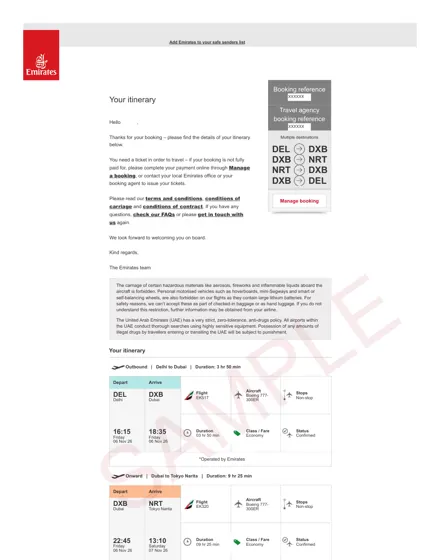
When you submit a flight reservation with your visa application, the officer isn't looking for proof of payment or a purchased ticket. What they need is a credible, internally consistent document that demonstrates your intended travel pattern and that you have taken concrete steps to plan the trip. Here is what they scrutinize — and how a dummy ticket, refundable ticket, or hold fare stacks up against each check.
1. The PNR and Airline Verification Code
Every reservation must carry a six-character Passenger Name Record (PNR) or booking reference. Officers do not call the airline for every application, but they can — and increasingly do for Schengen, UK, and US visas. The PNR must return a live booking in the airline's system when queried. A hold fare or dummy ticket from a reputable provider will show as "on hold" or "confirmed" status, which is acceptable. A paper-only itinerary with no PNR, or a PNR that has been cancelled, is an instant red flag.
2. Passenger Name Match
The name on the reservation must exactly match your passport — same spelling, same order, no nicknames, no initials unless your passport uses them. Officers cross-check this against your application form. If the PNR shows a different traveller, the document is treated as fraudulent, regardless of whether it was an honest mistake.
3. Route Logic and Duration
Officers evaluate whether your itinerary makes sense for your stated purpose. A 3-day round trip from Mumbai to London for a "business meeting" with no conference invitation will draw scrutiny. They also check that the dates align with your planned travel window — usually, they expect the outbound flight to be within 30–60 days of your visa interview. A reservation held for 11 months is a red flag; most genuine applicants book close to departure.
4. Return Ticket Requirement
For most visitor visas, a return or onward ticket is mandatory. Officers verify that your reservation includes an outbound and a return leg (or a connecting ticket to a third country if you're travelling onward). A one-way dummy ticket for a tourist visa application will almost always be rejected.
5. Booking Status and Validity Window
The table below summarises how each option performs on the core checks:
| Check Element | Dummy Ticket (live PNR) | Refundable Ticket (purchased) | Hold Fare (24–72 hrs) |
|---|---|---|---|
| PNR verifiable in airline system | Yes | Yes | Yes |
| Name matches passport | Yes (customisable) | Yes | Yes |
| Valid at interview date | Typically 7–14 days | Until you cancel | Usually 1–3 days only |
| Return leg included | Yes | Yes | Usually yes |
| Shows as "confirmed" vs "on request" | Confirmed | Confirmed | Confirmed while held |
| Risk of cancellation before interview | Low (valid window) | None (until you cancel) | High — expires quickly |
6. The Booking Date vs. Application Date
Officers check the "date of issue" on the reservation. If your booking was made 6 months ago but you're applying now, they will question why you haven't travelled or cancelled. A freshly issued reservation (within 1–2 weeks of submission) is the safest pattern. Both dummy tickets and hold fares should be generated close to your appointment date.
7. What Raises Suspicion (Avoid These)
- No PNR or a PNR that returns "not found" — the document is worthless.
- Reservation from a travel agency with no IATA or ARC accreditation — unverifiable.
- Multiple reservations for the same date — officers may see duplicate holds and assume you're shopping for a visa, not a flight.
- Business class on a low-income salary — inconsistent with your financial profile.
In practice, the safest approach is to use a live dummy ticket with a verifiable PNR, generated within 10 days of your interview, with your exact passport name and a sensible itinerary. A refundable ticket works too but ties up your credit card and requires cancellation discipline. A hold fare is risky because it usually expires before the visa officer even opens your file — most embassies take 3–15 working days to adjudicate, and a 48-hour hold will be dead on arrival. The best choice is whichever document remains verifiable at the moment of adjudication, not just at submission.
Dummy Ticket, Refundable Ticket, or Hold Fare: Core Definitions and Costs
Before you spend a single cent, you need to understand what each option actually buys you. The three tools—dummy tickets, refundable tickets, and fare holds—look similar on paper but differ wildly in price, flexibility, and what the airline will confirm to a consulate.
Dummy Ticket (Flight Reservation with Live PNR)
A dummy ticket is a real airline reservation created in the airline’s booking system, complete with a valid PNR (Passenger Name Record) and a flight itinerary. It is not paid for and will auto-cancel after the airline’s ticketing deadline—usually 24 to 72 hours, though some carriers allow up to 14 days. You receive a PDF confirmation that shows the PNR, flight numbers, dates, and passenger names exactly as a paid ticket would appear.
What you pay: Typically $5 to $15 per passenger from a reputable agency. The service generates a genuine PNR that a visa officer can verify via the airline’s website or the IATA (International Air Transport Association) query system—though in practice, most officers only eyeball the document.
What you get: A time-stamped PDF, usually delivered within 10–30 minutes. It is valid for a visa interview on the same day or the next day, provided the airline has not yet cancelled the booking. You do not get a seat assignment, baggage allowance, or any right to board.
Refundable Ticket (Fully Flexible Airfare)
A refundable ticket is a genuine, paid airline ticket with a fare basis that permits cancellation for a full cash refund (not a travel credit). You pay the full fare upfront—often 2 to 5 times the cost of a non-refundable ticket—then cancel after your visa decision and claim your money back.
What you pay: Consider a standard one-way flight from Mumbai to London. A non-refundable fare might cost $350. The refundable version of the same flight could run $1,200 to $1,800. For a round-trip, you might pay $2,500 to $4,000. Refund processing typically takes 7 to 14 business days after you submit the cancellation request, and the airline may deduct a small administrative fee ($25–$75) even on "fully refundable" fares.
What you get: A rock-solid reservation that cannot be cancelled by the airline, a confirmed seat, and a e-ticket receipt showing "REFUNDABLE" in the fare rules. If a visa officer checks the PNR, the status will read "Confirmed" with a ticketed fare. The catch: your money is locked for weeks, and you must remember to cancel before your travel date or you lose the entire fare.
Hold Fare (Airline Booking with Ticketing Deadline)
A hold fare—sometimes called a "fare lock" or "option fare"—is an unpaid reservation you create directly on an airline’s website or via a travel agent. You pick a flight, enter passenger details, and the system assigns a PNR without asking for payment. The airline holds the price for a fixed window: 24 hours for most US carriers (by law), 48–72 hours for many European and Asian airlines, and sometimes up to 7 days for premium fares or if you call the airline’s call center.
What you pay: Usually $0 if you use the free hold option on airline websites like Lufthansa, Air France, or Emirates. Some airlines (e.g., United, Delta) charge a "hold fee" of $5 to $15 per passenger for extending the window beyond 24 hours. This fee is non-refundable but is credited toward the ticket price if you later purchase.
What you get: A legitimate PNR and itinerary PDF from the airline’s own booking engine. The document clearly states "TICKETING DEADLINE" or "BOOK BY" date, which can raise questions if a visa officer reads closely. Unlike a dummy ticket, the hold is tied directly to your name and the airline’s reservation system, making it verifiable but also time-limited.
Side-by-Side Cost and Validity Comparison
| Option | Typical Cost (per passenger) | Validity Window | Refundable? | Best For |
|---|---|---|---|---|
| Dummy ticket | $5–$15 | 24–72 hours | No (auto-cancels) | Same-day or next-day visa appointment |
| Refundable ticket | $1,200–$4,000 (long-haul) | Until you cancel (usually 12 months) | Yes—full cash refund minus fees | High-risk applications or consulates that verify PNR status online |
| Hold fare | $0–$15 (hold fee) | 24 hours to 7 days | No (expires) | Applicants with an appointment within the hold window |
Hidden Costs and Practical Pitfalls
Three costs are easy to miss. First, currency conversion fees: if you buy a refundable ticket in EUR or USD but your bank account is in INR or PHP, expect a 2–3% foreign transaction fee. Second, cancellation admin fees: even "fully refundable" fares often carry a $50–$100 per-ticket processing charge that the airline deducts before returning your money. Third, the opportunity cost of a refundable ticket—your $3,000 sits in the airline’s account for 2–4 weeks, earning you nothing.
For a dummy ticket, the only real cost is the agency fee. But verify that the agency sends the booking in your exact passport name and that the PNR format matches the airline’s standard (6 alphanumeric characters). A mismatched name or a PNR that does not resolve on the airline’s website will fail the most basic check.
For the flight component of this file, order a dummy flight ticket and attach the PDF to the rest of the application.
Need a verifiable dummy ticket for this?
Live PNR you can check on the airline website. From ₹599 / $7, delivered in ~10 minutes.
Risk Matrix: Which Option Carries the Least Rejection Risk?
When weighing a dummy ticket vs refundable ticket for your visa application, the honest answer is that none of the three methods guarantees approval—visa officers assess your entire financial and travel profile. However, the probability of rejection due to the flight document itself varies sharply. Below is a practical breakdown of where each option fails, based on how embassies and immigration systems actually verify reservations.
Dummy Ticket (Unpaid PNR or Fake Itinerary)
Rejection risk: High—but only if the officer attempts verification and finds no record. A genuine dummy ticket from a reputable agency (one that holds a real PNR for 24–72 hours) usually passes the initial check because the airline’s system shows an active booking. The problem arises in two scenarios:
- Expired PNR: If you apply 10 days after the dummy was generated and the hold lapsed, the officer sees a dead reservation. This looks like misrepresentation.
- Fabricated PDF: Officers in Schengen, UK, and US consulates routinely call the airline’s verification desk or use IATA’s Timatic. A fake reference number is an instant refusal and often a 5-year ban.
Practical mitigation: Use a paid dummy service that re-confirms the PNR on the day of submission, and apply within 48 hours of issuance.
Refundable Ticket (Fully Flex Fare)
Rejection risk: Lowest, but not zero. A purchased, paid refundable ticket is the gold standard because the officer can see a ticketed status (not just “on hold”) in the airline’s booking system. The residual risk is not about the document—it’s about your profile. If the officer suspects you’ll cancel after approval, they may still dig deeper into bank statements or employment proof.
- Best practice: Book a refundable fare after your visa interview date, not before. This avoids the “why did you pay for a ticket before approval?” question.
- Keep the cancellation policy printed. Most full-fare tickets are refundable within 24 hours or up to 72 hours before departure—but some “refundable” fares only give you a travel voucher, not cash. That distinction matters if the officer checks.
Hold Fare (Airline or Agency Reservation Without Payment)
Rejection risk: Moderate. A hold fare is a real reservation with a time limit (usually 72 hours to 14 days). It is not a dummy ticket—it has a valid PNR and is visible to the airline. The rejection risk comes from the officer’s perception: if your hold expires mid-processing (Schengen applications take 15–30 days typically), your file will show a cancelled itinerary.
- Ask your travel agent for a hold that matches your visa processing window. Some airlines allow paid extensions for a small fee (e.g., $10–$30) to keep the PNR alive for 30 days.
- Never submit a hold that expires before the embassy’s stated average processing time—check the consulate’s website for “processing times” before booking.
Side-by-Side Comparison
| Factor | Dummy Ticket (Paid, Real PNR) | Refundable Ticket | Hold Fare |
|---|---|---|---|
| Verification success rate (airline system) | ~95% if PNR is live | 100% (ticketed) | ~98% while hold is active |
| Risk of expiry during processing | High after 72 hrs | None (ticket stays valid) | Medium unless extended |
| Officer’s perception of intent | Neutral to suspicious | Positive (financial commitment) | Neutral |
| Cost if refused | ₹599 / $7 lost | $0 if refunded within rules | $0 if hold expires |
Final call: For low-risk profiles (strong ties, solid funds, single-entry short stay), a hold fare or a paid dummy with a fresh PNR is acceptable. For high-risk profiles (first-time applicant, weak bank history, overstay-prone nationality), the refundable ticket is the only option that removes the flight document as a variable—because the officer’s system will show a fully paid, non-cancelled reservation at the moment of adjudication. If you choose a dummy ticket, never generate it more than 48 hours before submission, and always request a re-verification screenshot from the provider on the day you file.
Side-by-Side Comparison Table: Dummy Ticket vs Refundable Ticket vs Hold Fare
Use this table as your final decision-maker when you’re staring at a visa checklist and need a flight reservation that meets requirements without wasting money. The right choice depends on your timeline, budget, and how much certainty you need before the visa decision arrives.
| Criteria | Dummy Ticket (Verifiable PNR) | Refundable Ticket | Hold Fare (Airline Booking Hold) |
|---|---|---|---|
| Typical cost | ₹599 / $7 per passenger, one-time fee | Full ticket price + premium (often 2–4× non-refundable fare); refundable after deduction of fees | Usually free or a small deposit (₹500–₹2,000) depending on airline and fare class |
| Verification by embassy | Live PNR checks on airline website or GDS; valid for 7–14 days typically | Fully ticketed, always verifiable; no expiry concerns | PNR exists but not ticketed; some embassies may flag an unpaid hold as insufficient |
| Cancellation / refund process | No cancellation needed; reservation expires automatically. If you need a new date, purchase another dummy ticket. | Cancel online or via agent; refund to original payment method usually takes 5–10 business days, minus cancellation fees | Hold lapses automatically after 24–72 hours unless you pay to extend; deposit is typically non-refundable if you let it expire |
| Time to obtain | ~10 minutes via email; instant PNR generation | Immediate if purchased online; 30–60 minutes for complex itineraries | Instant if airline website allows; some carriers require phone call with agent (10–20 minutes hold time) |
| Best use case | Schengen, UK, or US visa where you only need proof of intent; you’ll book real tickets after approval | Embassies that explicitly require a paid ticket (e.g., certain Middle East or Asian consulates); applicant with flexible budget | Short application windows (48–72 hours) where you need a genuine booking hold for an interview tomorrow |
| Risk of visa rejection due to document | Low, if PNR is verifiable and dates match your application form | Lowest, since it’s a paid, ticketed itinerary | Medium – some visa officers may reject if they see “unpaid” status in the PNR |
How to Read This Table for Your Specific Visa Type
If you’re applying for a Schengen visa, most consulates only require a flight reservation, not proof of payment. A dummy ticket with a live PNR is usually sufficient. For a US B1/B2 visa, the officer rarely even scans the itinerary—but you must have one printed for the interview. A hold fare works there too, but only if you can get the airline to extend it past your interview date; most holds expire in 72 hours, and US interviews are often scheduled weeks out.
For countries like Australia or Canada, where online applications are reviewed before biometrics, the officer may cross-check the PNR status. In those cases, a refundable ticket eliminates any doubt, but you’ll pay a hefty premium. A practical middle path: buy a dummy ticket for the initial application, then upgrade to a refundable ticket only if the embassy sends a procedural fairness letter asking for proof of payment.
Practical Steps Before You Choose
- Check the specific embassy’s visa document checklist (PDF) — look for wording like “confirmed flight itinerary” vs “paid airline ticket.”
- Call your airline’s reservation line and ask if they offer a 72-hour hold without payment; if yes, request a written confirmation email with the PNR.
- Compare the refundable fare’s cancellation fee against the cost of 2–3 dummy tickets — if the fee is under $50, the refundable option may be worth it for peace of mind.
- Print all confirmation pages, including the fare rules page, so the visa officer sees the refund eligibility terms.
Related guide: Dummy Ticket for Cyprus Visa: Flight Reservation Requirements, Process and Mistakes to Avoid.
Step-by-Step: How to Choose and Execute the Right Option for Your Visa
Choosing between a dummy ticket, a refundable fare, or a hold fare is not about which is cheapest—it’s about matching the tool to the visa type, your travel flexibility, and your bank balance. Follow this sequence to avoid the two most common mistakes: buying a fully refundable ticket you never cancel, or submitting a reservation that the embassy cannot verify.
Step 1: Identify Your Visa Category and Its Verification Level
Start by reading the specific instructions for your visa sub-type. Tourist visas (e.g., Schengen Type C, US B1/B2) usually require proof of round-trip travel but rarely verify it online. Transit visas (UK, Australia) are stricter—officers have been known to call the airline to confirm a PNR exists. Work or student visas often ask for a “confirmed flight itinerary” but may accept a dated reservation with a booking reference.
- High-verification visas (UK visitor, Australia subclass 600): Use a live PNR from a real airline reservation—either a hold fare or a paid refundable ticket.
- Medium-verification (Schengen, Canada): A verifiable dummy itinerary with a real PNR (not a screenshot) works, but keep it active for 7–14 days.
- Low-verification (some Asian and Gulf states): A dated itinerary without a PNR may pass, but why risk a refusal for $7?
Step 2: Check Your Departure Date and Refund Window
Your timeline dictates which option is viable. If you are applying 3–4 weeks before travel, a hold fare is ideal. If your visa decision can take 6–8 weeks (e.g., Schengen during peak season), a hold fare will expire long before the officer looks at your file. In that case, you need a reservation that stays valid until a decision is made.
| Time Until Decision | Best Option | Why |
|---|---|---|
| Under 14 days | Hold fare (48–72 hr) or dummy ticket with live PNR | Both stay valid during the short review window. |
| 15–30 days | Refundable ticket (cancel after approval) | Holds expire. A refundable ticket is safe but ties up funds. |
| Over 30 days | Cheapest refundable fare or two-stage dummy ticket | Buy a refundable ticket, cancel after visa grant, then repurchase at real fares. |
Step 3: Match the Option to Your Financial Buffer
Refundable tickets on international routes can cost 3–5 times the non-refundable fare. If you cannot float that amount on a credit card for 3–6 weeks, choose a verifiable dummy ticket instead. The key is to ensure the dummy ticket’s PNR is checkable on the airline’s website, not just a PDF. Most reputable services deliver within 10 minutes and include a 24-hour verification window—use that time to test the PNR on the carrier’s site.
Step 4: Execute the Purchase or Hold Correctly
Once you have chosen, follow these practical steps to avoid a rejection:
- For a hold fare: Go to the airline’s website, search your exact dates, select a fare, and choose “Hold for 48–72 hours.” You will receive a six-character PNR. Print the confirmation page and the fare rules. Do not pay unless asked—holds are free.
- For a refundable ticket: Purchase the fare, download the e-ticket receipt, and immediately note the cancellation deadline (usually 24 hours for US carriers, 1–3 days for EU/Asian airlines). Set a calendar reminder to cancel after your visa interview, not before.
- For a dummy ticket: Use a service that generates a real PNR on a scheduled flight (not a charter). Cross-check the PNR on the airline’s “Manage Booking” page. Save the PDF and the airline’s verification URL as separate files.
Step 5: Prepare the Supporting Documents
Whichever option you execute, your visa packet must include more than the reservation. Pair the flight booking with a dated hotel reservation (refundable or with free cancellation) and a rough day-by-day itinerary. Visa officers look for coherence—a round-trip flight from Paris to New York with a 3-day hotel stay for a 10-day trip raises questions.
Finally, never submit a dummy ticket for a visa interview where you are asked to show the same reservation at the airport or at port of entry. That crosses into misrepresentation. Use the dummy ticket strictly for the application phase, then purchase the real ticket only after the visa is stamped in your passport. This decision guide ensures you spend the minimum necessary while keeping your application credible.
Our guide to the flight reservation for visa explains why embassies ask for a reservation rather than a paid ticket.
Case Study: How a Tourist Visa Applicant Saved Money with a Dummy Ticket
The Applicant’s Dilemma: A Schengen Visa for a Two-Week Trip
Meet Priya, a marketing professional from Mumbai planning a 14-day tourist trip to Italy and France in late September. Her visa appointment at the Italian consulate was scheduled for August 15, but she had not yet booked any flights because she was unsure whether her leave would be approved by her employer. The consulate required a round-trip flight reservation as part of the Schengen visa checklist. Priya faced three choices:
- Refundable ticket: A flexible economy fare from Mumbai to Rome and Paris back to Mumbai priced at ₹185,000 (about $2,200) — refundable only after a 72-hour processing period, with a ₹7,500 cancellation fee if she changed her mind within 14 days of departure.
- Airline hold fare: Air France offered a 48-hour hold at no cost, but the consulate’s processing time was usually 10–15 working days, so the hold would expire before she received a decision.
- Dummy ticket: A verified flight reservation with a live PNR, valid for 14 days, costing ₹599 ($7) per passenger via a reputable provider.
Why the Refundable Ticket Was a Financial Trap
Priya initially leaned toward the refundable option because she believed it looked more credible to the visa officer. However, when she mapped out the timeline, the math did not work. Her visa decision typically arrived between August 25 and September 5 — well beyond the 48-hour hold window. To keep a refundable ticket valid through the decision date, she would need to purchase it on August 10 and hold it until at least September 5. That meant tying up ₹185,000 on her credit card for nearly a month. If her visa was refused or delayed, she would have to request a refund, wait 72 hours for processing, and still absorb a partial cancellation charge if she cancelled within two weeks of travel. The opportunity cost alone — losing access to that credit limit for other expenses like travel insurance and hotel bookings — was significant.
The Practical Execution with a Dummy Ticket
Priya chose the dummy ticket route and followed these steps:
- Ordered the reservation on August 12 — two days before her visa appointment — specifying her exact travel dates (September 20 departure, October 4 return) and the correct passenger name as printed on her passport.
- Received the PNR confirmation by email within 10 minutes, which she printed and attached to her application alongside a copy of her travel insurance and hotel bookings.
- Verified the PNR on the airline’s website on August 14 — the reservation showed as “confirmed” with her name and flight numbers, which gave her confidence when the consulate queried the booking.
- Submitted her application on August 15 and kept the reservation file saved on her phone for any follow-up questions.
- Received her visa on August 29 — exactly 14 days after submission. Her dummy ticket was still valid, so she could show it at passport collection if asked.
- Booked the actual flight on September 1 — once her leave was officially approved — at a promotional fare of ₹68,000, which was available because she had flexibility to choose a different airline than the one on the dummy reservation.
The Cost-Benefit Outcome
| Expense Item | Refundable Ticket Route | Dummy Ticket Route |
|---|---|---|
| Flight reservation cost | ₹185,000 (full fare held) | ₹599 |
| Actual flight ticket (booked later) | ₹185,000 (same fare, no flexibility) | ₹68,000 (promotional fare) |
| Credit card funds blocked | ₹185,000 for 22 days | ₹0 (only ₹599 charged) |
| Potential cancellation penalty | ₹7,500 if cancelled within 14 days of travel | None — reservation simply expired |
| Total out-of-pocket | ₹185,000+ | ₹68,599 |
Priya saved roughly ₹116,000 by deferring her real ticket purchase until after the visa decision. The dummy ticket fulfilled the consulate’s requirement for a confirmed flight itinerary without forcing her to commit funds prematurely. She also avoided the risk of holding a refundable ticket that could not be cancelled without penalty if her travel dates shifted. The key was using a reservation with a verifiable PNR, not a mere printout from a booking engine, and ensuring the validity window covered the consulate’s typical processing time. For applicants with uncertain schedules or tight budgets, this approach usually offers the best balance of compliance and cost control.
Related guide: Dummy Ticket for Bulgaria Visa: Flight Reservation Requirements, Process and Mistakes to Avoid.
7 Costly Mistakes When Using Refundable Tickets or Hold Fares
Refundable tickets and airline hold fares can be legitimate tools for a visa application—but only if you handle them correctly. Visa officers are trained to spot inconsistencies, and airlines have tightened their cancellation policies. Here are the seven mistakes that most frequently derail applicants, along with how to avoid each one.
1. Assuming "Refundable" Means "Fully Refundable in Cash"
The word refundable on a fare page rarely means you get 100% of your money back. Most refundable economy fares still deduct a cancellation fee—typically $100 to $300 per ticket—plus any difference in exchange rates if you paid in a foreign currency. Before you book, download the airline’s fare rules PDF (look for the "24-hour cancellation" and "refundable" clauses) and confirm the exact penalty amount. A $1,200 "refundable" ticket might only return $950 after fees.
2. Booking a Hold Fare and Forgetting the Expiry Date
A hold fare (sometimes called a fare lock or booking hold) usually expires after 24 to 72 hours, depending on the airline and route. If your visa interview is scheduled for two weeks out, a hold that expires in three days will produce a dead PNR by the time the officer checks it. Practical step: set two calendar alerts—one for 12 hours before expiry and another for 6 hours before—so you can either convert the hold to a paid ticket or let it lapse deliberately and re-hold closer to your appointment date.
3. Submitting a PNR That Shows "UNPAID" Status
Some airlines display the fare status directly in the PNR record. If your itinerary shows UNPAID or HELD, a visa officer may interpret that as a sign you have no genuine intention to travel. This is a common issue with hold fares that were never ticketed. If you must use a hold, request a PDF of the fare rules and the booking confirmation that states "ticket issued" or "paid" — if the airline cannot provide that, consider a verifiable dummy ticket with a live PNR that shows as confirmed instead.
4. Cancelling the Refundable Ticket Before the Visa Decision
This is the most frequent and costly error. Applicants book a refundable ticket, attend the interview, and immediately cancel the reservation the same afternoon to get their money back. Visa officers can and do re-check PNRs in the days following the interview, especially for high-risk nationalities or first-time applicants. If your itinerary vanishes from the airline system within 24 hours of your appointment, it raises a red flag. Keep the ticket active until you receive a formal visa decision—typically 5 to 15 business days for most embassies—and only then cancel.
5. Using a Different Name on the Reservation and the Visa Form
A mismatch between the passenger name on your flight reservation and the name on your passport/visa application is an automatic rejection trigger in many consulates. Double-check the exact spelling, including middle names and suffixes. If you have a common name, ensure the PNR matches your passport number exactly as printed. This sounds obvious, but data-entry errors account for a surprising share of refusals.
6. Ignoring the "24-Hour Rule" When You Actually Need a Paid Ticket
US airlines (and many international carriers operating from the US) must allow free cancellation within 24 hours of booking, provided you booked at least seven days before departure. Some applicants mistake this for a free hold and cancel after the interview—only to discover the 24-hour window has passed and they are now subject to the airline’s standard cancellation fees. Check the fare rules for the specific "24-hour waiver" clause before relying on it.
7. Choosing a Refundable Fare for Long-Haul Multi-City Routes
Refundable fares on multi-city itineraries (e.g., London–New York–Toronto–London) are priced per segment. You might assume one refundable ticket covers the whole trip, but if you cancel one leg, the airline can reprice the entire itinerary. In practice, you could lose more money than you saved by canceling a single segment. For complex routes, a verified dummy ticket with a live PNR is often the safer and cheaper option, as it avoids the repricing trap entirely.
Quick Reference: What Each Option Actually Costs You
| Option | Typical Cost | Cancellation Window | Risk of Visa Rejection |
|---|---|---|---|
| Refundable ticket (paid) | $400–$1,500+ | 24 hours free, then fees apply | Low if kept active until decision |
| Hold fare (unpaid) | $0–$50 (hold fee) | 24–72 hours | Medium—shows as "held" in PNR |
| Dummy ticket (verified PNR) | $7–$20 | N/A (used only for application) | Low if PNR is verifiable |
The bottom line: whichever option you choose, treat it as a document that must remain valid and consistent until your visa decision arrives. A refundable ticket is only useful if you keep it active; a hold fare is only useful if you manage its expiry. When in doubt, a verified dummy ticket avoids the financial exposure and expiry pitfalls entirely—just ensure the PNR is live and checkable on the airline’s own website before you submit.
Frequently Asked Questions About Dummy vs Refundable vs Hold Options
1. Is using a dummy ticket for a visa application illegal?
No, using a dummy ticket—a real airline reservation with a valid PNR that you do not intend to purchase—is not illegal in most jurisdictions. Visa officers evaluate your application on its merits; a reservation simply shows your intended travel dates and itinerary. However, the key distinction is that a dummy ticket must be a genuine, verifiable booking. A fabricated PDF or a screenshot from a fare aggregator that fails verification is fraud and can trigger a refusal or a ban under Section 40 of the UK Immigration Rules or similar provisions in Schengen and US law. Always obtain your dummy itinerary from a service that issues a live PNR you can check directly on the airline’s website before submission.
2. How long before my visa appointment should I book a refundable ticket?
Typically, you should book a refundable ticket no more than 2–3 weeks before your appointment, but not earlier than 30 days out. Airlines usually price refundable fares with a 24-hour risk-free cancellation window, but after that, refunds can take 7–14 business days to process back to your card. If your visa interview is delayed or rescheduled, the fare may fall outside the free-cancellation period, leaving you to pay change fees or forfeit the ticket. The safer window is to book after you receive your appointment confirmation but before you submit your financial documents, so the ticket date aligns with the intended travel dates on your application form.
3. Can I show the same flight reservation for multiple visa applications?
Technically yes, but it is risky and often rejected. A PNR is tied to a specific passenger name, passport number, and date of birth. If you submit the same itinerary for a Schengen visa and a UK visa simultaneously, and both officers verify the reservation, they will see the same booking referenced under two different application IDs—a red flag for misrepresentation. Instead, you should either purchase a separate hold fare from two different airlines for each application or use a dummy ticket service that can generate distinct PNRs for each embassy. Some airlines, like Lufthansa and Emirates, allow you to hold a fare for 72 hours; you can stagger two holds so they are active during each respective appointment.
4. What documents do I need to keep after I cancel a refundable ticket?
You should retain the original e-ticket receipt, the airline’s cancellation confirmation email, and the refund credit note or statement showing the amount returned to your card. Visa officers rarely ask for proof of cancellation, but if you reapply later, you may need to demonstrate that you did not misuse the previous itinerary. Keep these documents for at least six months after your visa decision. If you booked through a travel agency, request a formal cancellation invoice with the airline’s reference number. For a dummy ticket, you usually do not cancel—the reservation expires automatically after the ticketing deadline, typically 72 hours to 14 days depending on the airline, and no further action is required.
5. How do I verify that a hold fare is still active before my visa interview?
Most airlines give you a booking reference (six alphanumeric characters) when you place a hold. To verify, go to the airline’s official website, click “Manage Booking” or “My Trips,” and enter your last name and PNR. If the hold is active, you will see the flight status and a countdown to the ticketing deadline. For dummy tickets from a service like DummyTicketPrice.com, you receive a live PNR you can check the same way. Do this 24 hours before your appointment. If the hold has expired, you must either renew it or book a new reservation—submitting an expired PNR is grounds for refusal because the officer will see it as non-verifiable.
6. Which option is best for a Schengen visa versus a UK or US visa?
Schengen consulates (e.g., Germany, France, Italy) typically require a flight reservation but accept a dummy ticket or hold fare as long as the PNR is verifiable on the airline’s GDS. The UK Visas and Immigration (UKVI) guidance asks for a proposed travel itinerary, and a refundable ticket is safest because they may spot-check the booking after approval. For US B1/B2 visas, officers rarely require a booked flight at the interview—they focus on intent to return—so a hold fare is usually sufficient. The table below summarizes the practical differences:
| Option | Schengen | UK | US |
|---|---|---|---|
| Dummy Ticket | Accepted if live PNR | Accepted with caveats | Rarely needed |
| Refundable Ticket | Best for multi-entry | Strongest evidence | Overkill |
| Hold Fare | OK if under 72 hr | Risk if expiry | Sufficient |