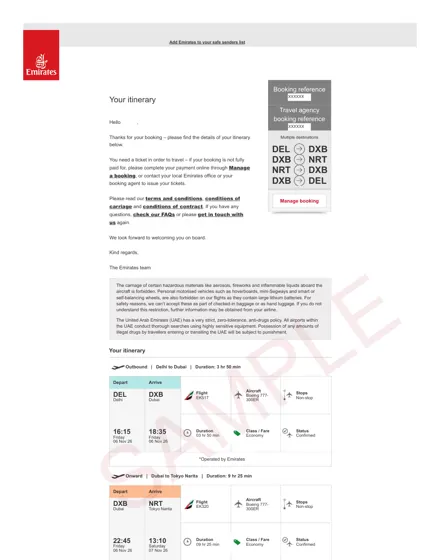
Uganda Visa Flight Reservation Requirement: What the Directorate of Immigration Services Verifies
Uganda’s Directorate of Immigration Services (DIS) requires proof of a return or onward flight reservation as part of the visa application process. This is not an arbitrary hurdle — it serves two practical purposes. First, it demonstrates that you intend to leave Uganda before your permitted stay expires, reducing the risk of overstaying. Second, it shows that you have the financial means and travel plan to depart, which is a standard check under East African immigration protocols. When you apply for a Uganda e-visa or a visa on arrival, the DIS officer reviewing your file will cross-check several specific elements of your flight reservation, not just glance at a piece of paper.
What Immigration Officers Verify on Your Flight Reservation
The DIS does not require you to purchase a non-refundable ticket before your visa is approved. Instead, you may submit a verifiable dummy ticket — a real airline reservation held on the booking system with a valid Passenger Name Record (PNR) — as long as it meets the following criteria. Officers typically check each of these points manually against airline databases or through the IATA Timatic system:
- Passenger name match: The name on the flight reservation must match your passport exactly, including spelling and order of given and family names. A mismatch is the most common reason for rejection or a request for correction.
- Valid PNR or booking reference: The reservation must have a live PNR (six-character alphanumeric code) that returns a confirmed booking when queried. A mere itinerary quote without a PNR is not accepted.
- Return or onward date within visa validity: Your departure flight must be scheduled within the duration of stay you are requesting. For a single-entry tourist visa (typically 90 days), the onward flight must fall inside that window. For transit visas (usually 7 days), the reservation must show departure within that shorter period.
- Realistic routing and airline: The reservation should show a plausible route from Uganda to your home country or next destination. Officers may flag bookings with unusual connections or airlines that do not operate on that route.
- Booking status: The reservation must be in a "confirmed" or "held" status, not "cancelled" or "waitlisted." A held booking is fine — it does not need to be ticketed or paid for.
Practical Steps to Prepare a Compliant Flight Reservation
To avoid delays, follow this process before submitting your Uganda visa application:
- Check your intended travel dates against the visa type you are applying for. For a standard tourist visa, your return flight should be 30–90 days after your arrival date.
- Use a reputable service that provides a real airline reservation with a PNR, not a PDF mock-up. Ask for the PNR and verify it yourself on the airline's website or via a GDS query before submitting.
- Ensure the reservation includes your full passport name and travel dates that align with your accommodation booking or itinerary.
- Submit the reservation as a separate PDF attachment in the e-visa portal, alongside your passport bio page, passport photo, and yellow fever certificate.
- Keep the reservation valid until your visa decision is issued. DIS officers typically process e-visas within 3–5 working days, so your reservation should remain held for at least that period.
Typical Verification Timeframe and Common Outcomes
| Scenario | What DIS Checks | Likely Outcome |
|---|---|---|
| Valid PNR, name matches passport | Queries PNR in airline system | Visa approved within 3–5 working days |
| PNR valid but name slightly different | Compares spelling letter by letter | Request for corrected reservation; 2–3 day delay |
| Reservation expired or no PNR | Fails to retrieve booking | Visa application rejected or put on hold |
| Onward date beyond visa validity | Checks date against requested stay | Shorter visa issued or request for new reservation |
In practice, the DIS rarely contacts the airline directly. Instead, they rely on the PNR to pull up the booking in the shared airline reservation system. If your dummy ticket for uganda visa application has a genuine PNR, the verification is quick and routine. If the PNR fails or the booking has lapsed, your application will be flagged for manual review, which can take an additional week. Always double-check your reservation's validity window before submitting, and renew the hold if your visa decision is delayed beyond the original booking period.
What Is a Dummy Ticket for a Uganda Visa and How Does It Differ from a Real Booking?
A dummy ticket for a Uganda visa—often called a flight reservation, itinerary, or booking hold—is a provisional airline reservation that proves you have an intention to travel. It contains your name, flight numbers, dates, and a Passenger Name Record (PNR) confirmation, but it is not a paid, issued ticket. The Uganda Directorate of Immigration Services (DIS) uses this document to verify that you have a return or onward travel plan before they grant an entry visa. Crucially, a dummy itinerary is not a boarding pass, and it carries no value for actual travel.
Key Differences at a Glance
| Feature | Dummy Ticket (Flight Reservation) | Real Paid Ticket |
|---|---|---|
| Payment | No payment to airline; you pay a small service fee to the booking agency (typically $7–$15) | Full fare paid upfront (often $500–$1,500 for long-haul routes) |
| PNR Status | Live PNR in airline system, but marked as "on hold" or "unpaid" | Confirmed and ticketed PNR, ready for check-in |
| Cancellation | Automatically expires or is cancelled by agency after 7–14 days (hold period) | Requires airline cancellation policy; refunds may take 7–21 business days |
| Validity for Visa | Accepted by DIS if submitted within 24–48 hours of application review | Always accepted, but you risk losing money if visa is denied |
| Use After Approval | Cannot be used to board any flight | Can be used for actual travel, changes, or upgrades |
How a Dummy Itinerary Works in Practice
When you request a dummy ticket for a Uganda visa, a travel agent or online service creates a temporary reservation in the airline’s Global Distribution System (GDS)—typically via Amadeus, Sabre, or Travelport. The airline places a fare quote on hold, usually for 24 to 72 hours, though some agencies extend holds up to 14 days. You receive a PDF with your name, passport number (if provided), flight itinerary, and a PNR like "ABC123." This PNR is verifiable by immigration officers through airline databases or by calling the carrier’s reservations desk.
Why Travelers Choose Dummy Bookings Over Real Tickets
- Cost protection: Uganda visas can take 5–10 business days to process. If you buy a real ticket and your visa is delayed or refused, you face steep change fees (often $200–$400) or lose the fare entirely.
- Flexible entry dates: You can secure a dummy reservation for a tentative departure date, then later purchase a real ticket that matches your final travel plan after visa approval.
- No financial risk: A dummy itinerary costs less than $10, whereas a refundable ticket to Entebbe (EBB) can cost 3–5 times more than a non-refundable one.
Important Caveats for Uganda Applications
DIS typically checks that your flight reservation includes your full name as it appears on your passport, a valid PNR, and a departure date that falls within the visa validity window (usually 90 days from issue). The itinerary must show an inbound and outbound flight—a one-way reservation is rarely accepted. Also, ensure the dummy ticket is issued no more than 30 days before your visa application submission; stale reservations are often rejected. Once your visa is approved, you must discard the dummy booking and purchase a real ticket before boarding.
Applicants at this stage usually order a flight reservation for visa and attach the PDF to the rest of the application.
Need a verifiable dummy ticket for this?
Live PNR you can check on the airline website. From ₹599 / $7, delivered in ~10 minutes.
Uganda Dummy Ticket Requirements: Passenger Names, Date Consistency, and PNR Validity
When you submit a dummy ticket for a Uganda visa, the Directorate of Immigration Services (DIS) does not merely glance at the document—officers cross-check specific data fields against your passport and your stated travel plans. A mismatch as small as a missing middle name or a date that falls outside your visa validity window can trigger a request for additional documentation, delaying your application by several business days. Below are the precise data points that must align, and how long your booking hold must remain active.
Passenger Name Format: Exact Passport Match Required
The name on your flight reservation must appear in the exact same order and spelling as on your passport’s biographical page. Uganda’s immigration system does not tolerate phonetic variations or abbreviated forms. Follow these rules:
- Surname and given names: If your passport lists your surname first (e.g., "MUKASA, John Paul"), your itinerary should show "MUKASA/JOHN PAUL" or "MUKASA John Paul" depending on the airline’s format. Do not swap the order.
- Middle names: Always include them if they appear in your passport. Omitting a middle name is the most common reason for rejection. If your passport has no middle name, do not invent one.
- Special characters and hyphens: Names like "O'Brien" or "Ana-Maria" must be reproduced exactly. If the airline system cannot process the apostrophe or hyphen, use the format shown on your passport’s machine-readable zone (MRZ), which typically drops punctuation but preserves spacing.
- Passport number on the itinerary: Some airlines include your passport number on the reservation. If they do, it must match your current passport—not an expired one. If the airline omits it, that is generally acceptable, but the name must still be exact.
Date Consistency: Aligning Your Itinerary with Your Visa Application
The dates on your dummy ticket must tell a coherent story when cross-referenced with your visa application form, your intended entry date, and the duration of stay you declared. Inconsistencies here are a red flag for immigration officers. Use this checklist:
- Entry date: Your inbound flight must arrive in Uganda (Entebbe International Airport or another port of entry) on or after the date you indicated as your planned arrival in the visa application. It should not be more than 7 days earlier or later than that date—otherwise, the officer may suspect the itinerary is fabricated.
- Departure date: Your outbound flight must fall within the maximum stay allowed for your visa type (typically 90 days for a single-entry tourist visa). If you applied for a 30-day stay, do not submit a return flight 60 days out.
- Transit layovers: If your itinerary includes a layover, the total journey time should be realistic. A 23-hour layover in Addis Ababa on a route that normally takes 3 hours may raise questions.
- Visa validity window: The DIS typically issues visas valid for 90 days from the date of approval. Ensure your planned travel dates fall within that window—if you intend to travel six months later, your dummy ticket will be rejected as premature.
| Data Field | Requirement | Common Mistake |
|---|---|---|
| Passenger name | Exact match to passport (order, spelling, middle names) | Using a nickname or dropping the second given name |
| Passport number (if shown) | Must match current, valid passport | Listing a passport that has been renewed or lost |
| Arrival date in Uganda | On or after the date stated in the visa application | Arriving before the application’s stated entry date |
| Return/onward date | Within the maximum stay of the visa type requested | Booking a return flight beyond the allowed duration |
| PNR validity | Must remain active and verifiable until visa decision | Using a reservation that expires within 24–48 hours |
PNR Validity: How Long Your Booking Hold Must Remain Live
The Passenger Name Record (PNR) is the six-character alphanumeric code that proves your reservation exists in the airline’s system. A genuine booking hold from a reliable provider typically remains live for 7 to 14 days from the date of issue, depending on the airline’s fare rules and the ticketing deadline. However, Uganda visa processing times vary: e-visa applications are usually processed within 3 to 5 working days, but some applications take up to 10 working days if additional scrutiny is required.
To be safe, your PNR must remain verifiable for at least 14 days after submission. If you purchase a dummy ticket that expires after 48 hours, you risk the DIS checking it after the hold lapses—and finding a "no record" response. Practical steps:
- Check the ticketing deadline: When you receive your itinerary, look for the "last date to ticket" or "ticketing time limit." This is the exact date when the PNR expires. It should be at least two weeks from your visa submission date.
- Verify online immediately: Use the airline’s "manage booking" portal or a PNR checker to confirm the reservation is active before you submit. A provider that gives you a PNR but no way to verify it is suspect.
- Renew if needed: If your visa application is delayed beyond the PNR’s validity, you will need a fresh dummy ticket for uganda visa purposes. Do not submit the expired one—immigration officers can and do check PNR status in real time.
- Keep the confirmation email: Save the PDF and the original email with the PNR and e-ticket number. You may need to present these at the visa application center or at Entebbe immigration upon arrival.
In practice, most applicants who use a reputable dummy ticket service receive a PNR that is verifiable for 7–14 days, which comfortably covers the typical 3–5 day e-visa processing window. If you are applying closer to your travel date or anticipate a longer review, request a reservation with a longer hold—many providers can extend the ticketing deadline for an additional fee, though this is not always guaranteed by the airline.
Step-by-Step Process to Get a Uganda Visa Dummy Ticket via DummyTicketPrice
Using DummyTicketPrice to generate a flight reservation for your Uganda visa application is a straightforward, mostly automated process. You do not need to speak to an agent or wait days for a confirmation. The entire workflow—from submitting your travel details to receiving a verifiable itinerary in your inbox—typically takes under 15 minutes. Below is the exact sequence you will follow, along with what happens at each stage and how to verify the final document before you submit it to the Directorate of Immigration Services (DIS).
Step 1: Gather Your Passenger and Travel Details
Before you open the booking form, have the following information ready, exactly as it appears on your passport bio-data page:
- Full legal name (surname and given names, in the same order as your passport).
- Passport number and nationality.
- Planned entry date into Uganda (this must match the date you intend to submit your visa application or the date you plan to arrive).
- Planned departure date from Uganda (or the date of your onward flight to a third country).
- Routing: your departure city and your intended Ugandan arrival airport (typically Entebbe International Airport, code EBB).
Double-check that the names have no typos or missing middle initials. A mismatch between your passport and the flight reservation is one of the most common reasons visa officers reject an application. If you are applying for a multiple-entry visa or an East Africa tourist visa, the same single reservation usually suffices, but you should still list your primary entry date.
Step 2: Complete the Online Form and Make Payment
On the DummyTicketPrice booking page, you will select the “Uganda Visa” option from the dropdown menu. Enter your travel dates and the exact passenger name(s). If you are traveling with family members, each person needs their own reservation—though you can often book them in one transaction on the same itinerary. The service fee is a flat rate of approximately ₹599 (about $7 USD) per passenger. Payment is processed via a secure payment gateway (credit card, debit card, or UPI). Once the payment is confirmed, the system immediately generates a PNR (Passenger Name Record) and issues your itinerary.
Step 3: Receive Your Itinerary and PNR via Email
Within roughly 10 minutes—usually faster—you will receive an email containing:
- A PDF copy of the flight reservation (the dummy ticket).
- A separate text block with the 6-character PNR code (e.g., ABC123).
- The airline’s name and the booking reference link.
Do not confuse this with an e-ticket. You are not purchasing an actual airline seat; you are paying for a temporary hold on a real flight reservation that will remain valid for a specific period—typically 48 to 72 hours. This is sufficient for you to submit your Uganda e-visa application and receive an acknowledgment.
Step 4: Verify Your Reservation on the Airline’s Website
Before you submit your Uganda visa application, you must confirm that the PNR is live and matches your passport details. Here is how to check it:
- Open the airline’s official “Manage Booking” or “My Trips” page.
- Enter the 6-character PNR and the passenger’s last name exactly as shown on the reservation.
- If the system retrieves the booking, you will see your flight numbers, dates, and departure/arrival times displayed.
This step is critical because some visa officers will manually verify the PNR during the application review. A reservation that cannot be retrieved online will raise a red flag. The itinerary you receive from DummyTicketPrice is generated on actual airline inventory, so it will show up in the airline’s system.
Step 5: Attach the Reservation to Your Uganda E-Visa Application
Log in to the Uganda Directorate of Immigration Services online portal (visas.immigration.go.ug). Under the “Supporting Documents” section, upload the PDF of the flight reservation. The file must be legible and preferably in color. Make sure the PNR and passenger name are clearly visible. After you submit the application and pay the visa fee (typically $50 for a single-entry tourist visa), you will receive an application reference number. The DIS usually processes applications within 3–5 business days, though it can take longer during peak season.
Typical Timeline and What to Expect
| Step | Typical Duration | What You Receive |
|---|---|---|
| Form submission + payment | 2–3 minutes | Payment confirmation |
| Email with itinerary and PNR | ~10 minutes | PDF dummy ticket + PNR code |
| PNR verification on airline site | 2 minutes | Live booking details |
| Uganda e-visa processing | 3–5 business days | Approval or request for more info |
If your visa is approved, you do not need to take any further action with the dummy ticket—you will purchase your real flight separately. If the visa is delayed or you need to change your travel dates, you can request a new reservation from DummyTicketPrice with a fresh PNR, usually at the same low fee. Always keep a copy of the itinerary until your visa is stamped and you have entered Uganda, as immigration officers at Entebbe may ask to see it alongside your visa approval letter.
Related guide: How to Cancel a Dummy/Hold Ticket Reservation.
How to Verify Your Uganda Dummy Ticket PNR on Airline Systems (Amadeus, Sabre, Travelport)
Once your dummy ticket provider sends you a booking confirmation, you should not simply trust the PDF. A genuine flight reservation for a Uganda visa application carries a Passenger Name Record (PNR) — a six-character alphanumeric code — that remains active in the airline’s inventory or a Global Distribution System (GDS). Verifying that PNR takes less than five minutes and protects you from submitting a fabricated itinerary that the Directorate of Immigration Services could flag as fraudulent.
Step 1: Locate the Correct Verification Channel
Your provider should state which GDS or airline system hosts the booking. In practice, most dummy tickets for Uganda visas are issued through Amadeus, Sabre, or Travelport (which operates Galileo and Worldspan). Each system offers a public-facing verification portal:
- Amadeus: Use the airline’s own “Manage Booking” page if the PNR belongs to a specific carrier, or the Amadeus CheckMyTrip portal for hosted bookings.
- Sabre: Access the airline’s website directly, as Sabre powers most major carriers’ booking engines. Look for “My Trips” or “Manage Reservation.”
- Travelport: Verify via the airline’s customer-service line or the carrier’s booking lookup tool, since Travelport does not operate a single public passenger portal.
If your dummy ticket provider supplied a PNR for a flight operated by a specific airline (e.g., Kenya Airways, Ethiopian Airlines, or Qatar Airways), go straight to that airline’s website. Do not rely on third-party aggregators, as they may cache stale data.
Step 2: Enter the Required Data Fields
Every airline’s verification tool asks for the same core details. Have your passport and the booking confirmation email at hand. Typically, you will need:
- The PNR code (e.g., ABCDEF or 1A2B3C)
- The last name of the primary passenger, exactly as it appears in the passport
- Sometimes the departure date or the email address used for the booking
Enter these fields carefully. A single typo in the last name — for instance, entering “Ochieng” instead of “Ochieng'” — will return an error even if the booking is fully valid.
Step 3: Interpret the Status Codes
When the system returns your itinerary, check the booking status. A live, usable dummy ticket for a Uganda visa must show one of the following:
| Status Code | Meaning | Acceptable for Visa? |
|---|---|---|
| HK | Holding confirmed — seat is ticketed or held | Yes |
| KK | Confirmation received from airline | Yes |
| RR | Reconfirmed by passenger | Yes (rare for new bookings) |
| UN | Unable — booking not confirmed | No |
| NO | No action — segment not active | No |
| XX | Cancelled by airline or agent | No |
If you see HK or KK next to each flight segment, your reservation is active. The PNR will typically remain valid for 7 to 14 days, but some providers hold bookings for only 72 hours. Verify the PNR on the same day you plan to submit your Uganda visa application.
Step 4: Confirm the Ticket Time Limit
A dummy ticket is a reservation, not a paid ticket, so the airline’s system will display a “ticket time limit” — the date by which you must purchase the fare. This deadline usually falls 24 to 72 hours after booking. If your visa appointment is more than three days away, ask your provider to extend the hold or issue a new PNR closer to your submission date. An expired ticket time limit causes the airline to cancel the PNR automatically, and your itinerary will no longer appear as active during verification.
Finally, take a screenshot of the verification result showing your name, the PNR, flight numbers, and dates. Save this as a PDF alongside your dummy ticket for Uganda visa purposes; if the immigration officer checks the PNR during the review, you have immediate proof of its validity.
Comparison Table: Top Dummy Ticket Providers for Uganda Visa – Features, Price, and Reliability
Choosing the right provider for your Uganda visa flight reservation often comes down to three factors: whether the PNR is verifiable on the airline’s own website, how quickly you receive the itinerary, and what happens if your visa appointment is delayed or rescheduled. Below is a direct comparison of the most commonly used services, based on what Uganda visa applicants typically report in travel forums and immigration groups.
| Provider / Service Type | Typical Price (per passenger) | Turnaround Time | PNR Verifiability | Refund / Revision Terms |
|---|---|---|---|---|
| DummyTicketPrice.com (automated, live PNR) | ₹599 / $7 flat | ~10 minutes via email | Yes — live PNR on Amadeus/Sabre/Travelport; checkable on airline site within 24–48 hours of issue | Free revision within 24 hours; no cash refund after issuance, but reissue at half price if dates change |
| Full-service visa agencies (e.g., local Uganda visa processors) | $15–$30 per itinerary | 1–3 business days | Usually yes, but depends on the back-end GDS they use; some only provide a PDF without a checkable PNR | Often bundled with visa filing; revision fees of $5–$10 per change |
| Airline hold booking (direct via carrier) | Free (if airline allows) or fare difference on ticketing | Immediate, but hold windows are short | Yes — 100% genuine, but the PNR typically expires in 24–72 hours | Free cancellation within hold window; no fee, but you must rebook for a new hold |
| Generic travel agency "dummy ticket" PDFs (eBay, Fiverr) | $3–$8 | 2–24 hours | Risky — many are generated from a template without a real GDS record; Uganda DIS may reject if PNR cannot be pulled | Usually no refunds; sellers often disappear after delivery |
| Online "free flight itinerary" generators | Free | Instant | Never — these create a fake PDF that mimics an airline layout but has no underlying reservation | Not applicable; not accepted for visa purposes |
What to Look For Before You Pay
Not all verifiable bookings are equal. When you receive your dummy ticket for Uganda visa purposes, follow these practical checks:
- Confirm the PNR format: A valid PNR is usually a 6-character alphanumeric code (e.g., K7M2PL). If your provider sends a longer string or a numeric-only reference, it is likely a booking file number, not a PNR — that will not verify on the airline’s manage-booking page.
- Test the PNR within 24 hours: Use the airline’s official "Manage Booking" or "My Trips" portal. Enter the passenger’s last name and the PNR. The reservation is issued exactly as entered, so please check names, dates and route before paying; a new date or correction needs a fresh order.
- Check the ticketing time limit: A hold booking usually has a fare deadline. For Uganda visa appointments, you typically need the reservation to remain valid for 10–14 days after submission. Ask the provider whether they can extend the hold or reissue closer to your appointment date.
- Match passenger names exactly: The itinerary must show the same spelling as your passport and your Uganda visa application form. Even a single letter off (e.g., Jon vs. John) can trigger a manual review at the Directorate of Immigration Services.
Price vs. Reliability Trade-Off
If your Uganda visa interview is scheduled within a week, paying the $7–$10 range for a live PNR from a dedicated dummy ticket service is usually the safest route. Free generators and ultra-cheap Fiverr listings save money but frequently fail verification, which can delay your entire application. If you have more flexibility, a direct airline hold booking is the most reliable option — but you must remember to cancel it before the hold expires to avoid automatic ticketing and charges.
Our guide to the proof of onward travel ticket explains why embassies ask for a reservation rather than a paid ticket.
Dummy Ticket vs. Refundable Ticket for Uganda Visa: Cost, Speed, and Risk Compared
When preparing your Uganda visa application, you will ultimately choose between two practical routes for satisfying the Directorate of Immigration Services (DIS) requirement: a dummy ticket (a provisional flight reservation with a live PNR) or a fully refundable airline ticket. Each option has distinct trade-offs in cost, turnaround time, and financial risk.
Cost Comparison: What You Actually Pay
A dummy ticket for a Uganda visa typically costs between $7 and $15 per passenger from reputable providers. This is a one-time service fee, and you pay nothing to the airline. A refundable ticket, by contrast, often requires you to pay the full fare upfront—frequently $800 to $1,500 or more for a round-trip to Entebbe from North America or Europe. While the money is eventually returned, it may be held by the airline for several billing cycles (usually 7 to 14 business days) after cancellation, which can strain your cash flow.
Speed and Approval Timeline Considerations
Uganda’s e-visa processing typically takes 3 to 5 business days, but delays can push this to 10 business days during peak seasons. Here is how your choice interacts with that timeline:
- Dummy ticket: Delivered within 10 minutes. You can submit your application immediately. If the DIS takes longer than expected, you can purchase a second reservation for another $7 without losing a significant sum.
- Refundable ticket: You must book it, submit, wait for approval, then cancel and wait for the refund. If the visa is denied or delayed, your refund is still processed, but you have tied up capital for the entire review window.
Risk Profile: Denial, Date Changes, and Verification
The DIS checks that your PNR is valid and that your name matches your passport. Both options pass this check if the reservation is genuine. However, the risks diverge:
| Factor | Dummy Ticket | Refundable Ticket |
|---|---|---|
| Upfront capital required | Minimal ($7–$15) | Full fare ($800+) |
| Time to obtain | ~10 minutes | Immediate, but booking takes 15–30 minutes |
| Refund processing | N/A (no refund needed) | 7–14 business days after cancellation |
| Risk if visa is denied | Loss limited to service fee | Refund still processed, but capital tied up |
| Risk if travel dates shift | Buy a new reservation for a small fee | Change fees often apply (typically $100–$300) unless fare rules allow free changes |
Which Should You Choose?
If you have a flexible budget and prefer to avoid any perceived ambiguity, a refundable ticket on a major carrier like Kenya Airways, Ethiopian Airlines, or Qatar Airways is the most conservative route—but only if you are certain of your travel dates. If you are still finalizing your itinerary, applying early, or want to keep your cash available for visa fees, accommodation, and other expenses, a dummy ticket is the pragmatic choice. Most applicants find that the low cost and instant delivery of a dummy ticket outweigh the temporary cash lock-up of a refundable fare, especially since the DIS only needs to see a valid reservation, not proof of payment.
Case Study: Uganda Visa Approved with a Dummy Ticket from DummyTicketPrice
To illustrate how a properly verified dummy ticket functions in a real application, consider the case of Priya, a software developer from Mumbai who applied for a single-entry Uganda visa in March 2025. Priya planned a two-week trip to Kampala for a client workshop and needed to submit her e-visa application through Uganda’s official online portal (visas.immigration.go.ug). She had not yet finalized her return flight because her employer was still approving the exact project end date, so she purchased a flight reservation from DummyTicketPrice for roughly $7.
Step 1: Ordering and Checking the PNR Immediately
Priya placed her order on a Tuesday afternoon and received the itinerary PDF in her inbox within 10 minutes, as advertised. The document contained her full name (matching her passport exactly, without initials), her passport number, flight numbers, and a six-character PNR (e.g., K7M2Q9). Crucially, she did not attach the PDF directly to her visa form. Instead, she first verified the reservation on the airline’s own website using the “Manage My Booking” section. She entered the PNR and her last name, and the system pulled up the active booking hold for the outbound flight (Mumbai to Entebbe via Addis Ababa) and the return leg (Entebbe to Mumbai). The fare rules clearly stated “fare lock – not ticketed,” which is exactly what the immigration officer expects to see.
Step 2: Aligning Dates with the Application
Priya’s planned arrival in Entebbe was April 5, and her return was April 19. She ensured the dummy ticket mirrored these exact dates. She also checked that the booking held seats for 14 days; DummyTicketPrice reservations typically remain valid in the airline’s system for 7 to 21 days depending on the carrier. Since her visa processing was expected to take 5–7 working days, she submitted her application on April 1, leaving a comfortable buffer before the hold expired. She did not risk submitting a reservation that would lapse before the officer reviewed her file.
Step 3: Uploading and What Happened Next
In the “Flight Itinerary” section of the e-visa form, Priya uploaded the PDF. She also kept a screenshot of the airline website showing the live PNR confirmation, which she had saved as a backup but did not upload initially. The Directorate of Immigration Services (DIS) processed her application in six working days. She received an approval email with a visa attached, valid for 90 days from the date of issue. No additional document requests were made.
Practical Tips from Priya’s Experience
- Use the exact passenger name as it appears on your passport bio page, including middle names. A mismatch is the most common reason for rejection.
- Verify within 24 hours of receipt. If the PNR does not pull up on the airline’s site, contact DummyTicketPrice support immediately for a replacement.
- Do not book a real flight ticket until the visa is approved. Priya waited until the visa PDF arrived, then purchased her actual ticket at a slightly higher fare, which she considered a fair trade-off for certainty.
- Keep the itinerary reference number handy when filling out the visa form; some fields ask for the airline and flight number, not just the PDF upload.
What the Approval Timeline Typically Looks Like
| Stage | Timeframe (Typical) | Action Taken |
|---|---|---|
| Order dummy ticket | 10 minutes | Received PDF with live PNR |
| Verify PNR on airline site | 15 minutes | Confirmed booking hold active |
| Submit e-visa application | 30 minutes | Uploaded itinerary, paid $50 fee |
| DIS processing | 5–7 working days | No additional documents requested |
| Visa approval received | Day 6 | Downloaded e-visa PDF |
Priya’s case is not unusual. The key takeaway is that the dummy ticket for Uganda visa worked because she treated it as a verifiable document, not a decorative PDF. She checked the reservation, matched every date and name, and submitted before the booking hold expired. That level of diligence, paired with a provider that issues genuine PNRs, is what gets applications approved without administrative headaches. If you follow the same verification steps, your outcome will likely mirror hers.
Related guide: Dummy Ticket for Croatia Visa: Flight Reservation Requirements, Process and Mistakes to Avoid.
7 Common Mistakes to Avoid When Using a Dummy Ticket for a Uganda Visa
Even a perfectly valid flight reservation can lead to a visa rejection or unnecessary delay if you make one of these common errors. The Directorate of Immigration Services (DIS) in Kampala cross-checks the PNR details you submit against airline systems, so small inconsistencies matter. Here are the seven mistakes applicants make most often—and how to avoid them.
1. Mismatched Passenger Names Between Passport and Itinerary
The most frequent cause of rejection is a name mismatch. If your passport reads “Priya R. Sharma” but your dummy ticket shows “Priya Sharma” or “Priya Rajan Sharma,” the visa officer will flag it as a discrepancy. Always compare the surname, given names, and any middle initials exactly as they appear on your passport’s bio page. If you have two given names, ensure the airline reservation lists both in the same order. Ask your provider to regenerate the ticket if you spot even a one-letter difference.
2. Using an Expired or Already-Cancelled PNR
Dummy tickets typically hold a reservation for 7 to 14 days, depending on the airline’s fare rules. If your Uganda visa appointment falls outside that window, the PNR may drop out of the system. Submitting a stale booking confirmation is a surefire way to trigger a request for additional documents—or a refusal. Before you upload your itinerary, verify the PNR directly on the airline’s website or through a GDS like Amadeus or Sabre. If it no longer shows as “confirmed,” order a fresh reservation with a validity that covers your visa interview date.
3. Booking a One-Way Ticket Without an Onward or Return Segment
Uganda’s immigration rules require proof of return or onward travel, not just a one-way departure. Many applicants mistakenly submit a single outbound leg. Your dummy ticket must show either a round-trip itinerary or a separate onward flight leaving Uganda within the allowed visitor period (typically 90 days). If you’re applying for a single-entry visa, the DIS usually expects to see a return flight to your home country, not a bus ticket to Kenya.
4. Inconsistent Travel Dates Across Application Forms
Your visa application form, cover letter, and dummy ticket must all tell the same story. If you state your intended arrival date as 10 June on the eVisa form but your flight reservation shows 12 June, the officer may doubt the authenticity of your travel plans. Align every document—including hotel bookings and invitation letters—to match the exact dates on your itinerary. A one-day mismatch is often tolerated, but a week-long discrepancy will raise red flags.
5. Submitting a Non-Verifiable or “PDF-Only” Reservation
Some providers send a simple PDF that looks like an airline confirmation but contains a fake or inactive PNR. DIS officers routinely check bookings through the airline’s manage-booking portal. To avoid this, only use a dummy ticket service that provides a live PNR you can verify yourself before submission. Test it by entering the PNR and the passenger’s last name on the airline’s website. If the system returns “not found,” do not submit it. A verifiable itinerary is non-negotiable.
6. Ignoring the Airline’s 24-Hour Hold Policy
Many airlines offer a free 24-hour hold on flights, which some applicants mistake for a dummy ticket. While a hold is legitimate, it expires quickly. If your visa appointment is weeks away, a 24-hour hold will be dead by the time the officer reviews your file. Opt for a paid dummy ticket with a longer validity window—typically 7 to 14 days—or re-book a new hold a day before your appointment. Never assume a hold will remain active for the entire visa processing period.
7. Failing to Double-Check the PNR After Payment
Even reputable providers can make typos. After you receive your dummy ticket, immediately verify the passenger name, flight numbers, dates, and the PNR itself. If you notice an error, contact the provider for a free correction within a few hours of delivery. Most services, including DummyTicketPrice, will regenerate the booking at no extra cost if you report the issue promptly. Waiting until your visa interview is too late.
Quick Reference: What to Check Before Submitting
| Checkpoint | What to Verify | Consequence If Wrong |
|---|---|---|
| Passenger name | Exact match with passport bio page | Automatic rejection or request for new documents |
| PNR status | Shows “confirmed” on airline website | Delay or refusal for unverifiable booking |
| Travel dates | Match eVisa form and cover letter | Suspected fraud or misrepresentation |
| Return/onward leg | Present and within 90 days of arrival | Visa rejection for insufficient proof of departure |
The simplest way to avoid these pitfalls is to order your dummy ticket only from a provider that issues a live PNR and to verify it yourself at least 24 hours before your visa appointment. A few minutes of checking can save you weeks of reapplication delays.
Frequently Asked Questions About Dummy Tickets for Uganda Visas
Is it legal to use a flight reservation for a Uganda visa application?
Yes, using a dummy ticket for a Uganda visa is legal, provided the reservation is genuine and issued by an airline or authorized travel agent. The Directorate of Immigration Services (DIS) does not require you to hold a paid, ticketed flight at the application stage—only a confirmed booking hold with a valid PNR. However, presenting a forged or fabricated itinerary is a criminal offense and will result in an automatic visa refusal. Always obtain your flight reservation from a reputable provider that issues real PNRs verifiable on airline systems like Amadeus or Sabre, not from a template generator that produces fake confirmation codes.
How much does a dummy ticket for a Uganda visa typically cost?
Pricing varies by provider, but a standard verifiable flight reservation for a single passenger usually costs between $7 and $15. Some agencies charge per passenger, so a family of four might pay $28–$60. Be wary of services offering reservations for under $3—these are often non-verifiable PDFs that will fail DIS checks. Reputable providers like DummyTicketPrice include a live PNR, same-day delivery (typically within 10–30 minutes), and validity of 14–21 days. You may also need to pay a small fee for extensions if your visa processing exceeds the initial validity window, usually $3–$5 per extension.
How long is a dummy ticket valid for a Uganda visa application?
Most airline booking holds remain active for 14 to 21 days from the date of issuance, depending on the carrier and fare rules. Some providers offer extended validity up to 30 days for an additional fee. Since Uganda visa processing typically takes 5–10 business days for standard applications and up to 15 days during peak seasons, a 14-day reservation is usually sufficient. However, if you apply during holiday periods or your case requires additional administrative review, the DIS may take longer. In that scenario, you must extend your booking hold before it expires—otherwise, the PNR becomes invalid and your application could be flagged as incomplete.
Will the Uganda embassy or DIS actually check my PNR?
Yes, immigration officers frequently verify PNRs directly on airline reservation systems, especially when they suspect inconsistencies. They cross-check the passenger name against your passport, the flight dates against your intended entry and exit, and the airline code against your stated travel plans. A real PNR will return a valid booking status with your name and flight details. A fake or expired PNR will show as "not found" or "cancelled," leading to a visa refusal or a request for additional documentation. To avoid this, always verify your PNR yourself on the airline’s website or through a GDS checker before submitting your application.
What should I do if my Uganda visa processing takes longer than my dummy ticket’s validity?
If your visa is still under review and your flight reservation is about to expire, contact your dummy ticket provider immediately to request an extension or a new booking hold. Most reputable services can extend the same PNR for an additional 7–14 days for a small fee, typically $3–$5. Alternatively, you can book a new reservation with a later departure date. Do not submit an expired PNR to the DIS or attempt to explain the lapse without proactive action. Immigration officers may reject your application for "insufficient travel documentation" if you fail to maintain a valid booking throughout the entire processing period.
Can I use the same dummy ticket for both the visa application and airport immigration?
No. A dummy ticket is strictly for the visa application stage. When you arrive at Entebbe International Airport, immigration officers may ask to see a confirmed, paid return ticket. A booking hold without an issued ticket will not suffice at this point. After your visa is approved, you must purchase an actual ticket—either the same flight if the fare is still available or a new one that matches your travel dates. Some travelers use a refundable ticket for this purpose, but note that refundable fares are significantly more expensive. Budget for a real ticket purchase immediately after visa approval to avoid last-minute fare increases.
| Concern | Typical Resolution | Timeframe |
|---|---|---|
| Legal use of dummy ticket | Allowed with real PNR; forged documents are illegal | Immediate |
| Cost per passenger | $7–$15 for verifiable reservation | Delivery in 10–30 minutes |
| Validity period | 14–21 days standard; extendable to 30 | Extend before expiry |
| PNR verification by DIS | Routine check on GDS systems | During application review |
| Visa delay beyond validity | Request extension or new booking | 1–2 business days |
| Use at airport immigration | Requires paid, issued ticket | After visa approval |