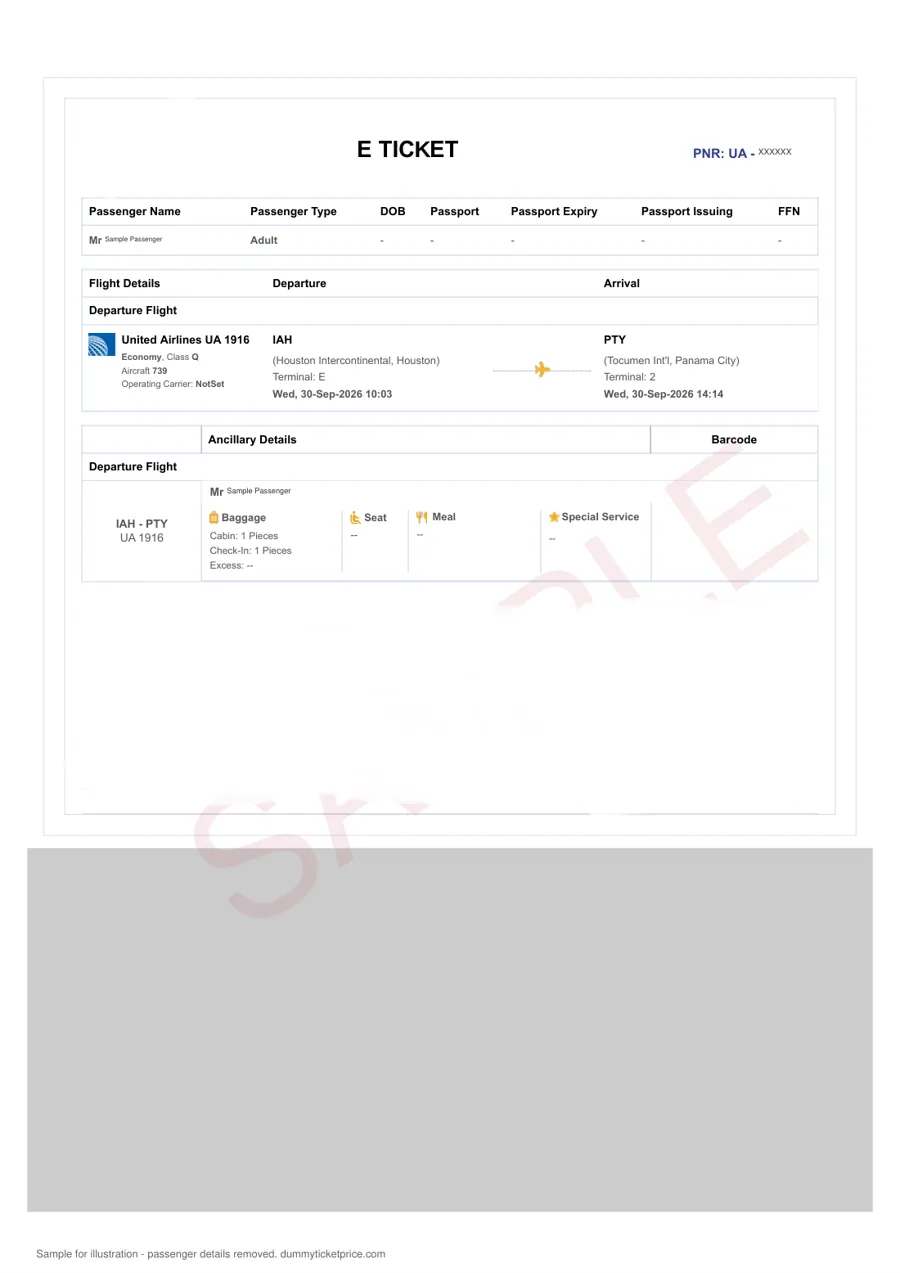
What Is a Re-Entry Permit and Why Dummy Tickets Are Essential for Returning Residents
A re-entry permit is an official immigration document issued to lawful permanent residents (Green Card holders in the United States, permanent residents in Canada, or similar status holders in other countries) who plan to travel abroad for an extended period. Unlike a standard visa application—which proves you intend to visit temporarily—a re-entry permit serves as proof that you intend to return to your country of residence after a prolonged absence. It protects your permanent resident status when you cannot satisfy the usual physical presence requirements.
How Re-Entry Permits Differ From Standard Visas
Standard visa officers scrutinize your itinerary to ensure you will leave before your visa expires. Re-entry permit officers do the opposite: they examine your travel plans to confirm you have a concrete reason to leave and a clear, scheduled intention to come back. This distinction drives the documentation requirements. For a re-entry permit (Form I-131 in the U.S., for example), you typically submit:
- Proof of permanent resident status (e.g., a valid Green Card or permanent resident card)
- A completed application form with biographical data
- Supporting evidence for the reason of absence (work contract, family emergency, medical treatment)
- Evidence of ongoing ties to your country of residence (tax returns, property ownership, bank accounts)
- A travel itinerary showing your departure date and—critically—your planned return date
Here is where a dummy ticket re-entry permit application becomes uniquely valuable. Real round-trip tickets for a 6-to-12-month absence are expensive, often non-refundable, and lock you into specific dates before you even know if your permit is approved. You cannot realistically purchase a fully paid, long-haul round-trip fare months in advance—especially if your departure window is tentative or your application is still under review.
Why a Flight Reservation Beats a Paid Ticket for Re-Entry Permits
Immigration officers do not need proof of payment. They need proof of intent and a coherent timeline. A verifiable flight reservation—a booking hold with a live PNR confirmation—satisfies that requirement without the financial risk. Consider the practical advantages:
| Scenario | Fully Paid Ticket | Dummy Flight Reservation |
|---|---|---|
| Application delayed 3 months | Ticket expires or requires costly rebooking fees | PNR remains valid; dates can be adjusted or reissued |
| Permit denied | You lose the fare or pay cancellation penalties | No financial loss—you simply let the hold expire |
| Travel dates shift after approval | Change fees often exceed $200–$500 | Book a new reservation once your actual dates are final |
| Officer requests additional evidence | You must submit the same itinerary documents | Your PNR confirmation and e-ticket PDF work identically |
How to Use a Booking Hold in Your Re-Entry Permit Application
When preparing your Form I-131 packet (or your country's equivalent), you will typically attach a cover letter explaining the purpose of your trip. In that letter, reference your planned departure date and expected return window. Then attach the flight reservation as an exhibit. The officer will check that the itinerary is internally consistent—departure within your permitted travel window, return date clearly stated, and sufficient duration to explain why you need the re-entry permit in the first place.
Most re-entry permits are valid for up to two years (the U.S. issues them for up to two years, while Canada's Permanent Resident Travel Document is different—re-entry permits are primarily a U.S. and select Asian/European concept). Your itinerary should show a return date that falls before your permit expiration, typically 6 to 12 months out. Immigration officers usually expect to see a return leg no later than 11 months after departure for standard re-entry scenarios.
Finally, ensure the passenger name on the reservation matches your permanent resident document exactly. A mismatch—even a middle name difference—can raise flags. Your flight reservation should also list your destination country and, ideally, show a return leg to your city of residence in the country where you hold permanent status. This simple, low-cost step keeps your application clean, consistent, and free of the financial risk that would otherwise accompany a genuine long-haul booking.
Re-Entry Permit vs. New Visa: Which Application Needs a Dummy Ticket?
When you hold a re-entry permit, you are not applying for a new visa—you are seeking permission to return to a country whose residency status you already possess. This distinction fundamentally changes what immigration officers expect from your travel documents, and whether a dummy ticket re-entry permit application will be accepted or raise red flags.
The Core Difference: Intent vs. Eligibility
A new visa application (e.g., an H-1B, Schengen C-type, or UK Standard Visitor visa) requires you to prove non-immigrant intent—that you will leave before your authorized stay expires. Consular officers scrutinize your flight reservation to confirm a planned departure date. In contrast, a re-entry permit (Form I-131 for U.S. permanent residents, or the equivalent in Canada, Australia, or the UK) is filed while you are still inside the country or before a temporary absence. The officer's concern is not whether you will overstay, but whether you genuinely intend to return and maintain your residency.
This means the documentary burden is lighter for re-entry permits, but not zero. Here is the practical breakdown:
| Requirement | Re-Entry Permit (e.g., U.S. Form I-131) | New Visa Application |
|---|---|---|
| Flight booking proof at filing | Usually NOT required for the initial petition; you can file with a stated travel plan. | Almost always required at the interview stage (e.g., Schengen, UK, Australia). |
| Evidence of return date | Only needed if you are applying for a travel document (e.g., a boarding foil) to re-enter after a prolonged absence. | Mandatory—officers check your planned exit to confirm temporary stay. |
| Penalty for missing itinerary | Low—the permit is adjudicated on residency ties, not flight dates. | High—your application is typically refused or put on administrative review. |
| When a dummy ticket is critical | When applying for a re-entry permit at a U.S. embassy abroad (emergency processing) or for a Canadian PR Travel Document (PRTD) at a visa office. | For the visa interview, for transit visas, and for showing onward travel at border entry. |
When a Dummy Ticket Is Non-Negotiable for Re-Entry Permits
There are two scenarios where you must provide a verifiable flight reservation even for a re-entry permit, not a new visa:
- Applying for a U.S. Boarding Foil (I-131A) at a consulate after being outside the U.S. for over one year without a valid re-entry permit. You must show a confirmed itinerary for travel back to the U.S. within 30 days. A dummy ticket re-entry permit application here works because the consular officer only needs to verify your travel date—not your intent to remain.
- Canadian PRTD applications at a Canadian visa office (e.g., in the U.S., UK, or India). Immigration, Refugees and Citizenship Canada (IRCC) requires proof of travel to Canada, including a flight booking, before they will issue the one-entry travel document. Without a held reservation, your PRTD will be refused for incompleteness.
Where a Dummy Ticket Is a Waste of Money
Do not attach a dummy ticket to your initial re-entry permit petition filed by mail (e.g., USCIS Lockbox). Officers adjudicating Form I-131 care about your green card status, tax records, and U.S. address—not a flight date that may change. Submitting a fabricated itinerary can actually hurt you: if the dates conflict with your stated absence period, the officer may request an RFE (Request for Evidence), delaying processing by 6–8 weeks.
Practical Steps for a Re-Entry Permit Application
- File Form I-131 at least 60–90 days before your planned departure from the U.S. Processing typically takes 4–6 months; you can request expedited processing if you have a medical emergency or job loss abroad.
- For a PRTD, book a refundable flight or a verifiable dummy ticket only after your application is approved in principle—IRCC will ask for the itinerary in a portal message, not at the initial submission.
- If you are already abroad and need a boarding foil, purchase a dummy ticket re-entry permit package that includes a live PNR (Passenger Name Record). Print the confirmation and bring it to the consular appointment—they will verify it against the airline's system in real time.
- Keep your return date within 30 days of the permit's validity. For U.S. re-entry permits, the permit is valid for up to two years from issuance, but the boarding foil is only valid for 30 days from the date of your intended departure.
In short, a new visa application always benefits from a dummy ticket at the interview; a re-entry permit application only needs one when you are applying from abroad or for a travel document. Match your paperwork to the officer's actual concern—residency ties for the permit, temporary intent for the visa—and you will avoid unnecessary expense and delay.
Practical next step: order a cheap dummy ticket and attach the PDF to the rest of the application.
Need a verifiable dummy ticket for this?
Live PNR you can check on the airline website. From ₹599 / $7, delivered in ~10 minutes.
Country-Specific Rules for Dummy Tickets in Re-Entry Permit Applications
When you hold lawful permanent resident status, consular officers and border officials apply different scrutiny levels to your travel documents depending on your destination country. Understanding these nuances prevents a rejected application or an uncomfortable secondary inspection at the port of entry. Below is a breakdown of how major jurisdictions treat flight reservations in the context of re-entry permits and returning-resident visas.
United States: SB-1 Visa and Form I-131
U.S. Customs and Border Protection (CBP) and consular posts do not require a paid ticket at the time of filing Form I-131 (Application for Travel Document) for a re-entry permit. However, if you have been abroad for over one year and need a returning resident visa (SB-1), the consular officer will scrutinize your itinerary to assess your intention to resume permanent residence. A dummy ticket showing a firm return date within 30 days of your interview strengthens your case. CBP officers at ports of entry may also ask for onward travel evidence if your absence exceeded the permit's validity; a printable PNR confirmation from a booking hold is acceptable during the initial document check, though a paid ticket becomes necessary once the SB-1 is approved.
Canada: Permanent Resident Travel Document (PRTD)
Immigration, Refugees and Citizenship Canada (IRCC) requires PRTD applicants to demonstrate travel plans, but a fully paid ticket is not mandatory at submission. Visa officers typically accept a dated itinerary or a dummy ticket with a 14-day hold. If your PRTD is approved, you must enter Canada with a real ticket—border services officers (CBSA) can verify the booking electronically. Note that IRCC may cross-check your PNR against airline databases; therefore, use a verifiable reservation from a travel agency or airline, not a screenshot from a fare aggregator that lacks a live confirmation code.
United Kingdom: Returning Resident Visa and the 2-Year Rule
The UK Home Office does not list a flight booking among the mandatory documents for a returning resident visa (Appendix Returning Resident). However, caseworkers weigh your travel history and future plans. A dummy ticket showing a departure within 3 months of your intended return is persuasive if you have been away for under 2 years. If you exceed 2 years, you must apply for a new entry clearance; in that scenario, a dated itinerary is less relevant than evidence of ties (property, employment). UKVI officers rarely call airlines to verify bookings, but they may reject a vague itinerary lacking a valid PNR.
Schengen Area: National Re-Entry Visas and Long-Stay Permits
For Schengen member states (e.g., Germany, France, Italy), returning residents with a valid residence permit do not need a separate re-entry visa if their absence was under 6 months. If the permit expired abroad, you apply for a national visa (D-type) at the embassy, and a flight reservation is part of the standard checklist. Each country's consulate has its own verification protocol: Germany's missions often accept a booking hold for up to 7 days, while Italy may require a ticketed itinerary for long-stay applicants. Use a dummy ticket that mirrors the exact dates of your residence permit renewal to avoid mismatch flags.
Australia: Resident Return Visa (RRV) Subclass 155/157
The Department of Home Affairs does not require a flight booking when applying for an RRV online. Approval is based on residency days (spent 2 years in the past 5 years) or substantial ties. However, if you apply for a 157 visa (short validity) while offshore, a dummy ticket can serve as supporting evidence of your intended return date. Border officials at Australian airports rarely ask for a printed booking because the visa itself grants entry. Still, a PNR confirmation is useful if you are transiting through a third country where the airline checks your onward travel eligibility.
Japan: Re-Entry Permit (Single and Multiple) and Special Re-Entry
Japan's Immigration Services Agency (ISA) issues re-entry permits valid for up to 5 years. The application form (Form for Re-Entry Permit) does not require a flight itinerary. However, if you apply for a single re-entry permit at a regional immigration office, you must present your passport and residence card—no dummy ticket needed. For a special re-entry permit (valid 2 years) obtained at the airport departure desk, you only sign a waiver. Japanese officers do not verify bookings at the point of permit issuance, but if you overstay the permit, a fake itinerary will not help during a future visa application; the ISA can access departure records.
| Country | Permit Type | Dummy Ticket Required? | Typical Verification Level |
|---|---|---|---|
| United States | SB-1 / I-131 | Recommended for SB-1 interview | Moderate – consular officer may review dates |
| Canada | PRTD | Acceptable with 14-day hold | Low – CBSA checks on entry |
| United Kingdom | Returning Resident | Optional but persuasive | Low – rarely calls airline |
| Schengen (DE, FR, IT) | National D-visa | Usually required in checklist | High – consulates may verify PNR |
| Australia | RRV 155/157 | Not required for 155; helpful for 157 | Minimal – online system |
| Japan | Re-entry permit | Not required | None – permit issued on status |
Before purchasing any dummy ticket for a re-entry permit application, check the specific consulate's document list on its official website. The rules shift periodically—for instance, some Schengen embassies now require a passenger name record (PNR) that matches your passport number exactly. A reputable booking hold service will provide a PDF with a 13-digit alphanumeric PNR and a fare breakdown, which you can submit as a supporting document without risking a financial loss if your permit is delayed.
Comparison Table: Dummy Ticket Requirements for Re-Entry Permits Across Key Countries
When applying for a re-entry permit, immigration authorities in different countries have varying expectations for proof of onward or return travel. Below is a practical comparison of how major destinations treat flight reservations, unpaid bookings, and verification methods for returning residents.
United States (Form I-131, Reentry Permit)
The U.S. Citizenship and Immigration Services (USCIS) does not require a dummy ticket re-entry permit application at the time of filing. However, U.S. Customs and Border Protection (CBP) officers may ask for evidence of intended return when you re-enter after a prolonged absence. A flight reservation showing an upcoming return date—even if unpaid—is typically accepted as a good-faith indicator. Verification is manual: an officer may check the PNR in the airline’s system, but usually only to confirm the reservation exists, not whether it was ticketed.
Canada (Permanent Resident Travel Document, PRTD)
Canadian visa offices processing a PRTD application abroad often request a flight itinerary to confirm your travel plans. An unpaid reservation is generally accepted, but it must show a valid PNR that the airline can retrieve. Validity of the dummy ticket should cover at least 14 days from your planned departure, as processing times typically range from 2 to 8 weeks. Verification is done electronically—officers may call the airline or use the booking reference to confirm the itinerary remains active.
United Kingdom (Returning Resident Visa)
The UK Visas and Immigration (UKVI) expects applicants to demonstrate an intention to resume residence. A flight reservation is commonly requested, though it is not a mandatory document. UKVI caseworkers usually accept an unpaid booking hold if it shows your name, date of travel, and flight numbers. The dummy ticket should be valid for at least 30 days to accommodate standard processing times of 3 to 12 weeks. Verification is often limited to a visual check, but random audits may involve contacting the airline directly.
Australia (Resident Return Visa, RRV — subclass 155/157)
For an RRV, the Department of Home Affairs generally does not ask for a dummy ticket at the application stage. However, if you are applying from overseas and your substantive visa has lapsed, a return flight booking may strengthen your case. Unpaid reservations are accepted, but the PNR must be verifiable online. Validity should extend at least 21 days beyond your intended return date, since RRV processing usually takes 1 to 6 weeks. Officers may use the airline’s website to check the booking status, so ensure the PNR is live.
Singapore (Re-Entry Permit for Permanent Residents)
The Immigration & Checkpoints Authority (ICA) does not require a dummy ticket for the re-entry permit application itself. However, when you re-enter Singapore after an extended absence, an ICA officer may ask for proof of your return flight. A confirmed but unpaid reservation is usually sufficient, provided it shows your full name and a recent date. Verification is typically done through the airline’s booking system at the checkpoint. The reservation should be for a date within 30 days of your arrival.
United Arab Emirates (UAE Residency Re-Entry Permit)
For UAE permanent residents returning after a long absence, the General Directorate of Residency and Foreigners Affairs (GDRFA) may request a return flight itinerary. An unpaid reservation is often accepted if it carries a valid PNR and matches your passport details. The dummy ticket should cover a travel date within 14 days of your planned return, as GDRFA approvals usually take 3 to 5 working days. Verification is performed electronically, and officers may reject bookings that cannot be confirmed in the airline’s database.
| Country / Permit Type | Typical Validity Period Required | Unpaid Reservation Accepted? | Verification Method |
|---|---|---|---|
| U.S. (Form I-131) | Not specified; show return within 1 year | Yes | Manual check by CBP at entry |
| Canada (PRTD) | At least 14 days from departure | Yes, with valid PNR | Electronic check via airline system |
| UK (Returning Resident) | At least 30 days | Yes | Visual review; random airline contact |
| Australia (RRV 155/157) | At least 21 days | Yes, verifiable PNR required | Online booking status check |
| Singapore (REP) | Within 30 days of arrival | Yes | Airline system check at checkpoint |
| UAE (Residency REP) | Within 14 days of return | Yes, with valid PNR | Electronic verification by GDRFA |
Practical Steps for Securing a Compliant Itinerary
To avoid rejection, follow these steps when preparing a flight reservation for a re-entry permit application:
- Use a real airline booking hold — not a PDF generator. Most international carriers allow a 24-hour to 7-day unpaid hold. Ask the airline for the PNR and the exact expiration date.
- Match your passport details exactly — a single typo in your name or date of birth can cause the reservation to fail verification.
- Check the booking online before submitting. Visit the airline’s manage-booking page with the PNR and surname to confirm the itinerary is visible and active.
- Extend the hold if needed — if your processing time is longer than the reservation’s validity, call the airline to extend or reissue the hold. Some airlines do this free of charge.
- Keep the itinerary email — save the PDF and the confirmation email. Immigration officers may ask to see the original correspondence, not just a screenshot.
Remember that a dummy ticket is a temporary planning tool — you will still need to purchase a real ticket once your re-entry permit is approved and your travel dates are confirmed. Always verify the specific requirements with the consulate or immigration authority handling your case, as policies can change without notice.
Related guide: Emirates Dummy Ticket: How the Reservation Works, PNR Verification and Visa Acceptance.
Step-by-Step: How to Order a Dummy Ticket for a Re-Entry Permit Application
Ordering a verifiable flight reservation from DummyTicketPrice.com is a straightforward process, but you must input your details with care. Immigration officers cross-check the itinerary against your actual application, so even a single typo in a name or date can trigger a Request for Evidence (RFE). Here is the exact workflow, from the booking page to the moment you hold a confirmed PNR.
Step 1: Prepare the Passenger Details Exactly as They Appear on Your Permit
Before you open the booking form, gather your travel documents. You will need the full legal name exactly as printed on your re-entry permit or passport — no middle-name abbreviations, no nicknames. You will also need your date of birth and the passport number you intend to use for the actual trip. If you are applying for a family, each member requires a separate reservation; a single PNR cannot cover multiple passengers with different surnames for immigration purposes.
Step 2: Select a Route That Matches Your Intended Return
Choose a flight that mirrors the itinerary you stated on your I-131 (Application for Travel Document) or equivalent form. If you told the officer you are returning from London on the 15th, your dummy ticket must show a London departure on the 15th. Do not book a generic route and hope it passes. The system at DummyTicketPrice.com lets you specify the airline, flight number, departure city, and arrival city. For re-entry permits, always select a return leg into your country of residence — not an outbound-only trip.
Step 3: Fill Out the Order Form and Pay
On the booking page, you will provide your email address, the passenger name(s), travel dates, and route. Prices start at ₹599 or $7 per passenger, which covers the reservation and the live PNR. Payment is via credit card or PayPal. After payment, the system sends a confirmation email typically within 10 minutes, though during peak visa season it may take up to 30 minutes. If you need the ticket urgently for a same-day appointment, select the express option at checkout.
Step 4: Receive Your PNR and E-Ticket Itinerary
Your email will contain two critical items: a six-character PNR (Passenger Name Record) and a PDF itinerary that mirrors an airline-issued receipt. The PNR is the key — it is a real booking in the airline’s reservation system. You can verify it directly on the airline’s website under “Manage Booking” or “My Trips.” Enter your last name and the PNR code to see your flight details, seat map, and booking status. A genuine dummy ticket shows a “Confirmed” status, not “Waitlisted” or “On Request.”
Step 5: Verify the PNR Before Submitting Your Application
Do not attach the PDF to your application without checking the PNR first. Follow this verification checklist:
- Log in to the airline’s official site (not a third-party aggregator).
- Enter the PNR and your last name exactly as spelled on the ticket.
- Confirm the flight dates, times, and route match your application form.
- Check that the passenger name matches your passport and I-131.
- Take a screenshot of the airline’s confirmation page — this is stronger evidence than the email PDF alone.
Step 6: Retain the Reservation Until Your Permit Is Approved
Dummy tickets are not ticketed (unpaid) reservations, so airlines may cancel them after the hold period, typically 7 to 14 days. If your re-entry permit application is still pending after that window, you must purchase a new dummy ticket re-entry permit reservation to keep your file current. Immigration officers occasionally re-check PNRs during the adjudication process, and an expired booking can raise questions about your stated travel intent.
| Verification Step | Where to Check | What Confirms Validity |
|---|---|---|
| PNR lookup | Airline’s “Manage Booking” page | Booking shows “Confirmed,” not “Cancelled” |
| Passenger name | Airline system vs. passport | Exact match, no spelling deviations |
| Flight schedule | Airline’s live timetable | Date/time/routing matches your application |
| Fare class | PNR details | Non-refundable or refundable fare is acceptable |
Once verified, print the airline’s confirmation page and the PDF itinerary. Submit both with your re-entry permit package. A verifiable live PNR, not a screenshot of a search result, is what immigration adjudicators expect. The entire ordering process, from form submission to PNR delivery, typically takes under 15 minutes — leaving you ample time to assemble the rest of your supporting documents.
Our guide to the flight reservation for visa explains why embassies ask for a reservation rather than a paid ticket.
Case Study: How a Returning Resident Used a Dummy Ticket to Secure a Re-Entry Permit After Overstay
The Applicant’s Predicament: A Green Card Holder Stuck Abroad
Ravi, an Indian national and lawful permanent resident of the United States, had been away from the U.S. for nearly 14 months. His original plan—a six-month visit to Chennai to care for his ailing father—stretched far beyond the one-year limit that U.S. Citizenship and Immigration Services (USCIS) allows before a Green Card is considered abandoned. Aware that returning without a valid re-entry permit (Form I-131) could trigger questioning at the port of entry or, worse, referral to an immigration judge, Ravi knew he needed to apply for a re-entry permit from abroad. The catch: USCIS typically requires the applicant to attend a biometrics appointment in the United States, and his prolonged absence meant he had to file while overseas and request a waiver of the biometrics requirement.
His immigration attorney advised that the strongest evidence of intent to return—and not abandon his U.S. residency—would be a concrete travel plan. Ravi needed to show USCIS that he had already arranged his return flight, within a few weeks of filing the I-131. This is where a dummy ticket re-entry permit strategy came into play.
Documents Gathered Before Filing
Before submitting anything, Ravi compiled a folder of evidence to prove his ongoing ties to the United States. The list below reflects what his attorney recommended, and it is typical for similar cases:
- Copy of his Green Card (Form I-551)—front and back, even though it had expired during his stay abroad (Green Cards are valid for 10 years, not tied to residency).
- U.S. tax returns for the two most recent years, showing he had filed as a resident alien.
- U.S. bank statements and a current credit card statement with a U.S. mailing address (his sister’s home in New Jersey).
- A lease agreement for a storage unit in Edison, New Jersey, where he kept furniture and a vehicle.
- Proof of his father’s medical condition—hospital records in Chennai explaining the extended stay.
- A signed affidavit from his U.S. employer confirming his job remained open and he was expected back within 60 days.
- Compare the name on the reservation to your passport bio page.
- Verify the date of birth linked to the PNR (if provided).
- Ensure the passport number on the reservation matches the one you submitted with your application.
How the Dummy Ticket Was Used
Ravi did not purchase a real, non-refundable round-trip ticket—he was unsure of his exact return date and did not want to lose $1,400 on a flight he might need to change. Instead, he ordered a verifiable dummy flight reservation from a trusted provider. The itinerary showed a United Airlines flight from Chennai (MAA) to Newark (EWR) via Frankfurt, departing 21 days after his planned I-131 filing date. The reservation came with a live PNR confirmation code that immigration officers could verify on the airline’s website.
He attached the dummy ticket as supporting evidence to his I-131 application, which he filed by mail to the USCIS Phoenix Lockbox. In his cover letter, he explicitly stated that the itinerary was a provisional booking made to demonstrate his imminent return, and that he would purchase the final ticket once the re-entry permit was approved or the biometrics waiver was granted.
Timeline of the Application Process
The following table outlines the realistic timeline Ravi experienced, which is typical for applications filed from abroad with a biometrics waiver request:
| Step | Timeframe (Typical) | Action Taken |
|---|---|---|
| Order dummy ticket | Same day (10 minutes) | Received PDF itinerary with live PNR via email. |
| File I-131 with USCIS | Within 1–2 days | Mailed package with Form I-131, $630 fee (as of 2025), supporting evidence, and the dummy ticket printout. |
| USCIS receipt notice | 2–3 weeks | Received Form I-797 with a case number. |
| Biometrics appointment notice | 4–6 weeks after filing | Received notice for a USCIS office in Newark; attorney filed a waiver request citing Ravi’s physical presence in India and the dummy ticket showing his planned return. |
| Approval of re-entry permit | 3–5 months from filing | USCIS approved the I-131 and mailed the re-entry permit (valid for 2 years) to his sister’s U.S. address. |
Outcome and Practical Lessons
Ravi’s re-entry permit was approved in about four months. He later purchased a real ticket using the same travel dates as his dummy itinerary, flew to Newark, and presented his Green Card along with the approved re-entry permit at passport control. The officer scanned the permit, asked one question about his father’s health, and waved him through.
The key takeaway from this case is that the dummy ticket re-entry permit application succeeded because it was paired with overwhelming evidence of U.S. ties. USCIS does not expect a fully paid, non-refundable ticket at the filing stage—they want to see a credible, near-term travel plan. A verifiable itinerary with a live PNR serves that purpose better than a screenshot of a fare search, which carries no weight. If you find yourself in a similar overstay situation, file the I-131 as soon as possible, request the biometrics waiver explicitly, and ensure your dummy ticket’s departure date falls within 30–60 days of filing to demonstrate urgency.
Related guide: Dummy Ticket Validity: How Long a Reservation Stays Live and When to Book.
7 Mistakes to Avoid When Using a Dummy Ticket for a Re-Entry Permit
Even with a legitimate flight reservation in hand, a re-entry permit application can be delayed or rejected if your supporting itinerary contains avoidable errors. Immigration officers are trained to spot inconsistencies between your stated travel plans and the documentation you submit. Here are the seven most common mistakes applicants make—and how to steer clear of them.
1. Mismatched Dates Between Your Application and Itinerary
The most frequent error is submitting a flight reservation whose departure date does not align with the dates on your Form I-131 (Application for Travel Document) or equivalent paperwork. If you state on the form that you intend to return to the U.S. on June 15, but your dummy ticket shows a return on August 20, the officer may assume you are not genuinely returning within the permit’s validity window.
Fix: Before ordering your reservation, fill out your application’s travel section first. Then, order the dummy ticket to match those exact dates—not the other way around. Allow a buffer of 2–3 days for potential flight changes, but never more than a week of discrepancy.
2. Booking a Ticket with an Overlong Validity Period
A re-entry permit typically grants you up to two years to remain abroad. Some applicants mistakenly order a dummy ticket showing a return flight two years out, thinking it demonstrates a long-term commitment. In practice, immigration officers expect you to return promptly after your business or personal matter is resolved—usually within 3–6 months for most applicants.
Why it fails: A return date far in the future suggests you are using the re-entry permit as a de facto exit permit, not as a temporary travel document. This can trigger requests for additional proof of ties to your home country.
3. Using a Purchased (Non-Refundable) Ticket Instead of a Hold
Some applicants make the costly mistake of buying a fully paid, non-refundable airline ticket to prove seriousness. This backfires for two reasons. First, if your re-entry permit is delayed (which happens frequently—processing can take 6–12 months), you lose the money. Second, immigration officers know that Returning Residents often need flexibility; a purchased ticket with no change options looks suspiciously like you are planning to abandon your residency.
Better approach: Use a verifiable dummy ticket—a real airline reservation with a live PNR that you can check on the airline’s website, but one that is not ticketed or paid for. This provides proof of intent without the financial risk.
4. Ignoring the 24-Hour or 72-Hour Cancellation Window
If you order a dummy ticket from a travel agency, the reservation typically stays active for 24 to 72 hours before the airline auto-cancels it. Submitting your application with a PNR that has already lapsed is a red flag. Officers routinely verify PNRs online; an invalid one can lead to a Request for Evidence (RFE) or outright refusal.
Practical step: Time your order so that the reservation is active when you file your application and remains verifiable for at least 7 days after submission. Reputable services like DummyTicketPrice.com allow you to specify a future travel date; ask for a confirmation that the PNR will be valid through your filing date.
5. Using a One-Way Reservation Only
A re-entry permit application requires proof that you intend to return. A one-way dummy ticket to your home country does not demonstrate this. You need either a round-trip reservation or a one-way reservation back to the country of your residency (e.g., the U.S. for Green Card holders).
What officers look for: The outbound leg can be flexible, but the return leg must clearly show you coming back within the permit’s validity. If your embassy requires onward travel for a re-entry permit, ensure the itinerary shows both legs.
6. Failing to Match the Passenger Name Exactly to Your Passport
Your dummy ticket must show your name exactly as it appears on your passport and re-entry permit application. Even a one-letter difference (e.g., "Jon" vs. "John") can cause the officer to reject the document as fraudulent. Middle names, suffixes, and hyphens must match precisely.
Checklist before submitting:
7. Submitting a Reservation That Lacks an Airline Reference Number
A generic printout from a travel website without a valid airline PNR (six-character alphanumeric code) is not acceptable. Immigration officers need to verify your reservation directly with the airline. If your dummy ticket lacks a PNR or the PNR cannot be retrieved on the airline’s website, it will be treated as a forged document.
| Mistake | Typical Consequence | How to Avoid It |
|---|---|---|
| Mismatched dates | RFE or interview request | Align itinerary with Form I-131 dates |
| Overlong validity | Suspicion of abandonment | Keep return within 3–6 months |
| Purchased ticket | Financial loss + refusal risk | Use a verifiable dummy ticket with live PNR |
| Expired PNR | Invalid document, refusal | Order so PNR is valid at filing |
| One-way itinerary | No proof of return intent | Book round-trip or return leg |
| Name mismatch | Document rejected as fraudulent | Triple-check name on passport |
| No PNR number | Treated as forged | Demand a verifiable airline reference |
By avoiding these seven pitfalls, your dummy ticket will serve its purpose: demonstrating credible travel intent without raising suspicion. Always double-check your reservation against your application forms before submission, and retain the original PDF confirmation email for your records—you may need it for a future visa interview or at the port of entry.
Frequently Asked Questions About Dummy Tickets and Re-Entry Permits
1. Do I actually need a dummy ticket if I already hold a re-entry permit?
In most cases, yes—even if your re-entry permit is already approved or pending. Immigration officers at the port of entry typically ask for proof of onward travel when you land, and many airline check-in agents will refuse to board you without a return or onward itinerary. A re-entry permit confirms your residency status; it does not replace the entry requirements of the destination country or the airline’s own ticketing rules. For example, U.S. Customs and Border Protection officers routinely request evidence of a return flight when processing returning residents who have been abroad for over one year. A verifiable flight reservation with a live PNR—not a screenshot or a hold receipt—is the safest way to satisfy these checks.
2. How far in advance should I book a dummy ticket for my re-entry permit application?
The ideal window is typically between 2 and 4 weeks before your scheduled departure. If you book too early—say, 3 months out—immigration officers may question why you haven’t purchased a real ticket yet. If you book too late, within 48 hours of travel, the airline may flag the reservation as suspicious or the PNR may not yet be visible in the airline’s system. For a re-entry permit interview at a U.S. embassy or consulate, schedule your dummy ticket to coincide with your interview date, not your intended travel date. For a land border crossing, the reservation should cover the date you actually plan to re-enter. Most immigration offices will accept a booking hold that is valid for 7 to 14 days, but always confirm the specific validity window with your airline or the DummyTicketPrice.com support team before submitting.
3. Must the dummy ticket be round-trip, or is a one-way itinerary acceptable?
This depends on your residency status and the country you are returning to. For a U.S. re-entry permit (Form I-131), a one-way flight reservation is usually sufficient because you are returning to your country of permanent residence—you don’t need to prove you’ll leave again. However, if you are applying for a re-entry permit for a country where you hold temporary residency (such as a UAE residence visa or a Schengen long-stay visa), immigration authorities often expect a round-trip itinerary to demonstrate that you won’t overstay. A practical rule: if you have a valid re-entry permit in hand, one-way is typically fine; if you are still waiting for approval or are on a provisional permit, book a round-trip reservation to be safe. You can always cancel the return leg later without penalty if your permit is approved.
4. Can I use the same dummy ticket for both my re-entry permit application and my visa interview?
Technically yes, but it is risky. Many applicants reuse a single itinerary for multiple steps, only to discover that the PNR has expired by the time of their second appointment. Immigration officers and consular staff can check the live status of your reservation; an expired PNR will raise red flags and may delay your application. The safer approach is to order two separate dummy tickets: one timed for the re-entry permit filing date and another for your visa interview or port-of-entry inspection. Each reservation costs roughly $7, and the peace of mind is worth the small expense. If you must reuse one, ensure the booking hold is valid for at least 21 days and verify the PNR remains active on the airline’s website the morning of each appointment.
5. What happens if the immigration officer checks my dummy ticket and sees it’s not a paid ticket?
Officers do not expect you to hold a paid, non-refundable ticket at the application stage—that would be financially wasteful, especially if your re-entry permit is delayed. What they do expect is a genuine, verifiable reservation with a live PNR that matches your passport details and travel dates. A dummy ticket from a reputable service like DummyTicketPrice.com is a real airline reservation placed on hold; it appears in the airline’s system exactly like a paid ticket, except the fare has not been collected. If questioned, simply explain that you are awaiting re-entry permit approval before purchasing the final fare. Officers are trained to distinguish a valid booking hold from a fabricated document. Never present a fake or altered itinerary—this constitutes fraud and can lead to a permanent ban from the country.
6. Are there specific document requirements for a dummy ticket used with a re-entry permit?
Yes, and they vary slightly by country, but the core requirements are consistent. Your dummy ticket must include your full legal name exactly as it appears on your passport and re-entry permit, the same flight numbers and dates as your planned travel, and a live PNR that can be verified online. For U.S. re-entry permits, the itinerary should show your arrival back into the United States within the validity period of your permit (typically 2 years from issuance). For Schengen or UK returning residents, the reservation must show you entering from outside the region. Below is a quick reference table:
| Document | U.S. Re-Entry Permit | Schengen / UK |
|---|---|---|
| Passport copy | Required | Required |
| Re-entry permit copy | Required (if issued) | Required |
| Dummy ticket validity | 14 days typical | 7–10 days typical |
| Round-trip needed? | No | Often yes |
| Live PNR check accepted? | Yes | Yes |