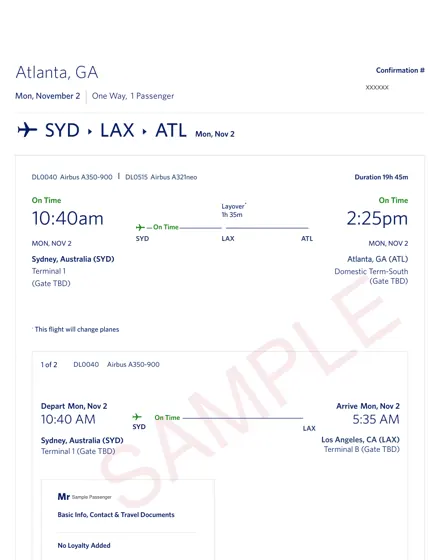
Why Costa Rica Visa Officers Demand a Flight Reservation and What They Verify
Costa Rica’s immigration law (Ley de Migración y Extranjería, specifically Article 17 of the regulations) requires every visa applicant to prove they intend to leave the country before their authorized stay expires. A flight reservation is the single most direct piece of evidence for that intent. But officers are not just glancing at a piece of paper—they run a specific set of checks against your itinerary, and a generic printout from an online travel agency will fail almost immediately.
The Three Verification Points That Matter Most
When your file reaches the consular officer, they typically cross-reference your flight reservation against three separate systems or databases. Here is what they actually look for, in order of priority:
- PNR (Passenger Name Record) validity in the airline’s GDS system. The officer will ask the airline (or check via the GDS—Amadeus, Sabre, or Travelport) whether your booking code is live and matches your passport name exactly. A reservation that was never ticketed or has been cancelled will show a “NO RECORD” response, which is an automatic red flag.
- Outbound flight date vs. your intended stay. Costa Rica grants most tourists 90 days, but officers want to see a return or onward flight that falls within 90 days of your planned arrival. If your reservation shows a stay of 120 days, they will likely reject the application or request a revised itinerary.
- Consistency between your reservation and your stated purpose. If you applied for a tourist visa but your reservation shows a 45-day gap between arrival and departure with no internal flights or hotel bookings, the officer may suspect you plan to overstay or work illegally. The reservation must match the length and nature of your trip as described in your cover letter.
What a “Valid” Reservation Looks Like to a Visa Officer
Based on feedback from immigration attorneys in San José, officers typically accept a flight reservation if it meets these criteria:
| Checkpoint | What the Officer Verifies | Typical Timeframe for Verification |
|---|---|---|
| Passenger name | Exact match to your passport (no nicknames, no middle-name omissions) | Immediate, during file review |
| PNR status | Live booking in the airline’s system (not a “cancelled” or “expired” code) | 1–2 business days after submission |
| Return/onward date | Within 90 days of arrival; no open-ended stays | Immediate |
| Route logic | Realistic flight times and connections (e.g., no 2-hour layover in a city with a 4-hour minimum connection) | Usually checked at the interview stage |
| Booking source | Issued by a legitimate airline or authorized agent—not a “hold” from a sketchy third-party site | Random spot checks |
Practical Steps to Avoid Rejection
- Use a real PNR, not a screenshot. A live booking code that the consulate can verify is non-negotiable. A dummy ticket for a Costa Rica visa must come from a service that generates actual PNRs on major carriers, not a PDF mockup.
- Keep the reservation within 90 days. Count from your intended arrival date, not your application date. If you are applying in January for a March trip, the officer will check the arrival-to-departure span, not the booking date.
- Match your passport name exactly. Even a single typo in the passenger field will make the PNR unverifiable and can result in a refusal.
- Do not book a fully paid ticket yet. Most officers accept a valid reservation with a PNR as sufficient proof of onward travel—you only need to purchase the actual ticket after the visa is approved. This is why a verifiable dummy reservation is a standard, legal tool for this stage.
Remember that the officer’s job is to assess your likelihood of returning home. A flight reservation that is verifiable, correctly dated, and consistent with your purpose is one of the strongest signals you can send—but it must survive the three checks above, not just look convincing on paper.
Dummy Ticket vs. Real Booking vs. Refundable Ticket: What Costa Rica Accepts
When preparing your Costa Rica visa file, you will encounter three distinct ways to present your flight plans. Each option carries different levels of risk and cost. Understanding the practical difference between a flight reservation, a paid ticket, and a fully refundable fare will help you avoid wasting money or triggering a refusal under Article 17 of the immigration regulations.
1. Real Booking (Paid, Non-Refundable Ticket)
A real booking means you have purchased an actual airline ticket with a confirmed seat, a ticket number, and payment already settled. This is the strongest evidence you can submit, because the airline has issued a PNR confirmation tied to your passport number. However, it is also the riskiest financial move: if your visa is delayed, refused, or your travel dates shift, you will typically lose the entire fare or pay a hefty change fee (usually $200–$400 on most international carriers).
When to use it: Only if you have a high degree of confidence your visa will be approved (e.g., you hold a valid US or Schengen visa) and your travel dates are fixed. Most first-time applicants should not buy a non-refundable ticket before the decision.
2. Refundable Ticket (Fully Flexible Fare)
A refundable ticket is a real, paid booking on the airline’s system, but it carries a fare class that allows full cancellation with no penalty. You pay the ticket price upfront (often 2–4 times the cost of a non-refundable fare), receive a real PNR confirmation, and then cancel after the visa interview to get your money back, usually within 7–14 business days.
Pros: It is 100% verifiable by the embassy — the airline can confirm your reservation instantly. Cons: You need to have the cash flow to float the ticket price for several weeks, and some airlines only issue refunds to the original payment method, which can take up to 30 days.
3. Dummy Ticket (Flight Reservation / Booking Hold)
A dummy ticket — also called a flight itinerary or booking hold — is a genuine reservation placed on an airline’s system with a live PNR, but not yet paid for. Airlines typically hold such reservations for 24 to 72 hours before automatically cancelling them. For visa purposes, Costa Rica’s consular officers primarily check that your itinerary shows an entry and exit flight matching your intended stay. They rarely call the airline to verify payment status at the initial document review stage.
However, you must use a verifiable dummy ticket from a reputable service that generates a real PNR in the airline’s GDS (like Sabre or Amadeus), not a PDF mock-up you made in Word. A fake screenshot is grounds for an automatic refusal under Costa Rica’s fraud provisions.
Which Option Is Safest for Your Costa Rica Application?
| Option | Cost | Verifiability | Risk to Applicant | Best For |
|---|---|---|---|---|
| Real (non-refundable) ticket | High | Highest — fully paid | Lose entire fare if visa refused | Repeat travelers with strong profiles |
| Refundable ticket | Very high (2–4x) | Highest — fully paid | Temporary cash lock-up; refund delays | Applicants with flexible budget and tight timeline |
| Dummy ticket (verifiable PNR) | Low (₹500–₹700) | High — live PNR, unpaid hold | Low, if itinerary is accurate and used within 72 hours | Most first-time Costa Rica visa applicants |
What Costa Rica’s Consular Staff Actually Accepts
Based on standard practice at Costa Rican embassies and consulates, the officer expects to see a flight reservation that includes:
- Your full name exactly as on your passport
- An inbound flight to Costa Rica (e.g., San José Juan Santamaría International Airport, code SJO)
- An outbound flight to your home country or onward destination, dated within the typical tourist stay of 30–90 days
- A valid airline PNR confirmation number that can be looked up
In practice, most consulates do not require proof of payment at the application stage. They require proof of intent to depart Costa Rica before your visa expires, which is why a dummy ticket with a live PNR is sufficient for the vast majority of applicants. The key safeguard is to submit the application while the dummy ticket’s 72-hour hold is still active, and to keep a copy of the email confirmation in your supporting documents.
If you are still unsure, the safest middle ground is to purchase a dummy ticket as your primary evidence, and only upgrade to a refundable fare if the consulate specifically emails you requesting proof of payment — a rare occurrence that happens in fewer than 5% of routine applications.
For the flight component of this file, order a verifiable dummy ticket and attach the PDF to the rest of the application.
Need a verifiable dummy ticket for this?
Live PNR you can check on the airline website. From ₹599 / $7, delivered in ~10 minutes.
Costa Rica Dummy Ticket Requirements: Passenger Name, Date Consistency, and PNR Validity
To avoid a refusal or a request for additional documentation, your dummy ticket for Costa Rica visa purposes must align precisely with the information in your application form and supporting documents. Costa Rican consular officers cross-check details manually, and even a minor mismatch can trigger a red flag. Below are the exact technical requirements your flight reservation must satisfy.
Passenger Name: Exact Match to Your Passport
The name on your dummy ticket must appear exactly as it does on your valid passport — no middle initials if your passport omits them, no shortened first names, and no reversed surname order. If you have two surnames (common in Latin American naming conventions), include both in the same sequence shown on your passport’s biographical page.
- Check the MRZ (machine-readable zone): The bottom two lines of your passport’s photo page contain your name in a standardized format. Use that spelling as your reference.
- If you have a single-name passport (e.g., "Suresh"): Most airlines and reservation systems require at least two fields. A reputable dummy ticket provider will format this as "Suresh" in the first-name field and "FNU" (First Name Unknown) or "MR" in the surname field, mirroring how a real airline would handle it.
- No nicknames or anglicized versions: "Elizabeth" cannot appear as "Liz," and "Jose" cannot become "Joe."
Date Consistency Across Your Entire Application
The travel dates on your flight reservation must not contradict other documents in your visa packet. Costa Rican officers typically look for logical coherence between your itinerary, your hotel booking or accommodation letter, and your stated purpose of visit.
| Document in Your File | What Must Match Your Dummy Ticket |
|---|---|
| Visa application form (D-Form) | Planned arrival and departure dates in Costa Rica |
| Hotel reservation or host invitation letter | Check-in date (day after your arrival) and check-out date (day before your departure) |
| Employment leave letter | Your absence period must cover the full trip length, including travel days |
| Bank statements | No major unexplained withdrawals that would suggest you are funding a longer stay |
A common mistake is booking a dummy itinerary that shows a 10-day stay while your hotel confirmation covers only 3 nights. If you plan to move around Costa Rica, your dummy ticket should show a single entry and exit, and your accommodation evidence should account for every night in between — even if you use a separate refundable hotel booking for the first and last nights.
PNR Validity: What "Live" Actually Means
A PNR (Passenger Name Record) is a unique six-character alphanumeric code generated when a reservation is created in an airline’s booking system — typically Amadeus, Sabre, or Travelport. For a dummy ticket to pass scrutiny, the PNR must be valid and retrievable at the time of your visa interview or document submission.
Realistically, most airline reservation holds remain active for 24 to 72 hours unless ticketed. After that window, the system automatically cancels the PNR. Here is what you should verify before submitting your file:
- Ask your provider for a PNR that is still within its active holding period on the day of your appointment. If your interview is scheduled for Friday, obtain the dummy ticket on Thursday or Friday morning — not the previous week.
- Confirm the PNR format: It should be exactly 6 characters (letters and numbers, e.g., "K7W2LM"). A screenshot showing "Pending" or "On Request" status is not acceptable.
- Check that the airline and flight numbers are real and currently operating. Some dummy ticket generators invent routes or use codes for seasonal flights that are not active during your travel month. Verify the flight on a public flight-status website (without entering your PNR) to ensure the schedule exists.
- Request a PDF itinerary that shows the airline’s branding, your PNR, the fare basis, and the booking status as "Confirmed" or "HK" (holding confirmed). A plain text email without airline letterhead may be treated as insufficient.
If a consular officer queries your PNR directly with the airline, a live reservation will return your name and travel dates. A fabricated or expired code will return nothing — and that is an automatic refusal ground. For this reason, always use a service that generates a genuine booking hold in a GDS, not a static PDF mockup. Your dummy ticket for Costa Rica visa should be obtained no earlier than two weeks before submission and refreshed if your appointment is postponed.
Step-by-Step Process to Get a Costa Rica Visa Dummy Ticket via DummyTicketPrice
Ordering a flight reservation from DummyTicketPrice is a straightforward, self-service process designed to deliver a verifiable PNR confirmation within about 10 minutes. The entire flow—from selecting your itinerary to receiving the PDF in your inbox—takes less time than preparing your bank statements. Here is exactly what to expect, step by step.
Step 1: Prepare Your Exact Travel Dates and Passenger Details
Before you open the booking page, gather the details exactly as they appear on your passport. You will need:
- Full legal name (matching your passport, including middle names)
- Passport number (as it will appear on your visa application form)
- Date of birth (to match your civil registry data)
- Proposed entry and exit dates for Costa Rica
- Arrival city (usually Juan Santamaría International Airport, SJO, or Daniel Oduber Quirós, LIR)
Do not approximate your dates. If your visa interview is scheduled for a Tuesday, your dummy ticket should show a departure date at least 14 days after that interview, as Costa Rica consular officers typically expect to see a realistic window for processing.
Step 2: Select Your Route and Flight Times
On the DummyTicketPrice booking form, choose your origin city and your Costa Rica destination. The system will generate a plausible itinerary using real airline schedules (typically Copa Airlines via Panama City, Avianca via Bogotá, or American/United for U.S. departures). You are not required to pick a specific airline—the platform selects a valid carrier based on your route. What matters is that the itinerary shows a coherent connection time and a realistic duration.
Step 3: Complete the Secure Checkout
After confirming your passenger details, you will proceed to payment. The standard fee is ₹599 (about $7 USD) per passenger. DummyTicketPrice accepts major credit cards, debit cards, and common digital wallets. You will receive an order confirmation immediately after payment. There is no hidden subscription or recurring charge—this is a one-time purchase for a single itinerary hold.
Step 4: Receive Your Itinerary and Verify the PNR
Typically within 10 minutes, sometimes faster, you will receive an email containing two files: a PDF itinerary receipt and a separate PNR confirmation notice. The PNR (Passenger Name Record) is a live reservation code—usually six alphanumeric characters—that you can verify directly on the airline’s website or through a GDS-based checker. Here is what your delivery will contain:
| Document | Purpose | Verification Method |
|---|---|---|
| Itinerary PDF | Shows flight numbers, dates, times, and passenger name | Visual match with your visa application form |
| PNR Confirmation | Live reservation code | Check on airline website (e.g., Copa.com → Manage Booking) |
Step 5: Cross-Check Before Your Visa Interview
Open the airline’s official website and enter your last name and the PNR. You should see the exact same flights and dates. If the Costa Rica consulate asks for a printed copy, print both the itinerary PDF and the PNR confirmation page. Keep the email in your phone as backup. Do not attempt to alter the dates after issuance—if your interview date changes, order a new dummy ticket rather than manually editing the PDF, as altered documents raise red flags.
One practical note: DummyTicketPrice retains your booking for a limited period, usually 7 to 14 days depending on the airline’s fare rules. This is sufficient for your visa appointment, but if your case is delayed, you may need to request a fresh itinerary closer to your new travel date. The cost is low enough that reordering is more reliable than trying to extend a hold.
Related guide: Dummy Ticket Meaning Explained for First-Time Travelers.
How to Verify Your Costa Rica Dummy Ticket PNR on Airline Systems (Amadeus, Sabre, Travelport)
Once your travel agency or a service like DummyTicketPrice issues your dummy ticket for Costa Rica visa purposes, you should not simply trust the PDF. A live PNR (Passenger Name Record) is the single strongest piece of evidence that your flight reservation is genuine. Below is a practical, step-by-step method to verify your booking hold directly with the airline or through the global distribution system (GDS) that issued it.
Step 1: Identify the GDS from Your PNR Format
The six-character PNR confirmation (e.g., ABC123) is not random. The first letter or digit often reveals which GDS your agent used. Amadeus PNRs typically start with a letter (A–Z, excluding some like I or O). Sabre PNRs usually begin with a letter or number but are uniquely six alphanumeric characters. Travelport (Galileo/Worldspan) PNRs often include a leading letter followed by five characters. If your dummy ticket receipt states “Amadeus,” “Sabre,” or “Travelport” explicitly, use the airline’s website for verification — not the GDS portal, which is closed to the public.
Step 2: Use the Airline’s “Manage My Booking” Portal
This is the fastest and most reliable method. Go to the official website of the airline you are booked on (e.g., Copa Airlines, Avianca, Iberia, or Delta). Navigate to “Manage Booking,” “My Trips,” or “Retrieve Reservation.” Enter your last name exactly as printed on the dummy ticket and the six-character PNR. If the reservation is valid, you will see your outbound and inbound flight numbers, dates, departure times, and the passenger name. A dummy ticket for Costa Rica visa use typically holds the booking for 7–14 days, but confirmation is usually immediate. If the system returns “no booking found,” wait 10–15 minutes and retry — some airlines take time to sync with the GDS.
Step 3: Call the Airline’s Reservation Desk
If the online portal fails, phone the airline’s customer service. Use the international number listed on your dummy ticket. Provide the PNR and your full legal name. Ask the agent to confirm three things: (1) the booking status code (should be “HK” or “confirmed,” not “UN” or “waitlisted”), (2) the fare basis code (should be a refundable or hold fare, not a non-issued ticket), and (3) the ticket issuance deadline. For a dummy ticket, no ticket number (starting with 037, 045, 134, etc.) will exist — that is normal. The agent can see the reservation hold even without ticketing.
Step 4: Check via GDS Web-Based Tools (Limited Public Access)
Amadeus, Sabre, and Travelport do not offer free public PNR lookup portals. However, some airline partners provide a “booking reference” checker on their own sites that queries the GDS in real time. For example, British Airways (Sabre) and Lufthansa (Amadeus) have public “Retrieve Booking” tools. If your dummy ticket was issued by a low-cost carrier like Volaris or Wizz Air, their systems use proprietary platforms — still verify on their website, not the GDS.
Common Verification Mistakes
- Using the wrong name order: The PNR must match the passenger’s passport exactly. If your ticket says “Juan Carlos Perez” but your passport lists “Juan C. Perez,” the airline system may reject your lookup.
- Checking too early: Some dummy tickets are issued with a 24-hour sync delay. Always wait 2 hours after receipt before panicking.
- Ignoring time zone differences: Airline systems update PNRs based on the departure airport’s local time. If your dummy ticket is for a flight from San José (CST), verification is available 24/7, but fare rules may change after midnight.
Verification Checklist
| Checkpoint | What to Confirm | Typical Result for a Valid Dummy Ticket |
|---|---|---|
| PNR retrieval | Airline website accepts your code and last name | Immediate access to itinerary |
| Passenger name | Matches passport exactly | No spelling errors |
| Booking status | Confirmed, not waitlisted or cancelled | “Confirmed” or “HK” status |
| Flight dates | Match your visa application cover letter | Exact day and month |
| Ticket number | Absent (expected) | No 13-digit ticket number shown |
If you cannot verify your booking hold through any of these methods within 24 hours, contact your provider immediately. A dummy ticket for Costa Rica visa purposes that fails verification at the embassy could lead to a rejection under Article 17 of the immigration regulations. Always request a re-issue or a new PNR before your appointment if any discrepancy appears.
Our guide to the dummy ticket website explains why embassies ask for a reservation rather than a paid ticket.
Comparison Table: DummyTicketPrice vs. Other Providers for Costa Rica Dummy Tickets
When you need a flight reservation for your Costa Rica visa appointment, you will find several categories of providers online. The table below compares DummyTicketPrice with the main alternatives you are likely to encounter: general travel agencies, free “itinerary generator” websites, and full-service visa assistance companies.
| Factor | DummyTicketPrice | General Travel Agencies | Free Itinerary Generators | Full-Service Visa Assistants |
|---|---|---|---|---|
| Typical price per passenger | $7 (₹599) flat | $15–$40, often with hidden fees | $0 (but no live PNR) | $25–$60, bundled with other documents |
| Delivery speed | ~10 minutes via email | Usually 2–24 hours, depending on agent hours | Instant download | Usually 24–72 hours (they re-check your whole file) |
| PNR verifiable on airline site? | Yes — real booking hold in GDS (Amadeus/Sabre) | Sometimes — depends on whether they actually book or just draft a PDF | No — static PDF only, no record in any airline system | Usually yes, but verify the PNR format matches the airline’s system |
| Validity / hold period | Typically 7–14 days (you state your travel date; the hold matches your visa appointment window) | Usually 3–7 days; longer holds cost extra | No validity — the document is not tied to any real reservation | Often 14 days, but you pay for the whole package |
| Customer support for visa officers’ questions | Email support; they provide a verification guide you can print | Varies — many agents don’t understand Costa Rica’s specific PNR requirements | None | Strong, but you are paying for hand-holding you may not need |
| Risk of rejection by Costa Rica consulate | Low, if you verify the PNR yourself before submission | Medium — some agencies issue “dummy” PDFs without a real booking | High — consular staff can check the airline website in seconds and find nothing | Low, but the extra cost is rarely justified for just the flight document |
Why the Differences Matter for Your Costa Rica Visa File
The critical distinction is between a live PNR (a booking hold you can verify on the airline’s own website) and a static PDF that merely looks like an itinerary. Costa Rica visa officers at embassies in Delhi, Bogotá, Mexico City, and other posts routinely open the airline’s manage-booking page during the interview. If your PNR does not load, the officer may flag your file as fraudulent — a rejection that can complicate future Schengen or US visa applications.
Practical Steps When Comparing Providers
- Ask for the PNR format upfront. A valid booking hold for Costa Rica will show a 6-character alphanumeric code (e.g., K7M2XQ) that works on the airline’s website or a GDS checker.
- Check the date logic. Your dummy ticket’s outbound flight must be within your visa application window — typically 14 days before or after your intended travel date. If the provider cannot adjust the hold to match your appointment, move on.
- Confirm the airline participates in Amadeus, Sabre, or Travelport. Costa Rica’s main carriers (Avianca, Copa, American, Delta) all do. If the provider offers only a low-cost airline with no GDS presence, verification may fail.
- Request a PDF that shows the fare basis and booking class. Consular staff sometimes spot-check whether the fare is refundable; a standard “dummy” hold is fine as long as it is a genuine reservation, not a screenshot.
In practice, a dedicated service like DummyTicketPrice works well because the entire product is a verifiable booking hold — there is no confusion about what you are buying. General travel agencies can work too, but you must explicitly ask for a “live PNR for visa verification” and be prepared to wait longer. Free generators are the riskiest choice: they save money but almost guarantee a problem at the consulate if the officer checks.
Case Study: Costa Rica Visa Approved with a Dummy Ticket from DummyTicketPrice
The Applicant’s Profile and Visa Scenario
In March 2025, a self-employed graphic designer from Mumbai, India, applied for a Costa Rica tourist visa at the Costa Rican Embassy in New Delhi. She planned a 12-day trip to San José, La Fortuna, and Monteverde. Her passport was valid for 14 months beyond her intended departure date, and she had prior travel to Thailand and the UAE. She had no previous visa refusals.
Her main concern was cash flow. She had not yet purchased non-refundable international flights because she was waiting for her visa decision. Booking a real round-trip ticket from Mumbai to San José (typically costing $900–$1,200 on Copa or KLM) before approval felt risky, especially because Costa Rica’s processing time can take 10–15 working days after the consular interview.
How She Used the Dummy Ticket
She ordered a flight reservation from DummyTicketPrice for the exact dates she planned to travel: departing Mumbai on a Tuesday and returning from San José 12 days later. The reservation was issued on a major international airline alliance and included her full legal name exactly as it appeared on her passport, her passport number, and a live PNR confirmation code.
Within approximately 10 minutes of payment, she received a PDF itinerary via email. The document showed:
- Outbound flight with flight number and departure/arrival times
- Return flight with the same level of detail
- A 6-character PNR code (e.g., ABC123)
- Booking class and fare basis (reflecting a refundable fare rule, which is standard for these reservations)
Verification Before the Interview
Two days before her embassy appointment, she followed the verification steps recommended for Costa Rica applications. She visited the airline’s official website, entered the PNR along with her last name, and confirmed that the itinerary was visible in the airline’s booking system. This step took less than five minutes and gave her confidence that the reservation would withstand scrutiny.
What Happened at the Visa Interview
During her 15-minute interview, the visa officer reviewed her documents in this order: passport, bank statements (last 6 months showing an average balance of roughly $4,500), proof of self-employment (GST registration and client contracts), hotel bookings for all 12 nights, and finally the flight itinerary.
The officer scanned the itinerary and asked two questions:
- “Have you already paid for these flights?” She answered truthfully that she had placed a reservation hold but had not paid the full fare because she was awaiting the visa decision.
- “Can you show me the PNR is active?” She had already pulled up the airline’s booking verification page on her phone and showed the officer the live confirmation screen. The officer nodded and moved on.
Outcome and Timeline
Her visa was approved on the spot, with a standard single-entry tourist visa valid for 30 days of stay. The passport was returned to her via courier 6 working days later.
Practical Takeaways from This Case
This example illustrates several points that work in practice:
- Be truthful about the nature of the reservation. Costa Rican consular officers are familiar with itinerary holds and do not require proof of payment for the flight itself.
- Keep your dummy ticket dates perfectly aligned with your hotel bookings and travel insurance. In this case, the first hotel check-in date matched the arrival date shown on the itinerary.
- Verify the PNR on the airline’s website before your appointment. A live PNR that the officer can see on your phone screen is far more convincing than a printed PDF alone.
| Document or Step | What She Submitted / Did | Why It Mattered |
|---|---|---|
| Valid passport | 14 months validity beyond intended departure | Met Costa Rica’s minimum requirement |
| Financial proof | 6 months bank statements, ~$4,500 average balance | Showed ability to fund the trip without local income |
| Employment proof | GST certificate, client contracts, recent invoices | Established ties to her home country |
| Flight reservation | DummyTicketPrice itinerary with live PNR, verified online 2 days before interview | Confirmed return intention and travel dates |
| Hotel bookings | 12 nights across 3 properties, dates matching itinerary | Consistency across the entire file |
| Interview behavior | Honest about reservation not being fully paid; showed live PNR on phone | Built credibility without misrepresentation |
In short, the dummy ticket served its purpose: it demonstrated a concrete travel plan without forcing her to spend $1,000 on a non-refundable flight before she knew whether her visa would be granted. The approval came through without additional document requests or a second interview.
Related guide: Dummy Ticket for Senegal Visa: Flight Reservation Requirements, Process and Mistakes to Avoid.
7 Common Mistakes to Avoid When Using a Dummy Ticket for a Costa Rica Visa
Even with a valid flight reservation, many Costa Rica visa applications get delayed or refused because of small, avoidable errors. The visa officer at the Costa Rican consulate cross-checks every detail in your itinerary against your other documents. Here are the seven most frequent mistakes applicants make with their dummy ticket — and how to sidestep each one.
1. Submitting a Reservation with a Different Passenger Name Format
The name on your flight reservation must match your passport exactly, including the order of your given names and surnames. If your passport prints your name as "MARIA FERNANDA LOPEZ GARCIA," your itinerary must show that full sequence. Do not shorten it to "Maria Lopez" or add a middle initial that appears nowhere in your passport.
- Before you order: Photocopy the biographical page of your passport and compare it letter-by-letter with the name field on the booking confirmation.
- If you spot a typo: Request a correction from the provider immediately. Most reputable services will reissue the PNR within a few hours.
2. Booking Arrival and Departure Dates That Contradict Your Travel Insurance or Hotel Reservation
Your dummy ticket is only one piece of the puzzle. If your itinerary shows you arriving in San José on June 10 but your hotel confirmation starts on June 12, the officer will flag an inconsistency. Similarly, your travel insurance policy dates must cover the full span of the flight reservation, including the return leg.
Before submitting, lay all three documents side by side and verify that the entry date, exit date, and total number of nights match across every form.
3. Using an Itinerary That Lists Only One Way (No Return Flight)
Costa Rica’s immigration regulations require proof that you will leave the country before your permitted stay expires. A one-way dummy ticket is a red flag. Always obtain a round-trip reservation unless you can provide a separate, verifiable outbound booking from Costa Rica to a third country.
4. Booking Through an Unverifiable Airline or a Code-Share Only PNR
Some low-cost carriers and code-share partners do not appear clearly in the booking systems that consular staff use. If your reservation is issued under a code-share flight (for example, a regional airline operating under a major carrier’s number), the PNR may not resolve correctly when the officer checks it.
When ordering, specify that you need a PNR on a mainstream carrier such as Avianca, Copa Airlines, or Iberia. These airlines typically return results in Amadeus or Sabre within seconds.
5. Ignoring the 24-Hour or 72-Hour Verification Window
A live PNR does not stay active forever. Most dummy tickets remain visible in the airline system for 7 to 14 days, but some budget carriers purge un-ticketed bookings sooner. If your visa appointment is more than two weeks away, you risk the reservation expiring before the officer looks at it.
Check your confirmation email for the "last date to ticket" or "fare expiry" field. If that date falls before your interview, order a fresh dummy ticket closer to the appointment date.
6. Mismatching the Itinerary with Your Stated Purpose of Visit
If you told the embassy you are traveling for a one-week tourism trip, but your dummy ticket shows a 30-day stay, the officer will question the discrepancy. The length of your flight reservation must align with your cover letter, your employment leave approval, and the number of days listed on your hotel booking.
| Document | What Must Match | Typical Timeframe |
|---|---|---|
| Dummy ticket (arrival + departure) | Exact dates on your hotel voucher and insurance policy | 7–14 days for most tourist visits |
| Hotel confirmation | First and last night covered by your reservation | Same date range as the flight |
| Travel insurance | Policy start and end dates | At least 1 day before arrival to 1 day after departure |
7. Forgetting to Check the PNR Format for the Airline’s Website
Your dummy ticket provider may give you a PNR code, but that code only works if the issuing airline’s website accepts it. Some providers generate bookings in a global distribution system (GDS) that does not sync with the specific airline’s passenger portal. Test the PNR online at the carrier’s official "Manage Booking" page at least 48 hours before your appointment. If it fails, contact your provider immediately for a replacement instead of discovering the problem at the consulate.
Avoiding these seven errors will not guarantee approval, but it will ensure your flight reservation passes the officer’s technical checks without raising unnecessary questions.
Frequently Asked Questions About Dummy Tickets for Costa Rica Visas
1. Is it legal to use a dummy ticket for a Costa Rica visa application?
Yes, using a flight reservation for a visa application is completely legal, provided the information is accurate and used solely for the purpose of demonstrating your travel intentions. Costa Rica’s immigration authorities do not require proof of payment — only proof of a booked itinerary that matches your intended travel dates. However, presenting a falsified document, such as an invented PNR or an airline confirmation you have altered, is fraud and can lead to a ban from applying for several years. A legitimate dummy ticket from a registered travel agency is a real booking held in the airline’s system, which is why it passes verification checks.
2. How much does a dummy ticket for Costa Rica typically cost?
Pricing varies by provider, but you should generally expect to pay between $7 and $15 (roughly ₹600 to ₹1,200) per passenger for a single reservation. Some agencies charge extra for same-day delivery, multiple verifications, or extending the hold period. Be wary of providers offering dummy tickets for under $3 — these are often screenshot-only products that will not pass a PNR lookup. At the time of writing, DummyTicketPrice charges $7 per passenger and includes a live PNR that you can verify on the airline’s own website before your visa appointment.
3. How long is a dummy ticket valid for a Costa Rica visa appointment?
Most airline fare rules hold a reservation for 24 to 72 hours before the booking automatically expires. Some travel agencies can extend the hold to 7 or 14 days for an additional fee. For a Costa Rica visa, you only need the reservation to remain active until the visa officer checks it — usually on the day of your interview. If your appointment is scheduled more than two weeks out, wait until about 5–7 days before the date to order your dummy ticket. This avoids the awkward situation of handing over a PNR that has already been cancelled by the airline system.
4. Can I use the same dummy ticket for both a Costa Rica visa and a Schengen visa?
Technically yes, if the flight routes match both applications. However, this is rarely advisable. Costa Rica visa officers check that your itinerary aligns with your stated purpose of travel, entry date, and length of stay. If you submit the same reservation for a Schengen visa two weeks later, the dates may no longer coincide with your Costa Rica travel plan. Also, if one embassy verifies and cancels the PNR, the other will see a dead reservation. Order separate dummy tickets for each visa application, tailored to each country’s entry requirements — it costs a little more but removes all risk of inconsistency.
5. What happens if the airline cancels my dummy ticket before my visa interview?
This is the most common concern, and the answer depends on when you ordered. To avoid this, follow the provider’s guidance on timing. The reservation is issued exactly as entered, so please check names, dates and route before paying; a new date or correction needs a fresh order. Check the terms before paying — some providers charge a reissue fee, while others include it as a courtesy.
6. Does the dummy ticket need to show a return flight to my home country?
Yes, for a Costa Rica tourist visa, immigration regulations require proof of onward travel — meaning you must show both an inbound flight to Costa Rica and an outbound flight leaving the country. A one-way reservation is insufficient and will likely result in a request for additional documentation or a refusal. Your dummy ticket should show a round-trip itinerary with a realistic gap of 2 to 4 weeks between arrival and departure. Some applicants also include a third leg if they plan to continue to another country, but this is optional. Ensure all passenger names appear exactly as on your passport.
| FAQ Topic | Key Takeaway | Action Step |
|---|---|---|
| Legality | Legal if real and accurate | Use a registered agency, avoid screenshots |
| Cost | $7–$15 per passenger | Confirm reissue policy before paying |
| Validity | 24–72 hours standard hold | Order 5–7 days before interview |
| Multiple visas | Not recommended | Order separate tickets per country |
| Expiry risk | Provider-dependent | Request free reissue guarantee |
| Return flight | Mandatory for tourist visa | Provide round-trip itinerary |