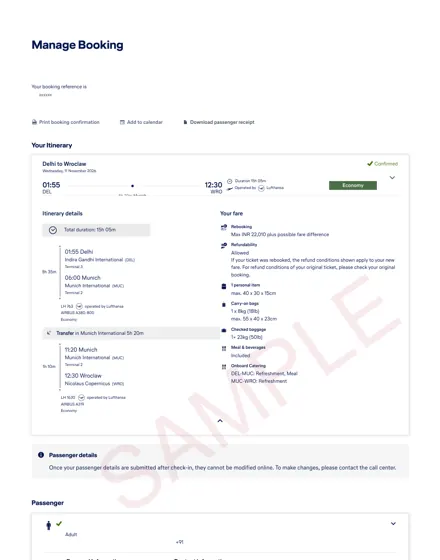
Why Internship Visas Specifically Require a Return Flight Itinerary
Internship visas sit in a regulatory gray zone between short-term tourist stays and long-term work permits. Unlike a standard work visa—where your employer sponsors your residence and the consulate assumes you’ll remain employed—an internship is temporary by definition. Most host countries (Germany, the Netherlands, Australia, Japan, and the U.S. J-1 program, among others) issue internship authorizations for a fixed window, typically between 3 and 12 months. That fixed window is precisely why a return flight itinerary becomes a mandatory document, not a nice-to-have.
The Core Rule: Intent to Depart Is Legally Presumed
Consular officers must verify that you will not overstay your internship authorization and transition into an undocumented worker. A one-way ticket suggests the opposite—that you may intend to remain indefinitely. To counter that presumption, the embassy or immigration authority requires proof of onward travel before they will even stamp your visa vignette or issue your residence permit. For internship applicants, this proof takes the form of a flight reservation showing a departure date within the validity of your internship contract, usually no later than 30 days after its end date.
What the Officer Actually Checks (and When)
Your return flight itinerary is verified at two distinct checkpoints:
- At the visa interview: The consular officer cross-checks your itinerary’s PNR (passenger name record) against your passport details. The reservation must show your exact legal name, the same passport number, and a departure date that aligns with your internship end date as stated in your host company’s invitation letter.
- At border entry: Immigration officers in the host country may ask to see your return booking again. If your itinerary lists a flight that departs before your internship concludes, you risk being questioned about your true purpose. If it departs too far after your visa expiry, you risk refusal.
Why a Dummy Ticket Satisfies This Without Buying a Real Flight
Purchasing a fully paid, non-refundable round-trip ticket weeks before your visa decision is financially reckless—especially since internship visa processing can take 4 to 8 weeks, and refusals happen. A dummy ticket for internship visa purposes is a genuine airline reservation placed on a 24-to-72-hour hold (depending on the carrier) that generates a real PNR confirmation. That PNR is verifiable in the airline’s system, which is what consular staff use to confirm your booking exists. You do not need to pay the ticket fare until the visa is granted and your actual travel dates are confirmed.
How to Align Your Itinerary With Your Internship Dates
To avoid the most common refusal trigger—a mismatch between your visa validity and your flight dates—follow this practical checklist:
- Obtain your internship contract or host company invitation letter first. Note the exact start and end dates.
- Choose a return date that is 7 to 14 days after your internship end date. This buffer accounts for a short grace period to depart the country, which most internship visas allow.
- Ensure your itinerary shows a flight from the host country back to your home country—not to a third country, unless you hold a residence permit there.
- Verify that the passenger name on the reservation matches your passport exactly (no nicknames, no middle-name omissions).
Typical Return Date Requirements by Visa Type
| Host Country / Program | Internship Visa Validity | Return Flight Date Allowed |
|---|---|---|
| Germany (Aufenthaltserlaubnis §16d) | Up to 12 months | Within 2 weeks after contract end |
| Netherlands (Highly Skilled Migrant – intern) | Up to 6 months | Within 14 days after visa expiry |
| U.S. J-1 Intern | Up to 12 months | Within 30 days after DS-2019 end date |
| Australia (Training Visa subclass 407) | Up to 24 months | Within 28 days after visa expiry |
The key takeaway: your return flight itinerary is not a formality—it is the single piece of evidence that proves your internship is temporary. A verifiable dummy booking gives the officer exactly what they need to see without forcing you to spend hundreds of dollars on a flight you may never take. Just ensure the PNR is live at the time of your interview, since officers occasionally check the reservation the day before your appointment.
Au Pair, Internship, and Trainee Visas: Different Onward Travel Rules
Although au pair, internship, and trainee visas are often grouped together in embassy guidance, their onward travel rules differ in ways that catch applicants off guard. The core distinction comes down to the purpose of stay and the expected duration—which directly affects whether a simple dummy ticket will satisfy the officer or whether you need a booking with a longer validity window.
Au Pair Visas: The Return Ticket Is Usually Non-Negotiable
Au pair programs (e.g., J-1 in the US, Working Holiday in Australia, or the German Au-pair-Visum) are structured as cultural exchanges with a fixed end date. Most embassies expect to see a return flight reservation that lands after the program's official conclusion date—not before, and not on the same day the program ends. For example, if your au pair placement runs from 1 July to 30 June, your itinerary should show departure no earlier than 1 July.
- Accepted: A dummy ticket with a live PNR showing your outward flight and a return leg 10–14 days after the program end date (common buffer used by agencies).
- Rejected: An open-ended itinerary or a one-way ticket, unless you also attach a notarized letter from your host family stating they will cover your return fare.
- Practical step: Ask your au pair agency for the exact "program completion date" in writing—not the date on your placement form—before you book any flight hold.
Internship Visas: The Return Flight Itinerary Must Match the Offer Letter
For internship visas (e.g., the German Praktikantenvisum, French convention de stage, or UK Tier 5 Temporary Worker), the onward travel rule is stricter. Your flight reservation must align with the end date on your internship contract, not the visa validity period. A common rejection reason is submitting a dummy ticket that shows a return date two weeks after the internship ends—officers interpret this as intent to stay for tourism, which is not permitted under this visa category.
| Visa Category | Return Date Must Match | Typical Buffer Allowed | Dummy Ticket Accepted? |
|---|---|---|---|
| Au Pair | Program end date (agency letter) | 10–14 days | Yes, with live PNR |
| Internship | Contract end date (offer letter) | 0–3 days | Yes, but must be precise |
| Trainee | Training plan end date (host organization) | Often 30 days for job search | Yes, but validity may need to extend |
For internship visas, your flight itinerary should show a return date that is the same day or within 72 hours of the contract end date. If you need a buffer for a weekend or public holiday, attach a cover letter explaining the delay. A generic dummy ticket with a flexible return date (e.g., "within 6 months") will not work here—the officer will cross-check the PNR against your contract dates.
Trainee Visas: The Outlier with a Longer Onward Travel Window
Trainee visas (e.g., the US J-1 Trainee, German berufliche Weiterbildung, or Japanese Technical Intern Training) are different. Because many trainee programs include a job-search period or a professional development phase after the core training, embassies typically allow a longer gap between the training end date and your departure. In practice, this means your flight reservation may show a return date 30–45 days after the formal training plan concludes.
- Check your DS-2019 or equivalent form—it lists both the "program start" and "program end" dates. Your dummy ticket must show departure after the end date.
- If the training plan mentions a post-training job search allowance, you can book a flight reservation with a return date up to 30 days after the end date. Keep a copy of the relevant page from your training plan to show the officer.
- For countries with strict exit controls (e.g., Japan), the onward ticket may be checked at immigration on arrival, not just at the embassy. Ensure your dummy ticket remains valid and verifiable via the airline's PNR system until you actually depart.
When in doubt, treat your dummy ticket as a flight reservation with a clear, defensible return date—not a vague itinerary. For internship visas especially, the margin for error is narrow, so verify the contract end date twice before submitting your booking hold. For au pair and trainee routes, the rules are more forgiving, but the documentation you attach (agency letter, training plan) must corroborate the dates on your dummy ticket. A live PNR confirmation from a service like DummyTicketPrice.com gives you that verifiable layer, but always cross-check the date logic against your specific program papers.
When your appointment date is fixed, order a dummy flight ticket and attach the PDF to the rest of the application.
Need a verifiable dummy ticket for this?
Live PNR you can check on the airline website. From ₹599 / $7, delivered in ~10 minutes.
Comparison Table: Dummy Ticket vs. Real Booking vs. Refundable Fare for Internship Visas
When preparing your internship visa paperwork, the flight document you submit can make or break your application. Below is a practical comparison of the three main options—each with different trade-offs in cost, speed, flexibility, and embassy acceptance.
Cost and Speed
- Dummy flight reservation: Typically costs $7–$15 per passenger. You receive a PNR confirmation and itinerary PDF within 10–30 minutes, often instantly. No payment to the airline is required.
- Real booking: Costs the full ticket price—usually $600–$1,500 for a round-trip international flight. You get immediate PNR confirmation, but you must pay the airline right away.
- Refundable fare: Costs the full ticket price upfront, often 2–4 times higher than a non-refundable fare. Refund processing typically takes 7–14 business days after you cancel, and some airlines charge a $50–$200 cancellation fee despite the "refundable" label.
Flexibility and Risk
- Dummy reservation: Usually valid for 7–14 days, which covers the typical embassy processing window. If your visa interview is rescheduled, you can request a fresh reservation at minimal extra cost.
- Real booking: Locks you into specific travel dates. If your internship start date shifts or the visa is delayed, you face change fees ($150–$300) or lose the ticket entirely.
- Refundable fare: Offers the most flexibility but ties up significant capital in your bank account—funds you may need for visa fees, accommodation deposits, or travel insurance.
Embassy Acceptance and Practical Use
| Factor | Dummy Ticket | Real Booking | Refundable Fare |
|---|---|---|---|
| Accepted by embassies for internship visas | Yes, if it shows a valid PNR and your name | Yes | Yes |
| Shows return/onward travel date | Yes, tailored to your visa window | Yes, but fixed to your actual plans | Yes |
| Financial risk if visa is refused | Minimal (only the small service fee) | High (full ticket lost or costly change) | Medium (temporary cash lock-up) |
| Time to obtain | 10–30 minutes | Immediate if you book online | Immediate, but refund takes weeks |
For most internship visa applicants, the dummy ticket offers the clearest advantage: it satisfies the embassy's requirement for a confirmed flight itinerary without exposing you to the financial downside of a real ticket before your visa is approved. The key is ensuring your reservation comes from a reputable service that issues a genuine airline PNR—not a fabricated PDF—since consular officers increasingly verify flight records directly with airlines.
Step-by-Step: How to Order an Internship Visa Dummy Ticket from DummyTicketPrice.com
Ordering a flight reservation for your internship visa application takes about ten minutes from start to finish, but only if you prepare the right details beforehand. The process is deliberately simple—you select dates, enter passenger data exactly as it appears in your passport, and receive a live PNR that you can verify directly with the airline. Below is the exact workflow, with the common mistakes that delay approvals flagged along the way.
Step 1: Gather Your Passport and Visa Application Dates Before You Start
Do not open the booking form until you have three pieces of information in front of you:
- Your passport bio-data page—the name, date of birth, and passport number must match your visa application character-for-character. A single typo in a middle name can cause the embassy to reject the itinerary as invalid.
- Your intended entry and exit dates—these should align with the internship period stated in your invitation letter from the host company or training organization. Most embassies expect the return flight to fall within 15 days after your internship end date, though this varies by country.
- Your arrival city and departure city—typically the international airport nearest your internship employer, not the city where you will attend a brief orientation.
If your internship dates are not yet finalized, choose a return date that is 30 to 45 days after your planned arrival. This gives you buffer room if the embassy asks you to resubmit with adjusted dates, and you can request a free date change from DummyTicketPrice.com within 24 hours of purchase.
Step 2: Select Your Flight Segments on the Booking Page
Navigate to the booking form and enter your departure city, destination, and travel dates. The system will show available airline schedules, but you are not selecting an actual seat—you are selecting a reservation window that the system will lock into the airline’s booking engine. Choose a flight that departs after your visa interview date, not before it. A common error is picking a departure that is too soon; if your visa is not yet stamped, the embassy will see the itinerary as unrealistic and may request a revised reservation.
Step 3: Enter Passenger Details Exactly as They Appear on Your Passport
Fill in each traveler’s full name, date of birth, gender, and passport number. If you are applying with a spouse or dependent who will join you for part of the internship, add them as a second passenger on the same reservation. Do not use nicknames, shortened names, or the name order from your airline loyalty account—use the passport order (surname first if your passport lists it that way).
Step 4: Complete Payment and Receive Your Itinerary and PNR
After submitting the form, you will pay the flat fee of ₹599 or $7 per passenger via credit card, debit card, or UPI. Delivery is typically immediate—most customers receive their documents by email within 10 minutes, though during peak visa season (May to August) it may take up to 30 minutes. Your email will contain two files:
- A PDF itinerary that lists the airline, flight numbers, departure and arrival times, and the booking reference (PNR).
- A confirmation notice explaining that this is a reservation, not a paid ticket, and that no funds have been charged by the airline.
Step 5: Verify the PNR on the Airline’s Website or App
Before you attach the itinerary to your visa application, verify that the PNR is live. Go to the airline’s official website, find the “Manage Booking” or “My Trips” section, and enter your last name and the six-character PNR code. If the system shows your flight details and passenger name, the reservation is valid. If it shows an error, contact DummyTicketPrice.com support immediately—they will issue a corrected PNR, typically within 15 minutes.
Step 6: Download the Itinerary as a PDF for Your Visa Upload
Most embassy portals accept PDF or JPG files no larger than 2 MB. Use a free PDF compressor if your file is too large, and ensure the PNR and passenger name are clearly visible on the first page. Do not screenshot the email—embassies sometimes check the file metadata, and a proper PDF is more credible.
| Typical Timeline Step | How Long It Takes | What You Should Have Ready |
|---|---|---|
| Gathering passport and dates | 15–30 minutes | Passport, host company letter, planned arrival/departure |
| Filling the booking form | 5–10 minutes | Exact passenger names, passport numbers |
| Payment and email delivery | Immediate to 30 minutes | Credit/debit card or UPI details |
| Verifying PNR on airline site | 5 minutes | Email with PNR and itinerary PDF |
| Uploading to visa portal | 10 minutes | Compressed PDF under 2 MB |
One final check: ensure the reservation’s return date does not conflict with your visa’s validity window. If your internship is six months, a return flight booked for eight months later will raise questions. When in doubt, choose a return date within your visa’s stated maximum stay, and if the embassy requests a revised itinerary after your interview, DummyTicketPrice.com will issue a date-adjusted reservation at no extra cost within 24 hours of your original purchase.
Related guide: Dummy Ticket for African Passport Holders.
Anatomy of an Internship Dummy Ticket: PNR, Flight Dates, and Exit/Entry Stamps
When a visa officer opens your file, they do not read your cover letter line by line. They scan your flight reservation for three structural red flags: a non-existent or unverifiable PNR, a return date that contradicts your internship end date, and a routing that makes no geographic sense. Understanding how these elements fit together—and how they interact with your passport's future stamps—is the difference between a smooth approval and a request for additional documents.
1. The PNR and Airline Reservation Code: Your Digital Fingerprint
A Passenger Name Record (PNR) is a six-character alphanumeric code stored in the airline's global distribution system (GDS). Every legitimate dummy ticket for internship visa purposes carries a live PNR that the embassy can verify directly on the carrier's website or via the GDS. Do not accept a PDF without this code—it is the single most important proof that your itinerary is real.
- Check it yourself: Before submitting, go to the airline's "Manage Booking" page and enter the PNR along with the passenger's last name. If the system pulls up your flight dates and times, the reservation is live.
- Timing matters: A typical dummy booking hold lasts 7 to 14 days, though some agencies extend holds up to 30 days. Verify your PNR's validity window and schedule your visa appointment within that period.
- Do not alter it: If you change the PNR after submission, the embassy's later verification will show a mismatch. Keep the exact reservation code you used at the time of application.
2. Flight Dates: Matching the Internship Timeline
The return flight date is the most scrutinized field. Your outbound flight should fall within 1–2 weeks before your internship start date—never more than 14 days earlier, as that signals tourism rather than work intent. The return flight must be scheduled 3–10 days after your internship ends, allowing buffer time for exit formalities but not an extended holiday.
| Scenario | Acceptable Return Date | Visa Officer's Likely Reaction |
|---|---|---|
| Internship ends June 30 | July 3 – July 10 | Normal; shows prompt return |
| Internship ends June 30 | August 15 | Suspicious; suggests tourist intent |
| Internship ends June 30 | June 28 (before end) | Rejection; contradicts program duration |
3. Exit/Entry Stamps: The Post-Arrival Reality
Your dummy ticket is not a magic document. When you actually travel, the immigration officer at your destination will stamp your passport on entry, and the officer at your home airport will stamp it on exit. These stamps must align with the flight dates on your reservation. If you book a dummy itinerary for a visa interview but later purchase a different real flight, the entry stamp date will differ from the dummy ticket's outbound date—this is usually fine for the visa itself, but it can cause confusion during future applications.
Practical Checklist Before Submission
- Print the airline's confirmation page (not just the agency's PDF) showing the PNR and fare basis.
- Cross-check the return date with your internship offer letter's stated end date.
- Ensure the passenger name matches your passport exactly—no middle-name abbreviations.
- Keep a digital copy accessible; some embassies email you mid-process requesting a re-verification.
Ultimately, a well-constructed flight reservation is a paper promise that you will leave. When the PNR is live, the dates align with your internship contract, and your planned stamps will tell a coherent story, the officer can tick the box and move on to your qualifications.
Our guide to the dummy ticket price explains why embassies ask for a reservation rather than a paid ticket.
Case Study: A German Language Student Secures a Schengen Internship Visa with a Dummy Ticket
When 24-year-old Marta from Brazil applied for a three-month internship at a Berlin-based architecture firm, she assumed her university transcript and the signed internship contract would carry the application. The German embassy’s checklist, however, asked for something she hadn’t considered: proof of onward travel. Marta had no concrete departure date because her internship end date depended on project milestones. Panicking, she nearly booked a refundable return flight costing €850. Instead, she used a verifiable flight reservation—a dummy ticket—that held her seat for 14 days without payment. This is how her timeline unfolded.
Week 1: Gathering the Core Documents
Marta’s appointment at the German Embassy in São Paulo was set for a Tuesday, exactly six weeks before her intended start date. She prepared the standard internship visa file: a valid passport with two blank pages, the signed internship agreement (stating a monthly stipend of €1,200), proof of health insurance covering the full 90-day Schengen period, and a motivational letter. Crucially, she also pulled her university’s enrollment certificate and a bank statement showing a €4,500 balance—enough to cover living costs for the three-month stay.
Week 2: Ordering and Verifying the Flight Reservation
Marta ordered a dummy ticket for a Frankfurt-bound flight on Lufthansa, with a return date exactly 89 days after her planned arrival. She chose a reservation that mirrored her realistic travel window, not a random date, because the visa officer would compare the itinerary against her internship contract. Within 12 minutes, she received a PDF with a live PNR (passenger name record) that she could verify on the airline’s website. The PNR showed her full name, flight numbers, and a “confirmed” status—but no payment was taken. This verifiability, she later learned, was the difference between a flagged application and a smooth one.
Week 3–5: The Waiting Period and a Key Mistake Avoided
Marta submitted her application on a Monday. The embassy’s published processing time was 15–20 working days, so she budgeted for a late-October decision. During week three, she received a request for a single additional document: proof of accommodation for her first two weeks in Berlin. She had that ready and emailed it the same day. She did not make the common error of purchasing a real ticket during the wait—which would have locked her into a non-refundable fare with no visa guarantee. Instead, she checked her dummy ticket’s PNR status every few days. On day 17, the embassy called to say her visa was approved.
Week 6: Converting the Reservation to a Paid Ticket
After the visa was stamped in her passport, Marta contacted the airline directly using her PNR. Because her reservation was held (not canceled), she paid the fare at the prevailing rate and confirmed the same seat. The total cost of her dummy ticket: $7. The cost of a refundable fare she nearly bought: $850. Her timeline from application to approval: 17 working days, well within the typical 15–25 working day window for German internship visas.
Key Documentation Timeline at a Glance
| Stage | Typical Timeline | Document Provided |
|---|---|---|
| Application submission | 6 weeks before internship start | Passport, contract, insurance, bank statement |
| Flight reservation order | 1–2 weeks before appointment | Dummy ticket with live PNR, held for 14 days |
| Embassy processing | 15–25 working days | No new documents unless requested |
| Post-approval ticket booking | Within 48 hours of visa stamp | Paid ticket using the same PNR |
Marta’s case illustrates the practical value of a dummy ticket for internship visa applicants: it satisfies the onward travel requirement without committing hundreds of euros before a decision is made. The itinerary must be internally consistent with your contract dates, and the PNR must be checkable—but the reservation itself can be held, not paid, until your visa is in hand.
Related guide: Turkish Airlines Dummy Ticket: How the Reservation Works, PNR Verification and Visa Acceptance.
7 Mistakes That Invalidate a Dummy Ticket for an Internship Visa
A flight reservation for an internship visa application looks simple—one outbound leg, one return leg, your name printed clearly. Yet consular officers reject or flag these itineraries daily for errors that are entirely avoidable. Below are the seven most common mistakes that turn a perfectly valid booking hold into grounds for refusal, and the precise way to prevent each one.
Mistake #1: A Passenger Name That Does Not Match Your Passport Exactly
This is the single most frequent reason a dummy ticket gets invalidated. If your passport reads ANA MARIA GARCIA LOPEZ, your itinerary must show that full name—not Ana Garcia, not A.M. Garcia, and absolutely not a nickname. Visa officers cross-check the PNR against your passport bio page line by line.
How to avoid it: Before submitting your booking request, compare the name field on your passport's machine-readable zone (the two lines at the bottom) with the name you type into the booking form. Use the exact same spelling, including double letters, hyphens, and middle names. If your passport has only one surname but you usually use two, the passport version wins.
Mistake #2: An Invalid or Unverifiable PNR Confirmation
A PNR (Passenger Name Record) is a six-character alphanumeric code that proves your reservation exists in the airline's system. Some providers email a PDF that looks like a booking but contains a fake or recycled PNR. When the embassy officer enters that code into the airline's website or the GDS (Global Distribution System), nothing comes up—and your application is flagged for misrepresentation.
How to avoid it: Order your itinerary from a provider that issues a live PNR you can verify yourself before submission. After receiving your document, go to the airline's official website, click "Manage Booking" or "My Trips," and enter the PNR plus your last name. If the booking appears with your flight dates and name, it is verifiable. If it does not, contact the provider immediately for a replacement.
Mistake #3: Mismatched Dates Between Your Visa Application and the Itinerary
Your internship visa application form asks for a proposed entry date and a proposed exit date. If your flight reservation shows you arriving three days before your stated entry date—or leaving after your stated exit date—the officer will assume you are not being truthful about your plans. Even a one-day discrepancy raises questions about whether you actually intend to return.
How to avoid it: Before ordering your dummy ticket, fill out your visa application form first. Note the exact dates you write in the "intended duration of stay" fields. Then request your flight reservation to mirror those dates precisely. A common rule of thumb is to book your return flight no later than the last day of your internship contract plus one or two days of buffer—never more.
Mistake #4: A Booking Hold That Has Expired Before Your Interview
Most dummy tickets are reservation holds, not purchased tickets. Airlines typically hold a fare for 24 to 72 hours, sometimes up to 14 days depending on the carrier and fare class. If your embassy interview is scheduled three weeks after you order the itinerary, the PNR may already be cancelled by the time the officer checks it.
How to avoid it: Ask your provider how long the PNR remains active in the airline's system. If your interview date is more than a week away, request a booking with a longer hold period or ask the provider to refresh/reissue the PNR closer to your appointment. As a practical rule, order your dummy ticket 3–5 days before your visa interview, not three weeks before.
Mistake #5: Return Flight That Violates the Internship Visa Validity Window
Internship visas are tied to your host company's contract dates. If your internship runs from June 1 to August 31, but your return flight is booked for September 15, the visa officer will see a mismatch between your employment documents and your travel plans. Conversely, a return flight before your internship ends also raises red flags—it suggests you do not actually intend to complete the program.
How to avoid it: Compare your flight reservation against your internship offer letter or trainee agreement. The return date on your itinerary should fall within the visa validity period, typically 2–7 days after your internship end date. If your internship end date is flexible, use the date stated in your host company's letter—that is the date the embassy will trust.
Mistake #6: Transit or Connection Points That Trigger Additional Visa Requirements
A flight reservation that routes you through a country requiring its own airport transit visa—such as the UK, the US, or Canada—can invalidate your entire itinerary. Even if you never leave the transit lounge, officers may refuse your visa because your travel plan includes a leg you are not legally permitted to board.
How to avoid it: When ordering your dummy ticket, specify that you need a route with no visa-required transit points. For Schengen-bound internships, choose direct flights or connections within the Schengen area (e.g., Frankfurt, Amsterdam, Paris). If your provider offers routing options, ask them to flag any layover in a country where you would need a separate transit visa.
Mistake #7: A One-Way or Open-Jaw Itinerary Presented as a Round Trip
Some applicants attempt to save time by submitting a one-way reservation to the internship country, assuming their return will not be checked. This is a fatal error. Internship visa regulations typically require proof of onward or return travel to establish that you will not overstay. An open-jaw itinerary (arriving in one city, departing from another) is acceptable only if both cities are within the same visa territory—for example, arriving in Berlin and departing from Munich.
How to avoid it: Always request a full round-trip reservation: outbound from your home country to your internship city, and return from the same (or another Schengen) city back to your home country. The return leg must be a confirmed reservation, not an optional note. Below is a quick reference for what consular officers typically check:
| Checkpoint on Your Dummy Ticket | What the Officer Verifies | Failure Consequence |
|---|---|---|
| Passenger name field | Exact match to passport bio page | Refusal under misrepresentation |
| PNR code | Live in airline system at time of check | Refusal—booking not genuine |
| Outbound date | Matches visa application entry date | Administrative delay or refusal |
| Return date | Within visa validity, after internship end | Refusal—no guarantee of departure |
| Transit points | No airport transit visa required | Refusal—unlawful travel plan |
Before you submit your internship visa application, run through this checklist once more. A verifiable flight reservation with a live PNR, an exact name match, and dates aligned to your contract is not a luxury—it is the difference between a smooth approval and a costly refusal.
Frequently Asked Questions About Dummy Tickets for Internship Visas
Is it legal to use a dummy ticket for an internship visa application?
Yes, using a flight reservation for visa purposes is legal in most jurisdictions, provided you do not misrepresent it as a paid, confirmed ticket. Embassies understand that applicants cannot pay for international flights months in advance while their visa status remains undecided. A dummy ticket is a legitimate planning document that shows your intended travel dates and return intent. The legal risk arises only if you submit a fabricated PNR or alter a real reservation to change dates or names after submission—that constitutes document fraud. Always order from a reputable provider that issues a genuine airline hold with a verifiable PNR, and disclose that the ticket is unbooked if an officer asks.
How long is a dummy ticket valid for an internship visa appointment?
Most airline reservations held for visa purposes remain valid for 7 to 14 days, depending on the carrier and fare class. Some low-cost carriers only hold a seat for 72 hours, while full-service airlines typically extend the hold to 14 days. Because embassy appointment wait times vary—usually 2 to 6 weeks in peak season—you should time your order to fall within 10 days of your scheduled visa interview. If your appointment is postponed, most providers will reissue a new reservation with updated dates for a nominal fee. Do not let a reservation lapse before your interview; an expired PNR is immediately visible in the airline system and will trigger a refusal.
Will a dummy ticket work for every country's internship visa process?
No, not all consulates treat flight reservations equally. Schengen states (Germany, France, Netherlands) generally accept a dummy ticket as part of the required supporting documents, though they may cross-check the PNR with the airline. The UK and Ireland have stricter rules and sometimes require evidence of a fully paid, refundable ticket before issuing a visa vignette. Australia and Canada typically ask for proof of sufficient funds rather than a booked flight, so a dummy ticket is unnecessary. Always check the specific embassy's document checklist for your nationality and internship type—some countries like the UAE and Singapore require a confirmed round-trip booking before they even accept your application. When in doubt, order a refundable fare instead of a dummy ticket.
Can I check my dummy ticket's PNR online before my visa interview?
Yes, you should always verify your booking hold before submitting it. A legitimate dummy ticket includes a six-character PNR code that you can check on the airline's official website or via the GDS (global distribution system) like Amadeus or Sabre. Enter your last name and PNR on the airline's "Manage Booking" page; the system should display your flight numbers, dates, and passenger details. If the PNR returns an error or shows "cancelled" status, the ticket is invalid and will be flagged during the visa review. Reputable providers like DummyTicketPrice.com deliver a live PNR within 10 minutes, and you can verify it immediately. Keep a screenshot of the verification page as backup evidence for the consular officer.
What happens if my internship visa is approved but my dummy ticket dates don't match my actual travel plans?
Nothing—this is the most common scenario, and it is entirely manageable. Once your visa is stamped, you are free to book real flights that align with your internship start date, which may differ from the dummy reservation by a few days or even weeks. The consulate only cares that you had a credible onward travel plan at the time of application. After approval, discard the dummy reservation and purchase a genuine ticket. However, if your visa decision takes longer than your reservation's validity period, order a new dummy ticket with updated dates before your passport is returned or before you travel. Do not overstay the dates on your original dummy ticket, as border officers may compare your actual arrival date against the itinerary you submitted.
Do I need a separate dummy ticket for each internship visa application if I apply to multiple countries?
Yes, you must have a country-specific flight reservation for each application. A single itinerary showing a return to your home country from Germany will not satisfy a French consulate, even if both are Schengen members. Each embassy expects to see flights that enter and exit their specific jurisdiction, with dates that align with your internship offer and your intended stay. For example, if you apply for a German internship visa and a separate French trainee visa, you need two distinct reservations with different PNRs. Submitting the same dummy ticket to two embassies simultaneously is risky because consular officers can cross-reference applications through shared visa systems, which may raise questions about your genuine travel intentions.
| Airline Group | Standard Hold Period | Reissue Fee |
|---|---|---|
| Star Alliance (Lufthansa, United) | 7–14 days | ₹300–₹500 ($4–$7) |
| OneWorld (British Airways, Qatar) | 7–10 days | ₹350–₹600 ($5–$8) |
| SkyTeam (Air France, KLM) | 5–10 days | ₹300–₹450 ($4–$6) |
| Low-cost carriers (Ryanair, EasyJet) | 72 hours–5 days | Often requires new booking |
Always confirm the hold period with your provider before ordering, especially if your visa appointment falls after a weekend or public holiday when airlines may release unheld seats automatically.