Two different worries end up under the phrase "overstay risk". One is the officer's worry when they read your application: will this person go home on time? The other is your own: what actually happens if a trip runs long? This guide covers both, starting with the official consequences of overstaying in five places our readers travel to often, then explaining why the exit date on your flight reservation carries so much weight with the people who assess your file. Every penalty below comes from an official government source, linked at the end.
Overstay consequences: key facts
| Destination | How long you may stay | Official consequence of overstaying |
|---|---|---|
| Schengen area (29 states) | Up to 90 days in any 180-day period.[1] | The Entry/Exit System flags overstayers automatically.[2] Return decisions can carry an entry ban, normally up to 5 years.[3] |
| United Kingdom | Usually up to 6 months as a Standard Visitor.[4] | Overstays over 30 days count against you; re-entry bans from 12 months to 10 years depending on how you left.[5] |
| United States | Until the "admit until" date on your I-94 record.[7] | More than 180 days of unlawful presence: 3-year bar. One year or more: 10-year bar.[6] |
| United Arab Emirates | As set by your entry permit or visa. | AED 50 for each day beyond the permitted stay; status must be adjusted or you must leave after paying.[8] |
| Thailand | 30 days visa-free for eligible tourists from 15 September 2026; 15 days on a visa on arrival.[9] | 500 baht a day up to 20,000 baht; bans of 1 to 10 years for longer overstays.[10] |
What exactly counts as an overstay?
Staying beyond the period you were allowed to stay, which is not always the same as the dates printed on your visa. This catches people out more than anything else.
- Schengen counts days, not just visa validity. You may stay up to 90 days in any 180-day period, so earlier trips in that window reduce what is left.[1] A visa valid for six months does not let you stay six months.
- The US measures your stay by the I-94 record created when you are admitted. The "admit until" date is when your status ends, and a visa stamp that runs for ten years says nothing about how long a single visit may last.[7]
- The UK usually lets standard visitors stay up to six months per visit, and a core eligibility test is that you'll go home when the visit is over.[4]
- The UAE fines each day after the permitted stay on your entry permit has expired.[8]
- Thailand counts from your entry stamp under whichever scheme you used.[9]
What happens if you overstay in Schengen?
Since 12 October 2025, the Schengen states have been switching from passport stamps to the Entry/Exit System (EES), and the system has been fully deployed since 10 April 2026. It logs passport details, fingerprints and a face image, plus where and when you crossed each time, and the European Commission says it allows the automatic detection of overstayers.[2] In other words, the arithmetic that border guards used to do by flicking through stamps is now done by the system.
The data also lasts. Denmark's immigration service explains that entry and exit records are kept for 3 years, and where there is no exit record, your data are kept for 5 years from the end of your authorised stay. Overstayers are added automatically to a list that return authorities can see.[11] The same page notes a narrow remedy: if serious, unforeseeable circumstances caused the overstay and you can show credible evidence, the record may be corrected.
What follows depends on the country where you are found, but EU law sets the frame. Under the Return Directive, a return decision comes with an entry ban if you were given no time to leave voluntarily or did not leave when told to, and a ban may be added in other cases. Its length should not in principle exceed five years, unless you are a serious threat to public security.[3] On top of any ban, a recorded overstay is exactly the kind of history that makes future Schengen visa officers doubt your intention to leave, which is a refusal ground under the Visa Code.[12]
What happens if you overstay in the UK?
The UK's suitability rules treat overstaying as a breach of immigration law, with one small allowance. If you overstayed by 30 days or less (for overstays beginning on or after 6 April 2017) and left voluntarily at your own expense, that overstay is disregarded.[5] Beyond that, a future application can be refused for a set period depending on how you left:
| How you left the UK | Period in which a new entry clearance application is refused |
|---|---|
| Voluntarily, at your own expense | 12 months |
| Voluntarily, at public expense, within 6 months of being told to leave | 2 years |
| Voluntarily, at public expense, later than that | 5 years |
| Removed at public expense, or deception used in an application | 10 years |
The deception row is worth reading twice. A false document in a visit application can bring the same 10-year ban as removal.[5] That is why we never edit or invent flight documents, and why you should never submit one that someone else has altered.
What happens if you overstay in the US?
US law attaches bars to "unlawful presence". USCIS sets them out plainly: if you build up more than 180 days but less than a year of unlawful presence and then leave, you are inadmissible for 3 years; a year or more brings a 10-year bar.[6] Unlawful presence usually starts the day after the date on your I-94.[6]
CBP has made the date harder to miss. Its traveller compliance page explains that you can check your admission status online, may receive an email when 10 days or less remain, and may receive a notification if you appear to have overstayed.[7] Shorter overstays below the 180-day line still matter in practice: they sit on your record and are likely to come up the next time a consular officer weighs your ties to home.
What happens if you overstay in the UAE?
A daily fine. The federal identity and citizenship authority (ICP) lists AED 50 for each day after the permitted stay has expired, payable through its smart services, and states that after paying, the person must either regularise their status or leave the country.[8] For a long overstay the bill adds up quickly: 40 days would be AED 2,000 at that rate. If your visa was issued in Dubai, the Dubai residency authority (GDRFA) handles many of the same services, so check which authority issued yours.
What happens if you overstay in Thailand?
Thailand combines a capped fine with bans that scale with the length of the overstay. The Royal Thai Embassy in Abu Dhabi publishes the measures in force since 20 March 2016:[10]
| Situation | Overstay | Re-entry ban from the date you leave |
|---|---|---|
| You report yourself | More than 90 days | 1 year |
| You report yourself | More than 1 year | 3 years |
| You report yourself | More than 3 years | 5 years |
| You report yourself | More than 5 years | 10 years |
| You are arrested | Less than 1 year | 5 years |
| You are arrested | More than 1 year | 10 years |
The shorter visa-free stay from 15 September 2026 makes this more relevant than it used to be. Under the new rules, eligible tourists get up to 30 days and must show onward travel within that window; the Royal Thai Embassy in London adds that the exemption may be used no more than two times per calendar year.[9] If you planned a five-week trip on the old 60-day allowance, recheck it. Our onward ticket for Thailand guide goes through the September changes.
Why does the exit date on your reservation matter so much?
Because for a visitor visa, the officer's central question is whether you will leave on time, and the flight reservation is the one document that names a day. Under the Visa Code, an officer may refuse if they reasonably doubt that you'll leave before the visa expires.[12] The UK's visitor test is phrased the other way round: applicants must satisfy the officer that they'll depart once the visit ends.[4] Your return date is how both systems see the end of the trip.
What follows is our practical advice, based on how files are put together rather than on any published rule:
- The exit date must fit inside the allowed stay. A return on day 92 of a Schengen trip, or day 31 of a Thai visa-free entry, invites refusal at the consulate or questions at the border.
- It should match your leave letter. If your employer has approved leave until 18 November, a return on 25 November needs explaining.
- It should match hotels and insurance. Insurance that ends before your flight home, or a gap of unbooked nights, looks like a plan to stay on.
- One-way trips need an exit plan. If you are flying on to another country, the onward reservation is your exit. Our onward ticket vs return ticket guide explains the choice.
- Leave a small margin. Booking your exit a day or two before the limit, not on it, protects you from a delayed or cancelled flight pushing you over.
Here is a worked example. Say you have spent 20 days in France in August and now plan a trip to Italy from 10 October. Count back 180 days from your last planned day in Italy and add up every Schengen day in that window. If the August trip falls inside it, you have about 70 days left, not 90. A reservation home on day 75 would breach the rule even though it looks modest. The EU's short-stay calculator does this counting for you.[1]
How the five systems compare
| Question | Schengen | UK | US | UAE | Thailand |
|---|---|---|---|---|---|
| How is the stay tracked? | EES biometric records | Leave granted on entry | I-94 record | Entry permit | Entry stamp and scheme |
| Daily fine published? | Set nationally | No daily fine in the rules | No | AED 50 per day | 500 baht per day, max 20,000 |
| Ban or bar | Entry ban, normally up to 5 years | 12 months to 10 years | 3 or 10 years | Not stated on the ICP page | 1 to 10 years |
| Small overstays forgiven? | None in the EU sources above | 30 days or less, if you left at your own expense | Bars start above 180 days | Not stated | Bans start above 90 days if you report yourself |
What if your plans change after you arrive?
Deal with it before the last day, not after. In most systems the safest option is to leave on time and come back later. Where an extension exists, apply while you are still within your permitted stay: the UK allows longer stays only in specific cases such as medical treatment, and the London Thai embassy says the visa-free stay can be extended by up to 30 days.[4][9] If a flight is cancelled at the last minute, keep the airline's cancellation notice. That is the kind of evidence the EES correction route and most border officers will want to see.[11]
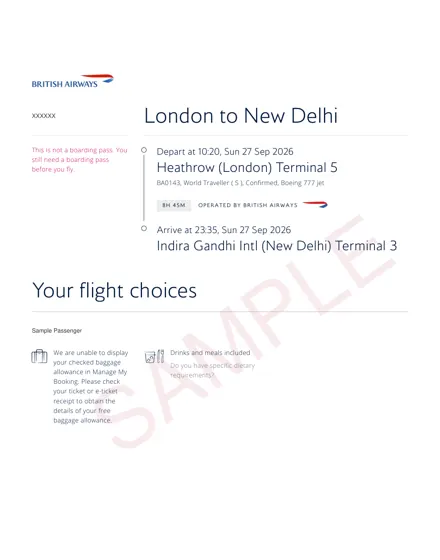
Your visa-file reservation also has a role here, though a limited one. It shows your plan at the time you applied. After approval, purchase your actual flights for dates that sit inside the permitted stay. A held reservation stays live for two weeks at most, the carrier fixes the actual window, and it can't be flown on.
Choosing a safe exit date: step by step
- Find your real limit. 90/180 for Schengen, the I-94 date for the US, your entry permit for the UAE, the scheme length for Thailand.
- Subtract days already used. Earlier Schengen trips count; so might an earlier Thai visa-free entry this calendar year.
- Check your leave and bookings. Work leave, hotel nights and insurance should all end on or after your return date.
- Pick a return a day or two inside the limit. It costs nothing and absorbs a delay.
- Book the reservation for that date. Make sure every traveller's name matches the passport.
- Verify it on the airline's site before you submit, following our PNR verification steps.
A reservation with the right exit date
We create held flight bookings, PNR live and name matching your passport, for any dates you pick, one-way exits included. No fare is paid, so it isn't a ticket. It lands by email in roughly ten minutes and is visible through the carrier's "Manage booking" lookup.
Pricing is per head and the same for one-way or return; see the full price list. More background is in our Schengen visa guide, flight reservation for visa, onward ticket and requirements by country. If your file also needs a stay, see hotel bookings for visas, or go to our home page.
Need a return or onward date that fits your stay?
Live PNR, names and dates exactly as entered. ₹699 / $9 per passenger.
Please note: a reservation reflects the trip you intend to make. It cannot extend your permitted stay, and only the immigration authority decides how long you may remain.
Frequently asked questions
Does a one-way booking make an officer think I will overstay?
It can, if nothing else in the file shows how you will leave. A one-way trip is fine when it is followed by a booked exit, such as an onward flight to a third country or a return from a different city. What concerns officers is a file with no end date, or an end date that does not fit the leave letter, hotels and insurance.
Is the Schengen 90-day limit counted from my visa dates?
No. It is counted over any 180-day period, looking back from each day of your stay. Days from earlier trips inside that window count against the 90. The visa sticker shows the validity and number of days granted, but the 90/180 rule still applies, and the EU's online calculator helps you check.
How is an overstay detected in Europe now?
Through the Entry/Exit System, fully deployed since 10 April 2026. It records each entry and exit with fingerprints and a facial image and flags people who exceed their authorised stay automatically. Where there is no exit record, data are kept for 5 years from the end of the permitted stay.
Does overstaying a few days in the UK cause a ban?
Under the suitability rules, an overstay of 30 days or less that began on or after 6 April 2017 is disregarded if you left voluntarily at your own expense. Longer overstays can lead to refusals for 12 months to 10 years depending on how you left. A short overstay may still be weighed in a later application.
Is my US stay limited by my visa expiry date?
No. Your stay is limited by the "admit until" date on your I-94 record, which CBP sets when you arrive. Unlawful presence usually begins the day after that date. More than 180 days triggers a 3-year bar, and a year or more triggers a 10-year bar.
What is the overstay fine in Dubai and the rest of the UAE?
The ICP lists a fine of AED 50 for each day after your permitted stay ends. After paying, you must either regularise your status or leave. Dubai-issued visas are often handled through GDRFA, so check the authority that issued yours.
Can I extend my stay instead of overstaying?
Sometimes, and always before your permitted stay ends. The Royal Thai Embassy in London says the 30-day visa-free stay can be extended by up to 30 days. The UK allows longer stays only in limited cases such as medical treatment. Schengen extensions are exceptional, so plan to leave on time.
Sources
All sources last checked: October 2026.
- European Commission, Migration and Home Affairs, Applying for a Schengen visa (90/180-day rule and short-stay calculator).
- European Commission, Migration and Home Affairs, Entry/Exit System (EES).
- Directive 2008/115/EC (Return Directive), Article 11: entry ban (text as published on legislation.gov.uk).
- GOV.UK, Visit the UK as a Standard Visitor.
- GOV.UK, Immigration Rules: Part Suitability (SUI 11.5, SUI 12.1).
- USCIS, Unlawful presence and inadmissibility, and Policy Manual, Volume 8, Part O, Chapter 6.
- US Customs and Border Protection, I-94 traveler compliance.
- Federal Authority for Identity, Citizenship, Customs and Port Security (ICP), UAE, Payment of visa or residence violation fine.
- Royal Thai Embassy, London, Visa exemption and visa on arrival schemes.
- Royal Thai Embassy, Abu Dhabi, Thailand overstay measures effective from 20 March 2016.
- Danish Immigration Service (New to Denmark), EES personal data.
- EUR-Lex, Regulation (EC) No 810/2009 (Visa Code), consolidated text: Article 32.
Related: onward ticket · requirements by country · sample tickets · Schengen visa guide.