Media Visa Categories: Why Your Dummy Ticket Must Match Your Assignment Type
Media visas are rarely a single, blanket category. Most countries split them into sub-types — typically a journalist/press visa, a film crew visa, and a documentary or cultural exchange visa. Each sub-type carries different expectations about your route, your duration of stay, and the ports you will realistically use. If your flight reservation contradicts the assignment type stated in your cover letter, consular officers will flag it as a mismatch — and that is one of the fastest ways to trigger an interview or a refusal.
Journalist and Press Visas: Expect Direct, Short-Haul Itineraries
Journalists on assignment usually fly point-to-point. If you are covering a summit in Geneva, your itinerary should show a direct flight or a single, short connection — not a multi-stop routing through three countries. Consulates know that news desks book the fastest route, and they often cross-check your dummy ticket’s transit points against the event dates you cited.
- Typical validity window: 7–14 days for a single assignment; your dummy ticket should show arrival 1–2 days before the event and departure within 48 hours after it ends.
- Transit rule: Avoid layovers in countries with adversarial press relations or in nations requiring a separate transit visa (e.g., if you are flying from South Asia to Europe, do not route through a country that demands an airport transit visa for your passport).
- Document to match: Your assignment letter from the editor must name the same city and date range as your flight reservation. If the letter says “covering elections in Nairobi,” your dummy ticket must land in Nairobi, not Mombasa.
Film Crew Visas: Longer Durations and Equipment-Related Ports
Film crews rarely fly together, and consulates know this. The key difference here is that your dummy ticket must reflect a realistic production schedule — usually 30 to 90 days — and your port of entry should align with where your equipment is cleared. Many countries require crew members to clear customs at a designated international cargo hub, so your flight reservation should land at that hub, not a regional airport.
- Check the shooting permit: If your production permit names a specific city as the primary filming location, your itinerary must arrive there or at its nearest international gateway.
- Match crew roles to travel dates: The director and cinematographer often arrive earlier for location scouting. Your dummy ticket for a crew visa should show an arrival date 5–7 days before the main cast, not the same day.
- Build in a buffer for re-shoots: Consulates expect film schedules to slip. A booking hold that ends exactly on the last shooting day looks suspicious — add 3–5 days of buffer before your return flight.
Documentary and Cultural Exchange Visas: Multi-City Itineraries Are Normal
Documentary work often involves multiple cities within one country. Your dummy ticket for a documentary visa may legitimately show an open-jaw itinerary (arriving in one city, departing from another). This is the one media sub-type where a multi-stop route is actually an advantage, because it demonstrates you understand the logistics of field production.
| Media Visa Sub-Type | Typical Duration on Dummy Ticket | Acceptable Transit Points | Red Flags to Avoid |
|---|---|---|---|
| Journalist / Press | 7–14 days | Direct or 1 short connection; must match event city | Multi-city tours, long layovers, arrival after event start date |
| Film Crew (Feature / Commercial) | 30–90 days | International cargo hub for equipment; then onward | Return date identical to last shooting day; no buffer |
| Documentary / Cultural | 21–60 days | Open-jaw routes, multiple domestic legs | Single-city itinerary if your treatment names several locations |
Before you purchase any flight reservation, pull the specific visa sub-type application form from the embassy website. The form usually asks for a “proposed itinerary” field — copy that exact route into your dummy ticket. If the form says your port of entry is fixed (some countries force media visa holders through a designated airport), your itinerary must comply. A mismatch between the application form and your booking hold is the most common reason a media visa file gets sent for additional administrative review, which typically adds 2–4 weeks to processing.
One practical step: use a 48-hour refundable booking hold directly from an airline first, then compare it against your assignment letter. If the dates, cities, and transit points align, you can safely convert it to a verifiable dummy booking from a reputable service. If they do not align, adjust the itinerary before you pay for the visa fee — because that fee is non-refundable, and a mismatched dummy ticket media visa file rarely survives scrutiny.
How Embassies Verify Dummy Tickets for Media Visas: PNR Checks and Beyond
When you submit a dummy ticket media visa application, the consular officer is not merely glancing at the itinerary page. For media visas — which carry heightened security scrutiny due to concerns about covert activities, uncontrolled movement, or undocumented work — verification is layered and often automated. The core tool is the PNR (Passenger Name Record), but officers employ several parallel checks that a simple PDF from a travel agency will not withstand.
1. The Live PNR Lookup in the Global Distribution System (GDS)
Most embassy visa sections subscribe to a read-only interface into the major GDS platforms — Amadeus, Sabre, and Travelport (Galileo/Worldspan). The officer will take the six-character alphanumeric PNR printed on your dummy ticket and paste it into their internal query tool. Within seconds, they pull the actual booking state from the airline’s host system. What they see is not what your PDF shows. They see:
- Status codes for every segment:
HK(holding confirmed) orHL(waitlisted) are acceptable.XX(cancelled),UN(unable to confirm), orNO(no action) immediately flag the document as invalid. - The ticketing time limit (TTL): A real reservation carries a deadline — typically 24 to 72 hours — after which the airline auto-cancels the seats. If your dummy ticket’s PNR was created more than 5 days before your interview, the officer will likely see a cancelled status or a zeroed-out fare. This is the #1 rejection reason.
- The fare basis code: Media visas often require a refundable or flexible fare. If your PNR shows a deeply discounted, non-refundable “Saver” fare, the officer may question why you are spending thousands on an itinerary you claim is provisional.
2. Airline Direct Portal Verification (Beyond the GDS)
For national carriers (e.g., Air India, Lufthansa, Turkish Airlines) or when the GDS query returns ambiguous data, an officer will open the airline’s own “Manage Booking” webpage. They enter your PNR and last name. If your dummy ticket is a fake — a Photoshop job or a “hold” that was never actually issued — this page returns “No booking found” or “Invalid PNR”. If it is a genuine but expired reservation, the page will display a prominently red-bannered “Booking Cancelled” notice. The officer’s screen will also show the ticket number (a 13-digit code starting with the airline’s 3-digit numeric prefix). A valid PNR without an associated ticket number is a red flag: it means you have a reservation but no fare paid — acceptable only if your visa interview is within the TTL window.
3. Cross-Check Against Your Visa Application Timeline
Media visa officers routinely compare the PNR’s creation timestamp (visible in the GDS history) against your visa application submission date and your stated purpose. If your dummy ticket media visa itinerary was created on the same day as your interview — and your cover letter claims you have been planning this shoot for two months — the inconsistency is noted. Conversely, if the PNR was created 3 weeks ago but has no ticketed fare and no seat assignment, the officer assumes you never intended to fly. The realistic window they expect: a PNR created 3 to 7 days before the visa appointment, with the outbound flight date 2 to 6 weeks out, matching the duration of your assignment in the invitation letter.
4. What Verification Looks Like by Media Sub-Type
| Media Visa Sub-Type | Primary Verification Focus | Typical PNR Requirement |
|---|---|---|
| Journalist / Press (short assignment) | Return date within 30 days; no open-ended stay | Confirmed outbound + return, HK status, TTL ≥ interview date |
| Film Crew (documentary) | Multiple internal flights matching shooting locations listed in the production letter | All segments must show HK; no “surface” or “waitlist” segments |
| Technical / Production Support | Date alignment with equipment arrival (carnet or ATA) | Outbound PNR must predate equipment shipment date |
5. The “Soft” Checks That Fail Dummy Tickets
Beyond the PNR lookup, officers look for micro-inconsistencies that a well-made dummy ticket media visa document often overlooks:
- Airline PNR and booking reference mismatch: A genuine booking’s PNR is identical across the GDS and the airline portal. Some fake documents show one code on the itinerary and a different one on the payment receipt.
- Fare breakdown arithmetic: Officers add the base fare, taxes, and fuel surcharge. If your PDF shows a total that does not sum correctly — or uses a tax rate from the wrong country — it triggers a manual review.
- Seat map access: A quick check whether the PNR allows seat selection. Genuine bookings usually permit it; cancelled or fake ones do not.
In practice, the verification takes under two minutes. If your dummy ticket is a legitimate, live airline reservation with a PNR created within the last week and a ticketing deadline that has not lapsed, you will pass. If it is a static PDF, a screenshot, or an expired hold, the officer will reject the application — usually with a generic “insufficient documentation” refusal that costs you the visa fee and weeks of delay.
When your appointment date is fixed, order a cheap dummy ticket and attach the PDF to the rest of the application.
Need a verifiable dummy ticket for this?
Live PNR you can check on the airline website. From ₹599 / $7, delivered in ~10 minutes.
Comparison Table: Dummy Ticket vs. Paid Ticket for Media Visa Applications
When assembling your media visa dossier, the flight document you choose — a temporary booking hold or a fully paid, ticketed itinerary — directly affects your approval odds, your cash flow, and your ability to adjust shooting schedules. The table below breaks down the practical trade-offs for journalists, documentary filmmakers, and freelance crews.
| Factor | Dummy Ticket (Booking Hold / PNR) | Paid Ticket (Issued & Ticketed) |
|---|---|---|
| Upfront cost | Typically $5–$15 per passenger via a verified service; refundable hold fee | Full fare — often $800–$2,500+ for long-haul routes; paid in full before visa outcome |
| Financial risk if visa is refused | Near zero — you lose only the small service fee | High — most economy fares carry cancellation penalties of $200–$600; non-refundable fares lose 100% |
| Validity window | Usually 7–14 days from booking; extendable for a fee | Valid until travel date; changeable (with fare difference) or cancellable per airline rules |
| Acceptance by media visa sections | Widely accepted if the PNR is verifiable via the airline’s website or GDS and matches your assignment dates | Always accepted — embassies view paid tickets as stronger proof of intent, but they rarely require them |
| Flexibility for shoot rescheduling | Excellent — you can cancel the hold and request a new itinerary with different dates in minutes | Poor to moderate — rebooking incurs change fees (often $150–$300) plus any fare increase |
| Risk of embassy PNR check | Low if you use a real airline reservation with a live PNR; avoid “fake” PDFs from unverified sellers | None — the ticket is paid and issued, so the PNR status will read “Ticketed” |
| Documents to submit | Airline PNR confirmation, itinerary receipt, and (if requested) the airline’s fare quote page | E-ticket receipt, itinerary with ticket number (starting with the airline’s 3-digit code), and payment confirmation |
| Best used for | Initial visa submission, especially for multi-country shoots where dates may shift; Schengen, UK, US, and most Asian media visa applications | Final visa interview stages, or when the embassy explicitly asks for a “confirmed ticket” and your production schedule is locked |
Cost and Risk: The Core Trade-Off
For a two-person film crew applying for a 30-day media visa, a paid ticket on a transatlantic route could cost $1,600–$3,000. If the visa is refused or delayed — which happens with media applications because consulates often request additional letters from your host broadcaster or production company — that money is tied up for weeks. A dummy ticket media visa approach, by contrast, costs under $20 per passenger and lets you submit a verifiable PNR immediately. You only purchase real tickets after the visa is stamped, which is why most production fixers recommend the hold strategy for the first submission.
Acceptance Nuances by Visa Type
Do not assume a paid ticket automatically strengthens your case. Some media visa sections — notably those in countries that issue accreditation cards — actually prefer an unbooked itinerary because your assignment dates may change after you receive accreditation. In practice:
- Journalist press visas (e.g., US I-visa, UK Tier 5 Media): A dummy flight reservation with a live PNR is routinely accepted at the application stage. The officer checks that your return date is within the visa validity window.
- Film crew visas (e.g., Schengen short-stay for shooting): Embassies may cross-check your PNR against your shooting permit dates. A paid ticket that conflicts with a permit extension creates more problems than a flexible hold.
- Countries requiring “confirmed onward travel”: Some destinations (e.g., certain Gulf states) ask for a ticketed onward flight. In that case, a paid ticket is safer — but you can often use a cheap refundable fare rather than the full production itinerary.
Practical Steps to Decide
- Review the embassy’s official media visa checklist — if it says “confirmed flight reservation” rather than “paid ticket,” a verified booking hold meets the requirement.
- If your production company has already paid for flights, submit those paid tickets. Otherwise, purchase a verifiable dummy reservation only after your assignment letter confirms the shoot dates.
- Keep your PNR confirmation and the airline’s fare breakdown page as separate PDFs — do not screenshot a single page that omits the fare basis code.
- For multi-city shoots, book a dummy itinerary that mirrors your planned routing exactly. A paid ticket for only the inbound leg, while the outbound leg is a hold, can confuse the officer — match both ends.
In short: use a paid ticket only when the visa rules demand it or when your shoot schedule is contractually fixed. For the majority of media visa submissions, a verifiable booking hold offers the same acceptance level at a fraction of the cost and with far greater flexibility for rescheduling.
Step-by-Step: Ordering a Dummy Ticket from DummyTicketPrice.com for a Media Visa
When your production schedule or editorial deadline is tight, the last thing you need is a confusing booking process. Ordering a flight reservation from DummyTicketPrice.com is deliberately streamlined, but knowing the exact sequence — and how it maps to media visa timelines — will save you from a last-minute scramble. Here is the precise walkthrough, from clicking the booking link to receiving your PNR confirmation.
Step 1: Prepare Your Media Visa Assignment Details Before You Click
Do not open the booking page until you have three documents in front of you: your passport bio-data page, your official assignment letter from the editor or production company, and the embassy’s visa application checklist. The checklist is critical because it specifies the exact travel dates your itinerary must cover. Most media visas require you to show an arrival date that is at least 3–5 working days before your scheduled reporting or filming start date, and a departure date that is typically 2–3 days after your last scheduled activity. Jot down those dates on paper — you will need them in the next step.
Step 2: Navigate to the Booking Form and Enter Passenger Details
Go to the booking page (usually /booking.html on their site). You will see a simple form asking for:
- Full name — exactly as it appears on your passport. A mismatched middle name is the single most common reason a dummy ticket is rejected at the embassy window.
- Passport number — some embassies cross-check this against the PNR, so do not leave it blank.
- Travel dates — your intended arrival and departure, aligned with the dates from Step 1.
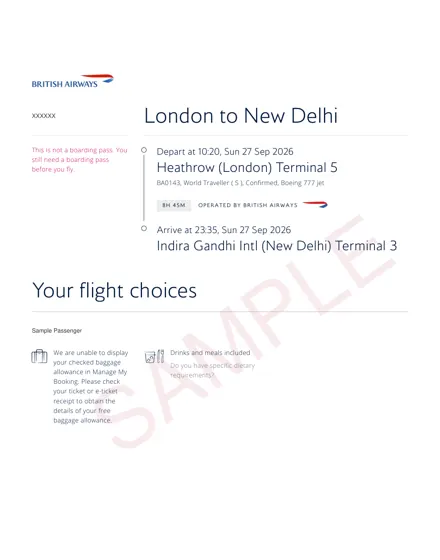
- Route — city pairs, e.g., London to Delhi. If you have a connecting flight, specify the full routing, not just the final destination.
- Email address — double-check this. The PNR and itinerary PDF go here.
For media visas, you may also see an optional field for “purpose of travel.” If present, select “Journalism/Film Production” rather than “Tourism.” This ensures the reservation is tagged correctly in the airline’s booking system, which some consulates verify.
Step 3: Choose Your Airline and Cabin Class Wisely
DummyTicketPrice.com typically offers a choice of carriers on your route. For media applications, choose the airline that your production company or news outlet actually plans to use for the real ticket. If you later upgrade the dummy to a paid ticket, this avoids a mismatch in airline reference numbers. Economy is usually fine for journalists; film crews transporting equipment may need to show a cargo allowance, so select an airline with a generous baggage policy if your assignment letter mentions gear. The system will display a fare quote — this is a reservation hold, not a charge.
Step 4: Complete Payment and Receive Your PNR
Pay the flat fee (typically ₹599 / $7 per passenger) via card or UPI. After payment, the system generates a live PNR — this is a real booking in the airline’s reservation system, not a PDF mock-up. Delivery is usually within 10 minutes, but for media visa deadlines, order at least 48 hours before your embassy appointment to allow for any email delays or corrections. You will receive two files:
- A PDF itinerary with the airline’s letterhead and booking reference.
- A separate PNR confirmation with a 6-character alphanumeric code.
Step 5: Verify the PNR on the Airline’s Website
Before you print anything, go to the airline’s official website and use the “Manage Booking” or “Find Reservation” tool. Enter your PNR and last name. The booking should pull up with your exact flight times and status. This verification step is non-negotiable for media visas — consular officers increasingly check the PNR live during adjudication. If the PNR does not resolve, contact DummyTicketPrice.com support immediately; they typically fix it within an hour.
Step 6: Print and Assemble with Your Media Visa Packet
Print the itinerary PDF and the PNR verification screenshot (the one showing the airline’s website). Staple them together. Do not rely on a phone screen at the embassy — many media visa sections require a physical copy. Keep the PNR handy until your visa is stamped, as the embassy may call the airline to confirm the booking is still active.
Typical Timeline for Media Visa Applicants
| Action | Recommended Timing | Why It Matters |
|---|---|---|
| Order dummy ticket | 5–7 days before embassy appointment | Allows time for corrections or re-issue if dates change after reviewing the visa checklist. |
| Verify PNR on airline site | Immediately after receipt (within 1 hour) | Catches typos in names or dates while support is still responsive. |
| Submit visa application | 2–5 days after receiving the dummy ticket | Most embassies process media visas in 5–10 working days; the dummy ticket must cover the entire adjudication window plus your travel dates. |
| Keep PNR active until visa decision | Check PNR validity every 3 days | Some airlines cancel unpaid holds after 7–14 days; if yours lapses, order a fresh dummy ticket before the embassy calls. |
One final tip specific to media applications: if your assignment involves multiple cities or a film festival with a fixed premiere date, order the dummy ticket to match the festival schedule, not your preferred travel dates. Embassies compare your itinerary against your invitation letter, and any mismatch between the two is a red flag. The entire process — from clicking the booking link to holding a verifiable PNR — should take under 15 minutes, but the preparation around it is what gets your media visa approved on the first try.
Related guide: Dummy Ticket for Mauritius Visa: Flight Reservation Requirements, Process and Mistakes to Avoid.
Case Study: How a News Crew Secured a Schengen Media Visa Using a Dummy Ticket
In March 2024, a three-person news crew from a regional broadcaster in Southeast Asia faced an unusually tight window: a breaking environmental story in the Netherlands required them on-site within 12 working days. Their Schengen media visa applications had to be filed, processed, and approved in that span. The crew’s producer, Marta, had never handled a Schengen press visa before. She learned quickly that the single most scrutinized document — besides the accreditation letter from the Dutch broadcaster — was the flight itinerary.
The Problem: Paid Tickets Were Too Rigid
Marta initially booked refundable paid tickets with KLM for the crew’s proposed dates. But the story’s logistics shifted twice within 48 hours — the interviewee’s availability moved, and the shooting location changed from Amsterdam to Rotterdam. Each change meant rebooking and paying change fees. Worse, the consulate’s appointment slot was for a date that fell after the crew’s intended departure. Marta realized she needed a flight reservation that could be adjusted without financial penalty, yet still carry a genuine airline PNR for verification.
The Solution: A Dummy Ticket with a Live PNR
She ordered three dummy tickets from a reputable visa itinerary service — one per crew member — for a proposed 9-day assignment. The itinerary showed a round trip from their home airport (Kuala Lumpur) to Amsterdam Schiphol, with a layover in Doha. Crucially, the PNR confirmation code was real and checkable on the Qatar Airways website. This mattered because the Dutch consulate’s media visa unit is known to spot-check PNRs against airline databases, especially for applicants from countries with higher overstay rates.
How the PNR Was Used in the Application
Marta did not simply attach the itinerary PDF. She took three practical steps that she believes made the difference:
- Verified the PNR online — She logged into the airline’s manage-booking portal and screenshotted the active booking status, showing her name, flight numbers, and dates. This screenshot was attached as a supplementary document.
- Matched the itinerary to the accreditation letter — The Dutch broadcaster’s letter specified the assignment dates (April 2–10). Marta ensured the dummy ticket’s arrival and departure dates fell squarely within that window, with a one-day buffer on each side for travel delays.
- Prepared a cover note — She wrote a short explanation that the flight itinerary was a provisional booking held for visa purposes, and that final ticketing would occur upon visa approval. This transparency preempted any accusation of deception.
Timeline and Outcome
The crew’s application timeline illustrates the typical pace for a media visa when documents are in order:
| Day | Action | Notes |
|---|---|---|
| Day 1 | Ordered dummy tickets | Received within 10 minutes via email |
| Day 2 | Verified PNRs on airline website | All three showed “confirmed” status |
| Day 3 | Submitted applications at consulate | In-person appointment, biometrics collected |
| Day 7 | Consulate called Marta | Asked to confirm the PNR’s booking class and fare basis |
| Day 8 | Marta provided the fare breakdown | Dummy ticket service supplied this via a quick email |
| Day 10 | Visas issued | Valid for 30 days, single entry |
Key Takeaways for Journalists
Marta’s experience offers three concrete lessons for other media professionals applying under tight deadlines:
- Never submit a fake or “screenshot-only” itinerary. Consulates for media visas increasingly cross-check the PNR directly with the airline. A real booking hold — even if unpaid — is verifiable; a fabricated one is not.
- Keep the dummy ticket’s dates flexible but plausible. If your assignment dates shift after submission, you can order a revised booking hold for the interview stage, but the initial submission must match your accreditation letter’s stated purpose.
- Expect a verification call. The consular officer in this case asked for the fare basis code — a detail found only in the airline’s fare rules, not on a standard itinerary PDF. Having a service that can retrieve this quickly saved the crew’s timeline.
In the end, the crew flew out on Day 12, exactly as planned. The dummy ticket media visa strategy worked because it was neither deceptive nor careless — it was a legitimate, verifiable booking hold that satisfied the consulate’s need for proof of intended travel while preserving the crew’s flexibility to adjust their plans without burning thousands of dollars on change fees.
Our guide to the dummy ticket website explains why embassies ask for a reservation rather than a paid ticket.
7 Mistakes to Avoid When Using a Dummy Ticket for a Media Visa
Even a perfectly issued flight reservation can sink your media visa application if you trip over these avoidable errors. Consular officers processing journalist and film crew visas are trained to spot inconsistencies — and a single mismatch can trigger a refusal or, worse, a misrepresentation flag that follows you to future applications. Here is what to check before you submit.
1. Mismatched Travel Dates vs. Your Assignment Letter
Your itinerary must align with the dates in your official assignment letter or invitation from the foreign broadcaster, production house, or government press office. If your letter states you will cover a summit starting on the 10th, but your booking hold shows you arriving on the 14th, the officer will question the authenticity of both documents. Double-check that your dummy booking covers the entire assignment window — typically from one day before the event starts to one day after it ends — to allow for setup or follow-up reporting.
2. Incorrect Passenger Name Details
The name on your flight reservation must match your passport exactly — same spelling, same order, no missing middle names. A common error is using a nickname or a shortened first name on the booking while your passport shows your full legal name. Also verify that the passport number you provide to the booking service matches the one you will travel on. If you hold two passports (e.g., dual nationality), use the same one for both the visa application and the dummy ticket to avoid a name or number discrepancy.
3. Ignoring Airline Blackout Dates and Route Realities
Many media visa applicants book a dummy itinerary on a route that does not actually operate on their travel date — for example, selecting a flight that only runs three times a week. Before you finalize, cross-check your booking hold against the airline’s published schedule. Also, be aware that certain budget carriers have blackout periods around major holidays or events where they suspend bookings entirely. If your PNR confirmation shows a flight that does not exist, an embassy can verify this in seconds through the airline’s GDS system.
4. Using a Single Itinerary for a Multi-Destination Shoot
Film crews and journalists rarely stay in one city. If your assignment involves shooting in three cities over two weeks, your dummy ticket must reflect the full domestic or regional routing — not just the international arrival. A common mistake is booking only the long-haul leg and leaving the domestic connections blank. For media visas, consulates often expect to see the entire journey, including internal flights, because your visa validity and entry/exit points are tied to that itinerary.
5. Forgetting to Check the PNR Before Submission
Your dummy ticket is only as good as its live PNR confirmation. A frequent error is submitting a PDF that shows a booking reference, but the applicant never verifies that the PNR actually resolves on the airline’s website. Always test your PNR confirmation 24 hours before your visa interview. The reservation is issued exactly as entered, so please check names, dates and route before paying; a new date or correction needs a fresh order. Do not walk into the embassy with a dead reference — that is an instant red flag.
6. Overlapping or Contradictory Prior Bookings
If you have previously applied for a visa with another itinerary — say, for a separate trip — do not leave that old booking active in the airline system. Consular officers can sometimes see a history of unused reservations linked to your name. Having two overlapping dummy bookings for different destinations on the same dates looks like you are shopping for visas rather than genuinely covering an assignment. Cancel or let expire any prior reservation before submitting a new one.
7. Submitting a Booking That Expires Before the Visa Decision
Most dummy tickets are valid for 7 to 14 days, but media visa processing can take longer — usually 10 to 15 working days in many jurisdictions, though some embassies take up to a month. If your flight reservation lapses before the officer reviews your file, they may see it as no longer valid. Schedule your dummy ticket purchase so its validity window covers the entire expected processing period. If your interview is delayed, order a fresh booking hold with updated dates rather than hoping the old one still works.
Quick Checklist Before You Submit
| Checkpoint | What to Verify | Typical Timeframe |
|---|---|---|
| Passenger name | Matches passport exactly | Immediate |
| Travel dates | Align with assignment letter | Within 24 hours of ordering |
| Route exists | Flight actually operates | Check airline schedule |
| PNR is live | Pulls up on airline website | 24–48 hours before interview |
| Booking validity | Covers full visa processing | 10–15 working days typically |
One final note: never attempt to alter a booking confirmation PDF yourself. If you need to change a date or name, request a fresh dummy ticket media visa reservation from your provider. A doctored file is the fastest way to a refusal — and potentially a ban from future media visa applications.
Related guide: Dummy Ticket for Samoa Visa: Flight Reservation Requirements, Process and Mistakes to Avoid.
What Media Visa Officers Look for in Your Flight Reservation: A Behind-the-Scenes Look
When a consular officer reviews your media visa packet, your flight reservation is not just a travel formality — it is a piece of documentary evidence about your credibility as a journalist or filmmaker. Officers process dozens of media applications weekly, and they have developed a sharp eye for itineraries that look manufactured versus those that reflect a genuine production schedule. Understanding their evaluation criteria can mean the difference between an approval and a request for additional documentation that delays your assignment.
1. Chronological Logic Relative to Your Assignment Letter
The most scrutinized element is whether your itinerary aligns with the dates and purpose stated in your official assignment letter from your employer or commissioning broadcaster. Officers typically cross-reference three documents: your assignment letter, your visa application form, and your flight reservation. If your letter states you will cover a film festival from March 10–17, your dummy ticket media visa itinerary should show arrival no later than March 8 (to allow for jet lag and press accreditation) and departure no earlier than March 18. A reservation showing you arriving two weeks early or staying a month after the event ends raises immediate red flags about whether you intend to work beyond your permitted scope.
2. Routing Realism for Media Logistics
Media crews rarely travel point-to-point without considering equipment, crew rendezvous points, or regional hubs. Officers look for routing that makes operational sense. For example, a documentary crew filming in multiple cities should have a reservation that reflects those locations, even if the actual travel between them will be by land. Your flight reservation should show an entry point that matches where your production company has scheduled your first shoot day. Table 1 below summarizes what officers typically assess:
| Document Element | What Officers Check | Common Red Flag |
|---|---|---|
| Arrival date | Matches assignment start date minus 1–3 days for setup | Arrival 2+ weeks early without explanation |
| Departure date | Matches assignment end date plus 1–2 days for wrap-up | Departure before the assignment ends |
| Airline and route | Reasonable for your departure country; no illogical layovers | Excessive 20+ hour layovers or bizarre city pairings |
| Passenger name | Exactly matches passport and visa application | Initials instead of full name, surname mismatch |
| PNR status | Live and verifiable on the airline's website | Expired booking or code that returns no record |
3. The "Return Intent" Assessment
Media visas are non-immigrant visas, which means officers must be convinced you will leave after your assignment. Your flight reservation is one of the few concrete pieces of evidence they have for this. Officers look for a return ticket to your home country, not onward travel to a third country. A reservation showing you flying onward to another destination without a return home can trigger an interview question about your post-assignment plans. The itinerary should clearly show a round trip, typically within 30–90 days depending on the assignment type and the country's standard media visa validity.
4. Booking Class and Flexibility Signals
Experienced officers know that genuine media bookings are often made in flexible fare classes because production schedules shift. A reservation showing a deeply discounted, non-changeable economy fare can actually look less authentic for a film crew than a mid-tier fare. However, the reverse applies to freelance journalists on tight budgets. The key is consistency: your itinerary should match the travel budget implied by your employer's letter or your funding documents.
5. Practical Steps to Pass This Scrutiny
- Request a dummy ticket that includes the full passenger name exactly as it appears on your passport — no nicknames, no middle name omissions.
- Ensure the reservation shows a live PNR and check it yourself on the airline's website before submission; officers often spot-check electronically.
- Ask your dummy ticket provider for a 14-day hold window if possible, as visa processing for media assignments typically takes 5–15 business days.
- Keep your assignment letter and flight reservation dates within a reasonable buffer — no more than 3 days of slack on either end.
- If your assignment involves multiple countries, submit a separate flight reservation for each leg or a single itinerary that clearly shows all entry and exit points.
Frequently Asked Questions About Dummy Tickets for Media Visas
1. How long is a dummy ticket valid for a media visa application?
A flight reservation from a reputable provider typically remains “live” in the airline’s booking system for 7 to 14 days, depending on the carrier’s fare rules. Some airlines hold unbooked itineraries for as little as 72 hours, while others extend the hold to 21 days. For media visa processing, you usually need the reservation to stay active until your interview date and for a few days afterward, since consular officers may re-check the PNR. If your appointment is more than two weeks away, order the dummy ticket closer to the interview date, or request a provider that offers a renewed PNR for the same itinerary at no extra cost.
2. Can one dummy ticket cover a multi-person film crew or journalist team?
Yes, but with an important caveat. A single booking reference (PNR) can list up to nine passengers on most airlines, which means one dummy ticket media visa itinerary can technically cover your entire crew. However, many embassies prefer each applicant to have an individual reservation, especially when crew members travel on different dates or from different departure cities. If your crew splits up — for example, a camera team flies ahead while the producer follows later — you need separate reservations. For safety, order one dummy ticket per applicant, even if you travel together, and mention in your cover letter that the crew shares a single itinerary.
3. Will the embassy call the airline to verify my dummy ticket?
Consular officers rarely phone airlines directly, but they do routinely check the PNR through the airline’s website or the Global Distribution System (GDS) used by travel agents. This verification process checks that the reservation exists, matches your name exactly as on your passport, and shows the same travel dates you listed on the visa application form. If the PNR cannot be retrieved or shows a cancelled status, the officer will likely flag your file for additional scrutiny or request a new reservation. A verifiable dummy ticket from a service like DummyTicketPrice.com provides a live PNR that passes this check for the full validity period.
4. What happens if my media visa interview is delayed beyond the dummy ticket’s validity?
If your interview is rescheduled or the embassy takes longer than expected, your flight reservation may expire before the officer reviews it. In this scenario, you have two practical options. First, contact your dummy ticket provider — many will extend the hold or issue a fresh reservation with a new PNR for a small fee, sometimes free if you purchased a protection plan. Second, if you already submitted the application and the embassy requests an updated itinerary, you can email the new reservation directly to the visa section. Do not attend the interview with an expired dummy ticket; officers typically reject applications with inactive PNRs as incomplete.
5. Does the dummy ticket need to show a return flight for media visas?
For most media visa categories, embassies require a round-trip itinerary to prove you intend to leave the country after your assignment. A one-way reservation is usually insufficient unless you hold a valid residency permit or work visa for another country. The return flight should be dated after your planned production or reporting period ends, typically within 30 to 90 days from arrival, depending on the visa type. If your assignment involves multiple destinations, include all internal flights as well — for example, a documentary crew shooting in three cities should show connecting flights that match the shooting schedule. Your dummy ticket must mirror the exact dates on your invitation letter from the production company or media outlet.
6. Can I use the same dummy ticket for multiple visa applications?
Technically, a flight reservation can be reused, but it is not recommended. If you apply for a Schengen media visa first and then a separate UK visa, the second embassy will see the same PNR and may question why you did not book an actual ticket after receiving the first visa. More importantly, if the first embassy already verified and logged your PNR, a second submission with the same reservation looks like a pattern of using dummy tickets, which can trigger a fraud flag. Always order a fresh dummy ticket for each visa application. The cost is minimal — typically $7 per passenger — and it keeps your application history clean and consistent.
| Question | Key Answer | Typical Validity |
|---|---|---|
| How long is a dummy ticket valid? | Live PNR for 7–14 days, extendable | 72 hours to 21 days |
| Can one dummy ticket cover a crew? | Yes, up to 9 passengers, but individual is safer | Same PNR or separate |
| Will the embassy verify my PNR? | Yes, via airline website or GDS | Immediate check |
| What if my interview is delayed? | Request extension or new reservation | Before interview date |
| Is a return flight required? | Yes, for most media visa categories | 30–90 days after arrival |
| Can I reuse the same dummy ticket? | No, order fresh for each application | One application only |