You'll find websites that sell flight reservations as if they were a shortcut to a visa stamp. They aren't, and we sell them. A reservation is a supporting document. It answers one narrow question in your file ("when and how do you plan to travel?") and leaves every big question to the rest of your evidence. This guide explains what officers actually weigh, using the governments' own words, where a reservation fits, and the few ways a flight document can work against you.
Key facts
| Question | What official sources say |
|---|---|
| Does any document guarantee a UK visit visa? | No. GOV.UK says submitting the listed documents "does not guarantee" a successful application.[5] |
| Is a US visa guaranteed once you apply? | No. The State Department says there is no guarantee and advises against buying tickets before you have a visa.[6] |
| What do Schengen applicants have to show? | Purpose of stay, means to support yourself, accommodation and your intention to return.[1] |
| Does a paid ticket get faster processing? | No. German missions in India say booking a ticket earns no "preferred processing".[3] |
| Do you need a paid ticket for the Netherlands? | "You do not need a paid travel ticket."[4] |
| Can a false document lead to refusal? | Yes. It is a refusal ground in the EU Visa Code, Article 32.[2] |
Does a dummy ticket increase your visa chances?
Not in the way people hope. A reservation does not add points to an application. No official guidance we've read says a flight booking makes approval more likely, and the UK's visitor guidance rates flight bookings as weak evidence for anyone who isn't transiting.[5]
What a reservation can do is stop a gap from appearing. If your checklist asks for flight details and you leave them out, your file is incomplete. If you include a genuine booking whose dates agree with your hotel, insurance and leave letter, that part of the file is simply done. Think of it as removing a reason to ask questions, not as adding a reason to approve.
Put another way: a strong applicant with a reservation is approved because they are a strong applicant. A weak application with a perfect reservation is still a weak application.
What does a flight reservation actually do in a visa file?
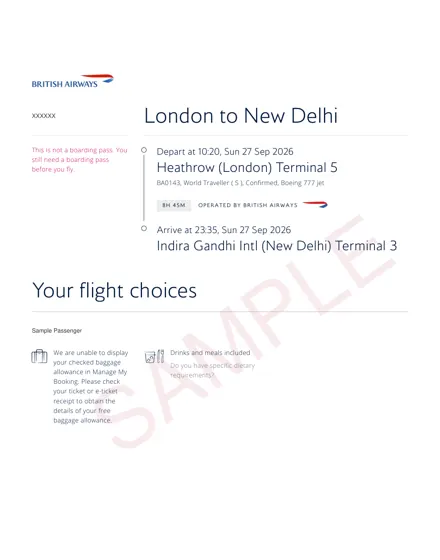
It shows a plan. Specifically, it shows the dates you intend to arrive and leave, the route, and that the people named on it are the people applying. For a Schengen visa, the EU Visa Code's list of supporting documents in Annex II includes a reservation of a return or round ticket among the evidence an officer may look at when considering whether you intend to leave.[2] It sits alongside many other documents on that list, not above them.
It also gives the officer something to cross-check. Your application form says you arrive on 3 May and leave on 17 May. Your hotel bookings cover those nights. Your insurance covers those dates. Your employer has approved leave for those days. The reservation shows flights on 3 and 17 May. Nothing contradicts anything else. That coherence is what you're after.
What it doesn't do is prove you can afford the trip, that you'll come home, or that your stated purpose is the real one. Those are the questions refusals turn on.
How are visa applications actually assessed?
Each system words it differently, but they ask the same core things: is the purpose genuine, can you pay for it, and will you leave on time?
Schengen. The European Commission tells applicants to show the purpose of the stay, financial means, accommodation and the intention to return home after the visit, plus travel medical insurance.[1] Article 32 of the Visa Code then lists refusal grounds, including false documents and reasonable doubts about the authenticity of documents, the reliability of statements, or the applicant's intention to leave before the visa expires.[2]
United States. Under section 214(b) of the Immigration and Nationality Act, a visitor visa applicant has to overcome a legal presumption of immigrant intent by showing strong ties to their home country. The State Department explains that officers look at each case individually and consider circumstances, travel plans, financial resources and ties outside the US.[7] Travel plans are one item on that list. Ties (your job, your home, your family) are the heart of it.
United Kingdom. GOV.UK publishes a guide to supporting documents for visitors and states plainly that providing them does not guarantee success. A decision maker may also ask you for more information.[5]
Canada. Canada's immigration department mentions flight details as optional supporting material for visitor visas, next to accommodation proof and event registration.[8] Again, one supporting item among several.
| What the officer is weighing | Does a flight reservation help? | What actually carries the weight |
|---|---|---|
| Purpose of the trip | Only indirectly, by showing dates and route | Itinerary, invitation letter, event registration, hotel bookings |
| Ability to pay | No | Bank statements, salary slips, tax returns, sponsor documents |
| Intention to return / ties at home | A small part (a planned return date) | Employment, leave letter, property, family, study, past travel |
| Consistency of the file | Yes, if dates and names match | Every document agreeing with the application form |
| Credibility and honesty | Yes, if genuine; harmful if fake or misleading | Truthful answers and genuine documents throughout |
| Length of stay within the rules | Shows the planned length | Your travel history, e.g. the Schengen 90/180-day count |
Would a paid ticket improve your chances instead?
The officials who have addressed this say no. On the German tourism checklist for India, a paid booking is expressly denied any "preferred processing".[3] Dutch guidance for Schengen tourists states that a paid ticket is not required.[4] And the US State Department goes the other way entirely, advising applicants not to buy tickets until they have the visa.[6]
We think the logic is straightforward. A paid ticket proves you spent money on flights. It doesn't prove you'll return, and a refundable one can be cancelled the next day anyway. Officers know that. Some checklists do ask for a confirmed or paid ticket, and where yours does, follow it; we explain those cases in when not to use a dummy ticket. But buying an expensive fare "to look serious" is money spent on the wrong evidence.
When can a flight document hurt your application?
A reservation can't win a visa, but a bad one can help lose it. These are the ways it goes wrong:
- It's fake. An invented PNR, an edited PDF, a "generator" printout. Under Article 32 of the Visa Code, false documents are a refusal ground.[2] UK caseworker guidance says proven deception leads to mandatory refusal and a 10-year ban on future applications.[9]
- It contradicts the rest of the file. Flights on 3 May, hotel from 5 May, insurance from 4 May. Each small mismatch gives the officer a reason to doubt the plan.
- It shows a trip you don't intend. A ten-day return booked to make a three-month stay look short is a misleading statement, whatever the PNR says.
- The names are wrong. A misspelt surname or a missing child makes it look like someone else's booking.
- It's described as something it isn't. Calling a reservation a "ticket" on your form or cover letter. Call it a flight reservation or itinerary.
Every one of those is avoidable. A genuine reservation, checked on the airline's site and matching your form, carries none of these risks. Our verification guide takes five minutes and catches most of them.
What actually makes a visa file strong?
This is where to put your energy. In rough order of importance for most tourist and family-visit applications:
- A clear, believable purpose. A short cover letter saying what you'll do, where and why, in your own words. Supporting evidence for anything specific: an invitation, a conference registration, a wedding card.
- Funds that make sense for the trip. Statements that show steady income and a balance that fits the trip's cost. Sudden large deposits with no explanation raise questions.
- Reasons to come home. A job and approved leave, a business, study, property, dependants. The US State Department names job, home and family relationships as examples of ties.[7]
- Travel history, if you have it. Previous visas used properly are useful context.
- Consistent dates and names on the form, hotel bookings, insurance, leave letter and flight reservation.
- Exactly the documents your checklist asks for, no more padding, no gaps.
The reservation lives at step five. It matters, because inconsistency is easy to spot. It just doesn't matter more than steps one to three.
Need the flight part of your file sorted?
A genuine reservation with a live PNR, in your names, for your dates. ₹699 / $9 per passenger.
Does the airline on the reservation make a difference?
Not to your chances. Officers are not impressed by a premium carrier or put off by a budget one; what they look at is whether the route makes sense for your trip and agrees with the rest of the file. A reservation into Paris and out of Rome, for a trip that starts in France and ends in Italy, tells a coherent story. A booking on a flagship airline that lands in the wrong city does not.
Choose an airline that actually flies your route on the dates you plan, with timings that fit your first and last hotel nights. If you are visiting several countries, make sure the entry and exit points match the itinerary you describe in your cover letter. That is all the "strategy" the flight document needs. Our guide to choosing an airline has a few practical pointers.
Why we won't promise approval
Because it isn't ours to promise. The consulate, embassy or immigration department decides, and nobody outside it can say how a particular officer will weigh a particular file. Any seller who tells you a reservation is "embassy approved" or guarantees a visa is telling you something they can't know.
What we can stand behind is narrower and checkable: the reservation is real, it carries a PNR you can look up on the airline's "Manage booking" page, it is issued in the names you give us, and it lands in your inbox roughly ten minutes after payment. You see how long it will be held on the booking form, before paying. That's it. The rest of the file is yours, and it is where visas are won.
For timing, see when to book before your appointment. If you're weighing a reservation against buying a flexible fare, read dummy ticket vs refundable ticket.
If you were refused, was it the flight reservation?
Read the refusal letter first; it gives the grounds. For Schengen visas, refusal reasons are notified on a standard form that refers to the grounds in the Visa Code.[2] Several of the Article 32 grounds concern the purpose of the trip, means of subsistence and the intention to leave, none of which a flight booking settles. If the letter does mention the authenticity or reliability of documents, look hard at whether every paper was genuine and consistent.
Before reapplying, fix the real weakness rather than changing airlines. Our guides on refusal reasons and reapplying after a refusal go further, and the Schengen guide lists what each consulate asks for.
Common questions
Does a dummy ticket guarantee a visa?
No. No document guarantees a visa; GOV.UK says as much about its own document list, and the US State Department says there is no guarantee of issuance. A flight reservation shows your planned dates and route. The decision rests on your purpose, funds, ties at home and the credibility of the whole file, and only the consulate makes it.
Does a dummy ticket increase my visa chances?
Not directly. It doesn't add weight the way bank statements or a job letter do. What it does is complete the flight part of the file when your checklist asks for it, and give the officer dates that match your hotel and insurance. That avoids questions; it doesn't create approval. UK guidance even lists flight bookings among less useful documents for visitors.
Is a paid ticket better than a reservation for approval?
The missions that have addressed it say no. Germany's missions in India deny paid bookings any priority, Dutch guidance calls a paid ticket unnecessary, and the US advises waiting for the visa before buying. Follow your checklist: if it explicitly demands a paid ticket, buy a refundable one.
Can a dummy ticket cause a visa refusal?
A genuine one that matches your file is very unlikely to be the reason. Problems arise when the document is fake or edited, when its dates or names contradict the rest of the application, or when it describes a trip you don't intend. False documents are a refusal ground in the Schengen rules, and proven deception brings a 10-year ban in the UK.
Do visa officers check the PNR?
Consulates don't publish how or how often they check flight documents, so nobody can tell you for certain. What you can control is that the booking is real and can be looked up on the airline's website with the PNR and surname. Check it yourself before submitting. If yours wouldn't survive a check, don't submit it.
Why do sellers claim their tickets are "embassy approved"?
Because it sells. No embassy approves a ticket provider, and acceptance of any document is decided case by case by the officer handling your file. Treat any promise of certain approval as a warning sign. A trustworthy provider describes what the document is, a reservation with a checkable PNR, and leaves the decision where it belongs.
What matters more than the flight reservation?
Almost everything else: a believable purpose, funds that fit the trip, and reasons to return home such as your job, family or studies. The US State Department names job, home and family as examples of ties. Get those right, keep every date consistent, and the flight reservation becomes the easy, uncontroversial part of your application.
Sources
All sources last checked: October 2026.
- European Commission, Migration and Home Affairs, Applying for a Schengen visa.
- EUR-Lex, Regulation (EC) No 810/2009 (Visa Code), consolidated text: Article 32 and Annex II.
- German Missions in India, Checklist for a Schengen visa for Tourism.
- Netherlands Worldwide, Checklist: applying for a Schengen visa for tourism.
- GOV.UK, Guide to supporting documents: visiting the UK.
- U.S. Department of State, travel.state.gov, Visitor Visa.
- U.S. Department of State, travel.state.gov, Visa Denials (INA section 214(b)).
- Government of Canada (IRCC), Apply for a visitor visa.
- GOV.UK, Part Suitability: deception, false representations, false documents and non-disclosure of relevant facts (caseworker guidance).
Related: book now · prices · requirements by country · hotel bookings · onward tickets · can a dummy ticket get a visa rejected?