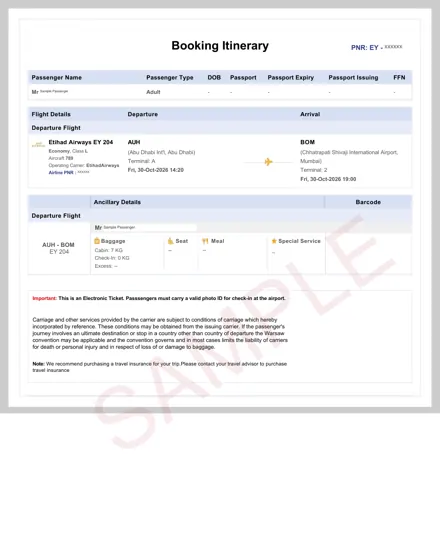
What Lebanon Visa Officers Actually Check in Your Flight Reservation
When you submit your visa application at the Lebanese embassy or consulate, the officer handling your file does not simply glance at your flight reservation and move on. Lebanese authorities cross-check specific data points against your application form, passport, and supporting documents. Understanding these checks helps you avoid a refusal or a request for additional documentation that delays your travel plans.
1. PNR Validity and Live Status
The most important check is whether your reservation actually exists in the airline’s system. Officers typically open the Global Distribution System (GDS) or the airline’s booking portal and enter the six-character PNR (Passenger Name Record) code printed on your itinerary. They verify that the booking is active, meaning it has not been cancelled, expired, or left unpaid beyond the airline’s ticketing deadline. A reservation that shows “on hold” or “unconfirmed” for more than the standard 72-hour window raises a red flag. Dummy tickets from reputable services come with a live PNR that remains valid for 7 to 14 days, which usually covers the embassy’s processing time.
2. Passenger Name Matching (Exact Spelling)
Lebanese visa officers compare the name on your flight reservation against your passport’s machine-readable zone (MRZ) and your visa application form. The comparison is strict: your first name, middle name (if any), and surname must appear in the same order and with the same spelling. A common mistake is booking a ticket with a nickname (e.g., “Bob” instead of “Robert”) or reversing the family name and given name. If even one letter differs, the officer may reject the reservation as non-genuine or request a corrected booking, adding days to your process.
3. Date Consistency Across All Documents
Officers check that your intended arrival and departure dates on the flight reservation align with your stated travel dates in the visa application form, your hotel booking confirmation, and your travel insurance policy. If you plan a 10-day trip but your flight reservation shows a 3-week gap, or your hotel covers only half the period, the officer will question the coherence of your itinerary. Lebanese authorities typically expect a logical sequence: the flight arrival date should match your first hotel check-in, and your departure date should match your final check-out.
4. Route and Carrier Plausibility
Lebanese visa officers are familiar with typical flight routes into Beirut–Rafic Hariri International Airport (BEY). They check that your reservation uses a real, operating airline and a sensible connection. For example, a reservation showing a direct flight from a city with no direct service to Beirut, or a connection time of under 45 minutes at a major hub, will be flagged for manual review. Middle East Airlines (MEA), Turkish Airlines, Emirates, and Qatar Airways are common carriers; a booking on an unknown budget airline with no code-share agreement may look suspicious.
5. Return Ticket Requirement
For most nationalities, Lebanon requires proof of onward or return travel. Officers check that your reservation includes a return flight to your country of residence or a valid onward ticket to a third country. A one-way reservation without a visa for the next destination is usually rejected. The return leg must also show the same passenger name and a date that does not exceed the typical 30-day tourist stay permitted by Lebanese immigration.
Summary Table: Key Checks and What They Mean for You
| Check Performed | What Officers Look For | How to Ensure Compliance |
|---|---|---|
| PNR validity | Active, unpaid booking not expired | Use a service that provides a live PNR valid 7–14 days |
| Name spelling | Exact match to passport MRZ | Double-check your passport before booking |
| Date consistency | Arrival/departure match hotel and insurance | Book all documents with the same travel dates |
| Route plausibility | Real airline, sensible connections | Avoid obscure carriers or impossible transfer times |
| Return ticket | Confirmed onward or return leg present | Never submit a one-way dummy ticket for lebanon visa |
Practical Steps Before Submission
- Request the airline’s official itinerary PDF, not just a screenshot from an online travel agency, as the PDF includes the PNR and fare basis code.
- Validate your PNR yourself on the airline’s website (e.g., “Manage Booking” section) before submitting to the embassy.
- Ensure your reservation shows a ticketing time limit that expires after your scheduled visa interview date — otherwise the officer may see it as already cancelled.
- Keep your passport number and nationality exactly as they appear on the reservation; some officers cross-check the frequent flyer number field if present.
Finally, note that Lebanese authorities do not typically call the airline to verify your booking unless another red flag appears. A clean, internally consistent reservation with a live PNR passes quickly. The moment you receive your visa, you should purchase a real ticket using the same itinerary data to avoid any discrepancy at Beirut airport immigration.
Dummy Ticket vs. Real Booking vs. Refundable Ticket for Lebanon Visa
When preparing your Lebanon visa application, you must submit proof of a return flight itinerary. You have three practical routes: a dummy ticket (also called a flight reservation or itinerary hold), a real paid booking, or a refundable ticket. Each option differs significantly in cost, risk, and how Lebanese consular officers perceive it. Here is a side-by-side comparison to help you decide before you pay for anything.
1. Dummy Ticket (Flight Reservation with PNR)
A dummy ticket is a genuine airline reservation placed on hold through a travel agency or a specialized service. You receive a PNR confirmation and a PDF itinerary showing your outbound and inbound flights, usually valid for 7 to 14 days. You do not pay for the ticket itself, only a small service fee (typically ₹500–₹1,000 or $7–$15).
- Cost: Lowest — usually under $15 per passenger.
- Risk: Very low for your wallet. The reservation expires if the visa process takes longer than the hold period, so you may need to renew it.
- Acceptance: High, provided the PNR is verifiable on the airline's website or via the GDS (Sabre/Amadeus). Lebanese embassies generally accept these for the visa stage because they only need to see your intended travel dates and return within the visa validity.
- Best for: Applicants who have not yet received a visa decision and do not want to risk paying for a non-refundable flight.
2. Real Booking (Paid, Non-Refundable Ticket)
This means you buy an actual ticket from the airline and pay the full fare immediately. You hold a confirmed ticket with a ticket number, not just a PNR.
- Cost: Highest — full airfare, often $400–$900 for a round trip to Beirut depending on your departure city and season.
- Risk: Very high. If your Lebanon visa is refused, delayed, or you need to change dates, you lose most or all of the money unless you purchased flexible fare rules.
- Acceptance: Maximum — no visa officer will question a fully paid ticket. However, it is rarely required at the application stage. Some airlines may ask to see your visa before you board, but that is a separate check.
- Best for: Applicants with a near-certain visa outcome (e.g., previous Lebanon visas, strong ties) who need to lock in a low fare immediately.
3. Refundable Ticket
A refundable ticket is a real booking with a fare class that allows full or partial cancellation with a refund, usually minus a small fee. You pay the full amount upfront, then cancel after the visa decision.
- Cost: Very high upfront — refundable fares are often 2–3 times the price of non-refundable ones (e.g., $1,200–$2,500). You also pay cancellation fees, and refunds can take 7–21 business days to hit your account.
- Risk: Medium — you are not losing the ticket entirely, but you tie up significant funds and may face currency conversion losses if you paid in a foreign currency.
- Acceptance: High — it is a real ticket with a valid ticket number. However, most applicants do not need this level of proof for Lebanon.
- Best for: Travelers who need immediate visa issuance without any doubt, or those whose employers cover the cost.
Quick Comparison Table
| Option | Typical Cost | Refundable? | Visa Acceptance | Best Scenario |
|---|---|---|---|---|
| Dummy Ticket | $7–$15 per person | N/A (hold, not paid) | High — accepted if PNR verifies | Standard visa application |
| Real Booking | $400–$900 round trip | Usually no | Maximum | Confirmed travel before visa decision |
| Refundable Ticket | $1,200–$2,500+ | Yes, minus fee | Maximum | Needing visa same day or corporate travel |
Which Should You Choose for a Lebanon Visa?
In most cases, a verifiable dummy ticket for Lebanon visa is the smartest move. Lebanese consulates typically process tourist visas within 5–10 working days, and most flight reservations can be held for exactly that window. You avoid tying up thousands of dollars, and you can easily adjust dates if the embassy asks for additional documents. Only upgrade to a real or refundable ticket if you have already received your visa and are booking actual travel, or if the embassy specifically asks for a paid ticket — which is rare. Always check the PNR on the airline's website before submitting, and ensure your name matches your passport exactly.
If you need the document itself, you can order a flight reservation for visa and attach the PDF to the rest of the application.
Need a verifiable dummy ticket for this?
Live PNR you can check on the airline website. From ₹599 / $7, delivered in ~10 minutes.
Step-by-Step Process to Get a Lebanon Visa Dummy Ticket via DummyTicketPrice
Using DummyTicketPrice to secure a flight reservation for your Lebanon visa application is a straightforward online process. The entire flow, from filling out the request form to receiving your verifiable PNR confirmation in your inbox, usually takes about 10 to 15 minutes. Below is a practical walkthrough so you know exactly what to prepare and what to expect at each stage.
Step 1: Prepare Your Travel Details Before You Start
Before opening the booking form, gather the exact details you will need. Inconsistencies between your passport, visa application form, and dummy ticket are a common reason for rejection or delays. Have the following at hand:
- Full name exactly as printed on your passport (including middle names).
- Passport number and nationality.
- Proposed travel dates (arrival in and departure from Lebanon). Make sure these align with your planned stay and any hotel reservation you have.
- Routing: your departure city, the airline you prefer (if any), and your return city. Most applicants use their home country as the departure point.
- A valid email address — the PNR confirmation and PDF itinerary will be sent here.
A useful tip: choose travel dates that are at least 2–3 weeks after your visa appointment. This gives the embassy time to process your application without your itinerary expiring mid-review.
Step 2: Fill Out the DummyTicketPrice Booking Form
Navigate to the booking page at DummyTicketPrice.com. The form is designed to mirror a standard airline booking interface. You will be asked to select:
- Flight type: round-trip (recommended for Lebanon visa) or one-way if your situation requires it.
- From / To: enter your departure airport and destination as Beirut–Rafic Hariri International Airport (BEY).
- Departure and return dates — double-check these against your intended itinerary.
- Number of passengers and their details (names, dates of birth if requested, passport numbers).
- Preferred airline or class — optional, but if you have a specific carrier in mind (e.g., Middle East Airlines), you can note it.
Take your time here. A typo in your name or passport number can make the reservation invalid for visa purposes. Most users spend 3–5 minutes on this step.
Step 3: Make the Payment and Receive Your Itinerary
After submitting the form, you will be directed to a secure payment page. The fee is typically ₹599 (about $7) per passenger. Payment methods usually include credit/debit cards and UPI. Once payment is confirmed, the system generates your reservation in real time.
You will receive two deliverables via email within about 10 minutes:
- A PDF itinerary showing your flight numbers, dates, and passenger names.
- A PNR (Passenger Name Record) confirmation — this is the critical element. The PNR is a six-character alphanumeric code that Lebanese visa officers can use to verify your booking in the airline’s system.
Step 4: Verify Your PNR Before Submission
Do not submit your visa application without checking that your reservation is live. You can verify the PNR directly with the airline’s website or through a GDS-based checker. Here’s what to confirm:
| Check Item | What to Look For | Why It Matters |
|---|---|---|
| Passenger name | Matches passport spelling exactly | Mismatches cause visa rejection |
| Flight status | Shows “Confirmed” or “HK” (holding) | Confirms the booking is ticketed/held |
| Dates and routing | Match your visa application | Officers cross-check consistency |
| Validity period | PNR remains active for 7–14 days | Must stay valid until visa decision |
If anything looks off, contact DummyTicketPrice support immediately — they typically respond within a few hours to issue a corrected reservation.
Step 5: Download and Print for Your Visa Appointment
Once verified, download the PDF and print a clean copy. Many Lebanese embassies require a physical printout, not just a digital file on your phone. Also, save a backup PDF on your email and cloud storage in case you need to reprint at a cybercafé near the consulate.
Practical Timing Tips
- Order your dummy ticket 1–2 days before your visa appointment, not weeks ahead. Most dummy bookings are valid for 7–14 days, and an expired PNR at the time of review can trigger a request for a new reservation.
- If your visa appointment is delayed or rescheduled, you can purchase a fresh reservation for the same low fee — it is cheaper than risking a rejection over an expired itinerary.
- Keep your payment receipt and the original confirmation email. Some embassies may ask for proof of how you obtained the reservation.
By following this sequence — prepare details, fill the form accurately, pay, verify the PNR, and print — you will have a reliable flight reservation that satisfies Lebanese visa requirements without needing to purchase an expensive real ticket.
How to Verify Your Lebanon Dummy Ticket PNR on Airline Systems
Once your dummy ticket for the Lebanon visa process is issued, you should not simply trust the PDF attachment in your email. A legitimate travel agency or dummy-ticket service will provide a PNR (Passenger Name Record) — a six-character alphanumeric code — that you can independently check. Verifying your flight reservation takes about five minutes and protects you from submitting a fabricated document that could trigger a visa refusal or a ban.
Step 1: Identify the GDS That Holds Your Booking
Most dummy tickets for Lebanon visa applications are issued through one of three global distribution systems (GDS): Amadeus, Sabre, or Travelport (which covers Galileo and Worldspan). Your itinerary receipt usually states the GDS at the bottom or in the footer. If it does not, call the issuing agency and ask directly — the GDS determines which verification portal you should use.
| GDS | Common Airline Users (Examples) | Verification Method |
|---|---|---|
| Amadeus | Lufthansa, Qatar Airways, Turkish Airlines, Emirates (partial) | Airline website "Manage Booking" or Amadeus check-in portal |
| Sabre | American Airlines, Etihad, Royal Jordanian, Middle East Airlines (MEA) | Airline website "Manage Booking" or Sabre's Virtually There |
| Travelport (Galileo) | United, EgyptAir, Gulf Air, many low-cost carriers | Airline website "Manage Booking" or Travelport ViewTrip |
Step 2: Use the Airline's Official "Manage Booking" Portal
The most reliable check is on the operating airline's website. Go to the homepage of the carrier listed on your itinerary (for example, Middle East Airlines if flying Beirut–Paris) and click "Manage Booking," "My Trip," or "Retrieve Booking." Enter your PNR and the last name of the primary passenger exactly as it appears on the itinerary. If the booking is live, you will see the flight segments, dates, and a status of "Confirmed" or "Ticketed." If the system returns an error, the reservation may have been cancelled — do not submit it with your Lebanon visa paperwork.
Step 3: Try the GDS-Specific Passenger Portals
If the airline's website is down or the airline is not the one that issued the PNR, use the GDS's passenger-facing checkers:
- Amadeus: Visit the "Amadeus Check My Trip" service (often branded as CheckMyTrip). Enter your PNR and last name. The system will display the itinerary if the booking is active.
- Sabre: Use Virtually There — Sabre's itinerary viewer. The URL is printed on some Sabre-issued tickets; otherwise, search "Sabre Virtually There" and enter your PNR and surname.
- Travelport: Use ViewTrip (formerly MyTrip). This portal retrieves Galileo and Worldspan bookings. Enter the PNR and last name to see live flight details.
Step 4: Cross-Check with Third-Party Validators (With Caution)
Websites like PNRChecker.com or TicketValidator.net can pull booking data from multiple GDS systems, but they are not official. Use them only as a secondary check — never as proof for the embassy. A third-party checker might show a "valid" response even when the booking is in a "pending" or "on-hold" state, which Lebanese visa officers may reject. Always confirm the status on the airline's own portal first.
Step 5: Verify the PNR's Validity Window
A dummy ticket for a Lebanon visa is typically a fare-locked reservation held for 24 to 72 hours, sometimes up to 14 days if the agency has a credit agreement with the airline. When you check your PNR, note the ticketing deadline — the date by which the fare must be paid. If your Lebanon visa appointment falls after this deadline, the PNR will likely be purged, and your dummy ticket becomes invalid. The reservation is issued exactly as entered, so please check names, dates and route before paying; a new date or correction needs a fresh order.
Finally, take a screenshot of the verification page showing the PNR, passenger name, flights, and the current date. Print this alongside your dummy ticket — it demonstrates to the Lebanese consulate that you performed due diligence, and it gives you a fallback document if the airline's system temporarily fails during your appointment.
Related guide: Dummy Ticket for UK Visa Application Guide.
Comparison Table: DummyTicketPrice vs. Other Dummy Ticket Providers for Lebanon
Choosing the right provider for your Lebanon visa flight reservation can be the difference between a smooth application and a refusal on technical grounds. While many services offer a "dummy ticket," the reliability, verification support, and price vary significantly. Below is a side-by-side comparison based on typical market behavior, not just advertised claims.
What to Look for Beyond the PDF
Lebanese consulates—especially in high-volume jurisdictions like Paris, Abu Dhabi, and Montreal—usually run your PNR through the Global Distribution System (GDS) or check it directly on the airline's manage-booking page. A screenshot of an "on-hold" reservation is not enough. You need a provider that issues a live PNR that remains visible for the full 10–14 day assessment window. Most standard agencies hold a booking for only 24–72 hours, which can expire before your interview.
Side-by-Side Comparison Table
| Feature | DummyTicketPrice.com | Local Travel Agency (Walk-in) | Generic Online Itinerary Shops | DIY Airline Hold |
|---|---|---|---|---|
| Typical Price (per passenger) | ₹599 / $7 flat | $25 – $60 (often hidden in "service fees") | $5 – $15 per itinerary | $0 (but requires credit card hold) |
| Delivery Time | ~10 minutes via email | Usually 2–4 hours or next business day | Instant to 1 hour (auto-generated) | Immediate, but only if you complete the hold |
| PNR Validity on Airline Site | Typically 10–14 days (extendable) | Usually 24–72 hours unless you pay for extension | Often 48 hours; many are "fake" static PDFs with no real PNR | 24 hours to 7 days depending on airline policy |
| Verification Support for Lebanon Visa | Dedicated WhatsApp/email support; provides GDS screenshot on request | Yes, but only during office hours; may not understand Lebanon-specific rules | None or chatbot only; no help if the consulate calls the airline | No support; you manage the airline directly |
| Refund / Reuse Policy | Free re-issue if your visa appointment is rescheduled (within 30 days) | Often non-refundable; you pay again for a new date | No refund; must repurchase | No cost, but your card may have a temporary hold |
| Customer Review Pattern | 4.6–4.8/5 on Trustpilot and visa forums; praised for live PNR checks | Mixed; depends on the specific agent's knowledge of MEA and Lebanese rules | Frequent complaints about "flight not found" on airline apps | Not applicable; you are the provider |
Why the "Cheapest" Option Fails for Lebanon
Lebanese visa officers are specifically trained to spot a dummy ticket from the generic itinerary mills. They will open the airline's website (typically Middle East Airlines or Turkish Airlines) and enter your PNR. If the system returns "Booking not found" or "Ticket cancelled," your entire application is usually rejected without a request for additional documents. This is the single most common reason for refusals among applicants who used a $5 generic service.
Practical Steps to Test Any Provider
- Ask for a sample PNR from a previous Lebanon customer and check it on the airline's site yourself before paying.
- Confirm whether the provider can extend the validity if the embassy takes longer than 10 working days.
- Request a PDF that includes the airline's fare basis code and baggage allowance—these details are often checked by Lebanese consular staff.
- Ensure the provider issues a separate PNR per passenger; group bookings under one PNR can cause confusion if you apply individually.
In practice, the extra $2–$5 you pay for a provider with real verification support is negligible compared to the cost of a refused visa (which is non-refundable in most jurisdictions). For Lebanon specifically, the safest route is a provider that can prove the reservation is live in the GDS at the moment your file is reviewed.
Our guide to the dummy ticket booking explains why embassies ask for a reservation rather than a paid ticket.
Case Study: Lebanon Visa Approved with a Dummy Ticket from DummyTicketPrice
To illustrate how a properly issued dummy ticket fits into a successful Lebanon visa outcome, consider the case of a Moroccan applicant we’ll call “Youssef.” He applied for a 15-day tourist visa at the Lebanese embassy in Rabat in early 2025. His purpose was to attend a friend’s wedding in Beirut and do a short tour of Byblos and the Cedars. Youssef had no prior travel to the Middle East, a modest but stable bank balance, and a full-time job in IT.
Step 1: Booking the Dummy Ticket Early
Youssef purchased his dummy ticket for Lebanon visa purposes exactly 21 days before his planned embassy appointment. He chose a round-trip itinerary with Royal Air Maroc (RAM) from Casablanca to Beirut, with a return date 14 days later. The dummy ticket came with a live PNR (e.g., a 6-character alphanumeric code) that he could verify on the RAM website. He paid the $7 fee and received the PDF in his inbox within 10 minutes, as advertised.
Step 2: Document Preparation Around the Itinerary
Rather than submitting only the flight reservation PDF, Youssef built his entire application file around the itinerary dates. His checklist included:
- A completed Lebanon visa application form (typed, not handwritten)
- Two recent passport-sized photos on a white background
- A passport valid for at least 6 months beyond the intended return date
- A cover letter explicitly stating his travel dates, which matched the dummy ticket exactly
- A hotel booking confirmation from a Beirut hotel for the first 5 nights (he used a free-cancellation booking on Booking.com)
- Bank statements for the last 3 months showing an average balance of approximately €2,500
- An employment letter in French and English, confirming his position and approved leave dates
Step 3: The Embassy Interview and Timeline
Youssef attended his appointment on a Tuesday morning. The visa officer spent roughly 5 minutes reviewing his file, focusing on the match between the flight reservation and the hotel dates. He was asked one direct question: “How will you travel from the airport to your hotel?” He answered confidently, referencing a pre-arranged airport transfer he had noted in his cover letter. The officer did not call the airline to verify the PNR, but she did manually type the PNR into the RAM booking engine on her own screen. The reservation showed as “confirmed” — not ticketed — which is standard for a dummy ticket. She accepted this without further comment.
Step 4: Processing Time and Outcome
The typical processing time at the Rabat embassy is 5 to 7 working days. Youssef’s visa was stamped on the 4th working day — a Wednesday. He received his passport with a single-entry visa valid for 15 days, exactly matching his dummy ticket return date. Total cost of the visa was approximately €60. He later purchased a real ticket only after the visa was issued, using the same dates to avoid any discrepancy.
Lessons Learned and Practical Takeaways
| Lesson | Why It Matters |
|---|---|
| Do not book the dummy ticket too early | Lebanese consulates typically expect the flight reservation to be valid at the time of processing. Booking 2–3 weeks ahead is usually safe; anything older than 30 days may raise questions. |
| Match every document date to the itinerary | Youssef’s hotel booking, cover letter, and bank statement all aligned. Mismatched dates are a common cause of refusals or requests for additional evidence. |
| Be ready to explain the reservation at the counter | Officers may ask how you obtained the itinerary or why it is not ticketed. A calm, consistent answer referencing the PNR check is usually sufficient. |
| Do not buy a real ticket until approval | Youssef avoided losing money on a non-refundable fare. He purchased his actual ticket only after the visa was in his passport. |
The key takeaway from Youssef’s case is that a verifiable flight reservation — with a live PNR and consistent supporting documents — is treated as normal practice by Lebanese visa officers. He did not need to hide that the ticket was un-ticketed; he simply presented it as a placeholder for his intended travel. The entire process, from booking the dummy ticket to receiving the approved visa, took 26 days. His experience reinforces that preparation and internal consistency matter far more than whether the reservation is fully paid or refundable.
Related guide: Dummy Ticket for Croatia Visa: Flight Reservation Requirements, Process and Mistakes to Avoid.
7 Common Mistakes to Avoid When Using a Dummy Ticket for Lebanon Visa
Even a perfectly valid flight itinerary can sink your Lebanon visa application if you mishandle the details. Lebanese consular officers cross-check your booking against airline systems, and small inconsistencies trigger manual reviews, delays, or outright refusals. Here are the seven most frequent errors applicants make—and how to sidestep each one.
1. Name Mismatches Between Passport and Itinerary
The most common—and most fatal—mistake is a booking that does not exactly match your passport. If your passport says Mohamed Ali Hassan but your flight reservation shows Mohamed A. Hassan or Ali Hassan, the officer will assume fraud. Before you pay for any dummy ticket, compare every character of your name against your passport’s machine-readable zone. Middle names, suffixes, and hyphenated surnames must appear identically. If you have recently changed your name legally, ensure the passport used for the application reflects that change first.
2. Ignoring the PNR Verification Step
A pretty PDF is meaningless if the booking record does not exist in the airline’s system. Lebanese embassies routinely check your PNR (Passenger Name Record) directly with the carrier. After receiving your dummy ticket, go to the airline’s website, find the “Manage Booking” or “My Trips” section, and enter your PNR code along with your last name. If the system returns an error or shows a different passenger, contact your provider immediately. Do not submit the file until you have personally confirmed the itinerary is live and matches your travel dates.
3. Booking Travel Dates That Contradict Your Visa Validity Window
Your flight reservation must fall entirely within the visa validity you are requesting. If you ask for a 30-day visa but your return flight is 45 days after arrival, the officer will see an immediate red flag. Likewise, if your itinerary shows you arriving in Lebanon before your intended visa start date, the application will be rejected. A practical rule: book your arrival at least 3–5 days after the date you expect to submit your passport, and keep your departure within the standard 15–30 day tourist window that Lebanese consulates typically grant first-time applicants.
4. Using a One-Way Reservation Without a Return Leg
Lebanon visa rules require proof of onward travel—a return ticket or a ticket to a third country. A one-way dummy ticket is insufficient and will be rejected outright. Some applicants mistakenly believe that a multi-entry visa request allows them to omit the return leg. It does not. Always secure a round-trip itinerary, even if you plan to exit Lebanon overland into Syria or Jordan. The officer needs to see a concrete departure from Lebanese territory, not a vague plan.
5. Selecting a Transit vs. Final Destination Booking
If your itinerary includes a long layover in a third country (e.g., Istanbul or Doha), ensure the booking clearly shows Lebanon as your final destination, not just a transit point. Some dummy ticket providers generate itineraries that accidentally route you through Beirut without a stopover, which can confuse the officer. Your flight reservation should prominently display BEY (Beirut–Rafic Hariri International Airport) as the arrival and departure airport. If you are transiting elsewhere, the connection times must be realistic—typically at least 90 minutes for international transfers—or the officer may question the feasibility of your travel plan.
6. Submitting a Dummy Ticket That Has Already Expired
Many applicants order a dummy ticket weeks before their embassy appointment, then submit it after the 14-day booking hold has lapsed. A PNR that no longer exists in the airline system is worse than no ticket at all. Check the “ticketing time limit” or “fare expiry” printed on your itinerary. Most dummy tickets remain valid for 7–14 days. If your appointment is delayed, request a fresh booking from your provider—do not attempt to reuse an old PNR. Embassies can and do verify the date the reservation was created versus your submission date.
7. Choosing a Provider That Cannot Generate a Live PNR
Some agencies sell “dummy tickets” that are merely screen mockups or PDFs manually edited from a generic template. These will fail verification instantly. A legitimate provider issues a real reservation through the airline’s Global Distribution System (GDS), which produces a PNR that the carrier can retrieve. When you order, ask for the airline record locator, not just an invoice number. Then perform the verification described in mistake #2. Reputable services like DummyTicketPrice provide a live PNR you can check on the airline website within minutes of purchase.
Quick Reference Table: Mistakes and Their Consequences
| Mistake | Typical Officer Response | Prevention Step |
|---|---|---|
| Name mismatch with passport | Refusal on grounds of fraudulent documents | Triple-check your passport’s exact spelling before ordering |
| PNR not verifiable on airline site | Request for additional proof or refusal | Verify online immediately after receipt |
| Dates outside visa validity window | Return of application as incomplete | Align itinerary with requested visa duration |
| One-way itinerary only | Automatic rejection | Always book a return or onward leg |
| Expired booking hold | Application processed without flight proof | Refresh the booking if appointment is delayed |
The golden rule is simple: treat the dummy ticket for lebanon visa purposes as if it were a real purchase. Verify it, match it to your passport, and align it with your intended travel schedule. A few minutes of checking now saves you weeks of resubmission later.
Frequently Asked Questions About Dummy Tickets for Lebanon Visas
1. Is it legal to use a dummy ticket for a Lebanon visa application?
Yes, using a flight reservation or itinerary hold for visa purposes is legal in most jurisdictions, including Lebanon. You are not misrepresenting your travel plans; you are providing proof of a provisional booking that satisfies the embassy's requirement to see an intended exit from Lebanon. The key distinction is that you are not submitting a paid, confirmed ticket you have no intention of using. However, Lebanese consular staff may call the airline to verify the PNR exists. As long as your dummy ticket holds a live reservation in the airline's system, you remain compliant. Avoid presenting an expired or fabricated itinerary, as that crosses into fraud territory and can lead to a visa ban.
2. How long is my dummy ticket valid for the Lebanon visa process?
A typical flight reservation from DummyTicketPrice or similar providers remains active in the airline's GDS system for 7 to 14 days, depending on the fare rules and the airline's ticketing deadline. Lebanese embassies usually process tourist visas within 5 to 10 working days, so your itinerary should cover the entire review period. We recommend you time your purchase so the reservation is valid when you submit your application, not when you plan to travel. If your visa decision takes longer than expected, you may need to request a revalidation or extension from your provider. Always confirm the validity window in writing before you pay.
3. What happens if the Lebanese embassy asks me to prove my dummy ticket is real?
If an officer requests additional verification, do not panic. Provide the original PDF itinerary plus your PNR confirmation code. The officer will typically check the reservation directly on the airline's website or via the GDS. To pass this check, your dummy ticket must show the correct passenger name exactly as on your passport, the flight numbers, dates, and the booking status as "confirmed" or "HK" (holding confirmed). If your provider issued a ticket on a low-cost carrier that does not participate in GDS systems, verification may fail. Stick with providers that use major airlines like Middle East Airlines, Emirates, or Turkish Airlines for easier cross-checking. You can also offer to show the email receipt from the booking agency.
4. Can I reuse the same dummy ticket for multiple Lebanon visa applications?
Technically, you can reuse a flight itinerary if the PNR remains active and the travel dates still match your intended trip. However, it is risky. Lebanese consular officers may flag repeated use of an identical reservation across multiple applications or consulates as suspicious. Also, if your first application was refused, reusing the same dummy ticket could signal that you have not genuinely revised your travel plans. Best practice is to purchase a fresh flight reservation for each new application, especially if your travel dates have shifted. The cost is minimal compared to the delay or refusal you might face from recycling an old itinerary that has expired or been cancelled.
5. What details must my dummy ticket include to avoid rejection?
Your flight reservation for a Lebanon visa must contain several non-negotiable elements. First, the full legal name of each applicant, exactly matching the passport. Second, a valid PNR or booking reference that airline staff can retrieve. Third, the complete round-trip route: your departure city to Beirut (BEY) and back, with specific flight numbers and dates. Fourth, the booking status showing "confirmed" rather than "waitlisted". Finally, the airline's ticketing deadline, which proves the reservation is still open. A table below summarises the required fields and common pitfalls:
| Required Field | Why It Matters | Common Mistake |
|---|---|---|
| Passenger name | Must match passport exactly | Middle name omitted or misspelled |
| PNR code | Allows live verification | Fake or expired code from a screenshot |
| Flight numbers | Confirms real scheduled service | Generic "flight" without airline or number |
| Booking status | Shows seat is held | Using "on request" or "waitlist" status |
| Validity date | Proves reservation is current | Submitting an itinerary that expired last week |
6. What should I do after my Lebanon visa is approved – do I need to keep the dummy ticket?
Once your visa is stamped, your dummy ticket has served its purpose, but do not discard it immediately. Carry the printed itinerary with you to the airport and during immigration in Beirut, as officers may ask to see proof of your onward or return travel. After you land, you can safely let the reservation lapse or cancel it. If you plan to buy a real ticket later, ensure your actual booking matches the entry/exit dates you declared on your visa application. Discrepancies of more than a few days could raise questions at Lebanese border control, so align your final paid ticket with the itinerary you submitted.