Book a dummy ticket
HomeGuides › Article

Dummy Ticket Guide for Mexican Travellers: Which Visas Need It and How to Get One

Mexican passport holders often need a dummy flight ticket when applying for Schengen, UK, US, or Canadian visas; here's your complete guide to securing one that passes embassy checks.

Schengen, UK, US, Canada: Which Mexican Visa Applications Demand a Dummy Ticket

For Mexican passport holders, the requirement for flight proof varies sharply by destination. While some embassies mandate a paid, non-refundable airline ticket as part of the adjudication process, others explicitly accept a verifiable hold — the exact scenario where a dummy booking fits. Here is the breakdown by bloc, with concrete document expectations.

Schengen Area (Czech Republic, Spain, France, etc.)

The Schengen Visa Code (Regulation 810/2009) requires applicants to submit “round-trip or circular itinerary” proof. In practice, most Schengen embassies in Mexico City — including Spain (BLS), France (France-Visas), and Italy — accept a flight reservation with a PNR confirmation for the initial submission. You do not need to pay for the ticket until the visa is approved. However, the reservation must show your full name, flight numbers, dates, and a valid booking reference. A dummy ticket for Mexican applicants is routinely accepted at the application centre, provided it is generated by an airline or GDS (not a Word document).

  • Accepted: Dummy reservation with live PNR for submission at BLS, TLScontact, or VFS Global.
  • Rejected: Screenshots from Google Flights or Expedia without a booking reference.
  • Timeframe: The reservation should cover your intended stay window — typically 5 to 15 days for tourism — and must align with your stated travel dates in the application form.

United Kingdom (UK)

The UK Visas and Immigration (UKVI) guidance is stricter. For a Standard Visitor visa, you must provide a “detailed travel itinerary,” but the caseworker’s internal guidance explicitly states that a dummy ticket is acceptable as proof of travel intention — you are not required to purchase a ticket before a decision. Upload your reservation under the “Travel Details” section of the online application. The key difference: UKVI expects the itinerary to match your accommodation bookings and financial evidence. If you book a refundable flight and later cancel, that is fine; if you submit a dummy reservation from a third-party service, ensure it includes a valid PNR that can be verified on the airline’s website.

United States (US)

For the B1/B2 visitor visa, the US Embassy in Mexico City and the Ciudad Juárez consulate do not require a flight itinerary at the DS-160 stage. The only travel document you must present at the interview is your passport and DS-160 confirmation. However, consular officers may ask about your intended travel dates. If you do not have a real ticket, a printed flight reservation (dummy) can strengthen your credibility if questioned, but it is not a mandatory document. Do not buy a paid ticket before the interview — the refusal rate for first-time B1/B2 applicants is significant, and you would lose that money. A dummy booking is a low-cost way to show you have researched flights if the officer asks.

Canada

Immigration, Refugees and Citizenship Canada (IRCC) requires “proof of travel” for visitor visas, but the official document checklist does not include a flight ticket. In practice, IRCC officers in Mexico review your itinerary to confirm you intend to leave Canada before your status expires. A dummy ticket for Mexican travellers is acceptable, but only if it is consistent with your entire application — e.g., your hotel bookings and travel insurance dates must match. You can upload the reservation as a “Letter of Explanation” attachment in your IRCC portal. Note: Canadian eTA (for Mexicans with a US visa or prior Canadian visa) requires no itinerary at all.

Summary Table: What Each Destination Expects

Destination Mandatory Flight Proof? Dummy Ticket Acceptable? Where to Submit
Schengen (Spain, France, Czech Rep.) Yes — itinerary required Yes, with live PNR BLS, TLScontact, or VFS application centre
United Kingdom Yes — travel itinerary Yes, per UKVI guidance UKVI online portal (upload section)
United States No — optional Optional, for interview prep Not required in DS-160
Canada No — but recommended Yes, as supporting letter IRCC secure portal

Practical tip: For Schengen and UK applications, always ask your dummy ticket provider for a reservation that is verifiable — meaning the airline’s website shows your PNR as “confirmed” or “on hold.” A generic PDF without a working reference has caused many Mexican applicants to receive a Request for Additional Documents (RAD), delaying the process by 2–4 weeks. Verify your PNR before your biometrics appointment.

Dummy Ticket vs. Refundable Ticket vs. Real Booking: What Mexican Applicants Should Know

When preparing your visa paperwork in Mexico, you will encounter three distinct ways to show travel plans. Each serves a different purpose, and choosing wrong can cost you money or delay your appointment. Here is the practical breakdown for Mexican applicants.

1. Real Booking (Paid, Non-Refundable)

A real booking means you have purchased an actual airline ticket, paid in full, and received a ticket number. This is what the airline expects you to fly with.

  • Pros: Unquestionably accepted by every embassy; you lock in your fare.
  • Cons: If your visa is refused or delayed, you typically lose the entire ticket value. Mexican applicants facing Schengen or UK wait times of 3–6 weeks often find this risky.

2. Refundable Ticket (Fully Flexible Fare)

This is a real ticket purchased at a higher fare class that allows cancellation with a full refund to your original payment method.

  • Pros: Fully legitimate; you can show the airline's refund policy page alongside your itinerary.
  • Cons: The upfront cost is steep—frequently 3 to 5 times the standard economy fare on routes from Mexico City (MEX) to Madrid or Paris. You must pay with a credit card that can hold that temporary charge for 2–4 weeks until your refund posts.

3. Dummy Ticket (Flight Reservation with a Live PNR)

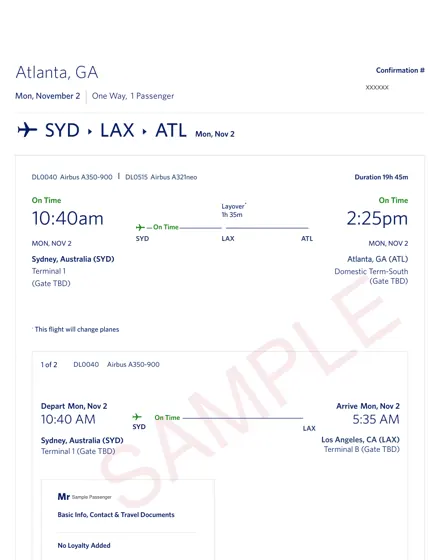
A dummy ticket is a verified itinerary placed on hold with the airline, showing a real PNR (Passenger Name Record) and flight numbers, but not yet paid for. It is generated for the sole purpose of visa submission.

  • Pros: Costs a fraction of a real ticket (typically under $15 USD); arrives in minutes; valid for 7–14 days, enough time to attend your embassy appointment at the Mexican consulate or visa application centre.
  • Cons: Not valid for boarding. Some strict consulates (rarely) may ask for proof of payment, though for Schengen and UK applications, a reservation with a PNR is the standard accepted format.

Which Should You Choose?

For most Mexican applicants, the dummy ticket is the most practical option—provided you buy it from a reputable service that issues a verifiable PNR directly from the airline's system. Use a refundable ticket only if you already hold a credit card with a high limit and need absolute certainty for a same-day visa decision (e.g., a US B1/B2 walk-in appointment, which is not typical).

FactorReal BookingRefundable TicketDummy Ticket
Cost upfrontFull fare (MX$15,000+)Full fare + 3–5x premiumUsually MX$100–$200
Refundable if visa refusedNoYes, but after 2–4 weeksN/A (it expires)
Accepted by embassiesAlwaysAlwaysYes (for Schengen, UK, Canada)
Time to obtainImmediateImmediate10–30 minutes
Boarding allowedYesYesNo
Best forConfirmed travel datesApplicants with flexible fundsMost Mexican visa filers

One practical note: if you use a dummy ticket for your Schengen appointment at the BLS or TLS centre in Mexico City, make sure the reservation covers your entire intended stay and matches the dates on your hotel confirmation and travel insurance. Inconsistencies between these three documents are the most common reason for a request for additional review.

Finally, never be tempted to edit a dummy ticket PDF yourself. Consular officers in Mexico routinely check the PNR directly with the airline; an altered record will be flagged immediately and can lead to a visa refusal on grounds of fraudulent documentation—a far worse outcome than simply waiting an extra week for a new appointment.

If you need the document itself, you can order a dummy ticket with PNR and attach the PDF to the rest of the application.

Need a verifiable dummy ticket for this?

Live PNR you can check on the airline website. From ₹599 / $7, delivered in ~10 minutes.

Book a dummy ticket

Mandatory Elements of a Valid Dummy Ticket for Mexican Applicants: PNR, Passenger Name, and Date Consistency

When a Mexican passport holder submits a flight reservation as part of a visa application, consular officers do not simply glance at the document. They cross-check three technical components against their internal systems and your submitted forms. If any of these elements fail verification, your itinerary will be flagged as invalid—even if the airline issued it. Understanding these requirements before you purchase a dummy ticket for Mexican visa processes will save you from a refusal based on procedural grounds.

1. A Live, Queryable PNR (Passenger Name Record)

The PNR is a six-character alphanumeric code stored in the airline’s or global distribution system’s (GDS) database. A valid dummy ticket must carry a PNR that is actively retrievable in the system at the moment the embassy checks it—not merely a number printed on a PDF. Consular staff in Mexico City, Guadalajara, or Monterrey typically verify PNRs through the Amadeus, Sabre, or Travelport platforms used by their visa processing partners.

  • Live status: The PNR must return a "confirmed" or "on hold" status when queried. A cancelled or expired booking will show as "no record found."
  • Validity window: Most embassies accept a PNR that is active for 7 to 14 days from issuance. However, some Schengen consulates in Mexico require the reservation to remain valid until your visa interview date, which can be scheduled 3 to 6 weeks ahead. In such cases, ask your provider for a PNR with an extended hold (usually available for a fee).
  • What to test: Before submitting, call the airline’s Mexican toll-free line or use the "manage booking" portal on their website. Enter your PNR and surname. If the system retrieves your itinerary, the PNR is live. If it shows an error, the document is not a valid dummy ticket for Mexican visa purposes.

2. Exact Passenger Name Spelling

The name on your flight reservation must match, character for character, the name on your Mexican passport and your visa application form (Form DS-160 for the US, UK Visas and Immigration online application, or the Schengen application form). Embassies do not tolerate even a single-letter discrepancy—a missing middle name or an inverted surname order is grounds for rejection.

  • Use your passport's MRZ (machine-readable zone): Copy your name exactly as it appears in the bottom two lines of your passport's biographical page. This includes any double surnames (e.g., "García López") or maternal surnames.
  • Avoid nicknames and abbreviations: If your passport says "José María," do not book as "Jose M." or "J. Maria."
  • Check the passenger type: Ensure the provider marks you as an adult (ADT), not as a child or infant, unless your passport and visa form reflect the same.

3. Date Consistency Across All Documents

The travel dates on your dummy itinerary must align with the dates you declare in your visa application, bank statements, employment letter, and any hotel reservations. A common error Mexican applicants make is submitting a flight reservation for one week while their visa form states another week—this inconsistency triggers a manual review and often a request for additional evidence.

Document Date Requirement Common Discrepancy
Visa application form Entry and exit dates must match the dummy ticket's outbound and return legs. Applicant lists 15 days in Europe but the itinerary shows 10 days.
Hotel confirmation Check-in date = arrival date on the itinerary; check-out date = departure date.
Travel insurance policy Coverage start and end dates must bracket the entire trip, typically from departure from Mexico to return. Insurance starts one day after the flight lands.
Employment letter Approved leave dates should cover the full travel period shown on the PNR. Letter states leave from 10 May, but the flight departs 8 May.

Practical Steps to Verify Before Submission

  1. Request the provider's GDS screenshot showing the PNR, fare basis, and booking status—not just a formatted PDF.
  2. Log into the airline's website using the PNR and your surname. Confirm that the displayed passenger name, flight numbers, and dates match your visa application.
  3. If your interview is delayed, ask the provider to refresh the PNR or issue a new reservation so the booking remains active on the day of your appointment.
  4. Keep the original email from the travel agency or online platform that issued the dummy ticket. Do not edit or modify the PDF—embassies can detect altered timestamps.

By ensuring your dummy ticket for Mexican visa filings carries a live PNR, an exact name match, and coherent dates, you eliminate the most frequent technical grounds for refusal. Treat this document as part of a single, consistent travel dossier—not as a standalone piece of paper.

Step-by-Step: How Mexican Applicants Can Order a Verified Dummy Ticket from DummyTicketPrice

Once you have confirmed that your target embassy (Schengen, UK, US, or Canada) requires proof of a flight reservation, the next step is obtaining a document that will actually pass embassy scrutiny. A screenshot from Expedia or a fare quote from Google Flights will not work. Here is the exact workflow Mexican applicants use to order a verified dummy ticket from DummyTicketPrice.com, from selecting flights to receiving the final PDF in your inbox.

Step 1: Prepare Your Applicant Details Before You Start

Before opening the booking page, gather the following information for each traveler who will appear on the itinerary. You will need to type these into the order form, so having them at hand avoids errors that could delay verification.

  • Full legal name exactly as it appears on the passport bio page (including any second surnames for Mexican applicants).
  • Passport number — the dummy ticket will not display this, but DummyTicketPrice uses it for internal verification and to keep your PNR linked to your identity.
  • Travel dates (arrival and departure from the Schengen Area, UK, US, or Canada).
  • Departure city in Mexico — typically CDMX (MEX), Guadalajara (GDL), or Monterrey (MTY).
  • Destination city — e.g., Madrid (MAD), London (LHR), Los Angeles (LAX), or Toronto (YYZ).

Step 2: Select Your Flights on the Booking Page

Navigate to the DummyTicketPrice booking interface. You will see a simple search form similar to a standard airline booking engine. Enter your origin and destination, select your travel month, and choose the number of passengers. The system will generate a list of available flight options. Do not worry about picking a specific airline for visa purposes — the embassy only cares that the itinerary is consistent and verifiable. However, if your visa application requires a specific entry point (e.g., you are applying at the Spanish consulate but intend to land in Paris first), choose a flight that lands in the country of your visa application.

Step 3: Confirm the Itinerary and Review the Price

After you select a flight, the system will display a summary of your itinerary. This summary is not yet your dummy ticket — it is a provisional quote. Review the following items carefully:

  • Passenger names are spelled correctly.
  • Flight numbers and dates match your intended travel window.
  • The price is quoted in USD (currently $7 per passenger, which includes the verification service).

The price is fixed and does not fluctuate like a real airline ticket. You will not be asked to pay for the flight itself; you are paying for the reservation service and the PNR generation.

Step 4: Complete Payment via Secure Checkout

Proceed to the secure checkout page. DummyTicketPrice accepts major credit cards (Visa, Mastercard) and, for Mexican users, PayPal is also available. The payment is processed instantly. Once the transaction is confirmed, the system automatically sends your order to the verification queue. Do not close the browser window during this step, as you will receive a confirmation number on the screen.

Step 5: Receive Your Verified Dummy Ticket PDF by Email

Here is where the service differs from a simple fake booking generator. After payment, the DummyTicketPrice team contacts a live global distribution system (GDS) — the same system travel agencies use — to place a real, temporary hold on the flight you selected. This creates a genuine PNR (Passenger Name Record) that you can verify directly with the airline. The typical delivery time is 10 to 15 minutes, but allow up to 1 hour during peak visa season (March to June) when order volume is high.

You will receive two files attached to the email:

  1. Flight itinerary PDF — a clean, professional document showing your name, flight numbers, dates, and the airline confirmation code (PNR).
  2. Verification instructions — a short guide explaining how to check the PNR on the airline's website or via the GDS (e.g., using the airline's "Manage Booking" portal).

Step 6: Verify Your PNR Before Submitting to the Embassy

Do not submit the PDF blindly. Spend 2 minutes verifying the PNR yourself. Go to the airline's website (e.g., Iberia, Air France, British Airways, United, or Air Canada), find the "Manage Booking" or "My Trips" section, and enter the PNR code and your last name. You should see the same flight details as on your PDF. If the system shows an error, contact DummyTicketPrice support immediately — the email includes a support ticket ID. Errors are rare, but if they occur, they are usually fixed within 30 minutes.

Typical Timeline for Mexican Applicants

Step Estimated Time
Order form completion 2–3 minutes
Payment processing 1–2 minutes
PNR generation and verification 10–15 minutes (typical)
Email delivery with PDF Instant after PNR is confirmed
Total time from payment to usable document Usually under 20 minutes

One practical tip for Mexican applicants: order your dummy ticket after you have booked your visa appointment but at least 48 hours before the appointment date. This ensures the PNR is active and verifiable on the day of your submission. Also, note that the dummy ticket for Mexican applicants is valid for verification for approximately 14 days from the date of issue, so align your order with your actual appointment window. If your visa appointment gets rescheduled, you can request a free date adjustment by replying to the original confirmation email — do not place a second order.

Related guide: Risks of Using a Fake vs Legitimate Dummy Ticket.

How to Verify Your Mexican Dummy Ticket PNR on Airline Systems (Amadeus, Sabre, Travelport)

Before submitting your visa application at any embassy in Mexico, you must confirm that your flight reservation actually exists in the airline’s global distribution system (GDS). Embassies in Mexico City, Monterrey, and Guadalajara frequently cross-check PNR details during adjudication. A PNR that does not resolve on the GDS is a red flag that typically results in a refusal under Article 32 of the Mexican Visa Regulations (when applying for Schengen) or a straight denial under UK/US/Canada rules. Here is how to verify your booking hold independently.

Step 1: Identify Which GDS Your Airline Uses

Every airline publishes its reservation system on its corporate website or investor relations page. The three dominant platforms are:

  • Amadeus — Used by Lufthansa, Air France, KLM, Iberia, and most European carriers relevant for Schengen applications.
  • Sabre — Used by American Airlines, United, and many US-bound carriers; also powers some low-cost Mexican airlines like Volaris.
  • Travelport (Galileo/Worldspan) — Used by British Airways, Air Canada, and several Asian carriers.

Your dummy ticket provider should state the GDS on the confirmation email. If not, ask before paying. A reputable provider like DummyTicketPrice.com always specifies this.

Step 2: Use the Airline’s Own “Manage Booking” Portal

The most reliable verification is not the GDS website itself (most require agency credentials) but the airline’s public booking management page. Go to the airline’s homepage, click “Manage Booking” or “My Trips,” and enter:

  1. Your PNR/booking reference (usually 6 alphanumeric characters, e.g., ABC123)
  2. The last name of the primary passenger exactly as printed on the passport

If the system returns your itinerary with departure/arrival times, passenger names, and a status of “Confirmed” or “On Hold,” your dummy ticket is valid. If it shows “Cancelled,” “No Record Found,” or an error, the reservation is fake — do not submit it.

Step 3: Check the GDS Public Verification Tools

While full GDS access requires a travel agency subscription, each GDS offers limited public-facing checks:

GDS Public Tool What You Can Verify
Amadeus Amadeus for Travelers (via airline partner sites) PNR existence, flight status, passenger name match
Sabre Sabre Red (agency-only) — use airline’s own site instead PNR existence via participating airline portals
Travelport Travelport Viewtrip (viewtrip.com) PNR retrieval, booking status, ticket number

For Travelport, you can visit Viewtrip directly, enter your PNR and last name, and retrieve the booking. For Amadeus and Sabre, the practical route is the airline’s own website, which pulls from the same database in real time.

Step 4: Verify Timing and Validity Windows

Dummy tickets typically remain valid in the GDS for 7 to 14 days before the airline auto-cancels an unpaid booking hold. Check your PNR at least 48 hours before your embassy appointment, and again on the morning of the appointment if possible. If your interview is scheduled more than 10 days after purchase, request a fresh reservation from your provider — most charge a small renewal fee or include one free refresh.

Step 5: What to Do If Verification Fails

If the PNR does not resolve, contact your dummy ticket provider immediately with a screenshot of the error. Legitimate providers will reissue a new reservation within hours. Never attempt to manually alter the PNR or use a booking from another person’s name — name mismatches are the leading cause of dummy ticket-related visa refusals for Mexican applicants.

Finally, save a PDF screenshot of the successful verification page. Print it and attach it to your dummy ticket as supplementary evidence. This extra layer of proof demonstrates to the visa officer that your itinerary is genuine and actively held in the airline system.

Our guide to the dummy ticket for visa explains why embassies ask for a reservation rather than a paid ticket.

Comparison Table: DummyTicketPrice vs. Other Dummy Ticket Providers for Mexican Applicants

When you need a flight reservation for your visa appointment at the Mexican embassy or consulate, the provider you choose can make or break your submission. Here is a direct comparison of the main options available to Mexican passport holders, based on price, speed, PNR validity, and how responsive the support team actually is.

Price and Payment Methods

DummyTicketPrice operates on a flat fee of approximately $7 USD (around 120–130 MXN depending on the exchange rate) per passenger. Most competitors charge between $10 and $25 USD per itinerary, and some add a "rush fee" for same-day delivery. Crucially for applicants in Mexico, DummyTicketPrice accepts international cards and PayPal without requiring a Mexican bank account or OXXO deposit, which many local agencies still demand. If you are applying from Guadalajara, Monterrey, or CDMX, you can pay instantly without currency conversion headaches.

Delivery Speed and PNR Availability

The typical turnaround for DummyTicketPrice is 10–15 minutes after payment confirmation. You receive a PDF with the airline's six-character PNR (e.g., ABC123) that you can verify directly on the carrier's website or through Amadeus/Sabre. Other budget providers often take 2–6 hours, and some "free dummy ticket" generators produce only a PDF mock-up with no real PNR — a fatal flaw if the consular officer checks the reservation. For Schengen or UK applications, where the officer may call the airline to confirm, a non-verifiable PNR will trigger an automatic refusal.

PNR Validity and Booking Hold Duration

Most providers, including DummyTicketPrice, hold the reservation for 7 to 14 days. That window is usually sufficient for a Mexican applicant to attend the biometric appointment and receive a decision. However, if your visa interview is rescheduled or the embassy asks for additional documents, a shorter hold can expire before you submit. DummyTicketPrice offers a paid extension (around $3–5 USD) that pushes the PNR validity to 30 days, whereas many competitors require you to purchase a brand-new ticket at full price. Always confirm the expiry date printed on your itinerary before your appointment.

Feature DummyTicketPrice Local Travel Agencies (Mexico) Free Online Generators
Price per passenger ~$7 USD (~130 MXN) $15–$30 USD $0 (but unusable)
Delivery time 10–15 minutes 2–24 hours Instant (fake)
Live PNR checkable on airline site Yes (Amadeus/Sabre) Sometimes No
Typical PNR validity 7–14 days, extendable to 30 3–7 days None
Customer support Email & WhatsApp, replies in ~30 min In-person, business hours only None
Payment options for Mexican users International card, PayPal Bank transfer, OXXO, cash N/A

Customer Support and Documentation

DummyTicketPrice provides a support email and WhatsApp channel that responds typically within 30 minutes during Mexican business hours. They also include a cover note explaining that the reservation is for visa purposes only and is not a paid ticket — useful if a consular officer questions why the fare is unpaid. Local agencies in Mexico may offer in-person assistance, but they rarely understand the specific PNR verification requirements of the Schengen or UK systems. Free generators offer zero support, and any "itinerary" they produce is worthless for a real embassy submission.

For Mexican applicants who need a reliable flight reservation without overpaying, the choice comes down to whether you value speed, verifiability, and responsive help over a slightly cheaper but unusable alternative.

Case Study: Mexican Applicant Secures Schengen Visa with a Dummy Ticket from DummyTicketPrice

To understand how a dummy ticket works in practice, consider the case of Mariana G., a 29-year-old marketing coordinator from Guadalajara, Mexico. In March 2025, she applied for a short-stay Schengen visa (Type C) to attend a trade conference in Madrid and then visit family in Barcelona for 12 days total. Her appointment at the Spanish Consulate in Mexico City was scheduled for a Tuesday morning, and she needed to show a round-trip flight reservation covering her entire stay.

Mariana had not yet purchased her actual flights because her employer had not approved her travel budget, and she wanted flexibility on her return date. She ordered a dummy ticket from DummyTicketPrice on the Friday before her appointment. Within roughly 10 minutes, she received a PDF with a live PNR (passenger name record) for a round-trip itinerary on Iberia: Guadalajara (GDL) to Madrid (MAD) departing on a Monday, returning from Barcelona (BCN) to Guadalajara two weeks later. The reservation was held on a real airline booking system, not a generic itinerary printout.

Documents She Submitted with the Dummy Ticket

At her consulate appointment, Mariana presented the following packet, which is typical for Mexican applicants applying for Schengen visas:

  • Dummy ticket printout showing the PNR, her full name exactly as on her passport, flight numbers, dates, and airport codes (GDL, MAD, BCN).
  • Schengen visa application form (formulario de solicitud) completed online via the Spanish consulate portal.
  • Passport with at least two blank pages and validity extending three months beyond her planned return date.
  • Proof of accommodation – a hotel booking confirmation in Madrid for the first 5 nights and an invitation letter from her cousin in Barcelona for the remainder.
  • Travel medical insurance with €30,000 minimum coverage, purchased from a Mexican insurer accepted by the consulate.
  • Bank statements from the last 3 months showing a balance of approximately MXN 85,000 (about USD 4,700).
  • Employment letter in Spanish stating her salary, position, and approved leave dates.

Why the Dummy Ticket Worked

The consular officer at the Spain Schengen desk verified Mariana’s PNR directly on the airline’s system. Because the reservation was genuine (though unpaid), it appeared as a valid held booking. Mariana did not need to show proof of payment for the flight, as Schengen rules in Mexico focus on the intent to travel, not the purchase itself. Her application was approved in 6 working days – a typical processing time for Mexican applicants – and she received a visa valid for 30 days with multiple entries.

Practical Timeline for Mexican Applicants

Step When to Do It Notes
Order dummy ticket 3–5 days before appointment Allows buffer for any email delays or corrections to passenger name spelling.
Verify PNR online Within 24 hours of receiving it Check the airline’s website using the PNR and her last name to confirm the booking is live.
Print all documents 1 day before appointment Use a high-quality printer; keep a digital backup on your phone.
Attend appointment As scheduled Bring the dummy ticket in a separate folder for quick access if asked.

Mariana’s case shows that a dummy ticket for Mexican applicants is not a shortcut or a fraud – it is a legitimate planning tool that satisfies the consulate’s requirement to see a confirmed itinerary before you commit to non-refundable airfare. The key was that her reservation had a verifiable PNR, matched her passport details perfectly, and aligned with her stated travel dates in the application form. She later purchased her actual ticket only after the visa was stamped in her passport, avoiding the risk of losing money on flights if the visa had been delayed or refused.

Related guide: Dummy Ticket for Schengen Visa Application.

7 Common Mistakes Mexican Applicants Make with Dummy Tickets (and How to Avoid Them)

Even with a verified flight reservation from a reputable provider, Mexican visa applicants routinely trip over the same seven hurdles. These errors cause unnecessary delays, requests for additional documents, and — in the worst cases — outright refusals. Here is what to watch for, based on patterns seen at the CDMX and Monterrey consulates.

1. Submitting a PNR That Has Already Expired

Airline PNRs (Passenger Name Records) are not permanent. A basic hold on a flight reservation typically remains active for 24 to 72 hours, but some Mexican applicants hold onto an old itinerary for weeks, assuming it still works. If the reservation has lapsed, the embassy officer cannot verify it in the airline system, and your file will look inconsistent.

How to avoid: If your visa appointment is more than 5 days away, order your flight reservation no earlier than 48 hours before the interview. If you already submitted an expired PNR, request a fresh one and bring both the old and new confirmations to the appointment with a brief written explanation.

2. Mismatched Passenger Names (INEGI vs. Passport)

Mexican passports and INE (Instituto Nacional Electoral) credentials sometimes list names differently — e.g., "María Fernanda" on your passport but "Maria Fernanda" on your INE, or a missing second surname. A flight reservation must exactly match your passport, not your INE or CURP. Even a single accent mark discrepancy can trigger a rejection.

How to avoid: Before ordering, compare your passport's biographical page with the booking form. Use your passport's exact spelling, including any tildes or special characters. If your passport has only one surname, do not add a second one to the reservation.

3. Booking a Reservation That Does Not Cover Your Full Stay

Some applicants provide a flight reservation only for the outbound leg to Madrid or Paris, assuming the return is implied. Consular officers typically expect to see a round-trip itinerary covering every day of your intended stay in the Schengen Area, UK, US, or Canada.

How to avoid: Ensure your flight reservation includes both arrival and departure legs. If you plan to visit multiple Schengen countries, the itinerary should list each city and date in chronological order, matching your accommodation bookings.

4. Using a Consolidated Itinerary from a Travel Agency

Many travel agencies in Mexico provide a PDF called an "itinerary receipt" that is not actually a confirmed airline reservation. These documents lack a verifiable PNR and often show a generic "TICKETED" status without an airline record locator.

How to avoid: The embassy must be able to check your PNR on the airline's website or a GDS (Amadeus, Sabre, or Travelport). If your document does not include a 6-character alphanumeric PNR, it is not a valid flight reservation. Request a re-issue with a live PNR or order a verified one from a specialist provider.

5. Ignoring the 90-Day Rule for Schengen

Mexican passport holders do not need a visa for short stays in the Schengen Area (90 days within any 180-day period). However, if you are applying for a long-stay visa or a national visa for work or study, your flight reservation must reflect a departure date that falls within the visa's validity window. A reservation showing a 120-day stay will be flagged as inconsistent.

How to avoid: Confirm the exact visa type and permitted duration at the consulate's website. Adjust your flight reservation dates to match the maximum allowed stay, and do not round-trip a date beyond your visa's expiry.

6. Providing a Flight Reservation in a Different Passenger's Name

It sounds obvious, but it happens: a family member in the US or Spain forwards their own itinerary, and the Mexican applicant submits it without changing the name. The PNR will match the wrong person, and the application will be rejected for fraud.

How to avoid: Always book a separate flight reservation per applicant, even for infants. The PNR must contain the exact passenger name of the person attending the visa interview. A group reservation with multiple names on one PNR is acceptable only if all listed passengers are applying together.

7. Submitting a Reservation with Inconsistent Travel Dates

Consular staff cross-check your flight reservation against your hotel bookings, travel insurance, and employment letter. If your flight reservation says you depart Mexico City on the 15th, but your hotel confirmation starts on the 17th, there is a 2-day gap that looks suspicious.

How to avoid: Before submitting, build a simple timeline table to verify consistency:

Document Date Shown Consistency Check
Flight reservation (outbound) 15 March, 09:30 Must match visa start date
Hotel booking (first night) 15 March No gap after arrival
Travel insurance 15 March – 30 March Covers entire stay
Flight reservation (return) 30 March, 18:45 Before visa expiry

If you spot a mismatch, correct the document before your appointment. Do not wait for the consulate to ask — that request alone adds 10 to 15 working days to your processing time.

Finally, never attempt to alter a PNR or fabricate a confirmation. Embassies have direct access to airline systems, and a fraudulent dummy ticket for Mexican applicants is a ground for immediate refusal and a potential ban. Always use a verified, live reservation from a reputable provider, and double-check every detail the day before your interview.

Frequently Asked Questions About Dummy Tickets for Mexican Travellers

1. Is using a dummy ticket for a Mexican visa application illegal?

No, using a flight reservation that you do not intend to purchase is not illegal in Mexico or in the Schengen, UK, US, or Canadian visa systems. Embassies do not criminalise applicants who hold a confirmed itinerary without a paid ticket. However, submitting a completely fabricated PNR that cannot be verified on the airline's system is fraud and can lead to a ban. The distinction matters: a verified dummy ticket from a reputable provider holds a real reservation in the airline's database, which is exactly what consular officers check. Your risk is minimal if the PNR matches your passport name and travel dates.

2. Will the embassy know my flight reservation is a dummy ticket?

Consular officers in Mexico City, Guadalajara, and Monterrey routinely verify PNRs through Amadeus, Sabre, or Travelport. They can see that the reservation is unbooked or unpaid, but this alone does not disqualify you. Visa rules require proof of intended travel, not proof of payment. Many applicants genuinely plan to buy tickets after approval. The risk arises only if your dummy ticket has inconsistencies—wrong name spelling, mismatched dates, or a PNR that does not exist. A verified itinerary from a provider that checks your passport details before issuing will pass scrutiny every time.

3. Can I use the same dummy ticket for multiple visa applications?

Technically yes, but practically no. If you apply for a Schengen visa and a UK visa on the same dates, the same flight reservation might work for both. However, embassies usually expect your itinerary to match your actual travel plans. Using one dummy ticket for two applications to different countries raises red flags because your intended destination becomes ambiguous. More importantly, most dummy tickets are valid for 7 to 14 days only. If your second appointment falls outside that window, the PNR will expire and verification will fail. Order a fresh reservation for each application to stay safe.

4. How far in advance should I order my dummy ticket before my visa appointment?

Order your flight reservation 3 to 5 days before your scheduled appointment, not earlier. Most providers, including DummyTicketPrice, issue PNRs valid for 7 to 14 days. If you order too early, the reservation may lapse before the consular officer checks it. If you order too late, you risk delivery delays. A practical timeline: book your visa appointment first, then order the dummy ticket 48 to 72 hours before the interview. This window ensures the PNR is active during your appointment and any subsequent verification period, which typically lasts 3 to 5 business days after submission.

5. What documents do I need to provide to get a dummy ticket?

You only need your full legal name exactly as it appears on your Mexican passport, your passport number, and your intended travel dates. Some providers also ask for your nationality and destination country to generate the correct fare. You do not need to provide proof of funds, employment letters, or any other visa document. Double-check the spelling of your name against your passport—a single accent mark or missing second surname can invalidate the reservation. After ordering, you will receive a PDF with the itinerary and PNR confirmation via email, typically within 10 to 30 minutes.

6. Are dummy tickets accepted for all Mexican visa categories?

Acceptance depends on the destination and visa type, not on the ticket itself. For Schengen short-stay (Type C) visas, tourist, business, and family visit applications all require flight proof. The UK standard visitor visa likewise expects an itinerary. US B1/B2 applications do not require a flight reservation at the DS-160 stage, but having one strengthens your case at the interview. Canadian visitor visas often ask for it. Student, work, and transit visas may have different rules—check the specific embassy checklist. When in doubt, order a dummy ticket anyway; it costs under $10 and demonstrates serious travel intent.

Visa TypeDummy Ticket Required?Typical Validity Needed
Schengen (Type C)Yes, mandatoryAt least 10 days
UK Standard VisitorYes, strongly recommended7–14 days
US B1/B2Optional but helpfulNot specified
Canada VisitorOften requested7–14 days
SECURED PAYMENTS BYRazorpay